REVIEW · MOSTAR
Break-up of Yugoslavia & The War in Mostar: Life Under Siege
Book on Viator →Operated by Mostar Travel Agency · Bookable on Viator
A war story in Mostar comes with receipts. This 3-hour walk-and-drive tour covers the breakup of Yugoslavia and what the siege did to daily life, from a hidden military hangar to the front line you can still trace in the city. It’s the kind of history you can feel under your skin because the guide brings the story with lived detail, not just dates and headlines.
I particularly love the personal siege stories shared by the guide, plus the way the tour uses a simple map approach to make sense of a confusing set of factions. One thing to consider: this is an information-heavy, emotionally serious tour, and not every stop is designed to be postcard-pretty.
If you want to understand Mostar beyond the bridge photo, this is a smart use of a morning or afternoon. I also like that the tour stays small (up to 8 people), and the pacing gives you time to ask questions rather than just march. The experience can run more than the posted time when the guide is answering questions and following the story where it needs to go.
markdown
- Tito-era aircraft hangar: a hidden, cliffside base with a real sense of secrecy.
- Mostar War Museum: local context and first-hand perspective inside a focused exhibit.
- A map you can follow: the guide uses a board drawing to connect events across the former Yugoslavia.
- Walkable front-line remains: see bunkers and the invisible border in the city center.
- Small-group feel (max 8): easier questions, more direct conversation.
- Hotel pickup included (if selected): less time coordinating and more time learning.
In This Review
- Mostar Under Siege: Why This 3-Hour Tour Feels Longer in the Best Way
- Getting Your Bearings with Pickup and a Small Group
- Stop 1: The Tito-Era Hangar and the Logic of Hidden Power
- Stop 2: Mostar War Museum (Gojka Vukovića) and How the Guide Makes It Make Sense
- Stop 3: Walking the West Front Line on Šantića Street
- What Makes the Guides So Powerful (Esmer, Harun, Vedad, and More)
- Pace and Timing: When 3 Hours Turns Into a Real Morning
- Value for Money: Why $42.33 Can Feel Like a Bargain
- Who This Tour Is Best For (and Who Might Want Something Else)
- Pairing This with the Rest of Your Mostar Day
- Should You Book: The Short Honest Call
- FAQ
- How long is the tour?
- How much does it cost?
- What’s included in the tour price?
- Is hotel pickup offered?
- What language is the tour offered in?
- How big is the group?
- Do I need to buy tickets for the sites?
- Is it suitable for children?
- Is there free cancellation?
- Will I receive a mobile ticket?
Mostar Under Siege: Why This 3-Hour Tour Feels Longer in the Best Way
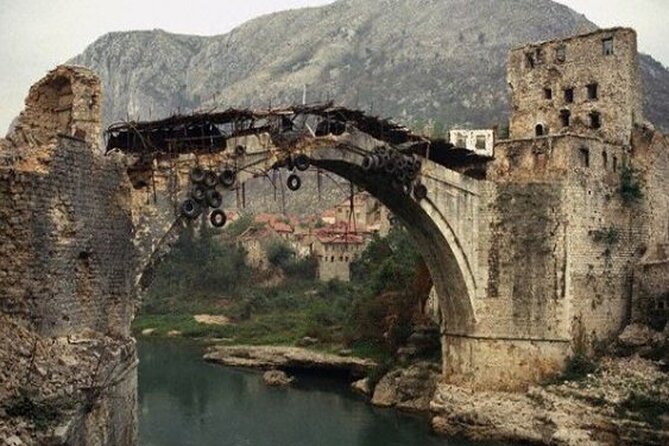
Mostar looks calm now, but the city’s recent past still shapes where people walk, what they point to, and what they avoid saying casually. This tour is built around that tension: you’re not just visiting “sites,” you’re watching how a city absorbed war and then tried to keep going.
The format helps. You start with a hidden military base, move into a war museum where the context is explained, and finish by walking parts of the former frontline. That sequence matters because it goes from strategy (where weapons were staged), to explanation (how the conflict worked), and finally to memory (what stayed behind in the streets).
Two things make it especially useful for you if you’re traveling with limited time. First, it’s small group and English-speaking, so the guide can slow down when you’re confused. Second, it gives you a framework for the breakup of Yugoslavia, which makes everything else you see in the region click into place.
Getting Your Bearings with Pickup and a Small Group
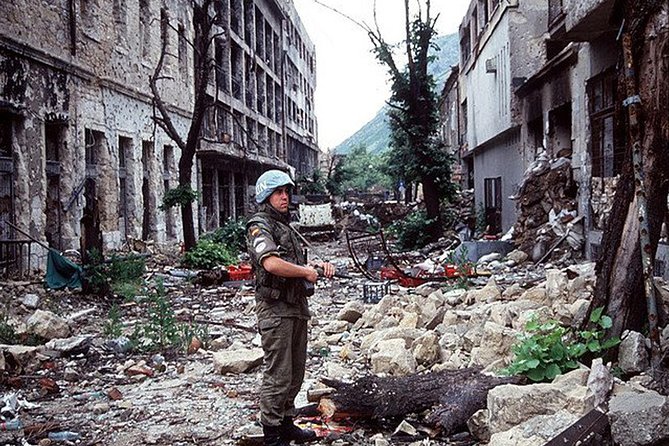
Mostar is compact, but getting around for three stops still takes time. This tour solves that with an air-conditioned vehicle and hotel pickup and drop-off if you select it. If your lodging isn’t listed, you provide your address in Mostar for the pickup.
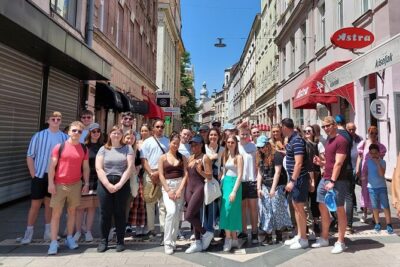
The group size is capped at 8 travelers, which keeps the tour from turning into a loud slideshow. You’ll feel more like you’re in conversation with a local teacher than a passenger on a bus tour. And because the tour is offered in English, you’re not stuck piecing together the “story” through gaps in translation.
The other practical bonus: you’ll get a mobile ticket, and the stops are close enough that you’re not losing the whole experience to driving.
You can also read our reviews of more tours and experiences in Mostar.
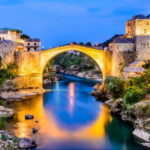

Stop 1: The Tito-Era Hangar and the Logic of Hidden Power
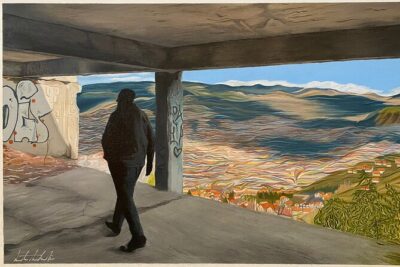
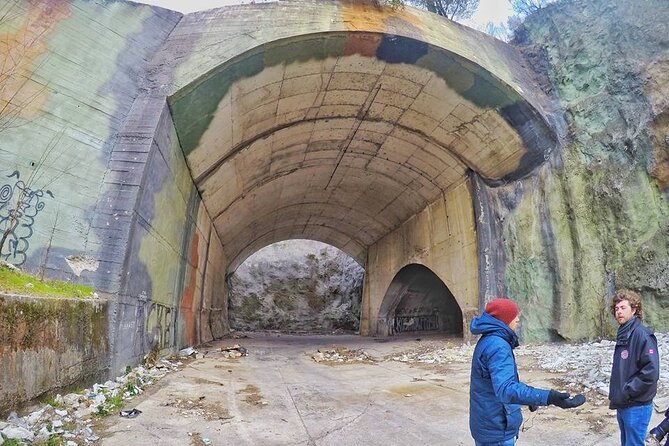
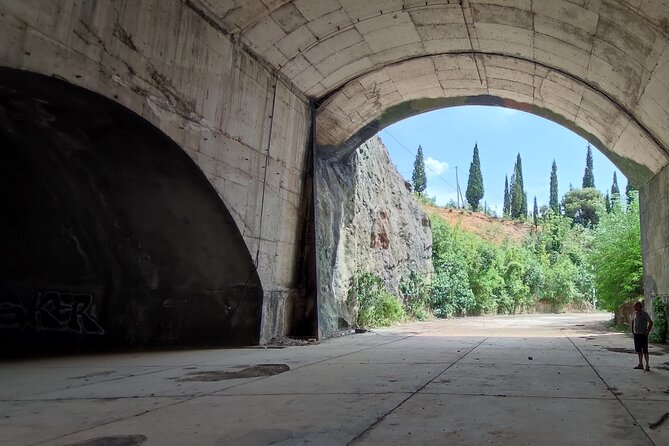
The first stop is an abandoned aircraft hangar about five minutes south of Mostar. It’s not a monument with dramatic lighting. It’s a real military structure tucked into a natural fortress-like setting, where fighter jets were placed deep inside mountainous space—protected from attack and also hidden from ordinary eyes.
What I like about this first stop is that it gives you a sense of how war planning works. It wasn’t only about having firepower; it was also about concealment, access, and timing. When you later hear how the siege unfolded in Mostar, this hangar start point helps you understand why certain locations mattered.
This is also one of the stops with the simplest expectation: admission is free, and the time on-site is about 50 minutes. You’re there to look, listen, and absorb atmosphere, not to rush through a checklist.
Good to know for you: the hangar setting is less “comfortable museum” and more “physical space with shadows and echoes.” Wear shoes you don’t mind getting a little dusty, and bring a jacket if you’re sensitive to cooler air that can linger in stone interiors.
Stop 2: Mostar War Museum (Gojka Vukovića) and How the Guide Makes It Make Sense
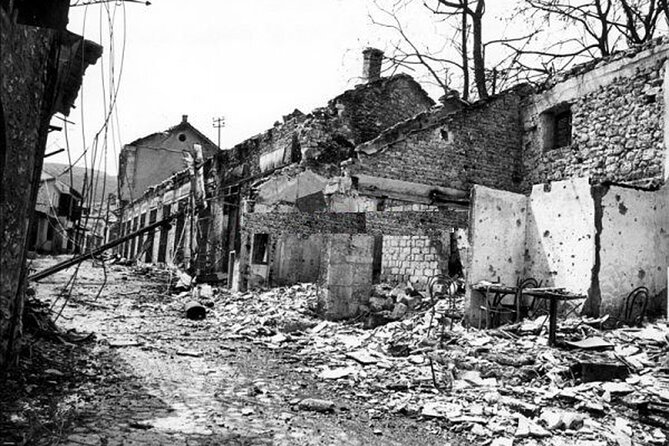
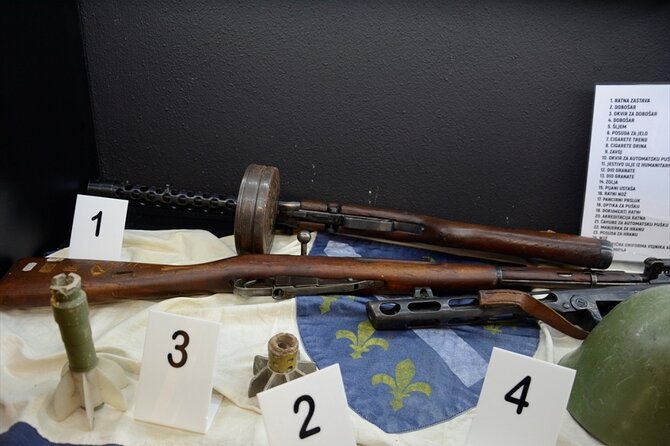
Next comes the Mostar War Museum, where the focus shifts from hidden hardware to lived experience. This is where you’ll hear the siege’s impact through a local lens and understand what it meant to live in a divided city.
A standout detail from guides featured on this tour: they often use a board to draw out a map of the former Yugoslavia. That matters more than it sounds. The breakup of Yugoslavia can feel like a pile of names and borders. Seeing a timeline and relationships sketched out in real time helps you connect the dots without needing to study Balkan politics before breakfast.
Time here is again about 50 minutes, and the museum entrance is included. There’s a reason people keep recommending this part: it’s not only informational; it’s structured for understanding. The guide’s personal perspective also tends to make the history feel less abstract. You get context, then you get a human explanation of how that context played out in Mostar.
One practical consideration: this stop is serious. It’s about civilians, targeting, division, and long consequences that outlast the fighting. If you’re the type who handles heavy topics better with breaks, mentally plan to take a breather after this museum—step outside when you can, get water, and let it land.
Stop 3: Walking the West Front Line on Šantića Street
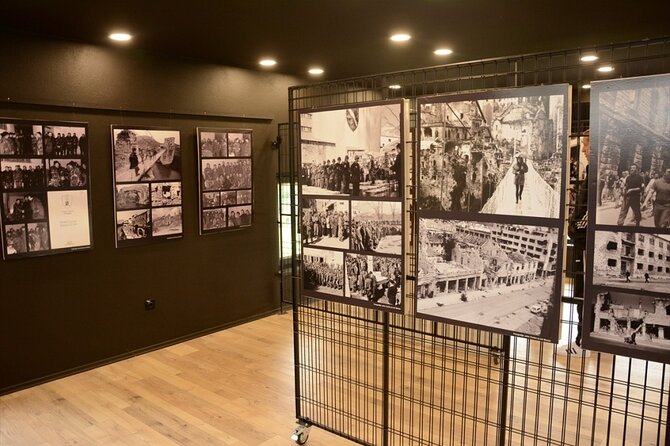
The tour ends with a walk through the city along what used to be close combat territory—around Šantića Street, with the experience oriented toward the West Front Line. This is where Mostar stops being a “lesson” and becomes a walkable map of memory.
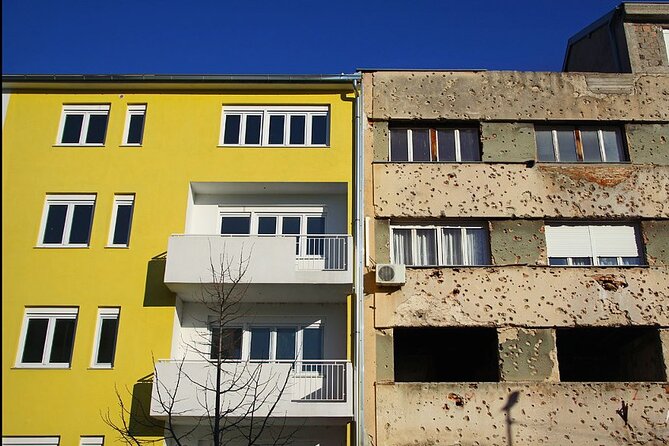
You’ll see bunkers that still exist in the city center. That’s a strange, almost unreal feeling at first: a structure built for survival during war is now just part of the streetscape. But the guide helps you read what you’re seeing, connecting the physical remains with what happened around them.
As you move closer to Spanish Square and Boulevard Street, the guide shows pictures from the war period so you can compare past and present. That comparison is one of the best learning tools on the whole tour. It turns “time” into something you can see, not just imagine.
This stop is about 50 minutes as well. You’re walking, and you’re looking, so you’ll want comfortable shoes. Also, expect the tour to show you the invisible line—how the city’s division is less about a fence now and more about neighborhoods, identities, and lingering separations.
A tip for you: when you see a bunker or damaged structure (or even an area that looks different after what you’ve just learned), ask your guide what changed afterward. The story doesn’t end with the fighting; Mostar’s recovery shapes the city just as much.
What Makes the Guides So Powerful (Esmer, Harun, Vedad, and More)
The heart of this experience is the guide. Names that come up in guest feedback include Esmer, Harun, and Vedad, and they’re praised for a similar set of strengths: clear explanations, chronological organization, and a willingness to handle difficult questions directly.
What you should expect from a strong guide on this tour:
- They explain the chain of events leading to war in a way you can follow.
- They share personal or family experience from the siege, not just second-hand summaries.
- They tend to aim for balance, including discussing more than one side’s role in wrongdoing.
That balance is important. War history can easily become propaganda or a one-note blame story. On this tour, the emphasis is on understanding complexity—how groups formed, how conflict escalated, and how civilians paid the price.
Several guides also focus on the “how to read the city” part. After you’ve walked the front line, you’ll start spotting how the built environment keeps memories visible. That’s the kind of local interpretation that turns “a place I visited” into “a place I understand.”


Pace and Timing: When 3 Hours Turns Into a Real Morning
The tour is listed at about 3 hours, with each stop around 50 minutes. In practice, the time can shift depending on questions and the guide’s storytelling style. Many people leave feeling the time passed quickly because the guide is actively teaching, not just moving people from one point to the next.
Also, this is not a tour designed only for photos. Some stops are emotionally and historically heavy. You’ll likely take fewer pictures than you expect because you’ll spend more time listening, asking, and looking closely.
If you’ve got tight plans the same day: consider keeping your next activity flexible. You’ll understand more if you allow time to absorb the museum portion before switching back to casual sightseeing.
Value for Money: Why $42.33 Can Feel Like a Bargain
At $42.33 per person, this tour can be a standout value in Mostar because you’re not paying just for access. You’re paying for a structured history lesson with local storytelling, plus included transport and a museum entrance.
Here’s what makes the price feel fair for you:
- Professional guide throughout all three stops
- Air-conditioned vehicle
- Hotel pickup and drop-off if selected
- Mostar War Museum entrance fee included
- Admission is listed as free for the hangar stop, and the remaining time focuses on guided walking
Compared to tours that feel generic or purely “viewing,” this one is built around explanation: why places mattered, how the conflict unfolded, and what still lingers. In a short time window, that’s the kind of payoff that can make the cost feel low.
Who This Tour Is Best For (and Who Might Want Something Else)
This tour is a great fit if you:
- Want context for the breakup of Yugoslavia and the war’s impact on Mostar
- Like guides who answer questions and teach clearly
- Travel with teens or older students who can handle serious history (children must be accompanied by an adult)
It may be less ideal if you:
- Want a mostly light, photo-focused outing
- Get overwhelmed by heavy content and prefer entertainment over explanation
- Only want a quick look at landmarks with minimal talking
The upside is that the tour is small, so you’re not stuck in a huge group where you can’t ask follow-ups.
Pairing This with the Rest of Your Mostar Day
Even if you don’t plan your schedule around history, doing this tour early helps your whole day. After you walk the former frontline and understand how the city’s division took shape, you’ll see the famous parts of Mostar with new eyes. The guide’s comparison between wartime images and today’s streets helps you spot what stayed, what healed, and what still carries memory.
If you want an easy plan: do this tour first, then spend the rest of your day moving at your own pace with a clearer sense of geography and meaning.
Should You Book: The Short Honest Call
I’d book this tour if your goal in Mostar is understanding, not just sightseeing. The combination of a Tito-era hangar, a Mostar War Museum explained by a local, and a front-line walk with visible remains gives you a strong learning arc in a short window.
Book it especially if you value a guide who’s willing to share personal siege details and connect them to a clear regional timeline. Just make sure you’re ready for an emotional topic and a lot of talking. If that fits your travel style, you’ll likely walk away with a deeper grasp of why Mostar is so complicated—and so determined to keep moving forward.
FAQ
How long is the tour?
It’s approximately 3 hours.
How much does it cost?
The price is $42.33 per person.
What’s included in the tour price?
You’ll get a professional guide, hotel pickup and drop-off if you select that option, Mostar War Museum entrance fee, and an air-conditioned vehicle.
Is hotel pickup offered?
Yes, hotel pickup and drop-off are offered if you choose the pickup option. If your accommodation isn’t listed, you provide your address in Mostar.
What language is the tour offered in?
The tour is offered in English.
How big is the group?
The maximum group size is 8 travelers.
Do I need to buy tickets for the sites?
Admission is listed as free for the hangar and the war museum entrance fee is included.
Is it suitable for children?
Children must be accompanied by an adult.
Is there free cancellation?
Yes. You can cancel up to 24 hours in advance for a full refund.
Will I receive a mobile ticket?
Yes, the tour offers a mobile ticket.