REVIEW · SARAJEVO
Best of Sarajevo – Ultimate Full-Day Experience
Book on Viator →Operated by Insider Ltd · Bookable on Viator
Sarajevo can feel like a city of stories stacked on stories, and this day plan follows the threads in a smart way. You get major landmarks plus real food breaks without turning it into a chaotic sprint, and the mix of faiths and eras is unusually well balanced for one full day. The only real drawback is that it’s long, with lots of short stops and some driving, so the last portion may feel like transit time instead of sightseeing.
I love how the route keeps switching gears: quick photo-and-context moments, then proper time for coffee, baklava, and burek. You’ll also get memorable “learning stops,” including the War Tunnel area and Siege-era sites, instead of staying on the surface. If you’re the type who wants long museum time at every stop, you might find this format a bit fast.
This is an English-language tour (maximum 15 people) that runs about 7 to 8 hours starting at 9:00 am. It uses an air-conditioned vehicle, and the operator provides a mobile ticket, which makes the day easier to manage—especially on busy streets.
In This Review
- Key points to know before you go
- A full-day Sarajevo sampler that doesn’t skip the important parts
- Your food stops: coffee, baklava, and burek without guesswork
- Latin Bridge and the city’s “name story” moments
- The Seven Brothers, Saint Anthony, and Sarajevo’s Ottoman-era footprint
- Trebević cable car and the Bob Trail: views plus movement
- The old town and craftsmanship: Bascarsija, Kazandžiluk, and Morica Han
- East-meets-West stops: mosques, cathedrals, and Sarajevo’s symbolic crossroads
- Jewish Museum and the Sarajevo Haggadah thread
- House of Spite and Sebilj Fountain: the fun, local side of Sarajevo
- Siege memory made practical: Sniper Alley and the Tunnel of Hope
- Price and value: what $84.11 gets you, plus the €30 entry bundle
- How to plan your day: timing, walking style, and comfort
- Who should book this and who might want a different style
- Should you book the Best of Sarajevo Ultimate Full-Day Experience?
- FAQ
- How long is the Best of Sarajevo Ultimate Full-Day Experience?
- What time does the tour start?
- What languages is the tour offered in?
- What is included in the price?
- What’s not included in the price?
- What is the group size limit?
Key points to know before you go
- Small group pace (max 15): You should feel like a person, not a number.
- Food is built in: Bosnian coffee and baklava, plus a traditional lunch with burek tasting.
- A “both sides” Sarajevo approach: You’ll see Islamic sites, Catholic and Orthodox landmarks, and East-meets-West symbolism.
- Trebević cable car + Bob Trail: Views on the way up, then a walk along the historic bobsleigh/luge track with graffiti.
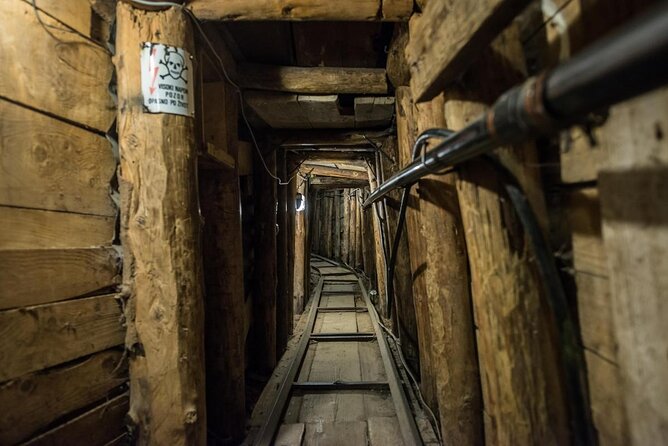
- War Tunnel stop included on the route: The Tunnel of Hope is a full 1-hour segment.
- Some admissions require extra payment: Cable car and several major religious/museum entrances are covered via a €30 entry package.
A full-day Sarajevo sampler that doesn’t skip the important parts
This tour is designed for first-time visitors who want a lot of Sarajevo in one shot—but without the usual “one stop every ten minutes” feeling. You’ll start downtown and move outward and back again, with a mix of landmarks, neighborhoods, and a couple of longer breaks.
The day has a clear rhythm. You’ll get quick context at places like Latin Bridge and the old religious sites, then you’ll slow down for meals and tastings. The hardest, most meaningful segment comes later with Siege-era sites and the War Tunnel.
You can also read our reviews of more tours and experiences in Sarajevo

Your food stops: coffee, baklava, and burek without guesswork
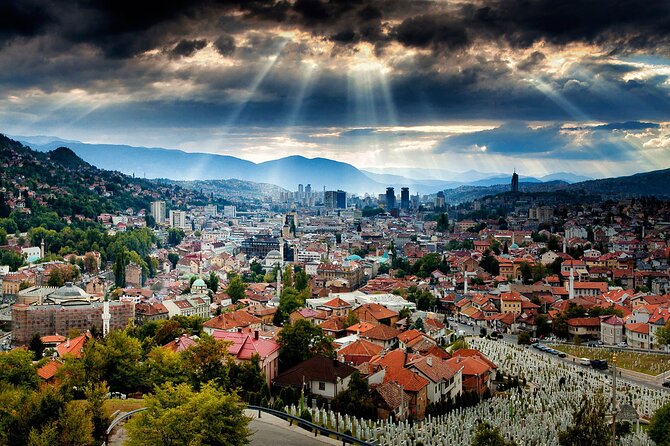
If you care about eating your way through a city, this part is the payoff. The tour builds in Bosnian coffee with baklava tasting, then another scheduled tasting later for lunch-style food.
Here’s what to expect:
- You’ll get a dedicated coffee break with a tasting, not just a random café stop.
- You’ll also do a burek degustation (traditional Bosnian pastry) and learn how it’s made.
- Lunch is included as a traditional food tasting, and it’s planned into the route so you’re not hunting for something good while everyone waits.
One practical note: plan to drink water too. You’ll be on your feet, and you’ll have that strong coffee moment plus bakery sugar. It’s fun, but don’t run on espresso alone.
Latin Bridge and the city’s “name story” moments
You’ll begin at Latin Bridge, one of Sarajevo’s most iconic spots. The tour frames it around why the bridge matters and why its name is tied to Sarajevo’s story—exactly the kind of place that helps you understand what you’re seeing later.
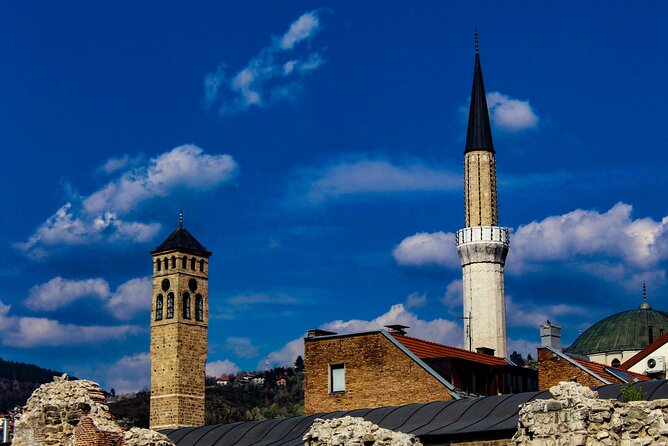
From there, the schedule shifts into older layers of the city with quick stops that explain how Sarajevo evolved. The Emperor’s Mosque stop is short, but it’s positioned as the city’s oldest mosque in the route, with time to learn how the city got its name.
Even in brief segments, these pauses matter. They help you connect the architecture and the street layout you’ll keep seeing later. Without that context, Sarajevo’s religious mix can feel like random landmarks. With it, the city starts to read like a timeline.
The Seven Brothers, Saint Anthony, and Sarajevo’s Ottoman-era footprint
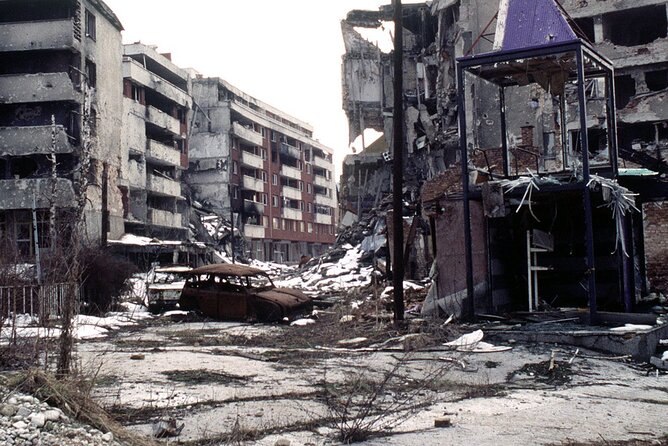
Next you’ll move through a set of culturally specific stops that feel like small chapters.
- Jedileri (the Tomb of the Seven Brothers): You’ll visit a serene memorial linked to local legends and historical significance.
- Church of Saint Anthony of Padua: A Catholic stop that shows how deeply different communities are woven into Sarajevo’s streets.
- Sarajevska Pivara: You’ll learn about the history of the first brewery in the Ottoman Empire, giving you a different angle on everyday life and industry.
What I like about these segments is that they don’t treat Sarajevo as only conflict and memorials. They show religion, craft, food, and ordinary development—things that existed long before the war and didn’t disappear with it.
Trebević cable car and the Bob Trail: views plus movement
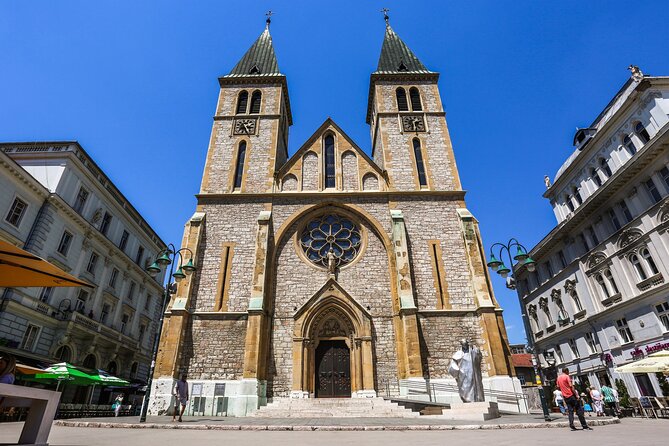
Trebević is where the tour gives you a break from constant city-street looking. You’ll ride the Trebević cable car for breathtaking views from the city up toward the mountain.
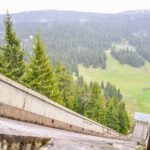
Then you’ll walk part of the historic bobsleigh and luge track—the Bob Trail—where the route is decorated with graffiti art. It’s not just a scenic stop. You get a little exercise and a very “here’s how sports and history overlap” moment.
Planning tip: wear comfortable shoes. Even though the segments are scheduled as short-to-medium, you’ll likely be walking on uneven areas near the trail. If you hate hills, you’ll still be fine, but you should expect some incline.
Also, budget time and money: the cable car admission is part of the extra €30 entry package.
- Fall of Yugoslavia, Sarajevo War Tour with Tunnel of Hope Museum and Frontlines
★ 5.0 · 1,314 reviews
The old town and craftsmanship: Bascarsija, Kazandžiluk, and Morica Han
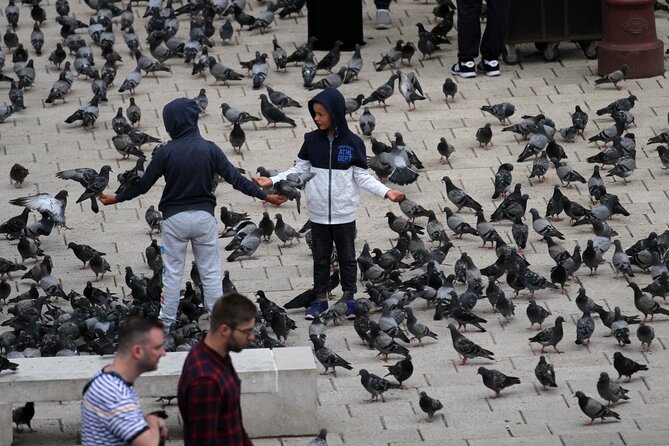
Back in the center, the tour leans into Sarajevo’s traditional lanes.
- You’ll stop for time in Bascarsija, with that included coffee-tasting break.
- You’ll also visit Kazandžiluk, focused on older crafts still practiced in Sarajevo.
- Morica Han adds a quieter Ottoman-in. If you like architecture with age and purpose, this is a good pause.
This section is where the tour starts feeling less like a checklist and more like Sarajevo in daily life. The craft street and the han stop are shorter, but they connect you to the city’s handwork culture—something you’ll notice again later when you walk through the old bazaar areas on your own.
East-meets-West stops: mosques, cathedrals, and Sarajevo’s symbolic crossroads
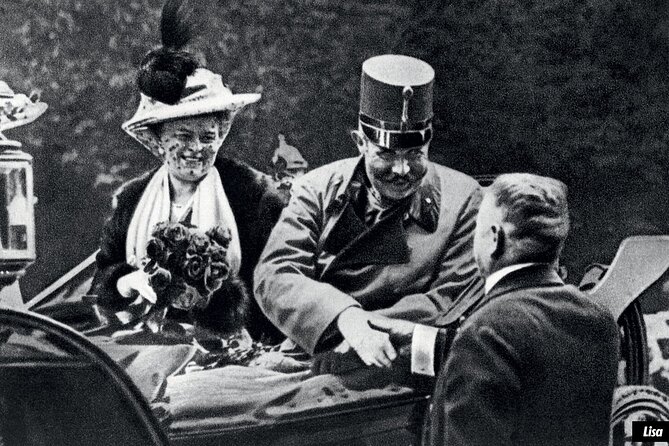
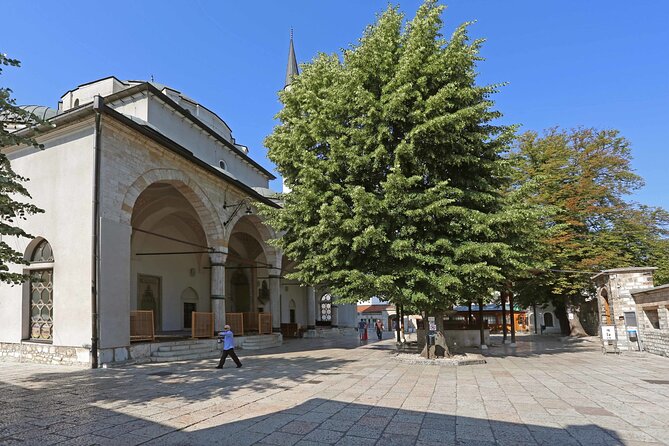
One reason this tour works is that it treats Sarajevo’s mix of religions as normal, not as an oddity. You’ll pass or visit major landmarks across different traditions, including the courtyard of Gazi Husrev-beg Mosque, described as an epicenter of local Muslim life.
You’ll also encounter:
- Sarajevo City Hall, known as a symbol of the city’s multicultural heritage.
- The Sarajevo Meeting of Culture point, standing where East meets West.
- Katedrala Srca Isusova, a Catholic cathedral stop.
- The Serbian Orthodox Cathedral, noted for being the city’s largest Orthodox church with impressive domes.
A practical consideration: a few of these places are marked as not included for admission. That doesn’t mean you can’t see them from outside, but it does mean you should decide if you want to go inside. If interior access matters to you, the €30 entry package becomes important.
Jewish Museum and the Sarajevo Haggadah thread
The Jewish Museum of Bosnia and Herzegovina is one of the key cultural-history stops on the route. You’ll have time to learn about Sarajevo’s Jewish community and the Sarajevo Haggadah.
Even if you’re not a museum person, this stop tends to make the rest of the day click. It adds a layer to the city’s identity story, not just an isolated “fact stop.”
As with other major entrances, this is listed as not included and is part of the €30 entry package.
House of Spite and Sebilj Fountain: the fun, local side of Sarajevo
Not every highlight is heavy. You’ll also get a couple of local-color stops that are easy to photograph and hard to forget.
- House of Spite: You’ll hear the quirky story of a house that had to be moved brick by brick.
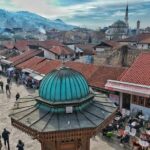
- Sebilj Brunnen (Fountain): You’ll have a moment to sip fresh water from this iconic Sarajevo symbol.
These feel light compared to the war segment, but they’re not filler. They remind you that Sarajevo has humor, stubbornness, and daily rituals—things that survive even the darkest periods.
Siege memory made practical: Sniper Alley and the Tunnel of Hope
This is the part of the day you remember most.
First comes Sniper Alley, a drive through one of the most dangerous streets from the Siege of Sarajevo. It’s described as dangerous due to what happened there during the war, and it’s framed in the context of understanding the city’s scars.
Then you’ll reach the Sarajevo War Tunnel (Tunnel of Hope), with a full hour on-site. The tour describes it as the lifeline that saved Sarajevo during the war. This is a longer stop than most, so you don’t just pass by—you get time to take it in.
A balanced note: this is emotional history. If you’re sensitive to war-related sites, consider how you’ll manage your energy. Taking breaks during earlier food stops helps, and it also keeps the day from feeling emotionally back-to-back without recovery.
Price and value: what $84.11 gets you, plus the €30 entry bundle
At $84.11 per person, this tour isn’t trying to be the cheapest way to see Sarajevo. Instead, the value comes from the structure: scheduled tastings, air-conditioned transport, and a long route that hits both historic and cultural landmarks in one day.
Here’s the trade-off you should plan for:
- The tour price includes coffee/tea with baklava tasting, air-conditioned vehicle time, and lunch via a traditional food tasting.
- The entry fee package is €30 per person, and it covers paid admissions listed as the cable car, Bey’s mosque, synagogue (through the Jewish Museum stop), Orthodox Church, and the Tunnel Museum.
So your real budget depends on whether you want to go inside the major buildings and museums. If you only want quick outside views, you might still pay the bundle if it’s how the operator handles admissions for your group. If you do want the interior experiences at those stops, the €30 bundle is the difference between casual seeing and deeper understanding.
For many first-timers, that’s a good deal.
How to plan your day: timing, walking style, and comfort
This runs about 7 to 8 hours, starting at 9:00 am and returning back to the meeting point. With a schedule full of short stops (a few minutes each) plus a few longer segments (coffee and meal time, plus the tunnel hour), the day moves steadily.
A few practical tips:
- Wear walking shoes. Even when time per stop feels short, the day adds up.
- Bring a light layer. Weather in Sarajevo can shift, and you might feel it more on the Trebević ride and Bob Trail walk.
- Use the included transit strategically. Air-conditioned vehicle time is part of the experience, not downtime—use it to reset between neighborhoods.
- If you have mobility limits, confirm your comfort level with the walking portions. The tour does say most travelers can participate, and there’s a near public transportation connection, but it’s still a full-day route.
Also, the experience requires good weather. If conditions are poor, it may be canceled and you’ll be offered a different date or a refund.
Who should book this and who might want a different style
This tour is ideal if you want:
- a first-time Sarajevo overview with food breaks
- a balanced blend of Ottoman-era, multi-faith landmarks, and Siege memory
- a small group day (max 15) with a guide who can keep history understandable
It may be less ideal if you:
- prefer slower museum-heavy days with lots of time inside each building
- hate long days with lots of short viewing and driving between stops
One last thought on guides: the name Tarik comes up as especially praised for keeping the tour at the right pace and staying impartial with historical context. If you get someone with that style, you’ll likely enjoy the day more.
Should you book the Best of Sarajevo Ultimate Full-Day Experience?
I’d book it if you’re in Sarajevo for a limited time and you want the city’s main storylines in one day—food, old town texture, major houses of worship, and the war history that explains why Sarajevo feels the way it does today.
I’d hesitate if you’re the type who needs long quiet time in one area and doesn’t want a packed schedule. In that case, you may do better with a half-day or a theme-based tour that lets you linger.
For most visitors, though, this is strong value: you’re paying for guidance, transport, and built-in meals, and the paid admissions are clearly identified so you can plan your budget.
FAQ
How long is the Best of Sarajevo Ultimate Full-Day Experience?
It lasts about 7 to 8 hours.
What time does the tour start?
The tour starts at 9:00 am.
What languages is the tour offered in?
The tour is offered in English.
What is included in the price?
Coffee and/or tea with Bosnian coffee and a baklava tasting are included, along with an air-conditioned vehicle and lunch as a traditional food tasting.
What’s not included in the price?
You need to budget for an entry fee package of 30€ per person, which includes the cable car, Bey’s mosque, Synagogue, Orthodox Church, and the Tunnel Museum.
What is the group size limit?
The tour has a maximum of 15 travelers.
You Might Also Enjoy
More Full-Day in Sarajevo

More Tour Reviews in Sarajevo
- Fall of Yugoslavia, Sarajevo War Tour with Tunnel of Hope Museum and Frontlines
★ 5.0 · 1,314 reviews