REVIEW · MOSTAR
Mostar War Heritage Walking Tour
Book on Viator →Operated by Fortuna Trade Tours Mostar d.o.o. · Bookable on Viator
War stories in Mostar change your pace.
This walking tour pairs two things I really value: a licensed, authorized guide who can explain what you’re seeing, and time at the Old Bridge area where the engineering and the memory sit side by side. I also like how the route is planned around real places tied to the 1992–1995 conflict, so the history doesn’t stay abstract.
One possible drawback: parts of this experience deal with painful events, including personal war stories and a cemetery stop, so it may feel heavy if you prefer lighter sightseeing.
In This Review
- Key moments you’ll remember
- First impressions: where this tour fits in your Mostar day
- Price and what you get for your money
- Meeting point at Spanish Square: convenient and central
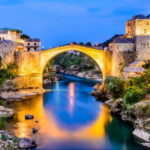
- Stop 1: Mostar Old Bridge (Stari Most) and the engineering story
- Stop 2: Liska park burial grounds and why this stop matters
- Spanish Square: name origin, war memory, and Stara Gimnazija
- Kujundziluk bazaar lanes: artisan craft you can still see
- Carinski Bridge and the quieter crossings that shape the city
- Kriva Ćuprija: the Crooked Bridge and the “prototype” idea
- The short film and personal stories: what to expect emotionally
- The guide experience: what good guiding looks like here
- Practical tips so you get more out of it
- Who should book this tour (and who might skip it)
- Should you book the Mostar War Heritage Walking Tour?
- FAQ
- Where does the tour start?
- What time does the tour begin?
- How long is the tour?
- Is the tour offered in English?
- What’s included in the price?
- What sights are part of the walk?
- Are admission tickets required for the stops?
- Is lunch included?
- Is this a private tour?
- What if I need to cancel?
Key moments you’ll remember
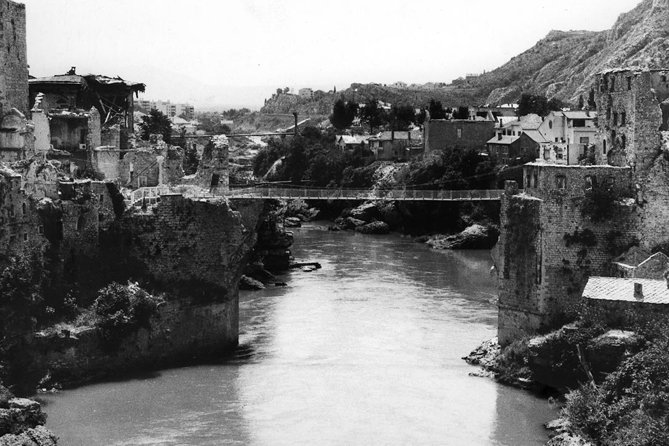
- Stari Most technical details like the one-arch span and how it was built centuries ago
- A stop in Liska park cemetery space, where Mostar had no other options during the war
- Spanish Square and Stara Gimnazija, including the name tied to Spanish UNPROFOR troops
- Kujundziluk artisan lanes, where coppersmiths and tanners shaped the old economy
- Less-famous bridges like Carinski Bridge and Kriva Ćuprija, which make the walk feel less repetitive
First impressions: where this tour fits in your Mostar day
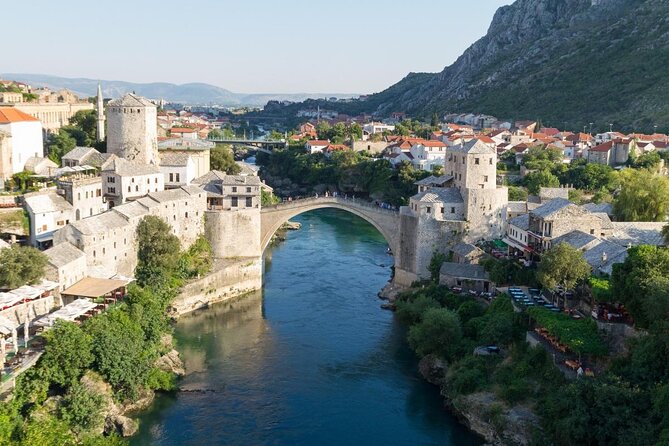
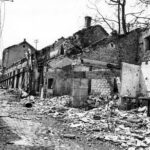
Mostar can be a one-bridge town if you’re not careful. This tour helps you avoid that trap. You start at Spanish Square and spend a couple of hours walking through the city’s key layers: Ottoman-era architecture, Austro-Hungarian crossings, and the scars of the 1990s.
I like that this isn’t just a “look and go” style walk. You’re guided through what the spaces meant before the war, what happened during the war, and what reconstruction looks like when you’re standing in it. Even better, it’s offered in English and runs about 2 to 3 hours, so it won’t swallow your whole day.
The price is $47.66 per person, and it’s not just about being taken from stop to stop. It includes a professional authorized guide, plus a short film that helps stitch together the bigger picture. If you’re traveling in a group, there can be group discounts, which usually makes the value feel even better.
You can also read our reviews of more walking tours in Mostar
Price and what you get for your money
At roughly a few dollars per minute, you’re paying for three things:
- A guide who can connect architecture to events
- Guided time at places that carry emotion, not just sightseeing value
- A short film that gives context so the walk doesn’t feel like random facts
Lunch isn’t included (and tips aren’t included either), so plan on eating separately if you’re building a full day. That’s normal for city walking tours, but it matters: this experience is timed as a walk, not a meal.
If you’re the type of traveler who likes learning while moving, this usually feels like a fair deal. If you’re only here for photos and you hate guided discussion, you might decide it’s more than you want.
Meeting point at Spanish Square: convenient and central
You meet at the Spanish Square skate plaza (Španski trg). The start time is 9:00 am, and the tour ends back at the meeting point.
Starting at Spanish Square is practical. You’re already in Mostar’s main public hub, and it’s an easy place to orient yourself before you start linking streets to stories. Also, the timing means you can often catch calmer streets early, before the busiest foot traffic.
This is also a private tour/activity, so only your group participates. That matters if you want questions answered without waiting behind a larger crowd.
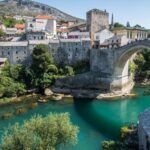
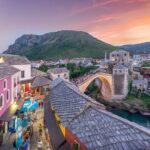
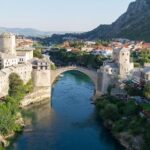
Stop 1: Mostar Old Bridge (Stari Most) and the engineering story
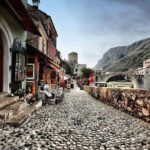
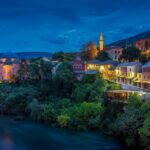
The tour begins where Mostar is most famous: Mostar Old Bridge. It’s not only a postcard. The guide focuses on how it came to exist, starting from an earlier wooden bridge that hung on chains and required careful crossing. That detail alone helps you understand why this spot mattered so much.
You’ll also hear about how the old bridge wore out in the 16th century and how Mostar asked authorities in Istanbul to build a new bridge using quality materials. The designer is named as Hajrudin, a student of Sinan, the famous 16th-century Turkish architect. That connection makes the bridge feel part of a wider world, not just a local monument.
Key measurements the guide points out:
- A span of 28.70 meters
- One big stone arch
- A width of 4.49 meters
- About 21 meters high from the summer water level
- Built from square stones connected with iron hooks and cast in lead
Then, the tour ties it back to why the old town grew around it: forts, towers, and gates developed around this monument, creating an architectural whole. I like this approach because you don’t just learn numbers. You understand why the town’s shape makes sense.
Stop 2: Liska park burial grounds and why this stop matters
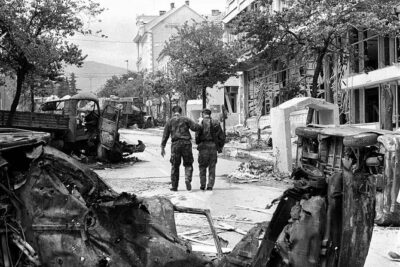
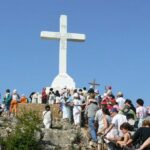
Next comes Mezarje / Groblje Liska park, a historic green space originally established in 1954. During the 1992–1995 war, the park became a burial site for civilians and soldiers of various nationalities, because there weren’t enough available cemeteries.
This is the most serious stop on the route. Even if you’re not a “history” person, you’ll feel the difference immediately. The value here is simple: you see that the war wasn’t only fought in headlines. It hit ordinary life, and it left permanent marks on the ground you’re walking on.
A practical tip: slow your pace a bit. Take your time looking, then listen. Photos are fine if you can do it respectfully.
You can also read our reviews of more historical tours in Mostar
Spanish Square: name origin, war memory, and Stara Gimnazija
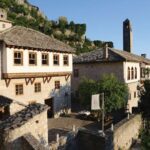
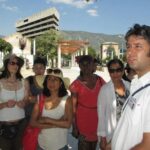
From there, the tour moves to Spanish Square, a central Mostar spot where the guide explains the name. In 1995, it was named to honor 21 Spanish troops killed at UNPROFOR during the last war. That turns the square from a landmark into a memorial.
Dominating the scene is Stara Gimnazija (Old Gymnasium). The building’s construction finished in 1902, and it’s described as one of the oldest schools in ex Yugoslavia. The guide also shares that the building carried a poet’s name—Aleksa Šantić—for a time.
Architecturally, it’s noted as Moorish Revival, also called Neo-Moorish style, and it’s listed as a national monument. I like that you get both: why it looks the way it does, and why it became part of the city’s identity.
If you’re the kind of visitor who likes seeing how different cultures leave fingerprints on the same street, this stop will click for you. It’s not just war memory. It’s also education, design, and local pride.
Kujundziluk bazaar lanes: artisan craft you can still see
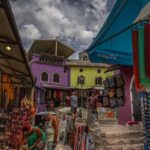
Then it’s time for a change of pace at Bazar Kujundziluk on the left bank of the Neretva. The guide explains that the area was historically called Kujundžiluk due to the many coppersmiths (Kujundžije). Tailors were part of the scene too, but the most numerous artisans were the tanners, described as masters of processing leather.
Today, the area functions as a cluster of small workshops and handicrafts. This stop isn’t about ignoring the past. It’s about showing what Mostar did to survive and earn a living—long before the 1990s, and long after.
If you want to shop, this is the moment. The craft focus makes it feel less like a tourist strip and more like a working district (even if you’ll still see plenty of visitors).
Carinski Bridge and the quieter crossings that shape the city
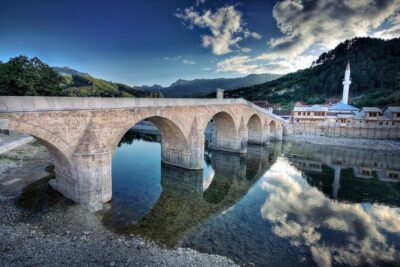
The tour also includes Carinski Bridge (Customs Bridge), described as less famous than the Old Bridge but historically significant. It spans the Neretva River just north of Stari Mostar and was built during the Austro-Hungarian period.
This stop is a good reminder that Mostar didn’t rely on a single bridge. City life needs multiple crossings—markets, neighborhoods, daily movement. Carinski Bridge helps you understand the city’s layout in a way that feels practical rather than purely symbolic.
Kriva Ćuprija: the Crooked Bridge and the “prototype” idea
To round things out, you’ll visit Crooked Bridge (Kriva Ćuprija). The guide frames it as a smaller, tucked-away counterpart—believed to be a miniature prototype of Stari Most.
It dates back to the 16th century and crosses the Radobolja River with arches that feel intentionally similar. It’s the kind of stop where you can look up and realize the city’s bridge language is a consistent theme.
This is also where the walk feels especially satisfying if you like variety. You’re not just doing one highlight spot over and over. You’re learning how different parts of Mostar connect.
The short film and personal stories: what to expect emotionally
One of the tour highlights is that you’ll watch a short film about Mostar’s history. I like when tours do this, because it prevents the walk from turning into a string of disconnected facts. You get context, then you walk and test what you just learned against real streets and bridges.
The guide also shares personal stories related to the war. Some guides leading this tour have shared that they lived through atrocities as adolescents, then talked about the city’s beauty and reconstruction afterward. The key is tone: the goal isn’t shock for its own sake. It’s understanding—how people make sense of what happened and still build a life.
This is where you’ll feel the tour’s heart. If you want a gentle route through tragedy, you might need a different kind of sightseeing day. If you want honest context, this part makes the experience.
The guide experience: what good guiding looks like here
This tour is led by a professional authorized guide, and the style matters a lot. In particular, the guides associated with this experience are described as friendly, flexible, and knowledgeable, and some tours have been run for small groups.
You’ll feel it in the small choices:
- how the guide adjusts pacing around sensitive stops
- how they explain architecture without making you memorize measurements
- how they keep the stories human instead of turning them into a lecture
I also appreciate that this tour is designed for groups that stay together. Private format means you can ask follow-ups without waiting your turn.
Practical tips so you get more out of it
Here’s how to make this tour land well:
- Bring comfortable shoes. This is a walk and you’ll be outside for most of it.
- Keep your phone ready, but don’t use it everywhere. At the cemetery stop, let silence do its job.
- If you’re sensitive to war topics, tell the guide early. A good guide can help you calibrate what you want to hear.
- If you plan to eat afterward, consider grabbing lunch after the tour. Lunch isn’t included, and you’ll probably want time to decompress.
Also, since it’s in English and starts at 9:00 am, plan for a calm morning. You’ll get more from the explanations when you’re not rushing.
Who should book this tour (and who might skip it)
Book it if:
- You care about how history lives in the street layout
- You want a guided walk that includes war memory, not just monuments
- You’ll appreciate bridges as engineering and as symbols
- You like learning with a guide, not only reading plaques
Skip it if:
- You want only light, photo-based sightseeing
- You don’t want personal war stories or cemetery stops
- You’re short on time and want a faster, purely architectural route
Should you book the Mostar War Heritage Walking Tour?
I think you should book if you want Mostar to make sense beyond the Old Bridge photo. The mix of architecture, memorial places, artisan streets, and a short film gives you a fuller picture than a simple loop.
At $47.66, it’s not a budget walk, but you’re paying for an authorized guide and for time spent in places that deserve more attention than a quick glance. If you can handle emotionally heavy material with respect, this tour is one of the most meaningful ways to spend a few hours in Mostar.
FAQ
Where does the tour start?
It starts at Spanish Square skate plaza, Španski trg, Mostar (plus code 8RV4+9QM).
What time does the tour begin?
The start time is 9:00 am.
How long is the tour?
The duration is about 2 to 3 hours.
Is the tour offered in English?
Yes, it’s offered in English.
What’s included in the price?
It includes a professional authorized guide. You’ll also have a mobile ticket.
What sights are part of the walk?
The stops include Mostar Old Bridge, Mezarje / Groblje Liska park, Spanish Square, Bazar Kujundziluk, Carinski Bridge, and Crooked Bridge (Kriva Ćuprija). A short film about Mostar’s history is also part of the experience.
Are admission tickets required for the stops?
The tour information lists admission ticket free for the stops described at Mostar Old Bridge, Liska park, Spanish Square, and the other listed stops.
Is lunch included?
No. Lunch is not included (optional).
Is this a private tour?
Yes. It’s private, so only your group participates.
What if I need to cancel?
You can cancel for a full refund up to 24 hours before the experience’s start time. Cancellation within 24 hours of the start time isn’t refundable.