Mostar makes time travel feel real. This guided walk is a smart way to learn the city fast, and I especially like the UNESCO Old Bridge views plus how local guide Marko ties major eras to what you’re seeing on the ground.
You’ll cover everything from the Ottoman period through Austro-Hungarian fin de siècle influence, then on to Yugoslavia’s socialist-realism era—right in the Old Town core near the Neretva.
The main thing to watch is comfort. It’s a roughly 2-hour walking tour on cobblestones, so wear good shoes and be ready for weather shifts.
If you want an easy start in central Mostar with a clear sense of where to wander next, this is a good value pick.
In This Review
- Key highlights worth your attention
- Why this Mostar walking tour is a smart first day move
- Finding iHouse Travel: simple logistics in the Old Bridge area
- The Old Bridge moment: using a landmark to understand everything else
- Ottoman-to-Austro-Hungarian Mostar: what the guide makes visible
- Yugoslavia and the “war-torn financial district” thread you can’t ignore
- The 2-hour pacing: what you get, and what you don’t
- Price and value: why $23.72 can make sense here
- Weather and route reality: how guides adapt on the ground
- Who should book this Mostar City Tour
- Should you book it?
- FAQ
- How long is the Mostar City Tour?
- What does the price include?
- Is food or drinks included?
- Where is the meeting point?
- What time does the tour start?
- Can I cancel for a full refund?
Key highlights worth your attention
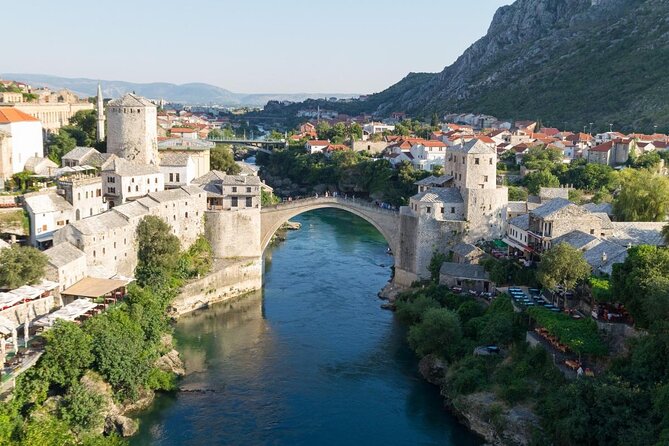
- UNESCO Old Bridge first impression: You get that classic Mostar view early, as a visual anchor for the rest of the story.
- Three eras in one coherent route: Ottoman, Austro-Hungarian, and Yugoslav periods are connected through the streets you walk.
- Marko’s lived perspective on conflict: One standout strength is how Marko brings history to life, including context around the 1991–1993 war period.
- Easy meeting spot near the river: Meet at iHouse Travel in the historical center, about 200 meters from the Old Bridge.
- Small-group feel when it works out: Even though the cap is 55, the experience can still feel personal enough for questions and discussion.
Why this Mostar walking tour is a smart first day move
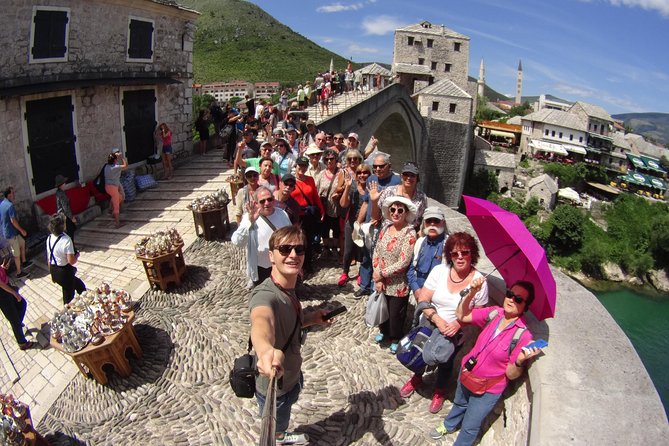
Mostar has a way of making you want to slow down. But if it’s your first time, you can also feel a little lost—too many streets, too many layers, not enough context. That’s exactly why a focused guided loop like this one pays off.
The tour’s big strength is the way it turns scenery into understanding. You don’t just see old buildings and bridges. You hear what shaped them—Ottoman influence, Austro-Hungarian fin de siècle culture, then the later Yugoslav period. Walking the Old Town core matters, because that’s where the “why” shows up in the street pattern and the built environment.
Another reason I like it: it’s built for people who don’t want a long, exhausting day. It’s roughly two hours—short enough to keep energy for exploring afterward, yet long enough for your brain to start organizing what you’re seeing.
You can also read our reviews of more city tours in Mostar

Finding iHouse Travel: simple logistics in the Old Bridge area
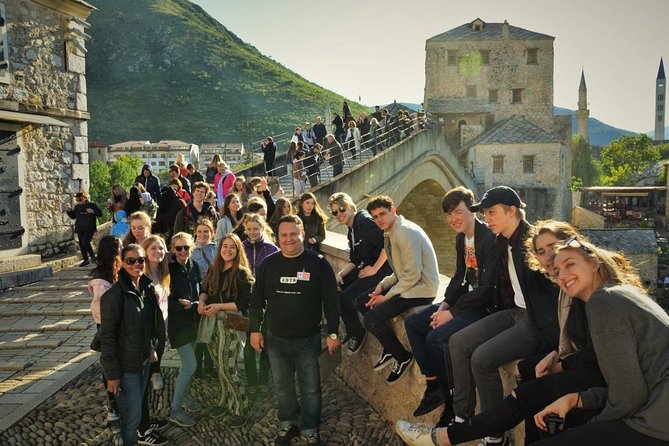
Meeting point matters. When you’re in a place like Mostar, a confusing start can waste the best part of the day—your momentum.
You’ll meet at iHouse Travel doo, on Onescukova 25, in the historical center. The key detail: it’s about 200 meters from the Old Bridge, on the right/west side of the river Neretva. That’s close enough that you can orient yourself quickly even if you’re arriving from a bus stop or walking in from another part of town.
The tour also returns you to the starting point afterward. So you don’t have to worry about ending up across town with no plan.
The Old Bridge moment: using a landmark to understand everything else
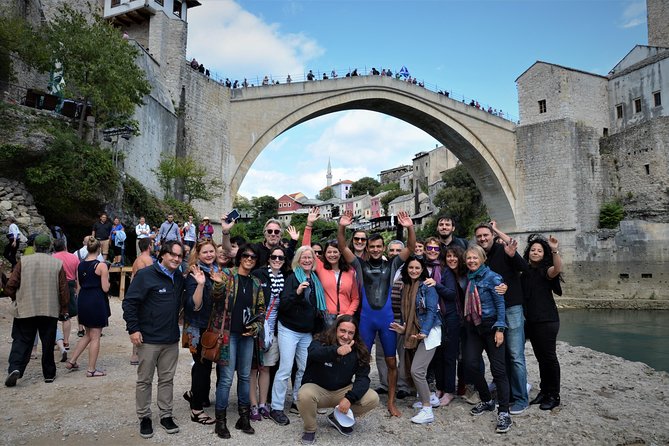
The Old Bridge is the headline, but it’s more than a photo spot. Think of it as your visual compass for the rest of the walk.
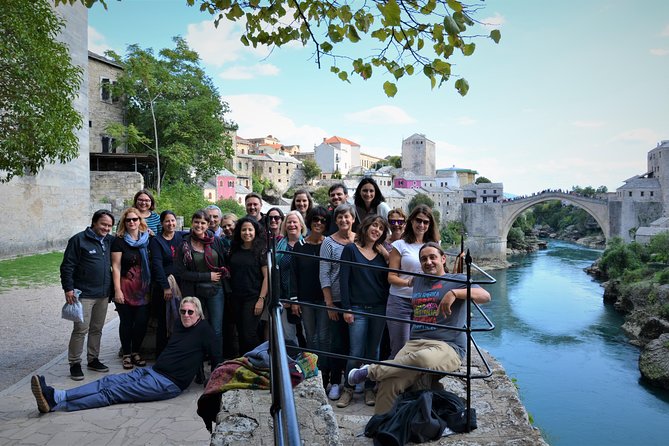
From the start zone near iHouse Travel, the itinerary leads you toward the Old Bridge area, where you can take in the UNESCO-listed structure and the Neretva river setting around it. That matters because the bridge helps you “place” the city in your mind. When you later move into other quarters and see different architectural styles or street rhythms, you’ll connect them back to this central reference point.
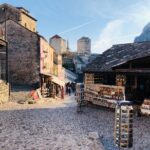
This is also where you’ll notice the feel of Mostar at street level: cobblestones underfoot, the shade from plane trees, and the way the old town’s narrow lanes funnel you toward key views. Those small physical details aren’t trivia—they help you understand how the city works as a lived space, not just a sightseeing lineup.
Practical note: if you’re visiting in hot weather, the plane-tree shade can be a real comfort break. If you’re visiting in rain, cobblestones can get slick, so keep that in mind for steady footing.
Ottoman-to-Austro-Hungarian Mostar: what the guide makes visible
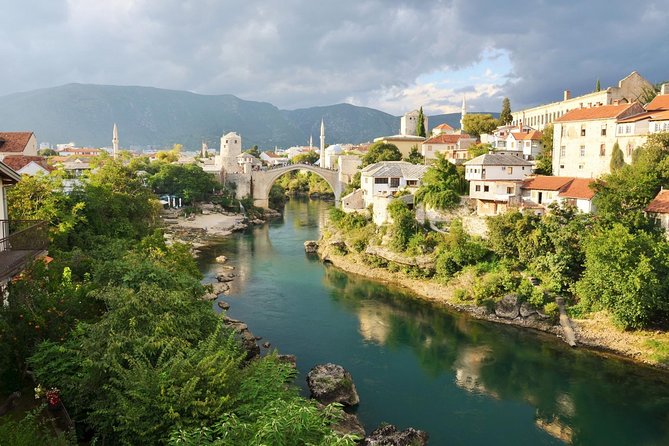
One of the tour’s best features is that it doesn’t treat “history” like a list. It frames it as a series of layers you can still walk through.
As you move through the Old Town core, your guide focuses on the Ottoman-era period and then the later Austro-Hungarian influence described as romantic fin de siècle. You’ll hear how those eras affected daily life, how buildings and streets reflect changing tastes and power, and why Mostar developed its own local character instead of turning into a generic “historic town.”
Here’s why you’ll care: without this kind of explanation, it’s easy to see Mostar as a collage of pretty facades. With the guide, you start noticing patterns—how different influences can sit side by side, and how the city’s geography and river setting shaped growth.
Also, the experience is designed for comprehension while walking. You’re not stopping for long lecture sessions. You’re learning in context, as you pass what the guide is talking about. That’s a big value-add on a short schedule.
Yugoslavia and the “war-torn financial district” thread you can’t ignore
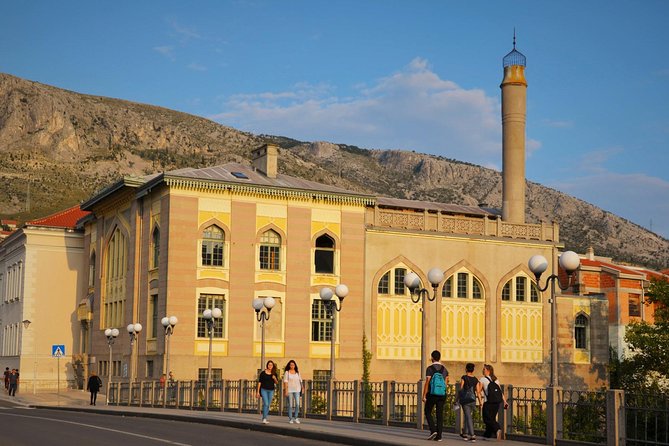
Mostar isn’t only old romance and riverside views. It also carries the marks of conflict and rebuilding.
The tour specifically addresses the Yugoslav period and socialist realism, then moves you through areas connected to a war-torn financial district. Even without specific building names provided in advance, the idea is clear: you’ll be guided to the parts of town where modern political history and its aftermath are visible in the urban landscape.
This is also where Marko’s role tends to shine. In the most praised moments, his personal approach stands out—especially the way he explains the independence-era conflict from firsthand proximity to the events. Hearing that kind of context from a local perspective changes the tone of what you’re seeing. A damaged or altered area stops feeling random. It becomes part of a broader story you can actually understand.
One consideration: this section of the walk involves heavier themes. If you prefer purely light sightseeing, you might find it emotionally intense. But if you want to understand Mostar as it is today—not just as it looks in postcards—you’ll likely appreciate the honesty.


The 2-hour pacing: what you get, and what you don’t
This tour is timed for orientation. Think of it as getting your bearings fast, not as covering every corner of town.
At roughly 2 hours, you’ll have enough time to:
- see the Old Bridge area and surrounding Old Town core
- walk through key zones connected to the Ottoman, Austro-Hungarian, and Yugoslav periods
- absorb context that helps you later pick good self-guided stops
What you should not expect: a full-day, everything-you-can-see marathon. This is a curated loop focused on the city’s most significant monuments and the historical thread connecting them. If you want to go deeper on one theme—architecture, religion, riverside life, or the post-war recovery—you’ll enjoy following up after the tour on your own.
If you’re planning your day, I suggest this as your first major activity. You’ll learn enough to make later wandering more meaningful, because you’ll know what you’re looking at and why it matters.
Price and value: why $23.72 can make sense here
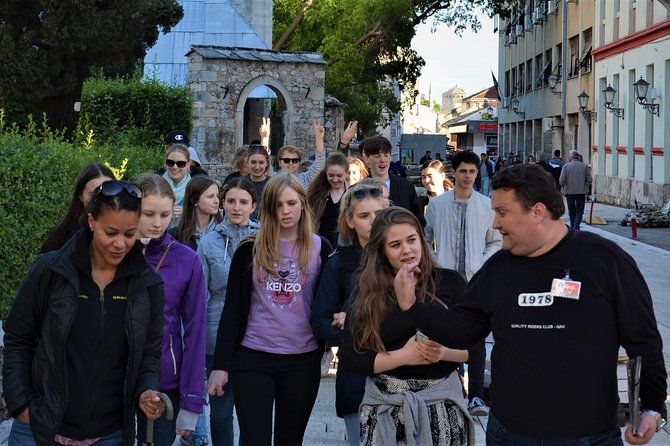
At $23.72 per person for an approximately two-hour guided walk, you’re paying for something you’d otherwise struggle to replicate on your own: a coherent explanation tied directly to what you see.
Is it a bargain? For Mostar, it’s a solid value when you look at what’s included: a professional guide and a local guide. That dual guidance matters because one person can handle the broader narrative, while the local perspective brings emotional realism and street-level clarity.
It also helps that the tour is offered in English, and it runs with a mobile ticket. Less time figuring out paperwork means more time looking at the city.
One more value note: food and drinks are not included. That’s common for walking tours, but it’s good to plan for. If you’re starting at 9:00 am, you’ll likely want a coffee or snack before you meet, or budget a quick stop afterward so you’re not hunting while your energy drops.
Weather and route reality: how guides adapt on the ground
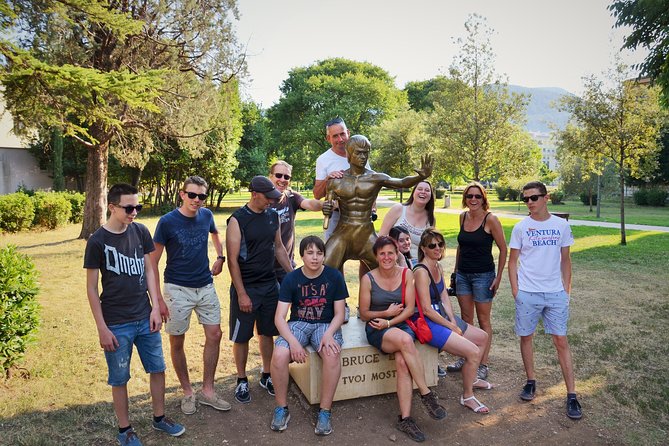
Mostar’s weather can change your day. Even if the tour has a planned flow, rain and wet cobblestones can turn the walk from pleasant to slippery.
A practical plus here is the guide style. On at least one rainy day, Marko adjusted plans and helped the group shift into a smaller setup with additional planned stops. The big takeaway for you: if weather is messy, don’t assume the worst. A local guide often knows how to manage comfort and timing while still delivering the key experience.
My advice: check conditions the morning of your tour, and come prepared. Comfortable walking shoes matter more than fancy sandals.
Who should book this Mostar City Tour
This tour is a great fit if you:
- are in Mostar for a short time and want context fast
- like learning history through streets and landmarks, not just museum walls
- want a local voice discussing how different eras shaped daily life
- prefer a walking pace that won’t eat your whole day
It may be less ideal if you:
- strongly dislike topics connected to conflict and rebuilding
- need a highly sedentary experience (it is a walk on cobblestones)
Should you book it?
Yes—if you want the kind of Mostar experience that helps you understand what you’re seeing, rather than just moving from viewpoint to viewpoint. For $23.72, you’re getting guided structure, English commentary, and a start right where most people want to be anyway: near the Old Bridge.
Book this tour if you’re a first-timer, or if you’ve been wandering around Mostar and felt like the pieces weren’t connecting. It’s a simple way to get the story straight early, so your later self-guided time actually feels like discovery.
FAQ
How long is the Mostar City Tour?
The tour lasts about 2 hours.
What does the price include?
It includes a professional guide and a local guide.
Is food or drinks included?
No, food and drinks are not included.
Where is the meeting point?
You meet at iHouse Travel doo at Onescukova 25 in the historical center of Mostar, about 200 meters from the Old Bridge on the right/west side of the river Neretva.
What time does the tour start?
The start time is 9:00 am.
Can I cancel for a full refund?
Yes. Cancellation is free if you cancel up to 24 hours in advance of the experience start time.