REVIEW · MOSTAR
Mostar Private Walking Tour – where East meets West
Book on Viator →Operated by Herzeg Day Tours · Bookable on Viator
Some cities hit you fast. Mostar mixes East and West in one compact, walkable route. You get a private local guide, then a smart mix of big-photo stops and smaller stories that explain why this river city looks the way it does.
I especially like the access and pacing. The UNESCO Old Bridge stop includes time connected to the famous jumpers, plus you also get to step into the city’s living craft scene in Kujundziluk. The one thing to consider: a couple of the most “active” viewpoints involve stair climbs and mosque entry rules, so bring comfy shoes and expect some walking.
In This Review
- Key points I think you’ll care about
- Mostar in Two Hours: private pace and what it means
- From Franjevačka Crkva to your first bridge views
- UNESCO Old Bridge and the jumper club tradition
- Crooked Bridge, Radobolja, and the Bridge of Love
- Kujundziluk Bazaar: crafts, families, and real hospitality
- Koski-Mehmed Pasha Mosque: dome views and the minaret climb
- Austro-Hungarian bridges, Spanish Square, and the war that shaped the city
- Park Zrinjevac and the war-time reason parks became cemeteries
- Mostar Peace Bell Tower: a multicultural ending
- Price and value: what’s free, what may cost extra
- Who this Mostar private walk fits best
- Should you book this tour?
- FAQ
- FAQ
- How long is the Mostar private walking tour?
- Is the tour private?
- Is it available in English?
- Where does the tour start?
- Do I need to pay admission fees for the sights?
- Are children allowed?
- Is this tour refundable if I cancel?
Key points I think you’ll care about
- Old Bridge jumper tradition included: you’ll visit the jumpers’ premises and hear how the practice became part of Mostar’s identity
- Crooked Bridge plus a romance story over the Radobolja river, a tributary of the Neretva
- Kujundziluk Bazaar with craft families: you’ll see old techniques and meet people keeping them alive
- Koski-Mehmed Pasha Mosque with a minaret option: tourists are allowed to enter and climb the minaret
- Spanish Square and war context: the tour touches what happened, not just what looks pretty
- Peace Bell Tower finale: a clear ending centered on multicultural Mostar
Mostar in Two Hours: private pace and what it means
This is a private walking tour that runs about 2 hours. That matters in Mostar, because the city rewards slow attention: bridges, stone facades, and the riverfront details all change every few minutes. In a private format, you can ask the practical questions that always come up once you’re standing where history happened.
You’ll also be working with a guide in English, and you’ll use a mobile ticket for the tour. The tour includes hotel pickup and drop-off, which is a real time-saver if your base isn’t right in the old town core.
The itinerary is built around short, focused stops. Each one is timed so you’re not stuck standing in one spot too long, but you still get enough minutes to take photos and hear the story behind them.
You can also read our reviews of more walking tours in Mostar
From Franjevačka Crkva to your first bridge views
You start at Franjevačka Crkva u Mostaru (Franjevačka 1, Mostar). It’s a handy meeting point because it puts you in the old-town rhythm quickly, without wasting time crossing the city.
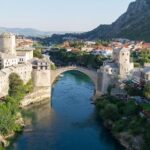
This matters because Mostar’s best moments usually arrive in layers. A bridge view is never just a bridge view here. It’s a connection point over the Neretva river, it’s a symbol people argue about, and it’s also where everyday life keeps flowing.
Once you’re moving, you’ll get a guided walk that builds logically. You’ll go from the city’s most famous monument to other bridge stories, then into market life, then into the religious landmark high above the river, and finally into the memorial-and-memory spaces. It’s a “see it, then understand it” route.
UNESCO Old Bridge and the jumper club tradition
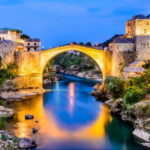
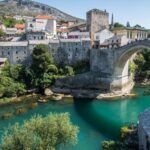
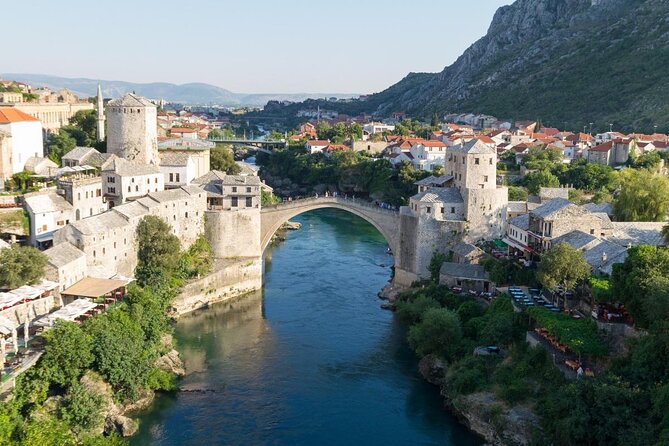
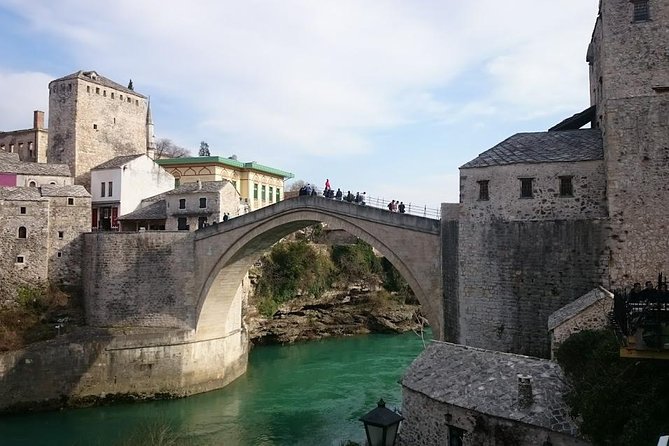
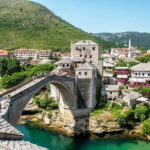
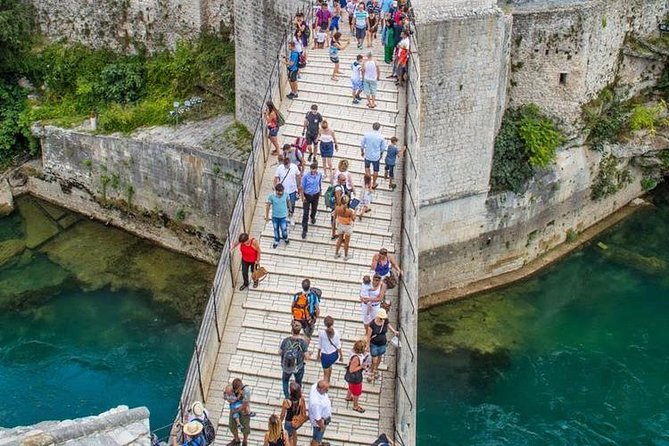
The tour’s headline stop is Mostar Old Bridge. Your accredited guide leads you and shares the important facts and stories tied to this UNESCO monument. This is where the city’s identity turns into a visual you can’t forget: the bridge shape, the river below, and the way people use that place as a stage.
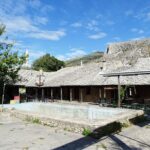
Here’s the standout part: because of the acquaintance and kindness of the famous jumpers from the old bridge, you get the privilege of visiting their premises and club. You’ll meet the jumpers and hear about the centuries-old tradition of attractive jumps from the UNESCO bridge. That extra time turns the Old Bridge from a photo stop into something closer to a living tradition.
Admission is listed as free for this portion, and the time here is about 20 minutes. That’s enough to get the meaning, take photos, and still keep momentum for the rest of the day.
Practical note: the topic is dramatic, so your guide will likely add detail that helps you understand why the tradition matters to locals.
Crooked Bridge, Radobolja, and the Bridge of Love
Next up is Crooked Bridge (Kriva Ćuprija), also known as the Bridge of Love. You’ll hear photos and stories tied to romance and local legend over the Radobolja river, which is a tributary of the Neretva.
This stop is short—about 5 minutes—but it’s a good change of pace after the gravity of the Old Bridge. Instead of focusing on one major monument, you get a second bridge view that’s tied to another kind of Mostar storytelling: the city’s mythmaking and its love of symbols.
If you like photography with context, this is worth it because you’re not just capturing an angle. You’re capturing a story people associate with that spot.
Kujundziluk Bazaar: crafts, families, and real hospitality
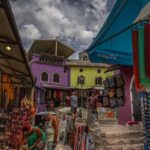
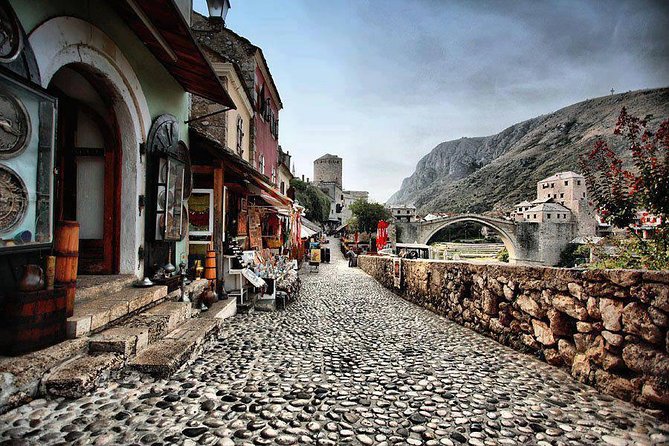
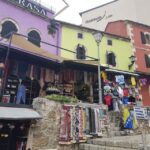
Then you step into Bazar Kujundziluk, described as the oldest bazaar in Herzegovina. The experience here isn’t about browsing aimlessly. It’s about understanding old crafts and how they’re kept alive.
You’ll learn about authentic handicrafts, and you’ll get the chance to talk with members of families who have been creating those crafts for centuries. Hospitality is built into the way this stop is framed, so it often feels less like a market visit and more like meeting the people behind the objects.
Time here is about 20 minutes, with admission listed as free. That makes Kujundziluk one of the best value parts of the tour because so much of it is “guided attention” rather than ticketed sightseeing.
If you’re buying anything, go slow. Ask what’s handmade, how long it takes, and what materials are used. Even if you don’t purchase, you’ll leave with a better eye for what’s authentic.
You can also read our reviews of more private tours in Mostar

Koski-Mehmed Pasha Mosque: dome views and the minaret climb
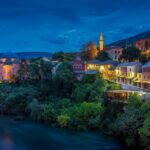
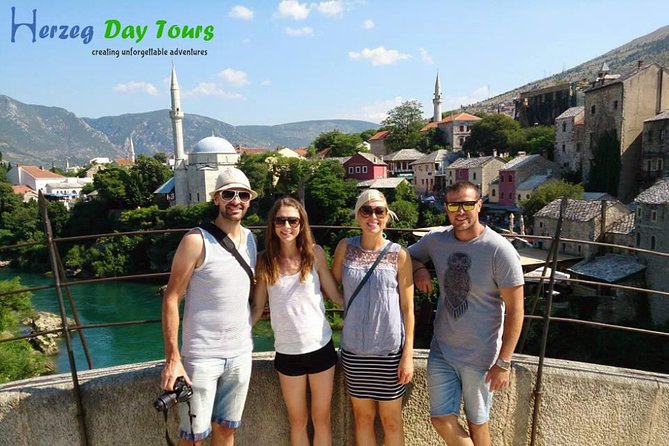
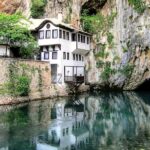
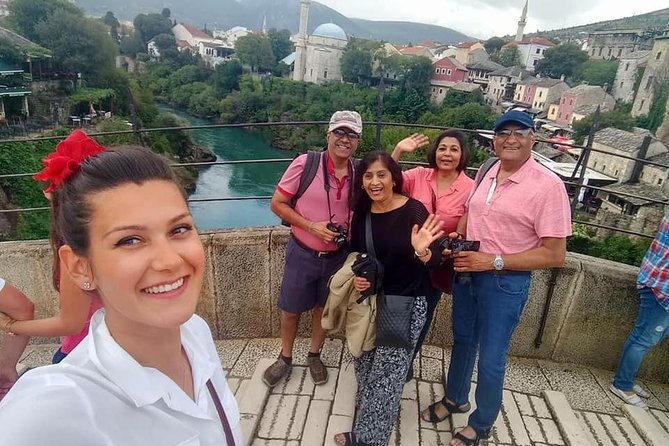
One of the most memorable sections is the visit to Koski-Mehmed Pasha Mosque. It sits above the river Neretva on a high rock under a dome, and it’s positioned so you can look back toward the Old Bridge area.
The tour notes that it’s one of the few mosques in the country where tourists are allowed to enter and even climb the high minaret. That minaret climb is a big reason this stop works for photographers. From up there, your view is built for capturing the Old Bridge in the wider city setting.
Time is about 15 minutes, but admission is listed as not included. That’s one of the few places where you should expect a separate fee, depending on what’s required at the moment you visit.
Even if you skip the minaret stairs for comfort, the mosque visit still adds a lot. It’s a direct “here’s the religious and architectural side of the city” counterpoint to the river-and-bridge identity.
Austro-Hungarian bridges, Spanish Square, and the war that shaped the city
After the mosque area, the walk crosses one of the most beautiful Austro-Hungarian period bridges. This is the transition moment where Mostar’s architecture starts telling multiple stories at once. From there, you move into a more park-and-building part of town.
Then comes Spanish Square. This stop adds the harder context. You’ll learn about what happened here and why it matters. The square was opened by King Juan Carlos of Spain in honor of the fallen members of the Spanish battalion within the UN peacekeeping forces. That’s a specific memorial connection, not a vague reference.
Time is about 5 minutes, and it’s admission free. It’s short on purpose. The goal isn’t to turn your walk into a long history lecture. It’s to make sure you don’t leave Mostar with only the postcard side.
Park Zrinjevac and the war-time reason parks became cemeteries
Next you’ll pass through Park Zrinjevac and the pedestrian area of Stefania’s promenade from the Austro-Hungarian monarchy period. You’ll see some of the most attractive buildings and villas from that era, including structures in pseudo-Moorish style.
This stop gets emotionally heavy in a careful way. The tour explains why public parks were used as cemeteries during the last war. In other words: the greenery you see isn’t only decoration. It’s part of a layered memory.
You’ll spend about 15 minutes here, and it’s admission free. The value of this segment is that it makes you look at the city differently. A park becomes a place you read with your head as well as your eyes.
If you’re the kind of traveler who likes meaning in the background, this is where your photos will suddenly have extra weight.
Mostar Peace Bell Tower: a multicultural ending
The final stop is the Mostar Peace Bell Tower. It’s a compact wrap-up—about 5 minutes—but it changes the tone from memory to message. The tour frames it as a place where you can understand multiculturalism in Mostar.
Admission is listed as not included for this tower. So if there’s an on-site fee at the time you arrive, plan for that in advance.
This ending works well for groups who want the tour to feel complete. You’ve seen bridges, crafts, a major mosque, and war-era context. Then you land on a symbol meant to point forward.
Price and value: what’s free, what may cost extra
Even without an entrance-price list for every site, you can still judge value based on what’s stated as free or not included.
- The Old Bridge jumper-club visit is listed as free for the stop, and you get a meaningful tradition component for around 20 minutes.
- Crooked Bridge and Spanish Square are listed as free.
- Kujundziluk Bazaar is free.
- Park Zrinjevac is free.
- The Koski-Mehmed Pasha Mosque is explicitly listed as not included, and the Peace Bell Tower is also not included.
So you’re mostly paying for guided time, private pacing, and access. The main extra costs you might encounter come from monument or museum fees tied to the mosque and tower.
In a city where ticketed sightseeing can add up fast, this tour’s structure keeps your spend focused. You spend your money on the guide and the best story-led stops, rather than only buying entry passes.
Who this Mostar private walk fits best
I’d put this tour on your shortlist if you want:
- A guided history thread that explains context, not just views
- A route that hits both heritage symbols and everyday culture (Old Bridge and Kujundziluk)
- A private format where you can move at a comfortable pace and ask questions
It’s also a solid choice if you care about religious architecture and viewpoints. The mosque stop has the unique angle of allowing tourist entry and even a minaret climb.
Because it includes war-related context, it suits travelers who can handle serious topics. If you only want light sightseeing with no heavier backdrop, you might find Spanish Square and Park Zrinjevac a bit intense.
Should you book this tour?
Yes, if you want a smart Mostar private walking tour that mixes the city’s biggest symbols with the human stories behind them. The route is tight, the time per stop feels realistic, and the standout Old Bridge jumper-club access turns the most famous landmark into more than a photo.
Book it especially if you want history with direct narrative, and if you’re happy to trade some “extra time sightseeing” for better context. Just go in with comfortable shoes and an open mind for the parts of Mostar that remember conflict, not only beauty.
FAQ
FAQ
How long is the Mostar private walking tour?
It lasts about 2 hours.
Is the tour private?
Yes. It’s a private tour/activity, so only your group participates.
Is it available in English?
Yes, it’s offered in English.
Where does the tour start?
The meeting point is Franjevačka Crkva u Mostaru, Franjevačka 1, Mostar 88000, Bosnia and Herzegovina.
Do I need to pay admission fees for the sights?
Some places may have fees that are not included. The mosque and the Peace Bell Tower are listed as not included, while several other stops are listed as admission ticket free.
Are children allowed?
Yes, but children must be accompanied by an adult.
Is this tour refundable if I cancel?
No. It is non-refundable and cannot be changed for any reason.