REVIEW · SARAJEVO
Bosnian Kingdom Capitals: Travnik & Jajce Tour from Sarajevo
Book on Viator →Operated by Balkland · Bookable on Viator
A day like this is a history test and a scenery payoff. You’ll move between Travnik and Jajce, hitting Ottoman-era landmarks, museum stops tied to major names, and Jajce’s dramatic fort and underground catacombs. I like that the stops are time-balanced for a full 10–12 hour day, and I really like the built-in pacing: you get walking views plus short museum breaks instead of one long slog. One thing to consider is the day is long, and you’ll spend plenty of hours in the vehicle while still keeping the sightseeing tight.
What makes this tour feel practical is that it’s set up for car days. You start at Sarajevo City Hall, you get pickup, and you travel in an air-conditioned vehicle with WiFi, plus bottled water and snacks like chocolate or chips. Another plus: it’s priced as a package with entry fees covered for the paid sites, so you don’t have to keep playing ticket-timing games while you’re out.
If you want a calm, unstructured wander, this may feel scheduled. But if you want maximum Bosnia per day without renting a car, this is the kind of day that helps you connect the dots between Ottoman rule, medieval kings, and later Yugoslav-era turning points.
In This Review
- Key highlights to look for
- A full-day loop between Travnik and Jajce capitals
- Travnik: Plava Voda and Old Town for instant Ottoman atmosphere
- Sarena Džamija and two more mosque stops
- Museums in Travnik: Andrić’s birthplace and a museum in an older building
- Catholic heritage stop in Travnik
- A chance to try ćevapi in the middle of the day
- Jajce: catacombs and the fortress that ties kings to views
- AVNOJ Museum and the Mithra Temple: two very different layers
- Pliva Waterfall and Mlincici mills: nature breaks with history in motion
- Price and logistics: does $150.10 actually make sense?
- What the tour feels like on the ground (based on real guidance)
- Who should book this, and who might prefer a different style
- Practical tips so the day goes smoothly
- Should you book Bosnian Kingdom Capitals: Travnik & Jajce Tour?
- FAQ
- Where is the tour pickup and meeting point?
- How long does the tour take?
- Is lunch included?
- What’s included in the tour price?
- Are entry tickets included?
- Can you swim at Pliva Waterfall?
- How do you travel between destinations?
- Is this a group tour with strangers?
- What happens if the weather is bad?
- What is the cancellation window?
Key highlights to look for
- Two former Bosnian Kingdom capitals in one outing, so you can compare old-power centers fast
- Short, focused stops like 10–35 minutes, which helps when you’re on a tight day
- Jajce catacombs + fortress views, a classic one-two punch of underground and hilltop
- Pliva Waterfall and Mlincici watermills, nature plus working-history vibes
- Snacks, bottled water, WiFi, plus air-conditioning for the drive days
- The tour is run as a private tour for your group, not a bus-load free-for-all
A full-day loop between Travnik and Jajce capitals
This is a long day out of Sarajevo—about 10 to 12 hours total—with roughly 2.5 hours back on the road after dinner in Jajce. The format is built for convenience: pickup is offered, you meet at Sarajevo City Hall (Brodac 1), and you’re returned to the same meeting point.
The value here is not just the distance. It’s the way the day is split into “head-up” stops and “head-down” stops. You’ll be climbing in places, looking out over towns, then switching to museums and indoor sites without losing the thread of the day. That matters because Travnik and Jajce can feel a bit like different worlds—Ottoman-era streets and tombs on one side, medieval fortifications and underground tunnels on the other.
It also helps that the tour is private for your group. That’s a big difference in how much you can ask questions, how quickly you can adjust to your pace, and how your guide can manage timing.
You can also read our reviews of more tours and experiences in Sarajevo.
- Fall of Yugoslavia, Sarajevo War Tour with Tunnel of Hope Museum and Frontlines
★ 5.0 · 1,314 reviews
Travnik: Plava Voda and Old Town for instant Ottoman atmosphere
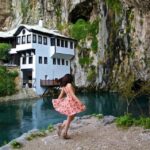
Travnik is where the day starts to feel like a layered story. You begin with Plava Voda, a national monument area tied to local history and memorial sites. The stop is short (about 20 minutes), but you get a lot packed into that window: the Derventa cemetery area, the Lutvina Kahva café, and the monumental tomb of mufti Mehmed Efendi and his wife Ajiša. This is the kind of place where even a quick visit can give you a sense of how history shows up in everyday locations.
Next comes Tvrdava Stari grad, the Old Town fortress area. It’s a 35-minute stop, and the point isn’t just “look at walls.” You’re on a hill, so you get panoramic views of Travnik, plus a clearer sense of why forts mattered here in earlier centuries. If you like historical architecture, this is one of the most straightforward payoffs of the day: you can see the geometry and the defensive logic without needing a guide’s diagram.
Sarena Džamija and two more mosque stops
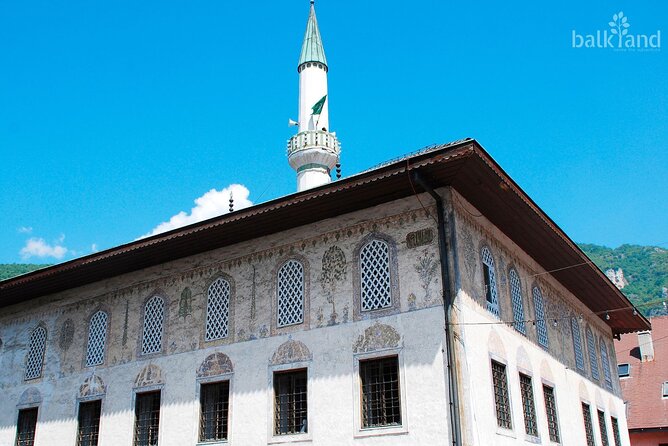
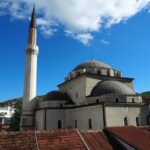
From fortress views, the tour drops you into Ottoman architectural details. You’ll visit Šarena Džamija (about 20 minutes), known for ornate decoration and Ottoman-era design. Then you’ll continue with Turbe (the vizier’s grave, free entry) and Hadži Ali-Begova dzamija (free entry), each about 10 minutes. These short stops work because they’re different “faces” of the same broader Ottoman influence: religious architecture, memorial spaces, and that sense of craftsmanship you can spot even without long explanations.
One practical thought: because these are short, you’ll want to move at walking speed and keep your camera ready. If you stop to read every sign in depth, you may feel rushed.
Museums in Travnik: Andrić’s birthplace and a museum in an older building
Travnik isn’t only streets and tombs. It also gives you two museum-style pauses that anchor the day in names and periods you can later remember.
First up is the Museum Birth House of Nobel Prize Winner Ivo Andrić. The stop is brief (about 15 minutes), but it’s a focused one: Andrić was born on October 9, 1892 in Zenjak, and the birthplace has been reconstructed and opened as a memorial museum. You’ll see a permanent exhibition about his life and literary work. If literature history is your thing, this is a great place to connect the town to a person who became world-famous.
Then there’s Zavičajni muzej Travnik (about 10 minutes). It began in 1950, using multiple buildings for exhibits, including references to an Austro-Hungarian prison and other named institutions. Since 1972, it has been housed in a building built in 1928, funded by the Rockefeller Foundation for medical and health purposes, with the permanent exhibition opened in 1975. That detail matters because it turns the museum building itself into part of the story—Travnik’s layers aren’t only outside on the street.
Catholic heritage stop in Travnik
You’ll also visit Crkva sv. Ivana Krstitelja (Church of St. John the Baptist), a Catholic church built in the mid-19th century. Expect a short stop (about 10 minutes) focused on the Catholic tradition’s architectural elements and interior artwork. This adds a useful balance to the day. Bosnia’s identity isn’t one single theme, and seeing different religious architecture in one day helps you understand why “Bosnia and Herzegovina” feels like a crossroads, not a one-note country.
- Fall of Yugoslavia, Sarajevo War Tour with Tunnel of Hope Museum and Frontlines
★ 5.0 · 1,314 reviews
A chance to try ćevapi in the middle of the day
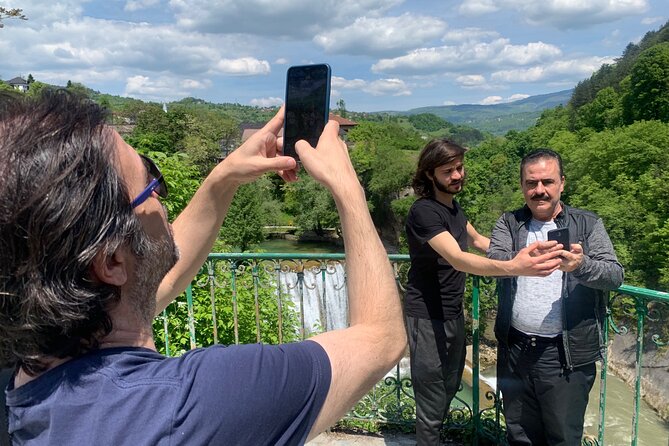
The tour highlights food as part of the experience, and you’ll have a chance to try ćevapi, Bosnia’s national dish mentioned as a key stop. The best way to use that moment is simple: go for it even if you think you’ve had it elsewhere. The flavors and serving style are often where “authentic” shows up—especially when you’re out of the city center mix.
Since lunch isn’t included, plan your day like a local: you’ll need to budget your meal costs separately. The tour provides snacks and water, but it doesn’t replace a full lunch.
Jajce: catacombs and the fortress that ties kings to views
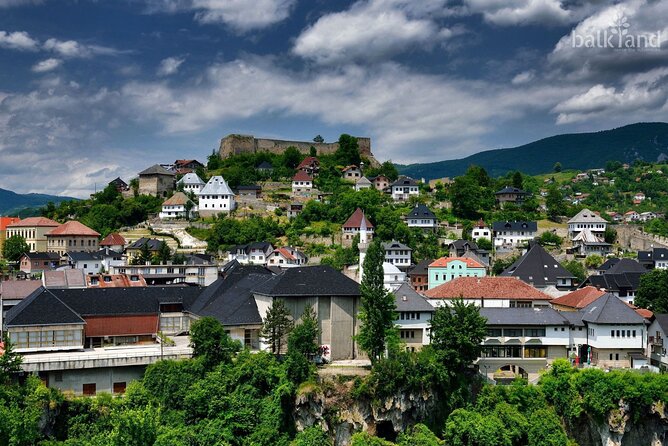
After Travnik, the day shifts to Jajce, and the tempo changes fast—in a good way.
First, you’ll visit the Catacomb of Jajce, an underground tunnel system built in the medieval period. The stop is about 30 minutes, which is long enough to walk through and actually get your head around the space. Underground sites like this often leave you with two memories: the physical scale and the feeling that people moved differently in earlier centuries. It’s one of those stops that stays interesting even if you’re not a tunnel expert.
Then you climb back up to the Fortress of Jajce (about 30 minutes). This is where the story gets high and dramatic. Jajce was the former capital of the Bosnian kingdom and was connected to the residence of the last two kings. The fortress area includes the Coronation Church of St. Mary beneath it, tied to the crowning of the final Bosnian king. And the hilltop setting gives you panoramic views of the town and surroundings—views you’ll notice immediately, even if you only have a short time.
AVNOJ Museum and the Mithra Temple: two very different layers
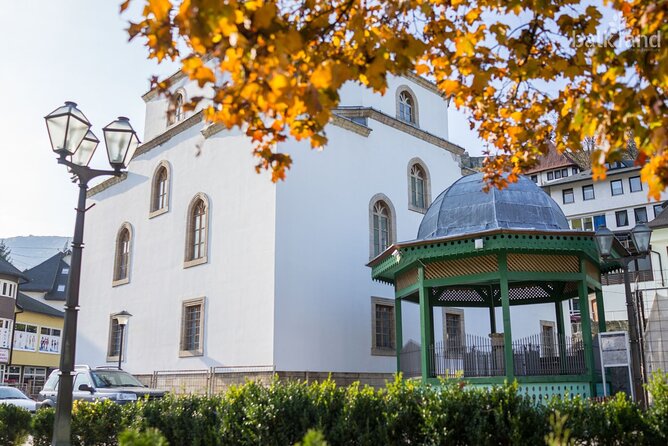
Jajce also brings in later historical themes, and it doesn’t do it quietly.
The AVNOJ Museum (about 20 minutes) is linked to the founding place of Yugoslavia. The exhibits commemorate the second session of AVNOJ in 1943 and the partisan resistance movement during World War II. You’ll see artifacts and original items connected to decisions that established the Republic of Yugoslavia. If you want to understand the Balkans as more than medieval castles, this museum gives you that bridge.
Then comes the Temple of Mithras (about 20 minutes). This is Roman-era. It’s a 3rd-century structure built by Roman soldiers and dedicated to the worship of Mithra. It’s described as one of the best-preserved Mithraic icons in the Balkans. The value for you is variety: in one day you see Ottoman sites, medieval fortification, Yugoslav political history, and Roman religious architecture—Jajce is a layered town in a way that feels unusually concentrated.
Pliva Waterfall and Mlincici mills: nature breaks with history in motion
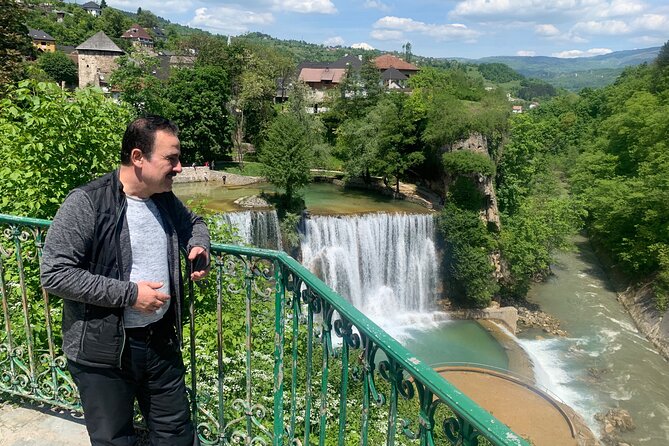
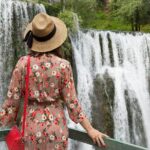
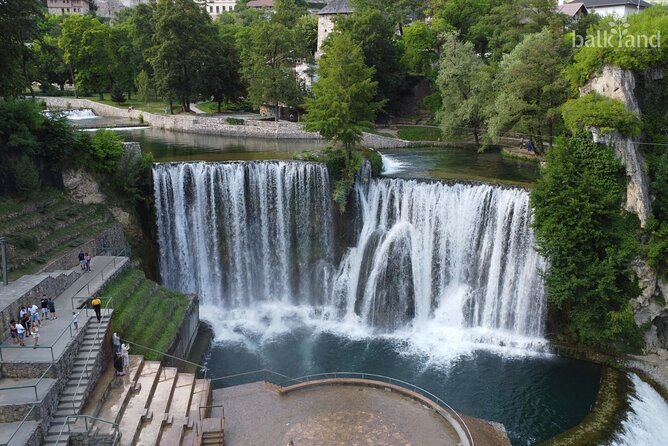
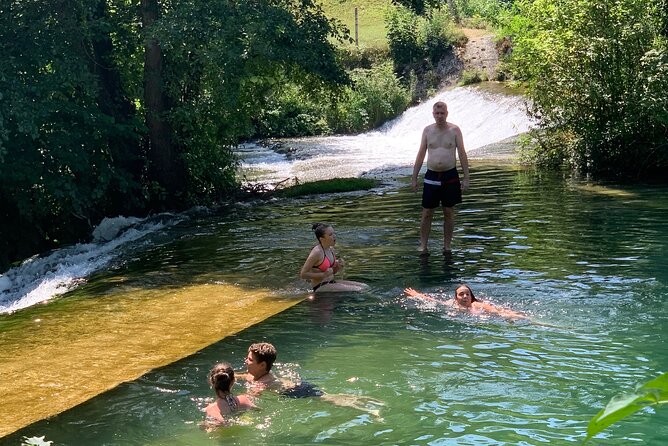
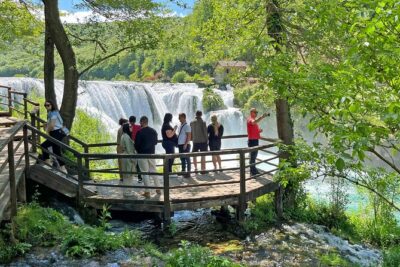
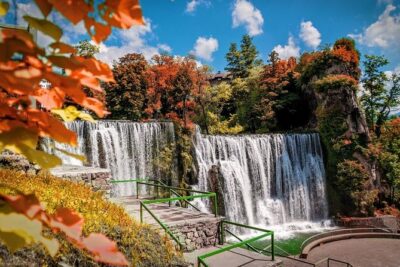
The tour’s nature stop is Pliva Waterfall (about 30 minutes). It’s described as a breathtaking natural spot with crystal-clear waters cascading over moss-covered rocks. You can take a refreshing dip in the natural pools, and you’ll have time for photos. This is a key change of pace after the indoor sites and stone structures. Even if you don’t swim, you’ll likely want a few minutes just to hear the sound and cool off.
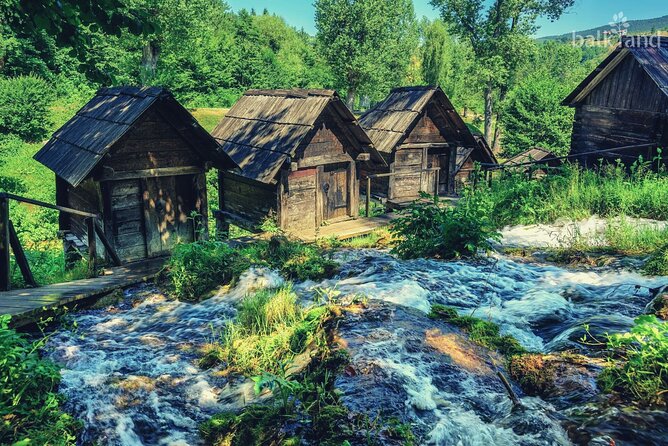
After that, you move to Mlincici—the watermills on the Pliva River (about 20 minutes). These mills ground grains into flour and were important economic assets for centuries, flourishing during the Ottoman period. The tour’s description frames them as a reminder of how the town relied on water power for everyday survival and growth. If you like practical history—how people lived and ate—this is the type of stop that feels grounded.
Dinner happens after the mills, with a 45-minute to 1-hour break in Jajce. That’s enough time to eat without turning the evening into a second tour.
Price and logistics: does $150.10 actually make sense?
At $150.10 per person for about 10–12 hours, you’re paying for transport, guide support, and a packed plan with entry fees handled for the sites that require them. The included extras matter because they reduce “day friction.” You get bottled water and snacks, plus WiFi and an air-conditioned vehicle. All fees and taxes are covered, which is often where day-trip costs creep up.
What’s not included is equally important for your budgeting: lunch, dinner, and alcoholic beverages. So the value depends on your willingness to pay for at least one solid meal yourself. If you’re the kind of traveler who usually grabs a quick snack and calls it lunch, you might still be okay. If you like full sit-down meals, plan for that cost upfront.
Duration is the other side of value. This is not a half-day. You’re paying for efficiency: multiple historical stops in a single outing with minimal driving stress.
Also, note the demand signal: the tour is booked on average 296 days in advance. That doesn’t guarantee it’s always sold out, but it’s a hint that these routes are popular and schedules may fill.
What the tour feels like on the ground (based on real guidance)
One standout detail from a prior guest experience: the day can be surprisingly personalized. A review specifically mentioned Muhammad, who organized a trip even when only one client was booked, and arranged local guides in Travnik and Jajce. That’s exactly what you hope for on a historical day trip. You want a guide who can translate sites fast and accurately, and you want local expertise when you’re inside museums and around architecture.
Even if you don’t get a single-client scenario, the “private tour” setup means your group’s questions and pace can matter. For a day with so many short stops, that control helps.
Who should book this, and who might prefer a different style
This tour is a strong fit if you:
- Want to compare two capitals without renting a car
- Like architecture and historical sites—especially Ottoman and medieval layers
- Prefer guided timing when you only have one or two days away from Sarajevo
- Enjoy a mix of museums and outdoor viewpoints
You might think twice if you:
- Hate long road time and want more spontaneous wandering
- Need long museum visits without time pressure
- Are sensitive to a packed schedule, since many stops are around 10–20 minutes
Practical tips so the day goes smoothly
You’ll cover a lot of ground in a short window. The biggest “prep” is attitude: treat this like a focused walk-and-look day, not a leisurely stroll.
- Wear comfortable shoes for stone and potential hilltop steps
- Bring a light layer; indoor spots and outdoor shade can swing
- Keep a simple plan for meals since lunch and dinner aren’t included
- If you’re planning to swim at Pliva Waterfall, pack swim gear and something to protect your phone/camera
Also, this experience is noted as requiring good weather. That’s fair for outdoor viewpoints and waterfall time. If weather is rough, you might need to accept a date change or a refund option.
Should you book Bosnian Kingdom Capitals: Travnik & Jajce Tour?
If your goal is to see a lot of Bosnia’s “why it matters” in one day, I’d say yes. This tour connects Ottoman Travnik landmarks, Jajce’s medieval fortress and catacombs, then finishes with the Pliva Waterfall and the watermills—so you get history plus nature without needing to drive yourself.
Book it if you value tight structure, easy transport, and included entry fees. Consider skipping (or choosing a slower option) if you want long stays in fewer places, because this day is intentionally designed to move.
Bottom line: for travelers who want the highlights with minimal hassle—and who don’t mind a long day—it’s a smart use of time.
FAQ
Where is the tour pickup and meeting point?
The meeting point is Sarajevo City Hall, Brodac 1, Sarajevo 71000, Bosnia and Herzegovina. The tour ends back at the same meeting point.
How long does the tour take?
The tour duration is about 10 to 12 hours, with remaining time spent on travel.
Is lunch included?
No. Lunch is not included, and dinner is also not included.
What’s included in the tour price?
The tour includes bottled water, snacks (chocolate bar or chips), all fees and taxes, an air-conditioned vehicle, and WiFi on board.
Are entry tickets included?
Yes for the stops listed as admission ticket included. Some stops are listed as free admission.
Can you swim at Pliva Waterfall?
The tour description says you can take a refreshing dip in the natural pools at Pliva Waterfall.
How do you travel between destinations?
You travel by an air-conditioned vehicle driven by experienced drivers. Pickup is offered.
Is this a group tour with strangers?
This is a private tour/activity, meaning only your group will participate.
What happens if the weather is bad?
The experience requires good weather. If it’s canceled due to poor weather, you’ll be offered a different date or a full refund.
What is the cancellation window?
You can cancel for a full refund if you cancel up to 24 hours in advance. If you cancel less than 24 hours before the experience’s start time, the amount you paid will not be refunded.
You Might Also Enjoy
More Tours in Sarajevo
- Fall of Yugoslavia, Sarajevo War Tour with Tunnel of Hope Museum and Frontlines
★ 5.0 · 1,314 reviews

More Tour Reviews in Sarajevo
- Fall of Yugoslavia, Sarajevo War Tour with Tunnel of Hope Museum and Frontlines
★ 5.0 · 1,314 reviews