REVIEW · SARAJEVO
Sarajevo: 2 Hours Old Town Walking Tour With Local Guide
Book on Viator →Operated by Meet Bosnia Travel · Bookable on Viator
Sarajevo fits a lot in two hours. I love how this walk stitches together Ottoman and Austro-Hungarian eras in one tight route, and I love the guide’s focus on why the city feels layered at every corner. One thing to plan for: the tour is fast-moving, so you won’t have long, unstructured time inside churches or museums.
This is a small-group style Old Town orientation, typically capped at 10 travelers, so you can actually ask questions as you go. And because the route is compact, you’ll get your bearings fast for the rest of your Sarajevo day—especially helpful if you’re here for a short visit or just landed that morning.
In This Review
- Key highlights worth your attention
- Sarajevo’s Old Town, paced for real orientation (not a marathon)
- Starting at Meet Bosnia Tours and setting the historical lens
- Church of the Holy Archangels Michael and Gabriel: oldest Orthodox stories, briefly
- Bascarsija Square, Sebilj fountain, and Kazandžiluk’s copper craft street
- Sarajevo City Hall (Austro-Hungarian drama) and Morica Han caravan life
- Gazi Husrev-bey Mosque and the timekeepers: clock towers as landmarks
- Jewish Museum stop and the Meeting of Cultures viewpoint
- Cathedral of the Sacred Heart and Latin Bridge: religion and the world stage
- How much this tour costs, and where the value really is
- What to expect on the ground: pace, group size, and weather reality
- Who this tour is best for (and who should skip it)
- Should you book this Sarajevo Old Town walking tour?
- FAQ
- How long is the Sarajevo Old Town walking tour?
- Where does the tour start?
- What is included in the price?
- Are entrances and admissions included at every stop?
- Is the tour offered in English, and how large is the group?
- Can I cancel and get a full refund?
Key highlights worth your attention
- A culture-mixing storyline: the route is built around where different faiths and empires left visible marks
- Small group energy: with a maximum of 10 people, the pace can feel more personal
- Old Town landmarks in walking range: Sebilj fountain, Bascarsija, Gazi Husrev-bey area, and Latin Bridge
- Hands-on street details: Kazandžiluk’s copper craft street is more than a photo stop
- Good first-day plan: many guides work to help you explore confidently afterward
- Optional museum time: you can choose whether to step inside the Jewish Museum stop
Sarajevo’s Old Town, paced for real orientation (not a marathon)
A two-hour walking tour in a city like Sarajevo has one job: help you understand what you’re looking at. This one does that by staying in the densest part of the Old Town and treating it like a history classroom you can walk through.
What makes it work is the theme. Instead of sorting Sarajevo into one single era, the walk keeps moving across time—Ottomans, Austro-Hungarians, and the religious communities that still shape daily life here. That matters because Sarajevo isn’t one straight-line story on the ground. It’s a layered place. In a short visit, a guide who can connect the layers helps you see patterns you’d miss wandering alone.
Also, the small-group setup is genuinely useful. In reviews, I saw a recurring point: people felt they could ask questions and move at a pace that fit them. On days with rain, guides also manage the walking rhythm and timing so you still cover the essentials without feeling steamrolled.
A possible downside: if you’re the type who wants to linger for 45 minutes in one church or museum, this tour will feel like it’s sliding past. Think of it as orientation and context, not slow travel.
You can also read our reviews of more walking tours in Sarajevo
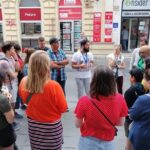
Starting at Meet Bosnia Tours and setting the historical lens
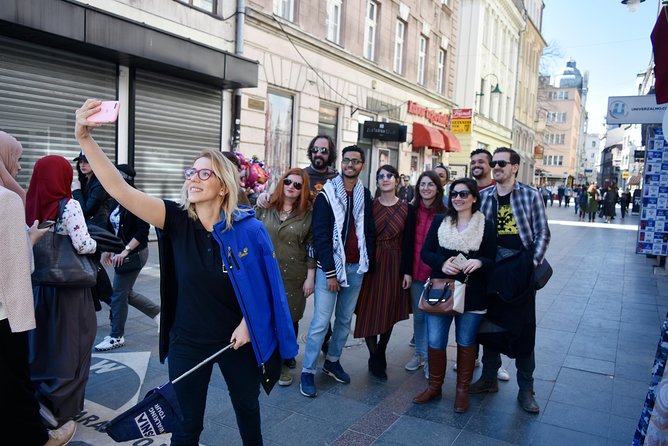
Your walk begins at the Meet Bosnia Tours office, at Gazi Husrev-begova 75, right at the crossroad of Mula Mustafe Bašeskije. From the start, you’re told the city’s backstory in a way that helps the rest of the route make sense.
That first intro is only about 10 minutes, but it’s not wasted time. Guides appear to use this moment to frame Sarajevo as a place shaped by empires and communities living side-by-side—then they keep returning to that idea as you walk.
If you’re coming in cold, with no background reading, this opening helps. If you already know Sarajevo’s major events, it still works as a quick map in your head: where you are, what time it represents, and what details to watch for.
Church of the Holy Archangels Michael and Gabriel: oldest Orthodox stories, briefly
One of the first stops is the Church of the Holy Archangels Michael and Gabriel in Sarajevo. The guide talks in front of the church about what’s said to be the city’s oldest Orthodox church, including secrets and legends tied to it.
A practical note: this stop doesn’t include admission, so you’ll want to treat it as an exterior-and-story moment unless you decide to pay on-site. Even if you just take it as an overview, the point is to show how Sarajevo’s religious map has long roots.
Bascarsija Square, Sebilj fountain, and Kazandžiluk’s copper craft street
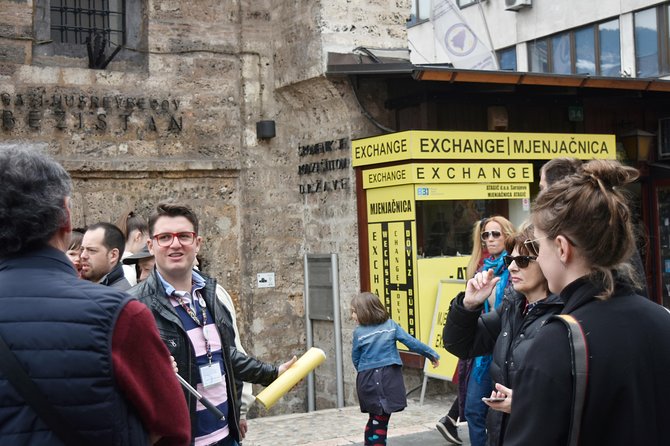
Then you hit the heart: Bascarsija Square and the streets around it. This is where the city’s Ottoman-era vibe becomes physical, not just historical on paper.
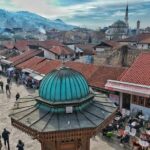
You’ll see the Sebilj fountain, famously made in the 18th century, and you’ll hear about the Ottoman period through the lens of what you’re standing next to. Sebilj isn’t just a pretty fountain for photos; it’s treated as a symbol of Sarajevo’s identity, and it’s the kind of landmark that helps you feel the city’s “center of gravity.”
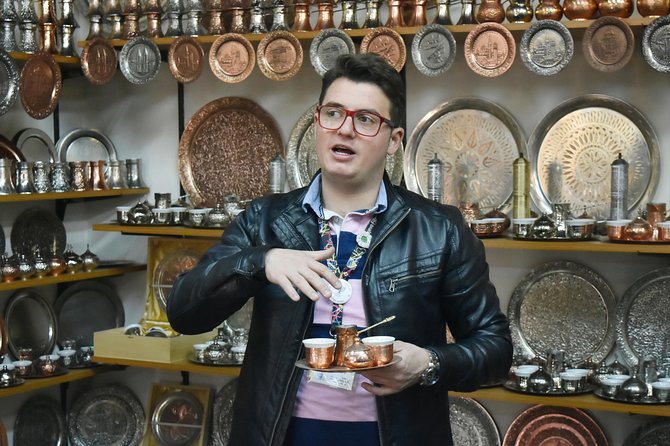
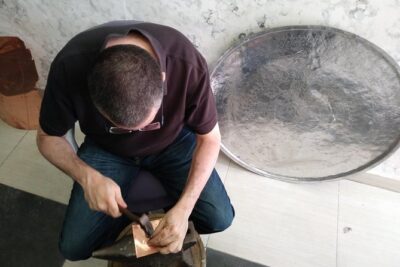
From there, you walk through Kazandžiluk, described as the oldest street in Sarajevo, linked to hand-made copper craft arts. This is one of those stops where I think the guide matters a lot. If the guide only points and talks, you’ll still get value. If the guide explains what the crafts represent and why the street is where it is, you start to see the Old Town like a working system instead of a postcard.
Admissions here are free on the route points connected to this area, so you can keep moving and stay focused on atmosphere.
Sarajevo City Hall (Austro-Hungarian drama) and Morica Han caravan life
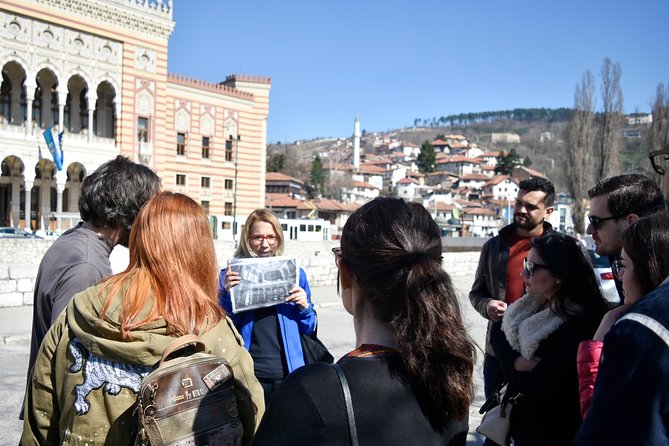
The tour shifts from Ottoman marks to Austro-Hungarian architecture with Sarajevo City Hall. The exterior story is a big part of the payoff: it’s described as one of the city’s most beautiful buildings, constructed in the Austro-Hungarian period, and you’ll hear how it used to serve as a national library as well.
Admission isn’t included for this stop, so it’s another “listen first, decide second” moment. Still, even as an exterior visit, it helps you understand how the city’s rulers left different kinds of fingerprints—administrative buildings, libraries, and the kind of civic architecture that signals power.
Next comes Morica Han, presented as the most authentic caravanserai in the Balkans region. The stop is framed as a merchant and traveler hotel from the past; today it has a different purpose. This is a smart stop for short-timers because it anchors the story of trade and movement—who came through, why Sarajevo mattered, and how commercial life shaped the city.
Admission for Morica Han is listed as free, which makes it easy to take this in without budget stress.
- Fall of Yugoslavia, Sarajevo War Tour with Tunnel of Hope Museum and Frontlines
★ 5.0 · 1,314 reviews
Gazi Husrev-bey Mosque and the timekeepers: clock towers as landmarks
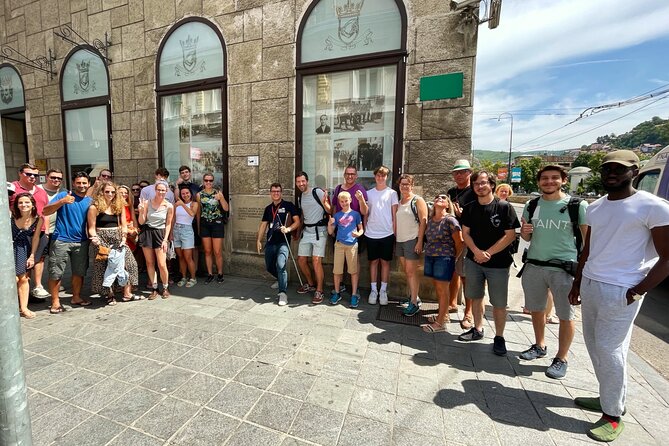
From there, the walk becomes about religious grandeur and time as a local symbol.
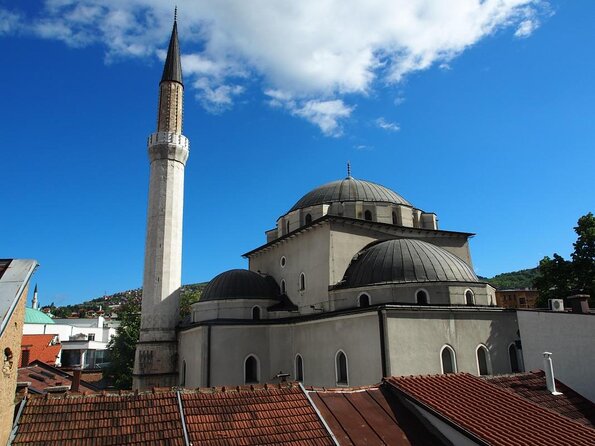
At Gazi Husrev-beg Mosque, you’re shown one of the biggest and most beautiful mosques in Sarajevo, with emphasis on unique ornamentations. The guide points you toward what to notice so the details feel purposeful instead of decorative.
Admission isn’t included here, so if you want to go inside or spend extra time, you’ll need to pay separately.
Right nearby, the tour connects you to the Clock Tower, and then later you get a separate stop at the Old Sarajevo Clock Tower. The older clock tower is described as a landmark with authentic time, and it’s called unique in the world. Even if you’re not a watch-and-mechanics person, a clock tower works as a navigation tool and a cultural symbol: it marks time in a city that has seen dramatic shifts.
If you’re visiting in rain or heat, this cluster is also practical: you’re stopping more often at major points, so the walking rhythm doesn’t feel endless.
Jewish Museum stop and the Meeting of Cultures viewpoint

One of the most interesting parts of this tour is that it doesn’t treat Sarajevo’s communities as separate trivia. It threads them into a single geography.
You’ll reach the Jewish Museum of Bosnia and Herzegovina, which used to be a Sefardic Jewish synagogue. The guide shares the long history of Jews in Bosnia and Herzegovina here. The big practical plus: museum entrance is optional. So you can keep it to stories outside or step in if it’s a priority for you.
Then you stop at Sarajevo Meeting of Cultures, described as the place where East and West meet. This is a short stop, but it hits the tour’s central theme in a single glance: Sarajevo as crossroads, not just destination.
If you like symbolism, this is where the tour becomes more reflective. If you prefer straight facts and architecture, the guide can usually keep it grounded in what you can actually see around you.
Cathedral of the Sacred Heart and Latin Bridge: religion and the world stage
The route finishes with two stops that widen the frame.
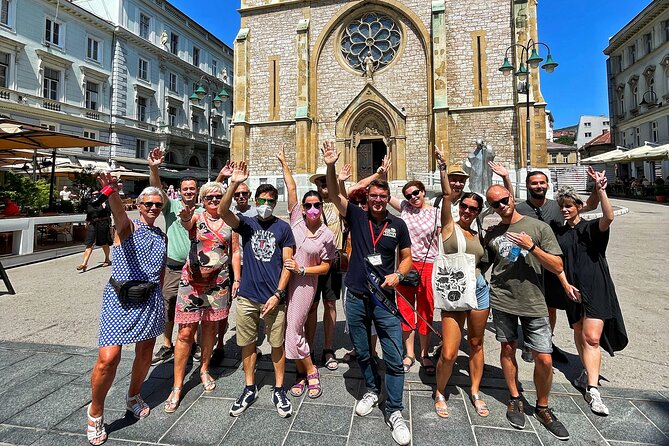
First is Katedrala Srca Isusova, described as the most beautiful Catholic church in Sarajevo, with the story of Catholics in Bosnia and Herzegovina. This stop is listed as free. The guide helps you understand the community context, so it’s not just another church stop—it becomes part of the larger picture of Sarajevo’s religious mix.
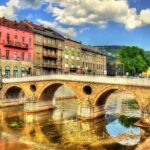
Next comes Latin Bridge, where you hear the story of the assassination of Archduke Franz Ferdinand, presented as the trigger event that set the First World War in motion. This is a big “world history” moment in the middle of an Old Town walk.
What I like about including Latin Bridge in a short Old Town tour is the contrast. You start seeing Sarajevo as a local place—streets, crafts, fountains, mosques. Then you realize it also played a role on the global stage. The city suddenly feels larger than your day plan.
How much this tour costs, and where the value really is
The price is $14.51 per person for about 2 hours, which is hard to beat if you value context and orientation.
Here’s where you’re getting your money’s worth:
- Local guide + professional guide: you’re paying for narrative, not just walking alongside you
- A compact route: you cover major anchors without building a map from scratch
- Mobile ticket support: makes it easier to show up and go
- English offered, with possible multi-lingual guides depending on operations
What’s not included is also part of the value equation. Food and drinks are not included, so you’ll want to plan your own meal. And several stops list admission as not included (for example the Orthodox church, City Hall, the mosque, and the Jewish Museum). That means the tour fee buys you the walking and the guided interpretation, while certain interiors and museum time can cost extra if you choose to add them.
If you’re the kind of traveler who likes to walk, ask questions, and then decide later what to pay for, this cost structure fits nicely.
What to expect on the ground: pace, group size, and weather reality
This tour is designed for the Old Town in a short time window. That means you should expect frequent “stop, listen, walk” rhythm rather than long breaks.
From reviews, one theme comes up again and again: guides handle pacing well, including on cooler or rainy days. People noted guides finding shade in summer heat and even doing extra small helpful things like sharing a hat or gloves when someone got cold. Those moments don’t change the route, but they make the walk feel cared for.
Group size is capped at 10 travelers, and I also saw cases where the tour ended up extremely small, which turned it into a more private feel. If you hate waiting for a crowd at every corner, this setup is your friend.
My practical suggestion: wear good walking shoes, bring a layer for rain or cold, and keep your schedule flexible afterward. This tour sets up the day, but it doesn’t replace time you might want to spend returning to the spots that caught your eye.
Who this tour is best for (and who should skip it)
This is ideal if you’re:
- doing a first visit and want to get oriented quickly
- short on time and want a “greatest hits” walk with context
- interested in how cultures and religions overlap in Sarajevo’s streets
- traveling with family and want a paced introduction where kids can keep up
A key fit note: based on one review, this is not positioned as a tour focused on the 1990s Balkans war sites. If that’s your main priority, you’ll want a different type of itinerary.
So think of this one as an Old Town story with Ottoman and Austro-Hungarian anchors, plus the global event at Latin Bridge and community context around major faith sites.
Should you book this Sarajevo Old Town walking tour?
Yes, if you want a fast, structured introduction that makes the Old Town readable. At $14.51 for about two hours, you’re buying a guide-driven route through the places that explain Sarajevo’s layers: fountains and crafts in Bascarsija, empire-era architecture near City Hall, religious landmarks around Gazi Husrev-bey, and the Latin Bridge event that reaches the world stage.
You might pass if you’re looking for long museum time or a slow, sit-and-stare approach, because the tour is built to cover many points in a short window. And if your trip focus is specifically the 1990s war sites, this route’s theme may not match what you came for.
If you’re unsure, use this rule: book it early in your trip. Then you’ll know exactly where to spend your extra hours afterward.
FAQ
How long is the Sarajevo Old Town walking tour?
It lasts about 2 hours.
Where does the tour start?
You meet at Meet Bosnia Tours – Sarajevo Tours, Days Out, Excursions and Activities at Gazi Husrev begova 75, at the crossroad of Mula Mustafe Bašeskije.
What is included in the price?
The tour includes a local guide/professional guide, and it uses a mobile ticket. Food and drinks are not included.
Are entrances and admissions included at every stop?
No. Some stops list admission as free, while others list admission as not included. The Jewish Museum entrance is described as optional.
Is the tour offered in English, and how large is the group?
English is offered. The tour also has a maximum of 10 travelers.
Can I cancel and get a full refund?
Yes, free cancellation is available. You can cancel up to 24 hours in advance for a full refund.
You Might Also Enjoy
More Walking Tours in Sarajevo
More Tours in Sarajevo
- Fall of Yugoslavia, Sarajevo War Tour with Tunnel of Hope Museum and Frontlines
★ 5.0 · 1,314 reviews

More Tour Reviews in Sarajevo
- Fall of Yugoslavia, Sarajevo War Tour with Tunnel of Hope Museum and Frontlines
★ 5.0 · 1,314 reviews