REVIEW · SARAJEVO
ROSES OF SARAJEVO (Official WAR + CITY tour)- Story of a Survivor
Book on Viator →Operated by Art and Tours Sarajevo · Bookable on Viator
Sarajevo tells its story with scars. This WAR + CITY tour connects major landmarks to the daily reality of the siege, with a guide who brings the past into focus. You’ll start with major sights in central Sarajevo and move through hard-hitting war locations like the Tunnel of Hope and Sniper Alley, plus major political and cultural sites.
I especially like how the tour mixes big-picture context with human detail. The route covers both West Sarajevo and East Sarajevo, so you see the country’s present-day complexity up close, not just the 1992–95 conflict.
One drawback to think about: the subject matter is heavy. You’ll also pay an extra €10 for the Tunnel of Hope Museum, since it’s not included in the base price.
In This Review
- Key highlights I’d circle first
- West to East Sarajevo: why this tour feels different
- Starting point and first impressions near Sarajevo’s core landmarks
- Sarajevo War Tunnel: what you’ll actually see (and why it’s worth the extra ticket)
- The Roses of Sarajevo memorial and the numbers behind it
- Yugoslavia, WWII Sarajevo, and why today’s politics are part of the story
- Sniper Alley, the Holiday Inn exchange, and Sarajevo’s “ruins with explanations”
- Defensive zones, grenade statistics, and what those bullet holes mean
- The Sarajevo 1984 Olympic sites: surprising, and very intentional
- East Sarajevo: learning the differences without losing the human thread
- Trebević Mountain viewpoints: Sniper zones and Sarajevo’s “Bosnian Disneyland”
- Mahala neighborhoods and Urijan Dedina: the city’s everyday scale
- Jewish Sarajevo: cemetery, European Jerusalem context, and synagogue visits
- Vrbanja bridge: Suada and Olga, first shots, and Romeo-and-Juliet framing
- Old Town to Yellow Fortress: Austro-Hungarian architecture and Ottoman panoramas
- Price, time, and what to wear when the day turns intense
- Should you book it?
- FAQ
- How long is the Roses of Sarajevo tour?
- Is the tour offered in English?
- Is the Tunnel of Hope Museum ticket included in the price?
- What’s included with the tour besides the guide?
- How big is the group?
- Do I need to print tickets?
- Is free cancellation available?
- Are there any rules for children?
Key highlights I’d circle first
- A survivor-centered tour that turns dates and headlines into lived experience
- The Tunnel of Hope walk-through, plus a short on-site movie and siege-era exhibits
- Sniper Alley viewpoints and “what you’re seeing” context rather than just photo stops
- East Sarajevo (Republika Srpska) overview, including today’s political and ethnic differences
- Historic Jewish Sarajevo stops, from the 16th-century cemetery to synagogue visits
- A tight mix of iconic Sarajevo like the 1984 Olympic bobsleigh track and the Yellow Fortress sunset view
West to East Sarajevo: why this tour feels different
Sarajevo is one of those cities where the past isn’t sealed in museums. It’s visible—on building facades, in street names, and in how people talk about the years that followed the 1992–95 siege. What makes Roses of Sarajevo (Official WAR + City tour) – Story of a Survivor stand out is that it’s not only a sightseeing run. It’s built around a personal, first-hand narrative that keeps the political and military facts grounded.
I like that the format is compact. In about 4 hours 15 minutes, you cover a wide arc across town, from Ottoman and Austro-Hungarian-era structures to siege front lines, plus key parts of the modern political landscape. The transport is an air-conditioned minivan, which matters here: you’ll spend time driving between neighborhoods, so you’re not doing all of this on foot.
Another smart detail is the small-group setup. The tour caps at 15 travelers, and the guide limit is set so you’re not lost in a crowd. That helps when the subject turns personal and discussion starts drifting into why things happened—and what it changed.
You can also read our reviews of more city tours in Sarajevo
Starting point and first impressions near Sarajevo’s core landmarks
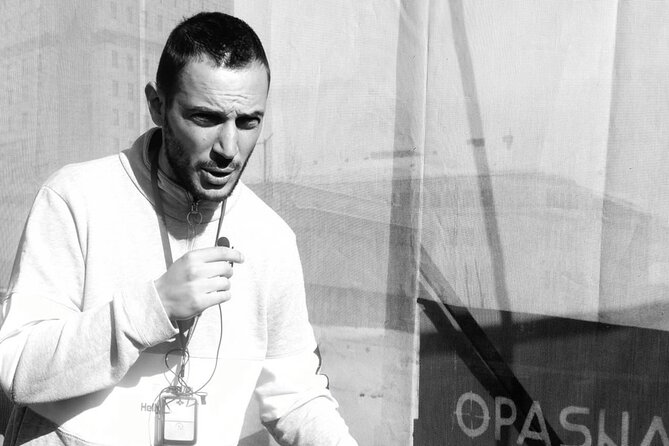
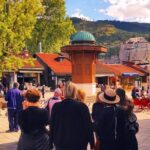
You begin at Đulagina 2, Sarajevo, and you return there at the end. Early on, the guide sets the scene with fast context around central Sarajevo’s landmarks, including the Sacred Heart of Jesus Cathedral. From there, you get the framing for why people describe Sarajevo as Little Yugoslavia—a label tied to the city’s multi-ethnic identity and political story.
This opening matters because the rest of the tour is moving fast. If you’re new to the region, those early explanations give you mental handles. You’re not just looking at places; you’re learning what each place represents, including layers from Ottoman, Austro-Hungarian, and Yugoslav periods.
Sarajevo War Tunnel: what you’ll actually see (and why it’s worth the extra ticket)
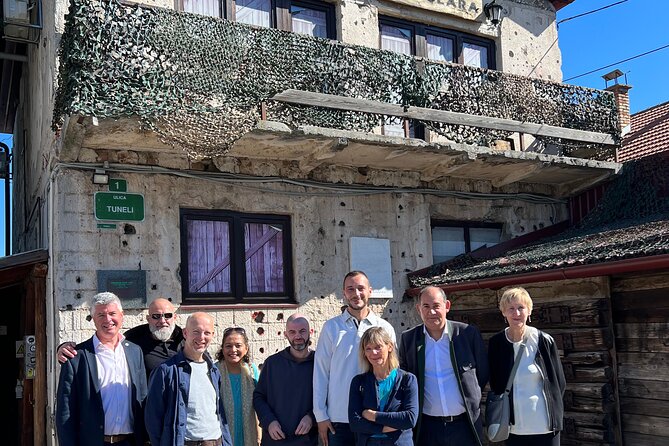
The biggest “this is real” stop is the Tunnel of Hope area. On the drive toward the museum, you’ll pass 20+ monuments connected to Ottoman, Austro-Hungarian, and Yugoslav history. It’s a clever rhythm: you get layers of the city before you hit the war part, so the contrast lands.
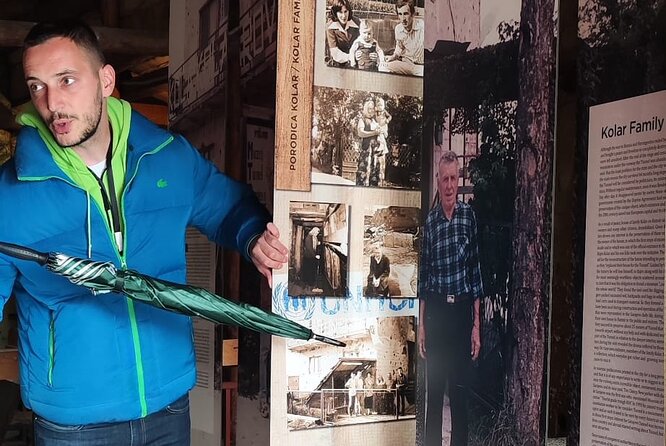
At the museum complex, the day turns specific. You’ll spend time at the war house tied to the Kolar family, and you’ll watch an on-going movie segment that runs about 17 minutes 44 seconds. After that, you move through siege-era installations such as minefields and the ’92–’95 Sarajevo War Museum exhibits.
Two parts are particularly important for understanding what the tunnel meant:
- The war room and war journal spots help explain how information and daily decisions worked under pressure.
- The walk-through of the Tunnel of Hope gives you the feeling of moving through a lifeline, not just reading about it.
There’s also a short 10–15 minutes of free time after the main circuit. That’s useful for quick photos and regrouping—especially since emotionally, this stop is one of the hardest.
Practical note: the Tunnel of Hope Museum entrance costs €10 per person and is not included in the tour price. If you’re budgeting tightly, factor that in now so it doesn’t surprise you later.
The Roses of Sarajevo memorial and the numbers behind it
After the tunnel stop, the tour keeps moving through the meaning of the siege, not just the mechanics. You’ll hear about the largest Rose of Sarajevo in the city and the number of victims in 1994 and 1995. This is the kind of memorial stop that can feel abstract if you don’t have context—and this tour does the context part.
The guide uses these memorial points to connect emotions to chronology. You’re not being asked to memorize dates for dates’ sake. You’re being shown how the city marked loss while still continuing the daily struggle to function.
Yugoslavia, WWII Sarajevo, and why today’s politics are part of the story
A major strength of this tour is that it doesn’t treat the siege as an isolated event. You’ll get an introduction to Yugoslavia, then a look at a WWII monument celebrating the liberation of Sarajevo. The point isn’t to turn the day into a history lecture; it’s to show the longer timeline that shaped what came next.
Then you’ll pass by the Presidency of Bosnia and Herzegovina, described as the European region’s complicated institution. You’ll also get a presentation of the current political system and how it functions in practice. That’s valuable because if you only know the siege years, you might miss why the country still navigates political complexity today.
- Fall of Yugoslavia, Sarajevo War Tour with Tunnel of Hope Museum and Frontlines
★ 5.0 · 1,314 reviews


Sniper Alley, the Holiday Inn exchange, and Sarajevo’s “ruins with explanations”
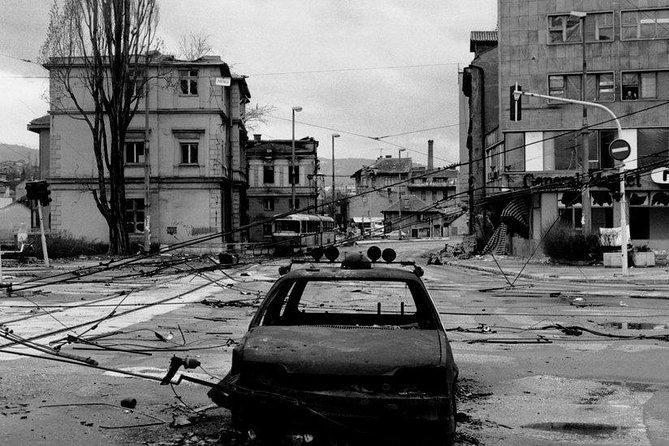
Now comes one of the signature siege corridors: Sniper Alley. You’ll pass through the main and deadliest sections while the guide explains what happened there—plus a layered story connected to war journalists.
A key named site is the Holiday Inn hotel in Sarajevo, which was used for the exchange of soldiers during the siege. That detail changes the tone. It’s not only about damage; it’s about the moments when negotiations, transfers, and fragile agreements still happened amid violence.
On the Austro-Hungarian side of the city, you’ll also pass the National Museum and hear about the Sarajevo Haggada book. The tour uses these cultural references to remind you that Sarajevo wasn’t frozen in time. Even under siege, the city’s intellectual and religious heritage stayed part of its identity.
You’ll also stop at the Historical Museum of Bosnia and Herzegovina at a major Sniper Alley point, which helps you anchor what you see outside to what the institutions preserve inside.
Defensive zones, grenade statistics, and what those bullet holes mean
After the central memorial and cultural stops, the tour turns strongly visual. You’ll learn about Satellite Hill and the core defensive strategy of the Bosnian army. Then you move into the middle part of Sarajevo that was heavily affected during the siege.
Here, you’ll look for siege evidence you might otherwise just photograph and forget:
- Sniper bullet holes on buildings
- Three Yellow towers with grenade remnants left behind
- UN-style official statistics about grenade shots from Trebević mountain during almost 4 years of siege conditions
It’s one thing to hear the siege described. It’s another to see physical reminders and then get the numbers and strategy behind them. That’s where the tour earns serious respect: it teaches you to read the city like a document.
The Sarajevo 1984 Olympic sites: surprising, and very intentional
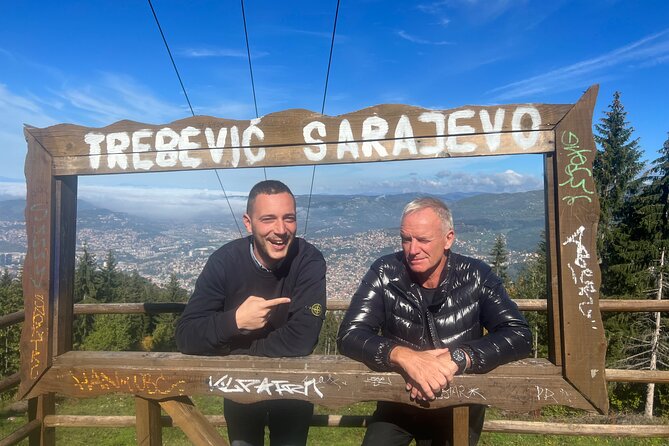
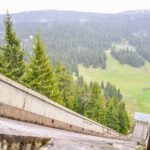
You’ll visit the 1984 Olympic village area and then later the Sarajevo Olympic bobsleigh and luge track. This is where the day becomes unexpectedly cinematic. The bobsleigh track gives you famous Sarajevo architecture and a great photo spot—then your guide ties it back to the siege-era geography.
The stop includes about 30 minutes and time for photos. You’ll also pass through or experience parts of the communist-Yugoslav architectural side of Sarajevo. The goal isn’t to romanticize a place that suffered. It’s to show how the city’s planned future and the war’s reality collided.
East Sarajevo: learning the differences without losing the human thread
The tour then shifts to neighborhoods associated with the survivor’s perspective and to East Sarajevo. One short stop is on Butmirska cesta, described as a survival path and Free Bosnian territory, with about 10 minutes there.
Then comes Dobrinja, another frontline area where the survivor was born. You’ll hear a brief personal explanation of what childhood was like before, during, and after the war in that region. Even in short time windows, that kind of sharing hits harder than a standard lecture.
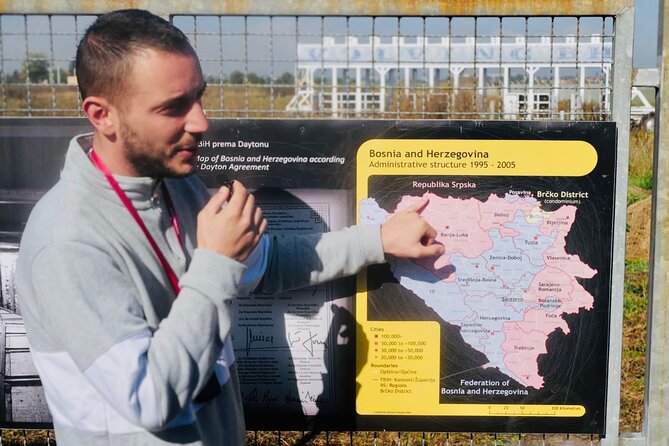
After that, you’ll see the broader political map of the country. The guide takes you through East Sarajevo in the Republika Srpska (RS) entity and explains core differences between the two entities and the country’s ethnic diversity. You’ll also see current war murals in East Sarajevo.
This section helps you understand something a lot of visitors miss: the siege shaped borders and identities that still matter. The guide’s approach keeps it from turning into blame games and instead focuses on how the system and communities differ.
Trebević Mountain viewpoints: Sniper zones and Sarajevo’s “Bosnian Disneyland”
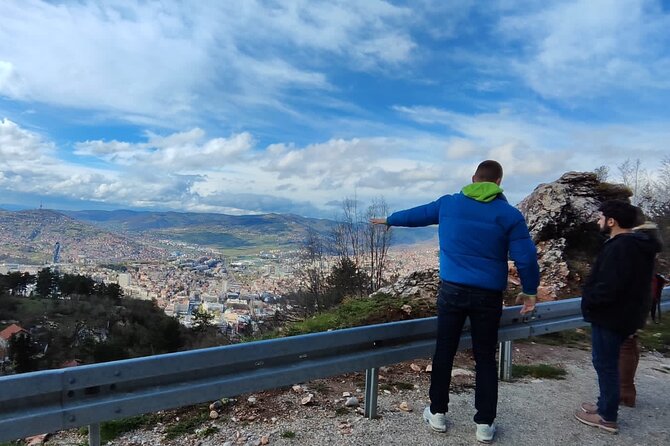
Next you head up toward Trebević Vidikovac, with about 20 minutes at the panorama. You’ll learn about the I and II sniper zones, using the mountain view to make the siege’s firing positions make more sense.
On the way to these zones, the guide introduces a place called SunnyLand, often described as a Bosnian Disneyland and tied to its earlier use as a sniper zone during 1992/1995. Whether you’re into dark history or not, this stop works because it shows how ordinary-looking spaces can hold brutal functions during wartime.
There’s no trying to soften it. The explanations are direct, and the viewpoint helps you connect the story to real geography.
Mahala neighborhoods and Urijan Dedina: the city’s everyday scale
Between big memorial and museum stops, you’ll also explore a hilly residential area—one of Sarajevo’s mahalas—to experience the local lifestyle. The tour only gives you a limited window, but it’s a useful reset. After siege evidence and institutional buildings, you get a more normal view of how people live in steep terrain neighborhoods.
A named viewpoint stop comes at Urijan Dedina, which is described as the best viewpoint of the Sarajevo sniper alley. Expect around 10 minutes here, enough time to look out and connect the dots.
Jewish Sarajevo: cemetery, European Jerusalem context, and synagogue visits
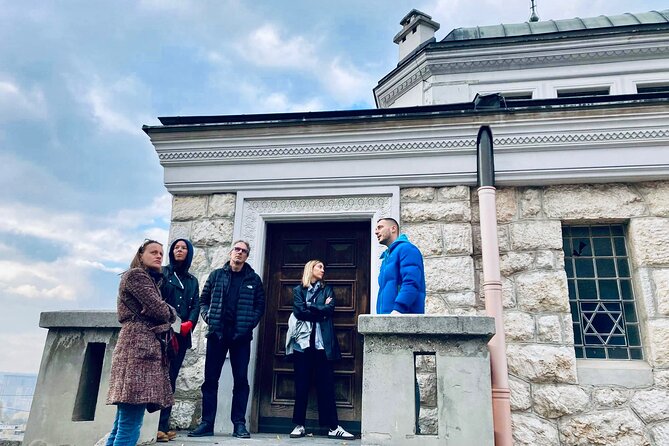
One of the most meaningful parts of the tour for me is how it treats Jewish Sarajevo as more than a side note. You’ll visit the Jewish Cemetery, with 16th-century monuments and context about Sarajevo being described as European Jerusalem.
You’ll also see a monument for WWII Jewish victims, then visit the Jewish Synagogue. The time here is about 25 minutes. This stop gives depth to Sarajevo’s multi-layered religious history and also reinforces how the city’s identity has been shaped by multiple tragedies across decades.
Vrbanja bridge: Suada and Olga, first shots, and Romeo-and-Juliet framing
The day also includes the Suada and Olga bridge area, with visits to both sides of the Vrbanja bridge. On one side, it’s described as the Sarajevo Siege First Victim Bridge side, and the guide points out the first-shot building from the start of the Sarajevo war.
On the other side, the tour frames it as a Romeo and Juliet love story—a reminder that love, loss, and cultural memory often get woven together in Sarajevo’s storytelling.
This stop is brief—about 5 minutes—but it’s the kind of short stop that sticks because the place is specific and the meaning is clear.
Old Town to Yellow Fortress: Austro-Hungarian architecture and Ottoman panoramas
Back toward the central and historic parts, you’ll go past the frontline 1992/1995 area and the 1984 Olympic hall Skenderija. You’ll then spend time around the Austro-Hungarian Neo-gothic architecture style of Sarajevo, one of the city’s most recognizable visual signatures.
The tour includes Ashkenazi Jewish society context and visits related to the Ashkenazi Synagogue. You’ll also get a story linked to At Mejdan Park, and then you’ll reach Latin Bridge, described as the assassination spot of Franz Ferdinand, which connects Sarajevo to the spark of WWI.
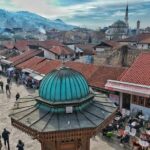
Other stops near the Old Town include Hotel Saray and the story of the City Hall / National Library, which was burnt two times in its history. Again, this isn’t random stop stacking. It’s about how Sarajevo kept taking hits and still rebuilding its symbolic centers.
Finally, you end with Yellow Fortress, described as the best panorama and sunset spot in Sarajevo. You’ll get an Ottoman history presentation here, and the tour notes the Yellow Fortress admission is included.
Price, time, and what to wear when the day turns intense
At $53.21 per person for about 4 hours 15 minutes, this tour is priced in the mid-range for Sarajevo. The value depends on what you care about: if you’re only chasing famous landmarks, you might feel the day is too intense. If you want the siege explained with physical evidence and a survivor’s personal framing, the price starts to make sense.
Just remember two costs-by-design:
- Tunnel of Hope Museum is extra (€10)
- Yellow Fortress is included
The transport is handled by an air-conditioned minivan, and the pacing includes multiple short stops (often 5–30 minutes each), plus a few walking segments. I’d wear comfortable shoes with decent grip because you’ll be moving between viewpoint areas and historic sites, and some parts can feel uneven.
Emotional readiness matters here. This is not a light tour. The subject matter—war, siege, victims, defensive zones—can feel heavy fast. If you’re going to bring tissues, bring them. If you’re not, at least give yourself space after the tour to decompress.
Should you book it?
If you’re visiting Sarajevo for only a short time and you want the siege explained in a way that makes the city’s geography and politics click, I think this is one of the best ways to do it. The standout feature is the survivor-centered narrative paired with practical context—Tunnel of Hope, Sniper Alley, East Sarajevo, and Jewish Sarajevo all connected into a single route.
Book it if:
- You want a small-group tour that connects history to real places
- You’re okay with a serious, sometimes upsetting tone
- You want both Sarajevo’s beauty and its scars, explained in context
Skip it if:
- You’re looking for a mostly relaxed sightseeing day with light topics
- You’d rather learn through museums only, without a personal survivor account
FAQ
How long is the Roses of Sarajevo tour?
It runs for about 4 hours 15 minutes (approx.).
Is the tour offered in English?
Yes, it’s offered in English.
Is the Tunnel of Hope Museum ticket included in the price?
No. The Tunnel of Hope Museum entrance costs €10.00 per person and is not included.
What’s included with the tour besides the guide?
The tour includes a driver/guide and transport by air-conditioned minivan.
How big is the group?
The tour has a maximum of 15 travelers, and one guide has a maximum of 8 people.
Do I need to print tickets?
You get a mobile ticket.
Is free cancellation available?
Yes. You can cancel for a full refund up to 24 hours in advance.
Are there any rules for children?
Children must be accompanied by an adult.
You Might Also Enjoy

More City Tours in Sarajevo

More Tours in Sarajevo
- Fall of Yugoslavia, Sarajevo War Tour with Tunnel of Hope Museum and Frontlines
★ 5.0 · 1,314 reviews

More Tour Reviews in Sarajevo
- Fall of Yugoslavia, Sarajevo War Tour with Tunnel of Hope Museum and Frontlines
★ 5.0 · 1,314 reviews