REVIEW · SARAJEVO
War Times Experience in Sarajevo – Half Day Tour
Book on Viator →Operated by Adventure in Bosnia | Tour Agency | Tours and Excursions · Bookable on Viator
Sarajevo makes history hard to ignore. This half-day tour guides you through the places tied to the Bosnian War and the siege of Sarajevo, with stops designed to connect what you see to what people endured. Two things I really liked were the way the guide kept the story human (not just dates), and the smart use of onboard Wi‑Fi to keep you connected between short, focused stops.
I also appreciated the private feel. It’s capped at 8 travelers, and the small-group setup helped the guide, Emir, answer questions without rushing you. Still, one thing to consider is the time: most locations are quick hits, and the topic is heavy—so if you need long reflection at each site, a half day may feel a bit brisk.
In This Review
- Key highlights you should know before you go
- A half-day route through Sarajevo’s siege-era realities
- Private pacing, small group size, and onboard Wi‑Fi that actually helps
- Price and what’s included (and where you’ll pay extra)
- Getting oriented: Sniper Alley and the war’s split town
- The “imaginary border” route between two entities
- Jewish Cemetery Sarajevo: learning where snipers were positioned
- Trebevic Mountain: first siege line and command-center ruins
- The Yellow Fortress panorama and defenders’ cemetery
- Sarajevo War Tunnel: what the Tunnel of Hope stop really gives you
- The guide matters: what I took from Emir’s approach
- Transportation and timing: why the 3–4 hours feel tight but manageable
- Who this tour suits best (and who should skip it)
- Should you book this War Times Experience half-day tour?
- FAQ
- How long is the War Times Experience in Sarajevo half-day tour?
- What is the price per person?
- What’s included in the tour price?
- Is Sarajevo War Tunnel admission included?
- Do I need a passport for the border crossings?
- Can I cancel and get a full refund?
Key highlights you should know before you go
- Sniper Alley and the siege geography: See the street tied to killings and understand why it earned that name
- Jewish Cemetery Sarajevo stop: Learn where snipers were positioned and how shooting affected citizens during the siege
- Trebevic Mountain and hotel ruins: Visit siege-era positions and the command center area
- Yellow Fortress panorama: Get an overlook view while the siege story gets explained, plus a defenders’ cemetery in sight
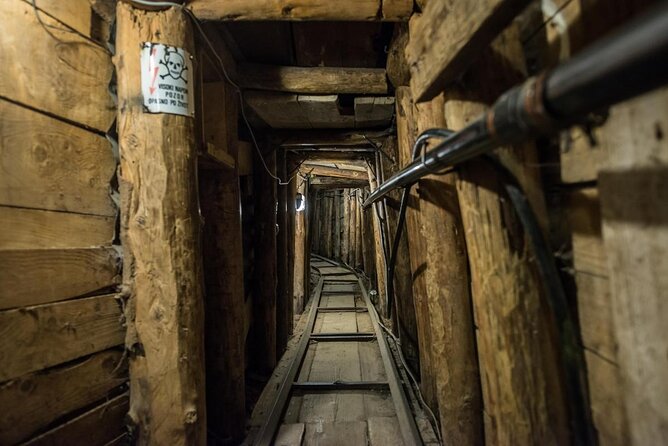
- Sarajevo War Tunnel (Tunnel of Hope): A longer stop with an educational presentation and a key survival story
- Imaginary borders: Pass between Federation of Bosnia and Herzegovina and Republic of Srpska along the route multiple times
A half-day route through Sarajevo’s siege-era realities
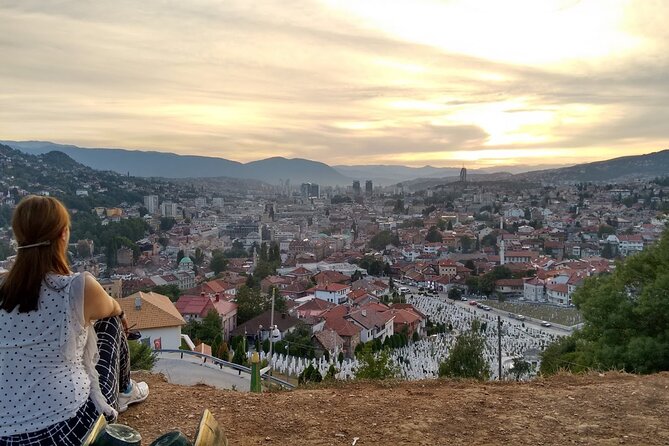
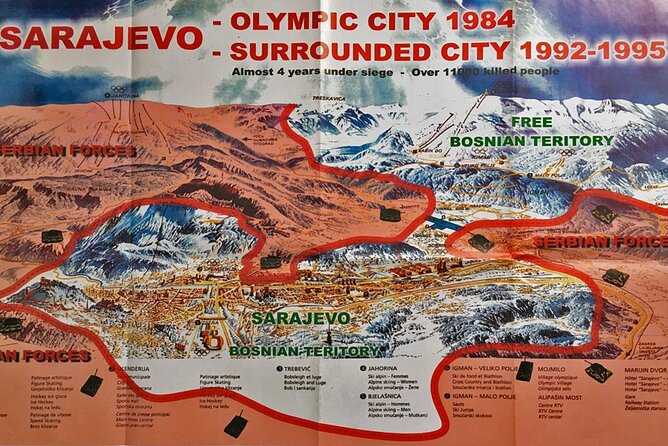
This tour is built like a focused walk through Sarajevo’s wartime map. You’ll move from street-level danger to hilltop viewpoints, then into one of the most talked-about survival sites from the siege period. The overall pacing is meant for people who want serious context without losing half a day or a whole day.
What makes it work is the connection between “where” and “why.” The guide doesn’t just point. You learn why a street is remembered, why a mountain mattered, and why certain routes feel different even today. When you step from one stop to the next, you’re carrying the last piece of the story with you.
You can also read our reviews of more tours and experiences in Sarajevo.
- Fall of Yugoslavia, Sarajevo War Tour with Tunnel of Hope Museum and Frontlines
★ 5.0 · 1,314 reviews

Private pacing, small group size, and onboard Wi‑Fi that actually helps
A private tour can mean a lot of things. Here, it mainly means you get time for real questions, and your guide can adjust how fast the explanations move. With a maximum of 8 travelers, you’re unlikely to get swallowed by a big group.
I also like the practical touch of onboard Wi‑Fi. Between stops, you’re not stuck totally disconnected. You can read, map, translate, or just send a quick message while the vehicle moves you to the next point. For a tour focused on one of the hardest chapters of modern European history, that little bit of normalcy matters more than you’d think.
Price and what’s included (and where you’ll pay extra)
At $35 per person for about 3–4 hours, the value comes from the guided logistics plus transportation. You’re getting a driver/guide, an air-conditioned vehicle, bottled water, and onboard Wi‑Fi. If you stay outside Old Town Sarajevo, hotel pickup is available when required by guests.
The main extra cost is the Sarajevo War Tunnel entry. The tunnel visit is about 1 hour, and the admission is not included; it’s listed at €10.00 per person. If you want the full impact of that stop, factor that in before you book so there are no surprises.
Getting oriented: Sniper Alley and the war’s split town
The first part of the experience centers on the idea that Sarajevo’s danger wasn’t evenly spread. You’ll witness the street infamous for killings during the siege and learn why it’s called Sniper Alley. This isn’t presented as trivia. It’s framed as a geographic lesson: where people were exposed, and why certain stretches became lethal.
Next, you’ll pass the part of town often referred to as being on the other side during the war. The point isn’t to reduce the conflict to slogans. It’s to help you understand that Sarajevo’s neighborhoods were affected in different ways as the siege tightened. From the road, you start to grasp why the war-era divisions still show up in how people talk about the city.
The “imaginary border” route between two entities
One of the tour’s most distinctive features is the route itself. Along the way to mountain Trebevic, you’ll cross an “imaginary” border between the Federation of Bosnia and Herzegovina and the Republic of Srpska four times. The tour explicitly notes that you do not need passports for these crossings.
I found the framing useful: it signals that this is a real-world reality you can experience physically, but without the hassle of formal border paperwork. It also underlines that Bosnia’s post-war structure affects daily life and movement—even when your day still feels like a regular guided sightseeing outing.
- Fall of Yugoslavia, Sarajevo War Tour with Tunnel of Hope Museum and Frontlines
★ 5.0 · 1,314 reviews

Jewish Cemetery Sarajevo: learning where snipers were positioned
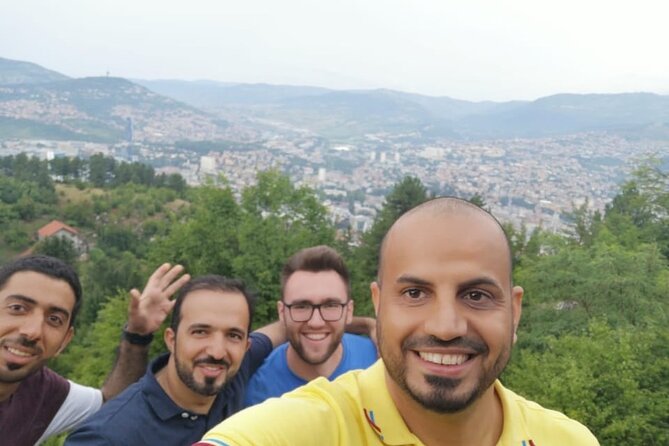
The Jewish Cemetery Sarajevo stop is one of the shortest segments, but it’s built to hit hard. It’s about 15 minutes, and admission is free. The guide shows where snipers were positioned and explains how they were shooting at citizens of Sarajevo during the siege.
What makes this stop worth your attention is the way it forces you to picture danger from a specific standpoint. Instead of vague talk about suffering, you’re given a directional understanding of how a siege worked in practice: distance, sightlines, and the fact that civilians were targeted. It’s not light viewing, but it helps you make sense of the other viewpoints later on the route.
Trebevic Mountain: first siege line and command-center ruins
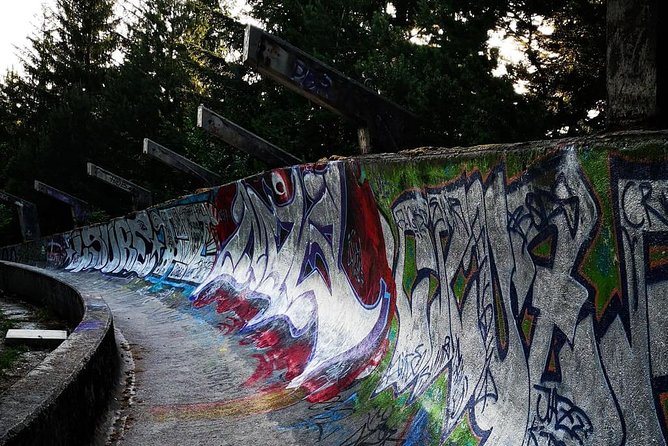
From the cemetery, the tour climbs toward the siege’s physical backbone at Trebevic Mountain. Again, the time is about 15 minutes, with free admission, but the content points to why the location mattered so much. Trebevic was a site of the first line during the siege, and you’ll visit hotel ruins tied to main positions and the command center of the besieging army.
This stop feels like a shift from explanation to atmosphere. You’re looking at terrain and remnants that suggest how controlling key heights can shape a whole city’s fate. Even if you don’t know the details of the war, you can still understand the basic logic: high ground changes everything.
A small drawback: because the stop is brief, you’ll want to stay mentally present. This isn’t the type of tour where you can wander slowly for 45 minutes. The guide keeps you moving so the story remains connected.
The Yellow Fortress panorama and defenders’ cemetery
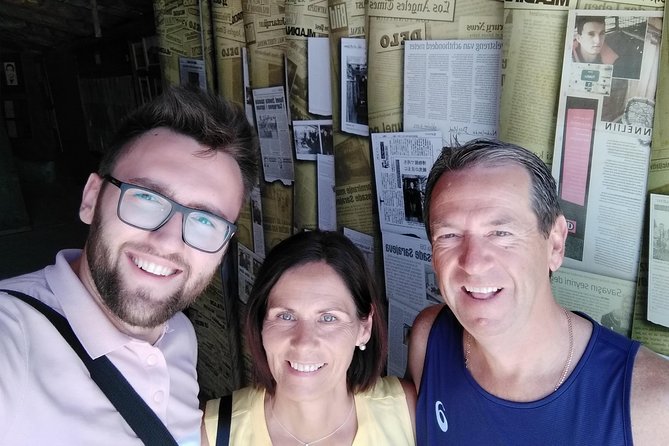
Next comes The Yellow Fortress, a stop designed for both perspective and context. It’s another 15-minute stop with free admission. The guide uses the panorama of Sarajevo to introduce the Sarajevo Siege, then you’ll be able to see an important defenders’ cemetery from the fortress.
I like this combination of view and meaning. The panorama helps your brain build a map of the city, and then the cemetery gives the lesson a human anchor—showing that defenders were also organized, positioned, and remembered. It’s one of the best places on this itinerary for understanding how the city was watched, guarded, and fought over.
Sarajevo War Tunnel: what the Tunnel of Hope stop really gives you
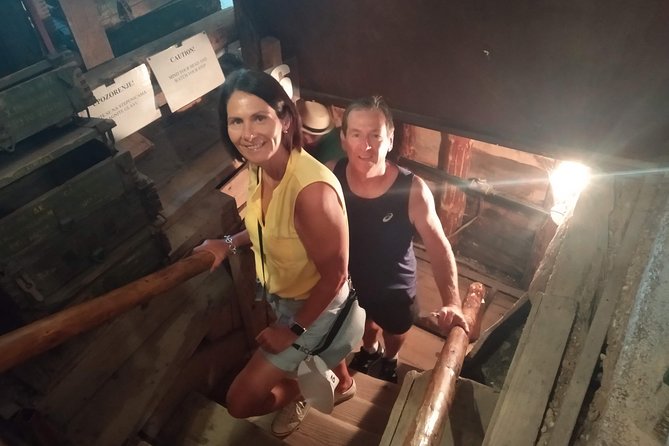
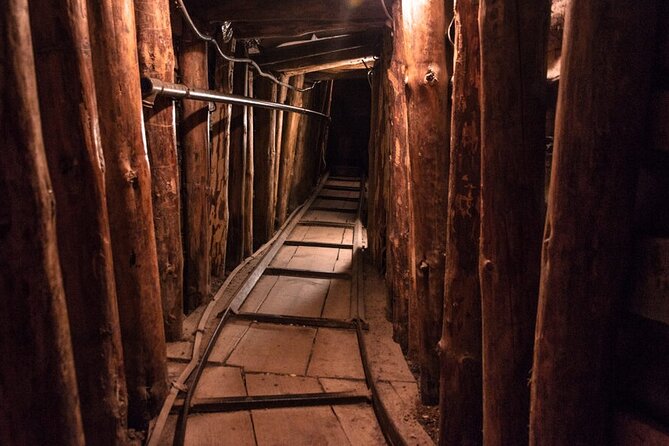
If there’s a single “main event” in the middle of the half-day, it’s the Sarajevo War Tunnel. You’ll get a short educational tour and presentation about the Bosnian War and the creation of the War Tunnel. This is the longest stop on the schedule, about 1 hour, and the tunnel admission is not included in the $35 price.
I think the value here is in the way a siege can feel abstract until you see a concrete piece of survival infrastructure. A tunnel is a practical idea, not a metaphor. It answers the basic question your brain keeps asking while you’re at viewpoints and ruined structures: how did people manage to keep going under pressure?
One practical note: because admission for the tunnel costs extra, bring enough budget to cover that €10 per person. It’s the one part where the tour price alone may not feel complete.
The guide matters: what I took from Emir’s approach
A key reason this tour earns strong marks is how it handles the hardest subject. In the small-group setting, the guide doesn’t stick to a script. Emir’s style, from what I learned watching how he answered questions, aims at clarity and personal connection.
You’ll get a guided story that stays practical: what you’re seeing, why it matters, and what it meant for people living through the siege. That keeps the day from becoming just a checklist of names and places.
Transportation and timing: why the 3–4 hours feel tight but manageable
The tour runs about 3–4 hours, with several 15-minute stops and one 1-hour tunnel visit. That means you’ll never spend so long at a single location that you lose the thread. On the flip side, it also means you’re not doing leisurely museum-style wandering.
Pickup is part of the convenience. You start at Kovači 25, Sarajevo 71000, and the tour can pick you up from hotels in Old Town Sarajevo or hotels on the way to the Tunnel of Hope area. Hotel pickup is included when guests stay out of the Old Town, when required.
For planning, I’d treat this like an organized history walk with transport between points—not like a flexible self-guided day. If you’re the type who likes to slow down and re-read plaques for 30 minutes, you might find the pace challenging.
Who this tour suits best (and who should skip it)
This experience is a strong match if you want a guided Sarajevo war overview that’s not padded with unrelated stops. It’s also a great fit if you like learning in the open air—using street-level sites, viewpoints, and terrain.
I’d also say it’s ideal if you’re traveling with someone who likes structure. The itinerary is tight, and the story is organized around key locations tied to the siege.
Where it might not fit: if you’re very sensitive to war-related content, expect this to feel emotionally intense. The cemeteries, siege positions, and Sniper Alley setting are not meant to be casual.
Should you book this War Times Experience half-day tour?
Yes, I’d book it if your goal is context. For $35, you’re paying for an efficient, guided route that touches multiple high-impact siege-related sites: Sniper Alley, Jewish Cemetery Sarajevo, Trebevic Mountain, The Yellow Fortress, and the Sarajevo War Tunnel. The onboard Wi‑Fi and small-group size make the experience smoother, and Emir’s approach is built around answering questions clearly.
But decide based on your energy. This is a half day with heavy themes and short stop durations. If you want a slower pace or a lighter topic, you might prefer a different kind of Sarajevo tour.
If you do book, come ready to listen, then let the places do their job. The city’s layout explains more than you expect when someone gives you the right starting points.
FAQ
How long is the War Times Experience in Sarajevo half-day tour?
It lasts about 3 to 4 hours.
What is the price per person?
The price is $35.00 per person.
What’s included in the tour price?
Included are the driver/guide, an air-conditioned vehicle, onboard Wi‑Fi, bottled water, and hotel pickup if required for guests staying out of Old Town Sarajevo.
Is Sarajevo War Tunnel admission included?
No. The Sarajevo War Tunnel ticket is listed as not included, at €10.00 per person.
Do I need a passport for the border crossings?
No. The tour states that you do not need passports, and the crossings are described as an absurdity to experience without repercussions.
Can I cancel and get a full refund?
Yes. Cancellation is free up to 24 hours in advance for a full refund.
You Might Also Enjoy
More Tours in Sarajevo
- Fall of Yugoslavia, Sarajevo War Tour with Tunnel of Hope Museum and Frontlines
★ 5.0 · 1,314 reviews


More Tour Reviews in Sarajevo
- Fall of Yugoslavia, Sarajevo War Tour with Tunnel of Hope Museum and Frontlines
★ 5.0 · 1,314 reviews