REVIEW · SARAJEVO
Visit Herzegovina from Sarajevo in one day
Book on Viator →Operated by Bosnian Voyager · Bookable on Viator
Herzegovina in one long day. What makes this tour work is the tight route that strings together Mostar’s Old Bridge and the icy reality of Buna spring, all in one morning-to-evening push. I like that it’s small-group and guided, not a bus-drop situation, and I also like the stop choices that mix Ottoman, Austro-Hungarian, and even WWII-era memorial history. The main drawback: it’s a 12-hour day, so every place gets just enough time to see the point, not enough time to linger.
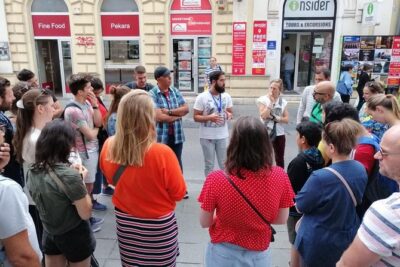
You start at 8:00 am with pickup (at your accommodation or the operator’s office), then ride in an air-conditioned vehicle with bottled water. The tour runs in English, and with a maximum of 15 travelers, the guide can actually steer the day instead of just reading off facts. In the real world, the energy of guides matters a lot here, and guides like Muammar and Hussain show up as favorites for clear English and high momentum.
In This Review
- Key highlights worth your attention
- A one-day Herzegovina circuit from Sarajevo: what you really get
- Konjic and Stara Ćuprija: the Ottoman bridge you’ll actually remember
- Jablanica’s Memorial Complex on the Neretva: history with a physical setting
- Mostar on foot: Old Bridge, bazaar lanes, and the Ottoman/Austro mix
- Buna and Blagaj: cold spring water and a reset from city walking
- Počitelj’s open-air museum feel: historic village on the Neretva
- Timing, comfort, and group size in a 12-hour day
- Price and value: why $76.03 can feel fair
- Guide quality is the hidden ingredient (and it shows)
- Weather and expectations: how to avoid a flat day
- Should you book this one-day Herzegovina trip?
- FAQ
- How long is the Herzegovina day trip from Sarajevo?
- What towns and sights are included?
- Is pickup from my accommodation included?
- Is lunch included in the price?
- Are entrance fees included?
- Is bottled water provided?
- What group size is this tour?
- What language is the tour in?
- Does the tour require good weather?
- Is there a cancellation window for a full refund?
Key highlights worth your attention

- Mostar Old Bridge with a guided walk that ties architecture to stories, not just photos
- Konjic’s Stara Ćuprija (Old Bridge), including the Ottoman construction details and later rebuilding
- Jablanica’s Battle on the Neretva memorial complex, designed as a place to walk through history
- Buna spring and the Blagaj area—the quick nature reset before you head into more ruins and viewpoints
- Počitelj as an open-air museum along the Neretva, with big views in a compact stop
- Small group (max 15) plus pickup and included fees, which helps the day stay smooth
A one-day Herzegovina circuit from Sarajevo: what you really get
This is built for travelers who want Herzegovina’s best hits without dealing with buses, transfers, and timing puzzles. You leave Sarajevo early, you cross into the Herzegovina-Neretva Canton, and you cover a smart mix of towns along the Neretva corridor.
What I like about this setup is that each stop has a clear “reason to exist.” Konjic gives you an old bridge with a long timeline. Jablanica gives you a memorial complex with place-based meaning. Mostar gives you the big-ticket sights and walkable Ottoman/Austro-Hungarian contrast. Buna and Počitelj shift the tone toward water, springs, and historic hillside living.
Yes, it’s long. But it’s also efficient. If your goal is to see a lot while staying guided and included-transported, this style of day trip makes sense.
You can also read our reviews of more tours and experiences in Sarajevo
Konjic and Stara Ćuprija: the Ottoman bridge you’ll actually remember
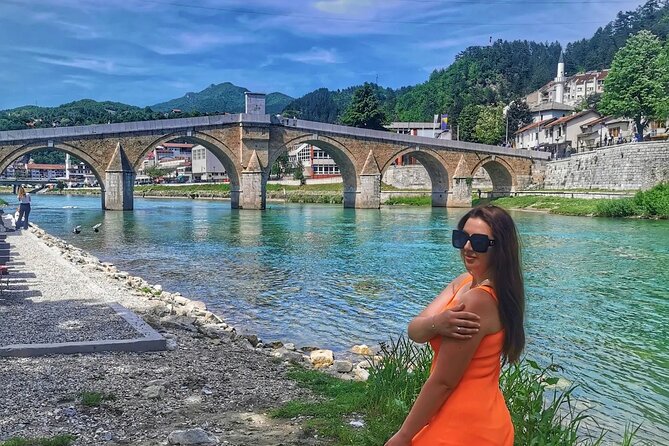
Konjic is your first stop, about an hour-ish out of Sarajevo area by road. It’s a mountainous, wooded town on both sides of the Neretva, and it carries serious age: current settlement life traces back almost 4000 years.
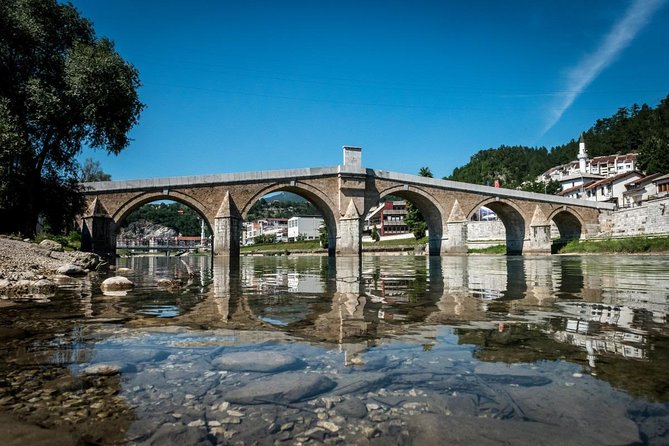
The star is Konjička Stara Ćuprija, the Old Bridge built between 1682 and 1683 by Ali-aga Hasečić. The bridge spans six slightly pointed stone arches. It was damaged during the retreating German army in March 1945, then rebuilt in its original form between 2003 and 2009. Today it’s a proclaimed National Monument of Bosnia and Herzegovina.
In a quick 30-minute stop, you won’t “study” architecture. But you will get the emotional punch that comes from seeing a bridge that has survived conflict, then been restored with intention. If you’re the type who loves a single object with a whole timeline, you’ll get a lot out of this.
Practical note: you’ll want comfortable shoes. Even when the walking is light, early travel days add up fast.
Jablanica’s Memorial Complex on the Neretva: history with a physical setting
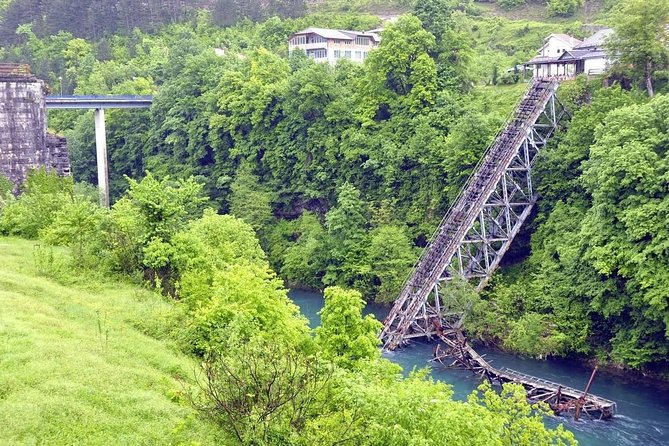
After Konjic, the route heads toward Jablanica for the Memorial Complex of the Battle on the Neretva. This isn’t a generic stop. It’s a dedicated memorial opened on 12 November 1978 to mark the 35th anniversary of the battle, with the complex designed to keep the story connected to the ground.
The complex and the monument on Makljen (near Prozor) were ceremonially opened by Josip Broz Tito, which is a big clue to how central the site is in local memory. The design follows the concept of memorial museums at authentic historic sites. In other words: the place matters.
If you’re curious why this feels different from a standard “look and go” attraction, it’s because the layout is meant to match the battle geography—especially the fateful passage across the Neretva river and the rescue of wounded and sick. The tour keeps it to about 30 minutes, but it’s enough time to get oriented and hear the story behind what you’re seeing.
What to watch for: it’s easy to mentally switch off during short history stops. Don’t. This one works best when you slow down for a moment and let the setting do its job.
Mostar on foot: Old Bridge, bazaar lanes, and the Ottoman/Austro mix
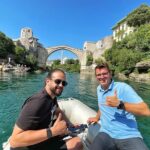
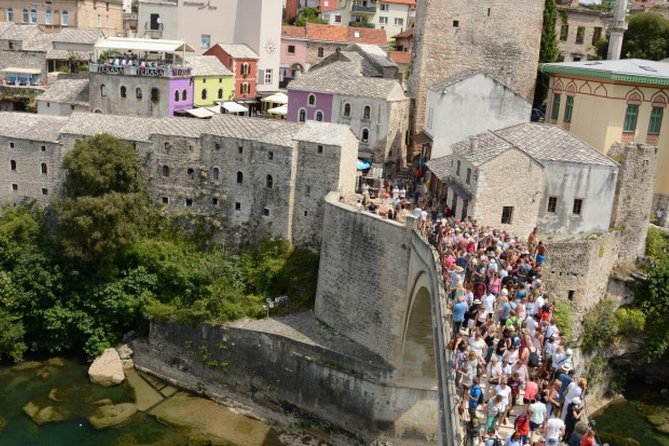
Mostar is where the day earns its reputation. You arrive and get a walking tour through the city, with time for the bazaar and the Old Bridge. This is also the stop that gives you the strongest sense of Mostar’s identity: Ottoman and Austro-Hungarian architecture side by side, with the river acting like the backdrop that keeps everything in frame.
The guided walk includes the major sight people come for—the Old Bridge—but also the streets around it. You’ll get time to orient yourself, then the guide’s stories help the sights click into place. The Old Bridge is the UNESCO-listed monument you’re here for, and it’s the perfect anchor point because it’s both dramatic and symbolic.
Next comes a museum visit focused on Mostar’s Old Bridge, domestic culture, and traditions through exhibitions. It’s a smart pairing. The bridge is the spectacle. The museum gives you context so the spectacle stops being just a photo.
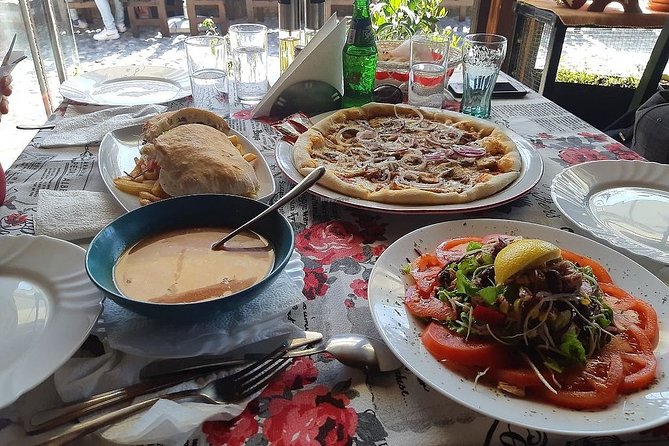
Lunch fits in after the museum. Lunch is not included, but the day does plan for it with a restaurant stop in the middle of the sightseeing flow. The key is you’re not stuck searching for food while everyone else moves on.
One more detail I really like: there’s usually time for more viewpoints before the tour wraps up later. Some guides, like Hussain in one report, highlight fortress views above Mostar, which is the kind of angle that makes the day feel like more than checkboxes.
If you want the Mostar experience without spending your whole day wandering alone, this guided pacing is a good match.
Buna and Blagaj: cold spring water and a reset from city walking
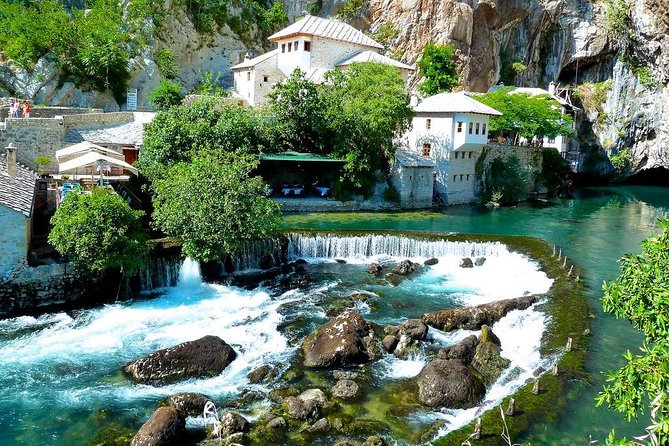
Then you switch gears. The Buna stop focuses on Buna spring (Vrelo Bune)—a strong karstic spring known for extremely cold water and one of the strongest springs in Europe. It’s near the village of Blagaj, southeast of Mostar, and the Buna flows west for about 9 km before joining the Neretva.
The tour keeps Buna to about one hour, which is the right length. Enough time to feel like you’ve stepped out of the city, but not so much time that your energy collapses before you reach the final historic village stop.
What you’ll take away here is the mood. Mostar is architecture and crowds (even in a small group, you’ll feel the city energy). Buna is water and open space. It’s a change that helps you enjoy Počitelj later instead of arriving mentally exhausted.
If you’re the kind of traveler who likes nature stops that are tied to specific facts (how long it flows, where it joins the Neretva), this one rewards attention.
- Fall of Yugoslavia, Sarajevo War Tour with Tunnel of Hope Museum and Frontlines
★ 5.0 · 1,314 reviews
Počitelj’s open-air museum feel: historic village on the Neretva
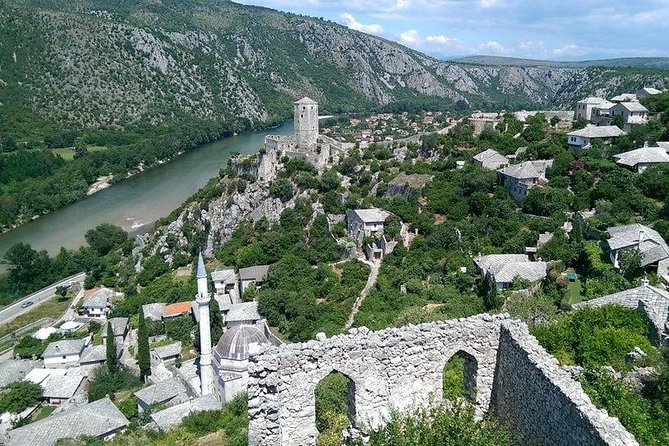
Počitelj is your late-day slowdown. It’s a historic village described as an open-air museum, located in the municipality of Čapljina on the left bank of the Neretva. It’s about 30 km south of Mostar and about 3 km from Čapljina center, and it sits on the main road Mostar–Metković.
This is one of those places where the setting does half the work. Your guide leads you through the village and the surrounding views, with stories tied to the site’s historic importance. Počitelj is often referred to as the jewel in the crown of the Bosnian Kingdom, and the tour uses that idea to help you understand why the village layout matters.
The stop is about one hour, so think of it as a guided taste of how a hillside town feels when it’s meant to be lived in, not just photographed. Even if you don’t know the details ahead of time, the guide’s explanation gives you something to hold onto while you walk.
Practical tip: late-day light can make stone buildings pop. If you want photos, this is a good time to pay attention to the angle and give yourself a minute before the group moves again.
Timing, comfort, and group size in a 12-hour day
This tour runs for about 12 hours and starts at 8:00 am, so plan your day like a pro. Early start means an earlier morning for you, but it also means you get to see Mostar and Počitelj before the day fully drifts into evening haze.
The vehicle is air-conditioned, and you’ll have bottled water included. That matters more than it sounds on a packed day. Road time plus walking time equals heat and fatigue if you aren’t prepared.
The group size max is 15 travelers. That’s small enough for a real conversation, and it helps the guide manage pacing. In a couple of real examples, guides stayed flexible when someone needed adjustments or when the group size got tiny, turning the day into a more intimate experience.
One note for your own planning: Mostar and Počitelj involve walking. You don’t need to be an athlete, but you should be comfortable on your feet for city streets and historic village paths.
Price and value: why $76.03 can feel fair
The price is $76.03 per person, and it’s priced like a “transport + guidance + entry fees” bundle. On a day trip, that’s often the make-or-break point, because the biggest costs are usually the vehicle and the guided coordination.
Here, the tour includes hotel pickup, entrance fees, round-trip transport, bottled water, and air-conditioned driving. Lunch is the one clear extra. If you budget lunch separately, you won’t feel blindsided when the group stops to eat.
Also, the fact that a mobile ticket is offered is practical. You’re not hunting for printed vouchers or figuring out last-minute instructions.
Value-wise, this is strongest if you want:
- guided time in Mostar instead of self-navigating
- multiple “named” stops without transfer stress
- a route that stays coherent rather than random driving
If you already plan to rent a car and you only care about one or two sights, you might do it cheaper on your own. But if you want the full Herzegovina story across several towns, the bundle approach is a fair trade.
Guide quality is the hidden ingredient (and it shows)
Most day trips live or die by the guide. In this case, the standout theme is energy plus clarity in English. Muammar comes up as a favorite for friendly, informative explanations and a strong interest in sharing Bosnia and Herzegovina in an understandable way.
Hussain also shows up with a reputation for highlighting views—like the fortress area above Mostar—so you get angles that make the city feel larger than it looks from street level.
One more detail from real experiences that I think is worth your attention: guides can adjust when the group needs it. In one account, the guide remained patient and flexible for a traveler using a crutch. That’s not something you can “guarantee,” but it’s a sign you’re working with people who pay attention to the day, not just the checklist.
If you care about storytelling, this tour’s format gives your guide room to do it.
Weather and expectations: how to avoid a flat day
The tour requires good weather. That’s not a trick line; it affects how enjoyable outdoors stops like Buna and Počitelj will be.
So what should you expect? A lot of moving between places, guided stops that are paced for a group, and time built around key sights rather than slow wandering. If your ideal day is 30 minutes somewhere and then off to the next “why does this matter” moment, you’ll like this.
If you want hours of free time in a single town, you might find the pace too busy. That’s the trade.
Should you book this one-day Herzegovina trip?
Book it if you want the Herzegovina highlights tied together in one guided day: Konjic’s historic bridge, a meaningful Neretva memorial, Mostar’s Old Bridge with a walk and museum time, the spring at Buna/Blagaj, and Počitelj as an open-air historic village.
Skip it (or adjust expectations) if you hate early starts, you want long unstructured time in one place, or you’d rather pick just one town to go deep instead of seeing five.
If you’re visiting Sarajevo and you only have one day to spare, this is one of the most logical uses of that time. You’ll see multiple “faces” of Herzegovina in a way that feels guided, paced, and actually worth your money.
FAQ
How long is the Herzegovina day trip from Sarajevo?
The tour lasts about 12 hours.
What towns and sights are included?
You’ll visit Konjic, Jablanica, Mostar, Buna, and Počitelj.
Is pickup from my accommodation included?
Pickup can be arranged at your accommodation or at the operator’s office, but you need to contact them with the exact address.
Is lunch included in the price?
No, lunch is not included.
Are entrance fees included?
Yes. All fees and taxes are included, and the listed admissions are ticket-free for the stops.
Is bottled water provided?
Yes, bottled water is included.
What group size is this tour?
It’s a small group with a maximum of 15 travelers.
What language is the tour in?
The tour is offered in English.
Does the tour require good weather?
Yes. It requires good weather, and if it’s canceled due to poor weather, you’ll be offered a different date or a full refund.
Is there a cancellation window for a full refund?
Yes. You can cancel up to 24 hours in advance for a full refund.
You Might Also Enjoy
More 1-Day Tours in Sarajevo
More Tour Reviews in Sarajevo
- Fall of Yugoslavia, Sarajevo War Tour with Tunnel of Hope Museum and Frontlines
★ 5.0 · 1,314 reviews