REVIEW · SARAJEVO
Sarajevo: Islamic Traditions and Daily Life Tour
Book on Viator →Operated by Insider Ltd · Bookable on Viator
Islamic Sarajevo on foot in two hours. This walk threads together mosques, madrasa education, and everyday Ottoman life, so you start understanding the city fast instead of collecting random landmarks. I especially like the way the itinerary connects places you can see with the faith and culture behind them, and I like that it stays practical with a guide and city map included. One thing to consider: it’s still a walking tour with some uphill segments, so wear comfortable shoes.
You’ll also pay attention to details most people miss—like the lunar clock—and that makes the stops feel less like checkboxes and more like a story you can follow on your feet. The main drawback is cost at two sites: you’ll need extra money for the Svrzo’s House museum and the Gazi Husrev-beg Mosque and Museum. If you budget for that up front, this tour is excellent value for the time you have.
In This Review
- Key highlights worth planning around
- Islamic Sarajevo on foot: pace, group size, and value for $30
- Mejdan Park and the founding scene you can still feel
- Jedileri Sanctuary: why the “Turbe” matters in Muslim life
- Emperor’s Mosque and how Sarajevo got its name
- Gazi Husrev-beg Mosque: Sarajevo’s central spiritual center
- The Clock Tower: timekeeping tied to the lunar calendar
- Gazi Husrev Begova Medresa: education as public culture
- Svrzo’s House and Morica Han: Ottoman daily life, not just monuments
- Faculty of Islamic Studies and Baščaršija: knowledge meets street life
- Bravadžiluk Street: where food and craft tell the story
- Optional Alifakovac Cemetery: a quiet pause with meaning
- Practical tips so the walk feels smooth (and not like a stair workout)
- Should you book this Sarajevo Islamic Traditions and Daily Life tour?
- FAQ
- How long is the Sarajevo Islamic Traditions and Daily Life tour?
- What time does the tour start?
- Is the tour offered in English?
- Where do I meet for the tour?
- Do I need to print anything, or is there a mobile ticket?
- How large is the group?
- Which entrances cost extra?
- Is there walking involved?
- What happens if weather is bad or I need to cancel?
Key highlights worth planning around
- A short, focused 2-hour route that mixes faith sites with Ottoman daily life
- Street-level context so you understand why Sarajevo’s Islamic landmarks shape the city
- Two paid indoor stops (Svrzo’s House and Gazi Husrev-beg Mosque/Museum) if you want to go inside
- The lunar Clock Tower—a rare timekeeping detail tied to the Islamic calendar
- Ottoman houses and inns that help you picture how Muslim travelers and residents lived
- Small-group feel with a maximum of 25 people and an English-speaking certified guide
Islamic Sarajevo on foot: pace, group size, and value for $30
This tour is built for people who want meaning without spending a whole day. It runs about 2 hours, starts at 10:00 am, and is offered in English with a certified guide and a city map included.
For $30.04 per person, the value is strong because many of the major stops are listed as free at the gate. The itinerary also mixes quick photo breaks with a couple longer stops, so you get both overview and a few places where you can actually slow down and look.
Group size is capped at 25, which keeps it easier to ask questions. Also, the tour uses a mobile ticket, so you’re not scrambling for paper on arrival.
You can also read our reviews of more tours and experiences in Sarajevo.
- Fall of Yugoslavia, Sarajevo War Tour with Tunnel of Hope Museum and Frontlines
★ 5.0 · 1,314 reviews
Mejdan Park and the founding scene you can still feel
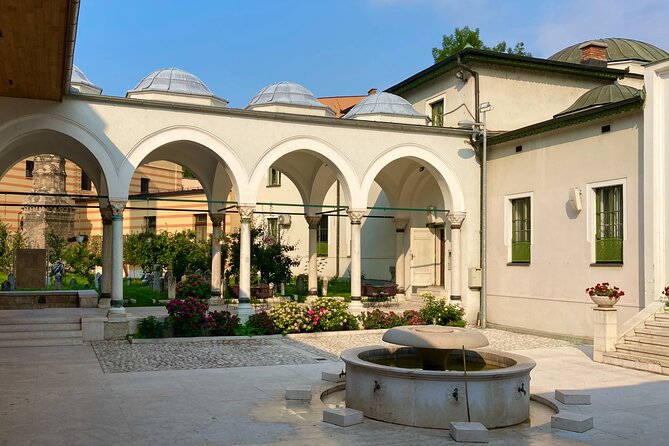
Your first key stop is Mejdan Park, tied to the historic moment when Sarajevo was officially established. This is the kind of place where the ground itself helps explain why people gathered here in the first place—social life first, then the layers of culture and faith built around it.
It’s a quick stop (about 5 minutes), and that’s a good thing on a short tour. You’re not stuck for long in one spot; instead, you get a starting point for the city’s story.
If you like tours that help you get your bearings fast, this opening works well. It sets up the rest so later stops don’t feel random.
Jedileri Sanctuary: why the “Turbe” matters in Muslim life
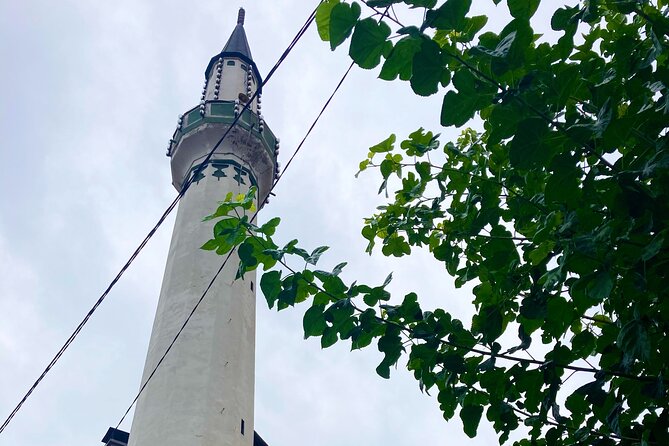
Next comes Jedileri Sanctuary, also known as Turbe sedam braće. This is one of those religious sites where you learn that spirituality is not only about big buildings—it’s also about remembrance, local sacred meaning, and community.
It’s another about 5 minutes, so you won’t get a long lecture. But the guide’s job here is to make you notice what you’re seeing and why it matters to Muslim life in Bosnia, not just where it is on a map.
If you’re the type who likes respectful, low-pressure context at sacred places, this stop fits the tone of the whole tour.
Emperor’s Mosque and how Sarajevo got its name
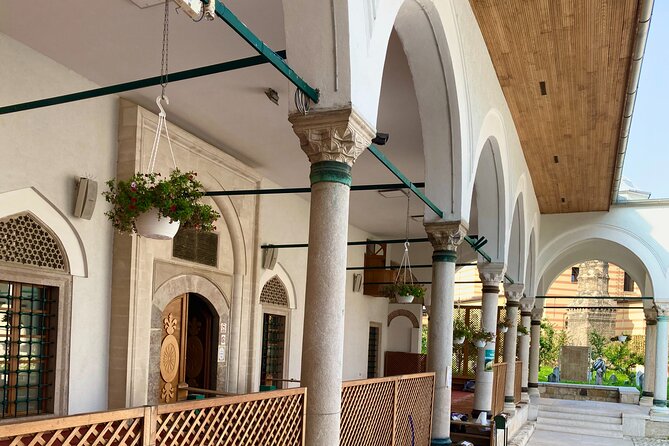
Then you move to the Emperor’s Mosque, described as the oldest mosque in Sarajevo. Even if you’ve never heard the origin story, the tour frames the site in a way that connects Islamic heritage with how the city became known.
This stop is brief (around 3 minutes), but short can be powerful when the guide focuses on one or two big ideas. Expect to leave with a clearer sense of how Sarajevo’s identity has been shaped over time.
Gazi Husrev-beg Mosque: Sarajevo’s central spiritual center
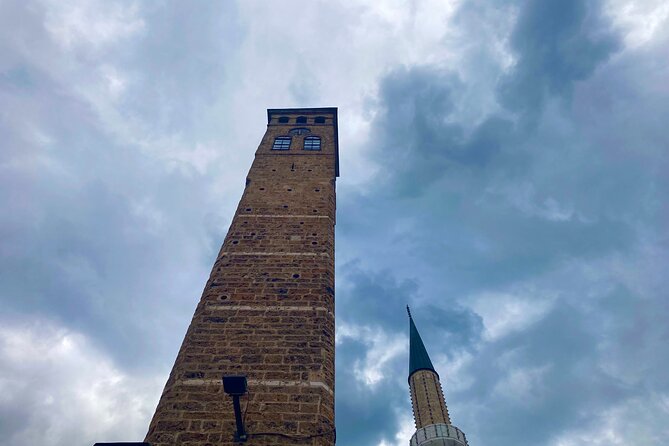
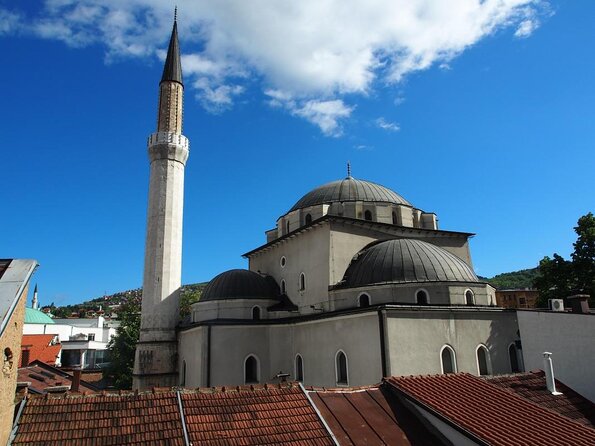
Now you’ll spend time at the Gazi Husrev-beg Mosque, the city’s central mosque in this route. This is a longer stop (about 30 minutes), and it’s the place where many themes from earlier stops start to feel tangible.
Important note: the entrance to the Gazi Husrev Bey’s Mosque and Museum is not included. The listed entry fee is 8 BAM (4.50€) per person. If you want the full experience inside the mosque area and museum elements, plan for that extra cost.
You’ll also likely understand why this mosque is treated as a spiritual and cultural heart of Sarajevo—because it’s not only about worship. It connects the city’s Islamic heritage to everyday community life in a way you can see in the surrounding urban rhythm.
- Fall of Yugoslavia, Sarajevo War Tour with Tunnel of Hope Museum and Frontlines
★ 5.0 · 1,314 reviews
The Clock Tower: timekeeping tied to the lunar calendar
Between mosque and madrasa-style education, you pause for one of Sarajevo’s signature curiosities: the historic Clock Tower, described as a rare lunar clock. This is the kind of stop that makes the whole tour feel specific to Sarajevo instead of generic “historic center” sightseeing.
The point isn’t just the photo. The guide helps you connect timekeeping to the Islamic lunar calendar, which changes how you look at what would otherwise be just another tower.
This is a quick moment, but it’s memorable because it’s unusual and practical: you learn why the city measures time the way it does.
Gazi Husrev Begova Medresa: education as public culture
After that, the route includes Gazi Husrev Begova Medresa, Sarajevo’s first Islamic high school, with a 1537 legacy tied to one of the city’s greatest benefactors. This stop is about 10 minutes, and it works because it shifts your focus from places of prayer to places of learning.
If you only visit religious sites, it’s easy to think faith lives only in worship spaces. A madrasa stop changes that. You start seeing education—who taught, who studied, and why it mattered—as part of the same cultural system.
The value here is the guided explanation. The building isn’t just a pretty stop; it helps you understand the role of knowledge in Sarajevo’s social fabric.
Svrzo’s House and Morica Han: Ottoman daily life, not just monuments
The tour then moves into the Ottoman “how people actually lived” side. First up is Svrzo’s House, a well-preserved 18th-century Ottoman home that shows daily Muslim life in Bosnia. The listed entrance is 5 BAM (3.00€) per person, not included.
Next is Morica Han, described as the best-preserved Ottoman inn in Sarajevo and a historical hub for Muslim travelers in Bosnia. In other words, this isn’t only about locals in private homes—it’s also about movement, hospitality, and the networks that brought people through the city.
These two stops balance each other. The home helps you picture family life and domestic rhythms. The inn helps you picture the city as a crossroads, where travelers arrived, stayed, and connected.
If you’re interested in Ottoman life beyond architecture, this is where the tour starts to feel especially real.
Faculty of Islamic Studies and Baščaršija: knowledge meets street life
One of the shortest-but-interesting segments is at the Faculty of Islamic Studies at the University of Sarajevo. It’s described as Neo-Moorish-inspired with contemporary elements, and it’s framed as a symbol of knowledge and cultural heritage in the city’s center.
Even though it’s only about 1 minute on this route, the focus is visual. You’re learning how Islamic design language continues in modern education settings—not trapped in the past.
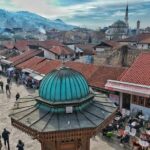
Then you transition into the old market area: Baščaršija. This is a 20-minute stroll through Sarajevo’s old bazaar, where Ottoman-era trade and culture shows up in craft and street atmosphere. The guide helps you connect what you see—goods, shops, the layout—with the city’s historic commercial life.
After Baščaršija, you stop briefly at Sebilj Brunnen (Fountain), with a moment to sip water at this central symbol of Sarajevo and a reference point in Muslim traditions. It’s quick (about 1 minute), but it’s iconic because it’s practical and symbolic at the same time.
Bravadžiluk Street: where food and craft tell the story
You also spend about 20 minutes on Bravadžiluk Street, centered on Muslim culinary traditions and artisanal crafts. This is one of those stretches where you can simply walk, watch, and get ideas for what to try later.
I like this part of the itinerary because it keeps the tour from becoming purely architectural. It reminds you that Islamic culture in Sarajevo isn’t only visible in mosques and schools—it’s also visible in what people eat and make.
You’re not required to buy anything during the tour, but the guidance can help you figure out what’s worth your time once you’re on your own.
Optional Alifakovac Cemetery: a quiet pause with meaning
There’s an optional stop at Alifakovac Cemetery. It’s listed as about 2 minutes, and the tone is reflection—Serene resting place of notable Muslims in Bosnia.
This stop is optional for a reason. It slows the pace, and it suits people who want a calmer, more contemplative angle on Sarajevo’s Islamic story. If you prefer faster movement or you’d rather keep energy for the market area, you can treat it as a choose-when-you-feel-like-it add-on.
Practical tips so the walk feels smooth (and not like a stair workout)
This is mostly a straightforward walking tour, and it’s generally doable for most people, but there is some uphill walking. The simplest fix: wear comfortable shoes and don’t plan this on a day when your legs are already cooked.
Two other practical points:
- Bring extra money for the two paid sites if you want to enter them: Svrzo’s House (5 BAM) and Gazi Husrev Bey’s Mosque and Museum (8 BAM).
- If you’re using a phone, a mobile ticket is already part of the experience, so keep your confirmation accessible.
One more nice-to-know: the tour includes a city map, and the guide is there not just to talk but also to help you connect the dots afterward. If your guide is Suad, you might even get extra time and practical suggestions for where to eat.
Should you book this Sarajevo Islamic Traditions and Daily Life tour?
Yes, if you want a focused overview that mixes faith sites with Ottoman domestic and travel life. This is a strong choice when you only have a short window in Sarajevo and you want the city to make sense.
Skip or rethink if you strongly dislike walking, uphill routes, or you don’t want to pay extra for mosque and museum entrances. Also consider your budget if you plan to enter both paid stops, since that will add a meaningful chunk on top of the base price.
If you like asking questions and you want a guide who can explain the Islamic context in plain, clear language—this tour is built for you.
FAQ
How long is the Sarajevo Islamic Traditions and Daily Life tour?
It lasts about 2 hours (approx.).
What time does the tour start?
The start time is 10:00 am.
Is the tour offered in English?
Yes, it is offered in English.
Where do I meet for the tour?
You meet at Sarajevo Insider – City Tours and Excursions, Zelenih beretki 30, Sarajevo 71000, Bosnia and Herzegovina.
Do I need to print anything, or is there a mobile ticket?
This experience uses a mobile ticket.
How large is the group?
The tour has a maximum of 25 travelers.
Which entrances cost extra?
Svrzo’s House Museum costs 5 BAM (3,00€) per person, and the Gazi Husrev Bey’s Mosque and Museum costs 8 BAM (4.50€) per person. Other listed stops are free.
Is there walking involved?
Yes. It is a walking tour, and it can involve some uphill walking, so comfortable shoes help.
What happens if weather is bad or I need to cancel?
The tour requires good weather. If it’s canceled due to poor weather, you’ll be offered a different date or a full refund. You can cancel for a full refund up to 24 hours before the experience starts.
You Might Also Enjoy

More Tours in Sarajevo
- Fall of Yugoslavia, Sarajevo War Tour with Tunnel of Hope Museum and Frontlines
★ 5.0 · 1,314 reviews

More Tour Reviews in Sarajevo
- Fall of Yugoslavia, Sarajevo War Tour with Tunnel of Hope Museum and Frontlines
★ 5.0 · 1,314 reviews