REVIEW · SARAJEVO
SARAJEVO CONCEPTUAL ART TOUR (galleries, art and arhitecture)
Book on Viator →Operated by Art and Tours Sarajevo · Bookable on Viator
Sarajevo doesn’t just have history. It has art made from it. This small-group conceptual art tour takes you through contemporary galleries, urban street marks, and modern sculpture, all within a walkable stretch of town.
I really like that it mixes indoor gallery time with outdoor stops you can read on the street, so the city feels like part of the exhibit. I also like the focus on Sarajevo’s lived-in modern look, not just famous landmarks. One thing to consider: two stops are outdoors, so cold, rain, or harsh wind can affect how comfortable you are.
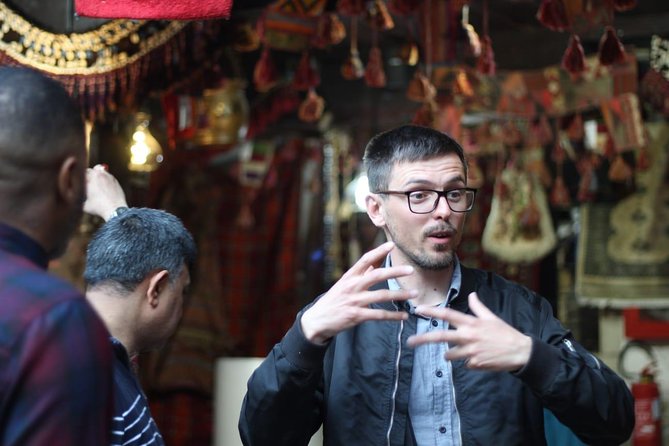
For the people-first part: the guide (Mak) has a personal, conversational way of connecting art with Sarajevo life, including the war years, and he’s known for making sure you can ask questions. If you want art that comes with context you can actually use, this tour fits.
In This Review
- Key highlights you’ll feel fast
- What this tour does differently in Sarajevo
- Meeting point, timing, and how to show up ready
- Brodac Gallery: from Austro-Hungarian prison to contemporary art
- Ferhadija Pedestrian Street and the Sarajevo Roses concrete scar
- Galerija Java in the center: where contemporary Sarajevo takes shape
- Veliki Park sculpture: Mensud Kečo’s Nermine, dođi and the weight of Srebrenica
- Skenderija Bridge area: coffee break at Gallery BORIS SMOJO and FESTINA LENTE
- Value check: is $33.64 worth it?
- Who this tour suits best
- Should you book the Sarajevo Conceptual Art Tour?
- FAQ
- Where does the tour start and end?
- What time does the tour begin?
- How long is the Sarajevo Conceptual Art Tour?
- Is the tour offered in English?
- How many people are in the group?
- Is a ticket included for all stops?
- Can I cancel for free?
- What if the minimum number of travelers isn’t met?
Key highlights you’ll feel fast
- Small-group pace (max 15): easier questions, more time to look closely
- Conceptual city storytelling: galleries plus outdoor marks like the Sarajevo Roses
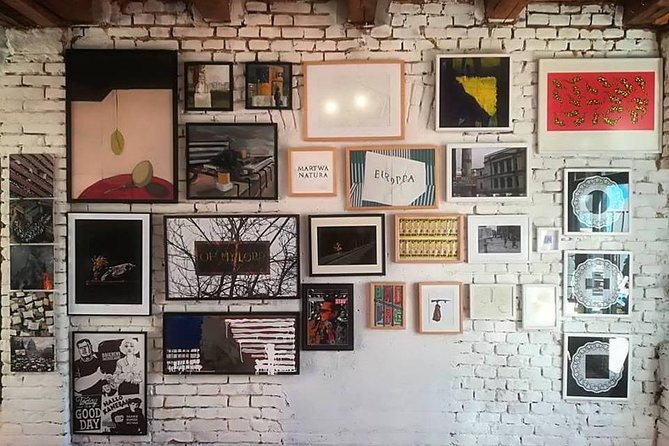
- Brodac Gallery + craft beer: a former prison turned into a cozy contemporary art stop
- Galerija Java’s role in modern Sarajevo: major central hub for local and international artists
- A heavy stop, handled with care: Mensud Kečo’s Srebrenica memorial sculpture in Veliki Park
- Skenderija area art walk: coffee break at Gallery BORIS SMOJO, then the FESTINA LENTE bridge
What this tour does differently in Sarajevo
This tour is built around the idea that Sarajevo is an art lesson you can walk through. You’ll see how contemporary artists respond to the city’s architecture, its urban battles, and its postwar rebuilding. Conceptual art here is not stuck in a textbook. It’s on walls, in parks, and literally in the pavement patterns left by conflict.
The pace is ideal for a first visit. You’re not jumping across the whole country. You’re moving through central areas at a human scale, with time to stop and look, then talk. And because it’s offered in English with a mobile ticket, you can show up prepared and spend your energy on the art instead of logistics.
Price-wise, $33.64 for about 2 to 3 hours is fair, especially since admissions are included for multiple stops. You’re paying for guided interpretation and access, not just a stroll.
You can also read our reviews of more museum experiences in Sarajevo
- Fall of Yugoslavia, Sarajevo War Tour with Tunnel of Hope Museum and Frontlines
★ 5.0 · 1,314 reviews
Meeting point, timing, and how to show up ready
The tour starts at 1:00 pm. You’ll meet at Đulagina 2, Sarajevo 71000, and end back near Skenderija (Skenderija 71000 Sarajevo). It’s planned to run roughly 2 to 3 hours depending on how the group moves and looks around.
A practical advantage: it’s near public transportation, so you can reach the meeting area without a complicated plan. Also, you’ll get a mobile ticket, which means you’re not hunting for paper confirmations in a pocket of receipts.
Wear walking shoes. Even with planned stops, you’ll spend time on sidewalks and public spaces. And if you’re visiting in colder months, think about layering for the outdoor segments.
Brodac Gallery: from Austro-Hungarian prison to contemporary art
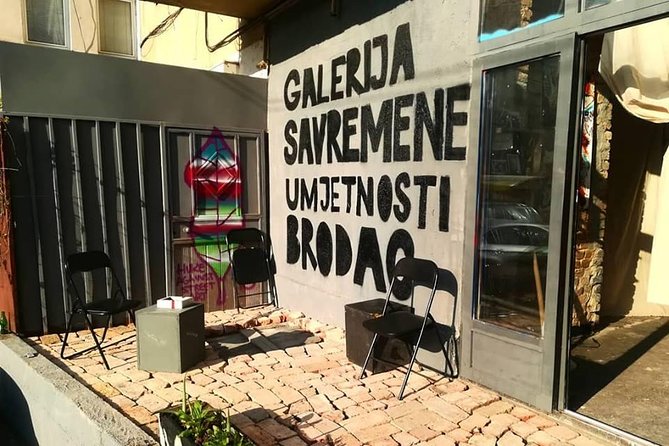
Stop one is Brodac Gallery, set in an old building with an actual past. It used to function as a prison during the Austro-Hungarian occupation, and now it’s a cozy place for contemporary Bosnian art exhibitions.
This is the kind of start that changes how you see the rest of the day. When you step into a former detention space turned gallery, the art doesn’t feel decorative. It feels like transformation. And that matters in a city where the built environment carries memory.
There’s also a social angle: they serve a local craft beer called Gelender. That combo—art + a drink in a small, story-heavy room—makes the start feel relaxed instead of museum-stiff. Admission is included here, and you’ll have about 45 minutes, enough time to look and ask the guide questions without feeling rushed.
One small consideration: because it’s an older building, the vibe can be a bit dim or enclosed depending on the exhibit space. Bring your good attention span, and don’t expect everything to be bright and airy.
Ferhadija Pedestrian Street and the Sarajevo Roses concrete scar
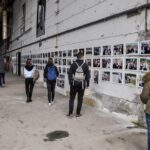
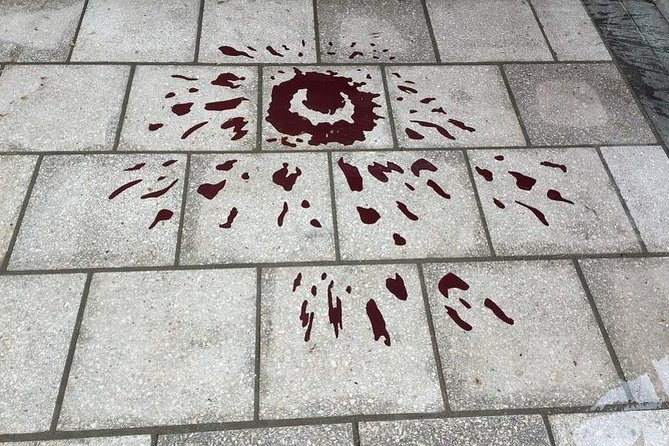
Next you head to Ferhadija Pedestrian Street, one of Sarajevo’s major east-west walking spines. Here, the tour points out Sarajevo Roses: a striking concrete scar formed by an explosion, later filled with red resin.
These patterns aren’t random. The tour explains how mortar rounds landing on concrete created a fragmentation design that looks almost floral in its arrangement. The key is what that pattern represents. Sarajevo went through intense urban warfare during the siege period, with thousands of shell explosions. The city’s surfaces hold those moments, and this is one of the most visually specific reminders you can see while walking.
You’ll get around 30 minutes at this stop. It’s free entry, and it’s outdoors, so it’s also a good stretch break from indoor galleries. But it’s also a stop that’s hard to treat casually. You’ll be seeing art that comes directly from violence, so if you prefer only light subjects, this might feel heavy.
Practical tip: take a slow lap and don’t look only once. This kind of damage-art reads better when you step back, then move closer again.
Galerija Java in the center: where contemporary Sarajevo takes shape
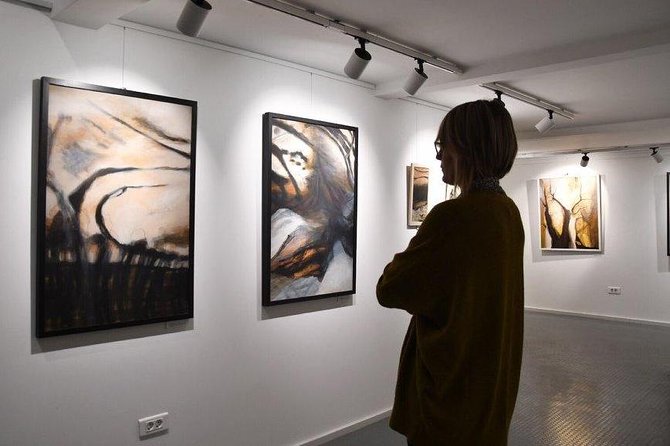
Stop three is Galerija Java on Titova 21, right in the middle of town. This gallery has played an important role in building Sarajevo’s contemporary art scene by giving artists a strong, attractive exhibit space.
What I appreciate about this stop is the emphasis on support, not just display. The tour highlights that the gallery backs both Bosnia and Herzegovina artists and international artists, and that it collaborates across different artistic mediums. That means when you’re standing in front of the works, you’re seeing an active ecosystem, not a one-off show.
You’ll have about 1 hour here, and admission is included. That longer time makes sense. Conceptual art rewards patience. You often need the guide’s framing to understand what the work is doing—how it uses materials, how it plays with ideas, or how it responds to the urban environment you’re already walking through.
If you tend to skim museum labels, slow down here. This is the part of the tour where your curiosity can pay off the most.
- Fall of Yugoslavia, Sarajevo War Tour with Tunnel of Hope Museum and Frontlines
★ 5.0 · 1,314 reviews

Veliki Park sculpture: Mensud Kečo’s Nermine, dođi and the weight of Srebrenica
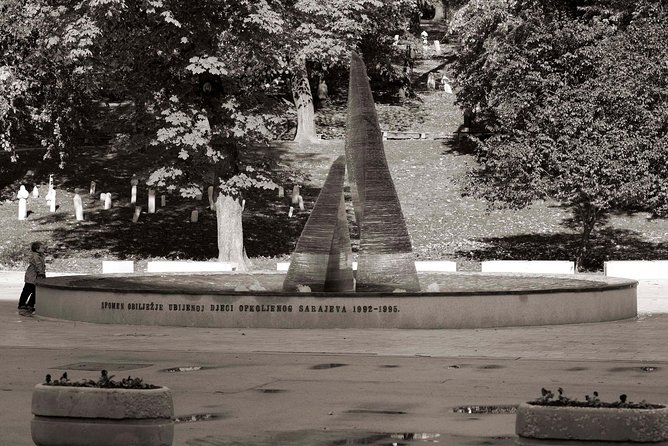
In Veliki Park, you’ll see a sculpture by BH artist and sculptor Mensud Kečo dedicated to the genocide in Srebrenica. The piece is titled Nermine, dođi and it’s made of concrete, reinforcement bars, plastic, and silicon.
That materials list is not just technical. It tells you the sculptor is using industrial, fragile, and human-made elements to communicate distress. The tour notes that the work represents one of the most distressing documented photographs from Srebrenica. That’s a huge part of why this stop hits so hard: you’re not just looking at symbolic form. You’re looking at a remembered image turned into physical structure.
You’ll spend about 30 minutes here. Admission is free. This outdoor stop gives you a moment to absorb everything you’ve seen so far—then confront the emotional core that Sarajevo’s postwar art often carries.
Consideration: this is heavy subject matter. If you’re traveling with kids, or if you’re not in a headspace for genocide-related commemoration, plan accordingly. There’s no way around the fact that this stop is part of the emotional curriculum of the tour.
Skenderija Bridge area: coffee break at Gallery BORIS SMOJO and FESTINA LENTE
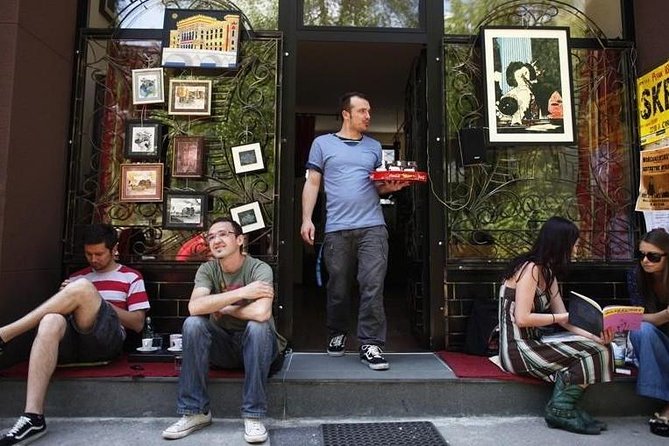
The last stretch starts with a caffe break at Gallery BORIS SMOJO. That pause is a smart move, because you’re going to finish the tour walking and looking again after two more emotional or reflective stops.
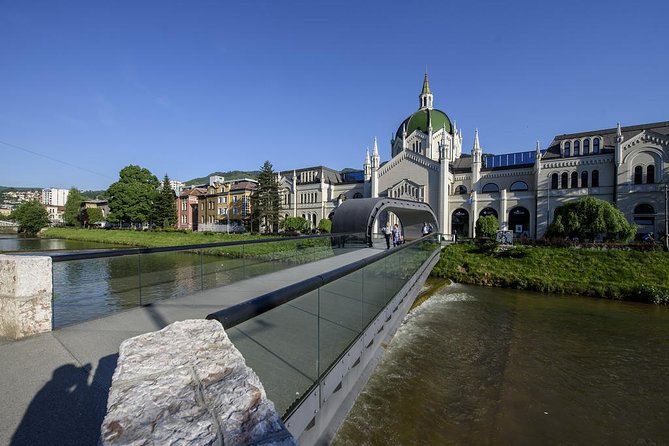
After coffee, you’ll head to see the bridge FESTINA LENTE. The tour doesn’t treat Skenderija as a quick pass-by. It includes time so you can experience the final visual statement and connect it back to the theme: Sarajevo’s modern forms, and how ideas get expressed in public space.
Stop five runs about 30 minutes, and admission is included for the segment. So you’re not just on your own here; you still get guided framing for the final view.
What to watch for: since you’ll be outdoors, keep an eye on weather. This is also where your pace will depend on the group mood—good or not-so-good weather can change how long people want to stand and look.
Value check: is $33.64 worth it?
At $33.64 per person for about 2 to 3 hours, the value depends on what you want from Sarajevo art.
If you’re the type who likes to wander, you could probably find some galleries on your own. But this tour is paying for three things you won’t get from a self-guided walk:
- Interpretation that helps you read conceptual work without guessing
- Access/time that fits the city’s pace, especially with admissions included at multiple stops
- A guide’s personal connection, including Mak’s style of sharing not just art history but also his own experience of the war era, plus quick answers when questions come up
Admissions are included for key indoor segments (like Brodac Gallery and Galerija Java), while other stops are free. That mix helps keep the overall price reasonable while still covering meaningful entry points.
If you want modern and conceptual art in Sarajevo explained in a small-group format, this is a solid buy.
Who this tour suits best
This experience is a strong match if you:
- Want contemporary Bosnian art and conceptual ideas tied to real city spaces
- Like tours where you can ask questions and get straight answers
- Enjoy a mix of indoor art and outdoor public-city meaning
- Are curious about how Sarajevo’s past shows up in architecture and street marks
It may feel less ideal if you:
- Want only sunny, light sightseeing
- Dislike guided context around difficult topics
- Are short on time and need a strictly fast landmark hit
Should you book the Sarajevo Conceptual Art Tour?
Yes, if you want Sarajevo to make sense through art—especially if this is one of your first days in the city. The tour gives you a tight, walkable route with admission-covered stops, strong framing, and a guide like Mak who brings conversation to the experience (including lived-in context around the war years).
Book it with confidence if you’re open to a mix of beauty, memory, and harder material. If you’re mainly looking for carefree sightseeing, you might prefer a lighter tour. But if art with meaning is what you came for, this one fits the mood.
FAQ
Where does the tour start and end?
The tour starts at Đulagina 2, Sarajevo 71000, Bosnia and Herzegovina, and it ends near Skenderija 71000 Sarajevo.
What time does the tour begin?
The start time is 1:00 pm.
How long is the Sarajevo Conceptual Art Tour?
It runs about 2 to 3 hours.
Is the tour offered in English?
Yes, the tour is offered in English.
How many people are in the group?
The tour has a maximum of 15 travelers.
Is a ticket included for all stops?
Admissions are included for stops like Brodac Gallery and Galerija Java, and the final bridge segment. Some stops, like the Sarajevo Roses on Ferhadija Pedestrian Street and the sculpture in Veliki Park, are free.
Can I cancel for free?
Yes. You can cancel for a full refund, and free cancellation is available up to 24 hours in advance.
What if the minimum number of travelers isn’t met?
If the tour is canceled because the minimum isn’t met, you’ll be offered a different date or a full refund.
You Might Also Enjoy

More Museum Experiences in Sarajevo
- Fall of Yugoslavia, Sarajevo War Tour with Tunnel of Hope Museum and Frontlines
★ 5.0 · 1,314 reviews
More Tours in Sarajevo
- Fall of Yugoslavia, Sarajevo War Tour with Tunnel of Hope Museum and Frontlines
★ 5.0 · 1,314 reviews

More Tour Reviews in Sarajevo
- Fall of Yugoslavia, Sarajevo War Tour with Tunnel of Hope Museum and Frontlines
★ 5.0 · 1,314 reviews