REVIEW · SARAJEVO
Bosnian Traditional Handicraft, half-day – do it yourself – Coppersmith Workshop
Book on Viator →Operated by Funky Tours · Bookable on Viator
Copper work, then you leave with one. In a very old shop on Kovači street, you’ll learn about Sarajevo’s traditional coppersmith trade while making your own copper souvenir, led in English. It’s one of those activities where the time feels fast because your hands are actually part of the process.
I especially love meeting the workshop’s female coppersmith instructor, who’s known for being patient and for explaining the craft clearly. I also like that the experience includes the finishing and decorating phase of a dzezva (a Bosnian coffee/tea pot) that you take home at the end.
One thing to plan for: there’s no hotel pickup or drop-off, and the start point is Besarina čikma 5, so you’ll want to get there on your own.
In This Review
- Key things to know before you go
- Entering Sarajevo’s Coppersmith World on Kovači Street
- Starting at Funky Tours: Where Your Afternoon Gets Organized
- What Happens Inside the Old Workshop (and Why It’s More Than a Souvenir Stop)
- The Star of the Show: Decorating Your Dzezva
- Light Refreshments and Conversation: The Pace Feels Human
- Why This Small-Group Setup Makes a Difference
- Price and Value: What You’re Really Paying For
- Who This Workshop Fits Best (and Who Might Want Something Else)
- Practical Tips Before You Book
- Should You Book This Coppersmith Workshop?
- FAQ
- How long is the Bosnian Traditional Handicraft half-day workshop?
- How much does it cost?
- Where does the workshop start?
- What language is the experience offered in?
- What do I make and take home?
- What’s included in the price?
- Is lunch included?
- How many people are in the group?
- Can children participate?
- What is the cancellation policy?
Key things to know before you go
- Small group size (max 4) means more time with your instructor and less waiting around
- Kovači street workshop setting gives you a real feel for Sarajevo’s copper craft tradition
- You make your own dzezva and take it home as a meaningful souvenir
- Coffee or tea included keeps the pace relaxed while you learn
- English instruction makes it easier to ask questions and understand the craft process
- Family-friendly with adult supervision for kids
Entering Sarajevo’s Coppersmith World on Kovači Street
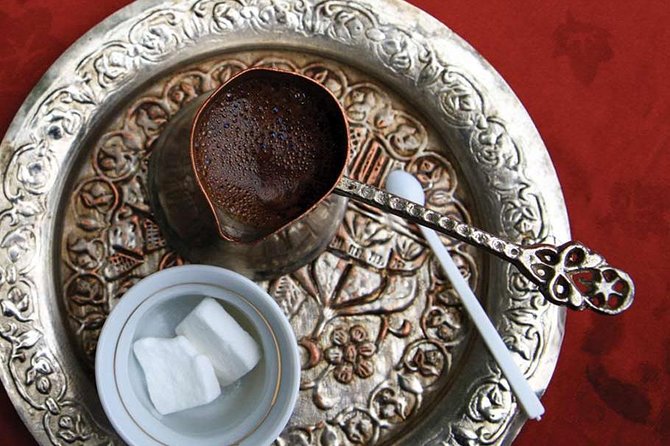
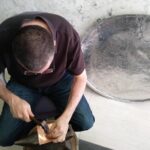
If you like travel that you can touch, this is a strong choice. Instead of watching something happen from the sidelines, you get pulled into the workflow of a traditional copper shop. The setting matters too: you’ll learn in a very old coppersmith shop on Kovači street, in the kind of place where craft isn’t a performance—it’s just how people have worked for generations.
What makes this experience especially satisfying is that it focuses on the practical side of the craft. You’re not just hearing a lecture about copper. You’re making, adjusting, and finishing something you can actually use later—your own dzezva.
And yes, this is one of the best ways to get a deeper sense of Sarajevo beyond historic buildings and photos. You’ll learn about the coppersmith industry in Sarajevo and Bosnia and Herzegovina, but you’ll also get a human layer: the daily rhythm of the workshop and what it takes to learn the work properly.
You can also read our reviews of more tours and experiences in Sarajevo
Starting at Funky Tours: Where Your Afternoon Gets Organized
Your experience begins at Besarina čikma 5, Sarajevo, with Funky Tours. The itinerary lists Funky Tours as Stop 1, which usually means you’ll check in, get oriented, and then move on to the workshop work itself.
Because there’s no hotel pickup or drop-off, treat this like an activity where your planning matters a bit. Public transportation is nearby, and the tour notes that most travelers can participate, so you’re not dealing with complicated logistics. Still, do yourself a favor: arrive a little early so you can settle in and start your hands-on session on time.
The group is capped at 4 travelers, so you won’t feel shuffled into a crowd. In a small group, your questions land better, and your instructor can keep an eye on what you’re doing without rushing you.
What Happens Inside the Old Workshop (and Why It’s More Than a Souvenir Stop)
Once you’re in the workshop setting, the focus shifts to learning the tradition and putting that knowledge into your own copper piece. This is where the experience feels local in a very grounded way. You’re not buying a mass-produced item; you’re working toward something handmade, with guidance.
You’ll have a professional art guide (part of what’s included), and you’ll spend time learning how copperwork fits into Sarajevo’s culture. The craft isn’t presented as a museum artifact. It’s presented as a skill—one that takes time to learn, and one that still matters enough to be practiced in a real workshop.
That matters for value. A lot of tours sell you a story. This one gives you the skill-side of the story: you see how the work is handled, how mistakes get corrected, and how the final look comes together.
The Star of the Show: Decorating Your Dzezva
The highlight here is the dzezva, the copper coffee/tea pot that’s part of Bosnian tradition. The tour price specifically covers the finishing phase of decorating the dzezva, and that’s the part you take home.
So what does that mean for you in real terms? It means you’re not just observing the entire copper-making chain from ore to final product. You’re stepping in at a meaningful point: the stage where your piece becomes your piece. You’ll work on the decorating/finishing work under guidance, shaping the final appearance while learning what makes the results look right.
This matters if you’re deciding whether this is worth it compared to other souvenir options. A lot of “craft” activities end with a small token. Here, your end product is a functional item—something you can associate with your trip every time you see it (or use it, if you’re the type who actually uses your souvenirs).
Reviews also point out that the instructor is careful about teaching and will help if you mess something up. That’s a big deal, because hands-on craft sessions can be stressful if the instructor only moves forward and never corrects. Here, the tone is described as patient, with solid English instruction, so you should feel comfortable asking basic questions and adjusting as you go.
Light Refreshments and Conversation: The Pace Feels Human
Most workshops hit you with a fast schedule: arrive, make something, leave. This one feels more like an afternoon activity you can breathe in. You’ll get coffee or tea as part of the included light refreshments, which helps take the edge off right at the start.
That small comfort changes how the learning feels. When you’re not racing to stay focused on every minute, you can actually listen. And in this kind of traditional craft session, the best parts often aren’t the technique steps. They’re the explanations you get when you ask why something is done a certain way—or what daily life is like for someone who does this work.
One standout detail from participant feedback is that the instructor shares both craft insight and what life in Sarajevo feels like. That kind of context is hard to manufacture on a schedule. It tends to happen when there’s time, patience, and a real teacher who cares that you understand.
- Fall of Yugoslavia, Sarajevo War Tour with Tunnel of Hope Museum and Frontlines
★ 5.0 · 1,314 reviews


Why This Small-Group Setup Makes a Difference
This experience runs for about 2 hours 30 minutes (approx.) and is limited to up to 4 travelers. That small number isn’t just trivia. It’s the reason this workshop is likely to feel personal.
In a larger group, an instructor has to keep moving so everyone stays on track. In a group of four, the instructor can:
- check your work more often,
- explain steps in a way that matches your questions,
- and correct mistakes before they become frustrating.
And since the included content is the finishing and decorating phase of the dzezva, you want time where your hands are on the project, not time spent waiting for a turn.
Also, if you’re visiting with kids, the tour notes children must be accompanied by an adult. In a small group, an adult can help keep things calm and focused without the chaos that sometimes comes with family-friendly activities.
Price and Value: What You’re Really Paying For
At $72.18 per person, this isn’t the cheapest thing on a Sarajevo shortlist. But you’re not buying a guided walk and a photo stop. You’re paying for:
- a professional art guide,
- coffee or tea,
- a hands-on workshop experience centered on a take-home copper souvenir,
- and the included finishing/decorating work of your dzezva.
The value equation here is simpler than it looks. If you love crafts, this saves you from the usual problem: buying souvenirs that are pretty but meaningless. A finished dzezva created during a guided workshop has a story tied to it, and that story is built on action—your hands, your questions, your corrected mistakes, your final piece.
It’s also a strong choice if you want an activity that doesn’t require hours of travel across town. You’re in and out in one afternoon block, with a compact setup rather than a whole day lost.
One practical note on value: because there’s no hotel pickup, your “real cost” isn’t money so much as time. Plan your route so you’re not rushing. Then the $72.18 feels like a fair exchange for a real souvenir and a real skill moment.
Who This Workshop Fits Best (and Who Might Want Something Else)
I think this is a great match for you if:
- you want a hands-on cultural experience, not just sightseeing,
- you like making one meaningful item instead of buying many small ones,
- you’re traveling with family and want something that can hold kids’ attention with an adult beside them,
- and you want to learn about Sarajevo’s copper heritage through a working artisan.
It may be less ideal if:
- you hate workshops or anything that requires steady focus for a couple hours,
- you’re short on time and need a quick, drop-in activity,
- or you’re looking for a broader “history and architecture” format (this is craft-forward, not a walking lecture).
If you’re the type who loves to ask questions, this workshop is especially rewarding because instruction is delivered in English, and the instructor is described as patient with beginners.
Practical Tips Before You Book
This experience is sold through Funky Tours and includes a mobile ticket, and you’ll receive confirmation within 48 hours of booking subject to availability. The tour also notes near public transportation, which is helpful if you’re using tram/bus options.
Here are a few practical steps that will help things go smoothly:
- Plan to arrive a bit early to Besarina čikma 5 so the workshop portion starts on time.
- Wear clothes you don’t mind getting a little “workshop feeling,” even if you’re not doing heavy physical labor.
- Bring a curious attitude. Craft sessions go best when you ask basic questions and stay flexible.
One more thing: since your booking is handled by Funky Tours while the actual artisan experience depends on the workshop schedule, I recommend you double-check your confirmation details shortly before you go. If anything looks off, resolving it early saves stress.
Should You Book This Coppersmith Workshop?
If you want Sarajevo in a form you can take home, yes—this is worth booking. The combination of a small group, clear English instruction, and a take-home dzezva makes it feel more substantial than a typical “cultural demo.” You’re not just learning about copper heritage; you’re finishing a real copper piece as part of the process.
I’d skip it only if you prefer sightseeing-only days, or if you can’t manage a self-arranged start point at Besarina čikma 5. Otherwise, this is one of the more memorable, tactile activities in Sarajevo, and it’s the kind of souvenir that doesn’t end up in a drawer.
FAQ
How long is the Bosnian Traditional Handicraft half-day workshop?
It lasts about 2 hours 30 minutes.
How much does it cost?
The price is $72.18 per person.
Where does the workshop start?
The meeting point is Besarina čikma 5, Sarajevo 71000, Bosnia and Herzegovina.
What language is the experience offered in?
It’s offered in English.
What do I make and take home?
You decorate/finish a dzezva (a copper coffee/tea pot) and take it home.
What’s included in the price?
Light refreshments (coffee or tea), a professional art guide, and the price covers the finishing phase of decorating the dzezva. Coffee and/or tea are also included.
Is lunch included?
No, lunch is not included.
How many people are in the group?
The activity has a maximum of 4 travelers.
Can children participate?
Children must be accompanied by an adult.
What is the cancellation policy?
You can cancel for a full refund up to 24 hours in advance of the experience start time, and cancellation is free.
You Might Also Enjoy
More Workshops & Classes in Sarajevo
More Tour Reviews in Sarajevo
- Fall of Yugoslavia, Sarajevo War Tour with Tunnel of Hope Museum and Frontlines
★ 5.0 · 1,314 reviews