REVIEW · SARAJEVO
Jajce, Travnik and Pliva watermills – Day Tour from Sarajevo
Book on Viator →Operated by Adventure in Bosnia | Tour Agency | Tours and Excursions · Bookable on Viator
Castles, waterfalls, and watermills in one long day. This tight little circuit pulls you from Sarajevo into central Bosnia, with private transport and a stop-by-stop plan that keeps the day moving. I like the fact it’s capped at eight people, so you’re not stuck shouting across a bus.
My other favorite part is the mix: you get medieval Jajce (fortress walls, church history) plus Travnik’s Ottoman-era centerpiece, and then the natural star that ties it together. You’ll also meet guides like Emir, Kenan, Senad, Mufid, and Ben, who tend to explain what you’re seeing in plain terms, with enough humor to keep it from turning into a lecture.
One thing to consider: it’s a long day (about 8 to 10 hours, with early start at 8:00 am) and you’re paying a couple small entrance fees for fortresses, so pack snacks if you’re the kind who gets hungry before lunch.
In This Review
- Quick hits before you go
- A Small-Group Bosnia Day Trip Starts at 8:00 in Sarajevo
- Fortress-of-the-day energy: Jajce’s medieval stronghold
- Catacombs that aren’t really catacombs
- Crkva Sv. Marije Jajce and the Ottoman layers you can still read
- Esma Sultana Mosque: the woman-name detail to look for
- The Pliva Waterfall is why this day works
- Mlincici huts and watermills: the storybook break
- Pliva Lakes: clear water time, short and sweet
- Travnik’s Old Fort and the river-side coffee stop
- Plava voda coffee: small pause, big view payoff
- Sarena Dzamija: the multi-coloured mosque moment
- Guides make or break the day: how to pick the right questions
- Pace, timing, and what to bring for an 8–10 hour route
- Price and value: what $95.58 buys you
- Who should book this tour (and who might not)
- Should you book the Jajce, Travnik and Pliva Watermills day tour?
- FAQ
- What time does the tour start?
- Do I get hotel pickup in Sarajevo?
- How long is the day tour?
- What is the maximum group size?
- What’s included in the price?
- Is lunch included?
- Are entrance fees included for all stops?
- What language is the tour offered in?
- Can I cancel for a full refund?
Quick hits before you go
- Small group (max 8): easier pace, more questions, less waiting.
- Jajce’s Pliva waterfall center-stage: 17 meters tall, right in town.
- Mlincici watermills and Pliva lakes break: a calmer, scenic stretch after forts and churches.
- Travnik coffee with river views: Blue water springs at Plava voda, right next to where the river runs.
- Clear historical stop list: medieval to Ottoman to Austro-Hungarian era elements show up in the route.
A Small-Group Bosnia Day Trip Starts at 8:00 in Sarajevo
This tour is built for people who want to see more than the usual Sarajevo routine without driving themselves. It starts at 8:00 am, and pickup is offered from any hotel in Sarajevo, with the day ending back at the meeting point. You get private transportation plus WiFi on board, which helps when you’re bouncing between viewpoints and towns for much of the day.
In real terms, you’re looking at a day that’s part history walk, part photo stop, part “watch your step” driving. Expect the roads outside the city to take time, and plan around the fact that you’ll be in the car for a while both ways.
You can also read our reviews of more tours and experiences in Sarajevo.
- Fall of Yugoslavia, Sarajevo War Tour with Tunnel of Hope Museum and Frontlines
★ 5.0 · 1,314 reviews
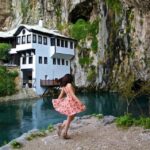
Fortress-of-the-day energy: Jajce’s medieval stronghold
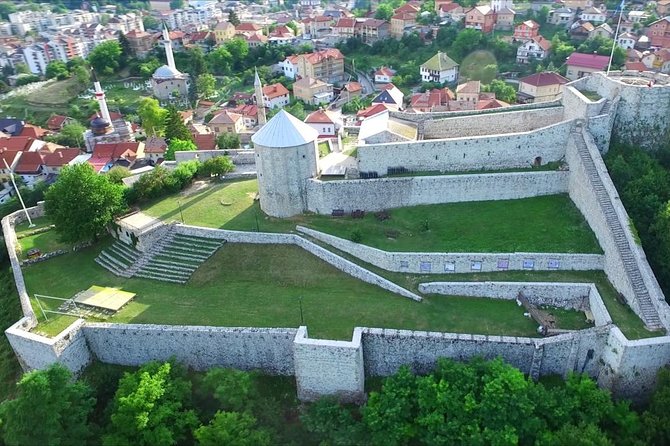
Your first big anchor stop is the Fortress of Jajce, often called the King City area. This is one of the best-preserved fortified capitals of the Bosnian Kingdom, and the whole place feels like it was meant to be defended. You get around 30 minutes, which is enough to get a sense of the layout and soak in the views from the higher ground.
Entrance here costs extra, so budget €2.50 per person for the fortress ticket. If you’re the kind who likes to understand why walls mattered, this stop sets the tone for everything that follows: Jajce was a last stronghold before Ottoman expansion changed the region’s fate.
Catacombs that aren’t really catacombs
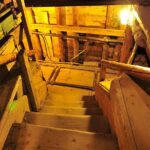
Right after the fortress, you’ll see the Catacomb of Jajce—what locals call it, even though it isn’t a true catacomb system. It’s basically a small underground Christian space: a church carved in a single rock or cave-like setting, done in a late Romanesque style. You get about 5 minutes here, so treat it like a quick, focused stop rather than a slow museum visit.
If you care about architecture details, this is one of those places where short time can still feel meaningful because the setting is so unusual.
Crkva Sv. Marije Jajce and the Ottoman layers you can still read
Next comes Crkva Sv. Marije Jajce, a church that became something else over time—and you can see the marks of that change in the building’s story. In the early 1400s, when Jajce rose to capital status of the Bosnian kingdom, an older Romanesque church was adapted into a Gothic-style one.
The religious and political symbolism is heavy here. After the marriage tying the Bosnian heir Stjepan Tomašević to Jelena Branković (Mara) in 1459, relics of St. Luke the Evangelist were brought from the Ottoman sphere, and the coronation of the last Bosnian king happened here in 1461 according to papal envoys.
Then the Ottoman period reshapes the site: in 1528 it becomes a mosque named after Sultan Suleiman I. It burned multiple times, with severe damage in 1658, and after a later 1832 fire only the walls remained; it hasn’t been used since. You’ll only have about 5 minutes at this stop, but it’s the kind of location where good explanations make the short visit feel complete.
Esma Sultana Mosque: the woman-name detail to look for
A few minutes later you reach the Esma Sultanija Mosque (also called Čaršija Mosque), located on the main street through town. This is the only mosque in Bosnia and Herzegovina named after a woman, which makes it an easy detail to remember later.
You’ll spend about 10 minutes here. Entrance is free. It’s not just a quick photo stop either: the context from the previous church visit makes this one hit differently, since you’re moving through layers of the city’s religious history.
- Fall of Yugoslavia, Sarajevo War Tour with Tunnel of Hope Museum and Frontlines
★ 5.0 · 1,314 reviews
The Pliva Waterfall is why this day works
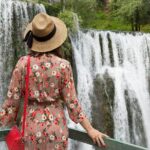
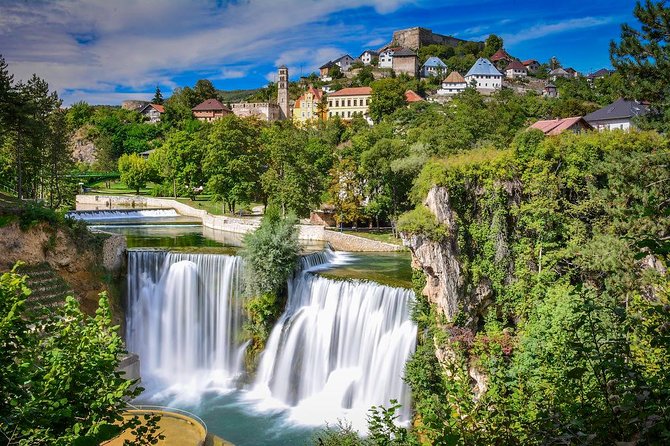
After the historical stops, the day shifts into full scenery mode at the Pliva Waterfall. This is a natural monument in the center of Jajce, about 17 meters high, and it’s famous for being unusual in how it meets rivers: it’s the only waterfall in the world said to create an estuary where the Pliva River joins the Vrbas River.
You’ll get around 30 minutes here. That timing is right: long enough to stand back and watch the full fall, and long enough to relocate for a different angle. It also helps that it’s in-town, so you don’t lose time trekking between viewpoints.
If you’re trying to decide whether the day tour is worth it, this stop usually makes the case. Fortresses are great, but a waterfall you can reach quickly and actually linger at is what makes the day feel like a real break from walking.
Mlincici huts and watermills: the storybook break
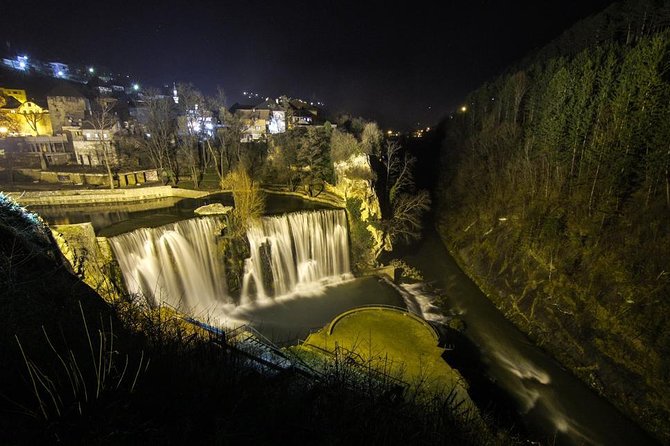
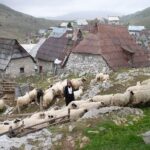
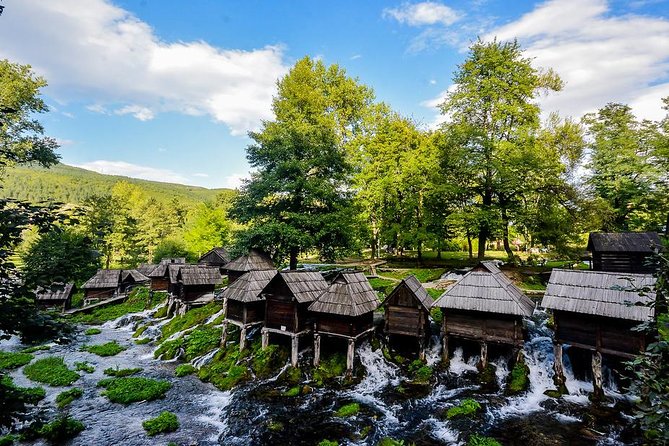
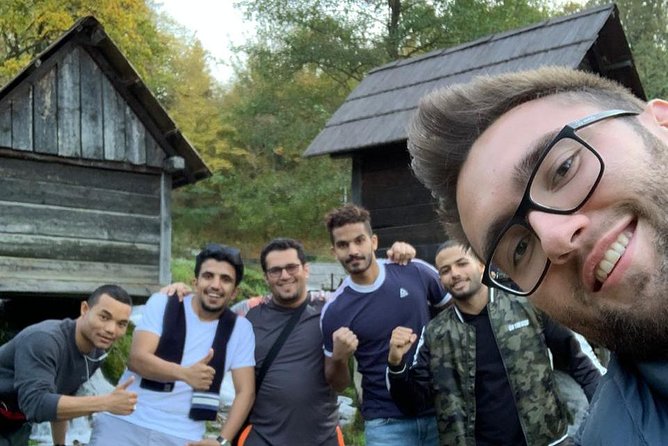
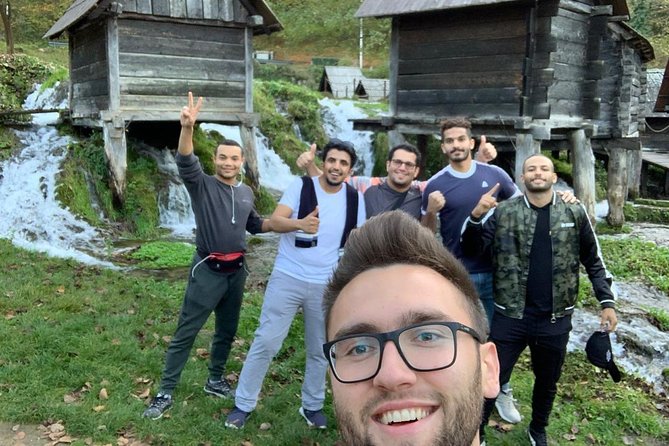
From the waterfall, you head downstream to Mlincici, in the Pliva Lakes area. This is a collection of roughly 20 small huts that were once watermills used by local farmers. Most dates to the Austro-Hungarian era (around 1867 to 1918), which is part of why this place feels like a little constructed chapter of history rather than a random scatter of old buildings.
You’ll have about 30 minutes. This is a great stretch of time for photos and for just standing there and letting the setting work its charm. Entrance is free, but the value is in what you experience: a slower pause after the fortress-and-church rhythm.
Pliva Lakes: clear water time, short and sweet
After Mlincici, the tour adds a quick stop at Pliva Lakes. You get about 10 minutes here, focused on the water itself: crystal-clear water and that fairytale feel that people associate with Jajce’s identity.
I like this stop because it breaks up the day without dragging it out. In ten minutes, you can grab a couple clean photos, read the mood, and move on—no pressure to do a long hike.
Travnik’s Old Fort and the river-side coffee stop
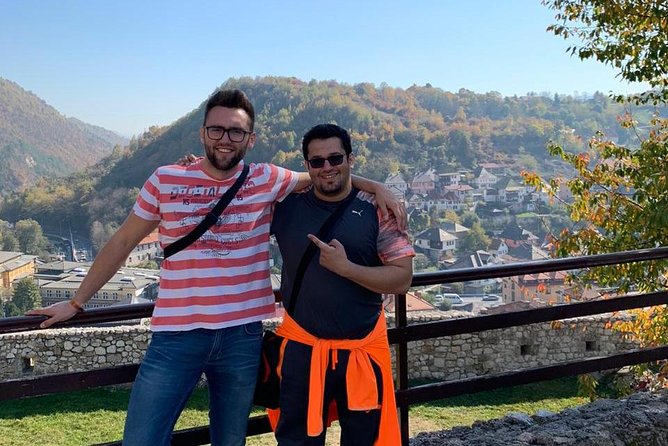
The second half of the day brings you to Travnik, starting with Tvrdava Stari grad (Old Fort). This is described as one of the most beautiful and best-preserved medieval fortified buildings in Bosnia, and later historical periods left visible marks on it. You’ll get about 40 minutes, and entrance here costs extra at €2.00 per person.
This stop is a good counterweight to Jajce. You’ve already seen one fortified capital-style setting, and now you get another stronghold that helps connect Bosnia’s past across different towns and eras.
Plava voda coffee: small pause, big view payoff
You’ll then have a break in Travnik for Bosnian coffee near Plava voda (Blue water springs), right where the river runs next to and under the area. The stop is about 30 minutes, and it’s one of the more relaxing parts of the route.
Practical tip: if you skip breakfast or you’re sensitive to timing, coffee and a snack here can save your afternoon. Lunch is not included, and the day is long enough that “I’ll eat whenever” can turn into a cranky plan.
Sarena Dzamija: the multi-coloured mosque moment
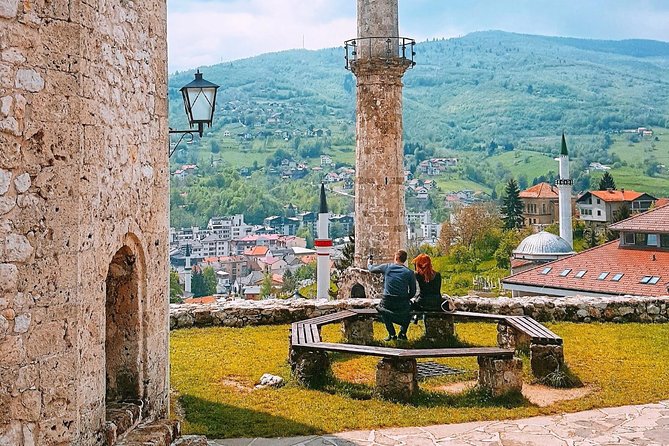
The last historic highlight in Travnik is Sarena Dzamija, also known as the Suleymanis Mosque or Multi-coloured Mosque. It was built in 1757 during the Ottoman era, and it’s described as an architectural beauty.
You’ll spend about 5 minutes here, and entrance is free. It’s a quick ending: a small stop that helps the day feel like it has a full arc rather than stopping at scenery alone.
Guides make or break the day: how to pick the right questions
Across the route, the guide role is crucial because you’re moving fast between places that have layered stories. Names you may encounter include Senad, Kenan, Emir, Mufid, and Ben, and the pattern is consistent in how they run the experience: clear explanations, friendly energy, and enough humor to keep the pace from feeling rigid.
If you want the day to feel personal, ask simple, pointed questions during the drive:
- What changed here when the Ottoman era arrived?
- Why did Jajce’s kings matter to this location?
- What should I notice in the fortress walls that I might miss?
That’s when a short visit (like the 5-minute church or the 5-minute mosque) starts to feel like more than a checklist.
Pace, timing, and what to bring for an 8–10 hour route
This tour is built around a schedule with short stops and longer photo moments at the waterfall and watermills. You’ll spend time walking in places that are outdoors and sometimes on uneven ground, especially around forts.
Bring the usual Bosnia day-trip kit:
- Comfortable shoes for historic stone surfaces and stairs
- A light layer, since weather can shift by the afternoon
- Sun protection if you’re there in warmer months
- A snack if you tend to get hungry between the morning drive and lunch
Also, remember lunch is not included. People often find they’re happiest when they treat lunch as a plan, not a surprise, because the day continues right after.
Price and value: what $95.58 buys you
At $95.58 per person, you’re paying for more than transportation. The tour includes private transport, WiFi on board, and bottled water, and it covers the overall flow that connects Jajce and Travnik without you hunting for schedules or maps. You also get many stops with free admission, which helps the total stay predictable.
You’ll still pay two small extra entrance fees for fortresses:
- Travnik fortress: €2.00 per person
- Jajce fortress: €2.50 per person
When the day is done right, you end up with a lot of different kinds of experiences in one go: medieval fortresses, religious site transformations, a central-town waterfall, and a scenic watermill area. If you’re short on time in Sarajevo but want a real slice of central Bosnia, this price-to-coverage ratio often makes sense.
Who should book this tour (and who might not)
This works especially well if you:
- Want a structured day trip that feels like more than one random stop
- Like history mixed with strong natural sights
- Prefer a small group over large coach tours
- Don’t want to arrange your own transport between towns
It might feel less ideal if you:
- Dislike long drive days and early mornings
- Want slow museum-style time at each site
- Travel in a season when smaller town shops may have quieter hours (winter can make some places feel closed down)
Should you book the Jajce, Travnik and Pliva Watermills day tour?
I’d book it if your ideal Sarajevo visit includes one big scenery payoff (Pliva waterfall) plus two towns that explain Bosnia’s changing eras in a day. The small group limit, pickup convenience, and the way the route moves from fortresses to watermills are what make it work as a practical day plan.
If you’re on the fence, focus on this: you’re paying for time saved. Someone else handles the driving, timing, and link between sites, and you get the moments that usually take visitors the longest to plan—like pairing Jajce with Travnik and ending at the Pliva watermills and lakes.
If you show up with good shoes, a light snack, and a few questions for your guide, this is the kind of day that leaves you with photos plus real context, not just “I was there.”
FAQ
What time does the tour start?
The tour starts at 8:00 am.
Do I get hotel pickup in Sarajevo?
Yes. Pickup is offered from any hotel in Sarajevo.
How long is the day tour?
It runs about 8 to 10 hours.
What is the maximum group size?
The group is capped at a maximum of eight travelers.
What’s included in the price?
The tour includes bottled water, private transportation, WiFi on board, and a mobile ticket.
Is lunch included?
No. Lunch is not included.
Are entrance fees included for all stops?
No. Fortress tickets are not included: Travnik fortress is €2.00 per person and Jajce fortress is €2.50 per person.
What language is the tour offered in?
The tour is offered in English.
Can I cancel for a full refund?
Yes, free cancellation is offered up to 24 hours in advance for a full refund.
If you want, tell me your travel month and whether you prefer early photos or longer stops, and I’ll suggest how to time your day around the key moments.
You Might Also Enjoy
More Tours in Sarajevo
- Fall of Yugoslavia, Sarajevo War Tour with Tunnel of Hope Museum and Frontlines
★ 5.0 · 1,314 reviews

More Tour Reviews in Sarajevo
- Fall of Yugoslavia, Sarajevo War Tour with Tunnel of Hope Museum and Frontlines
★ 5.0 · 1,314 reviews