REVIEW · SARAJEVO
Sarajevo for beginners
Book on Viator →Operated by Cooltour Sarajevo · Bookable on Viator
Sarajevo turns history into street-level stories. In a little over two hours, this guided loop threads together Sarajevo’s religious landmarks, Ottoman-era remnants, Austro-Hungarian architecture, and the spots tied to the events that reshaped the 20th century. Old Town is the theme, but you’re not just looking at buildings—you’re learning what each place is and why it matters.
What I like most is the guiding style. Guides such as Samra (and sometimes Irfan) keep things clear, funny, and genuinely useful—like you’ll actually notice details you’d otherwise walk right past. I also appreciate that coffee and/or tea are included, and the guide gives practical tips for enjoying Bosnian coffee properly. The only real catch: most stops are not ticketed in the price, so if you want to go inside buildings, you’ll likely need extra money for admissions.
In This Review
- Key things to know before you go
- Price and time: what $34.92 gets you in Sarajevo
- Morning start: how the route sets you up (9:00 am)
- Catholic, Orthodox, and Muslim landmarks in one guided sweep
- Ottoman-era remnants and the Austro-Hungarian contrast
- Shopping and bridges: old trade routes made walkable
- Coffee break, Inat, and small cultural details you’ll remember
- Old streets and meeting points: Baščaršija, Sebilj, and Kazandžiluk
- World-changing history: Sarajevo assassination location and the Jewish Museum
- Who this tour is best for (and who should consider a different format)
- Should you book Sarajevo for beginners?
- FAQ
- How long is the Sarajevo for beginners tour?
- Where does the tour start and end?
- Is the tour offered in English?
- What’s included in the price?
- Are admission tickets included for the stops?
- What’s the maximum group size?
- What is the cancellation policy?
Key things to know before you go
- A fast orientation for first-timers: about 2 hours to connect the dots across Sarajevo’s center
- English-speaking guides with personality: the explanations land fast, with humor and real local perspective
- Religious and political history in one walk: churches, mosques, and major historical locations stay close together
- Mostly outside, ticket extra: admission isn’t included for the listed stops, so plan for that if you want interiors
- Coffee/tea included: a small comfort break that helps you keep moving without rushing
- Small group size: maximum 18 people, which usually means less waiting and easier questions
Price and time: what $34.92 gets you in Sarajevo
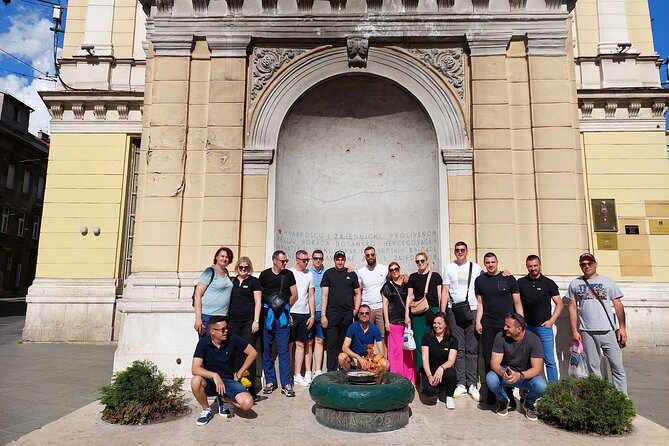
At $34.92 per person for roughly two hours, you’re paying for something most solo travelers struggle to buy on their own: a guided path that makes the city readable. Sarajevo can feel layered—different empires, faiths, and eras stacked close together—and this tour gives you a map you can walk even after it’s over.
You also get coffee and/or tea as part of the experience. It’s not a huge feature, but it matters because it turns the tour from a “march through landmarks” into a gentler introduction. In a place where street walking is the whole game, a built-in break is practical value.
The other value is group size. With a maximum of 18, you’re less likely to feel lost in the crowd. You can ask questions and get answers that actually fit what you’re seeing right then, not ten minutes later.
You can also read our reviews of more tours and experiences in Sarajevo.
- Fall of Yugoslavia, Sarajevo War Tour with Tunnel of Hope Museum and Frontlines
★ 5.0 · 1,314 reviews

Morning start: how the route sets you up (9:00 am)
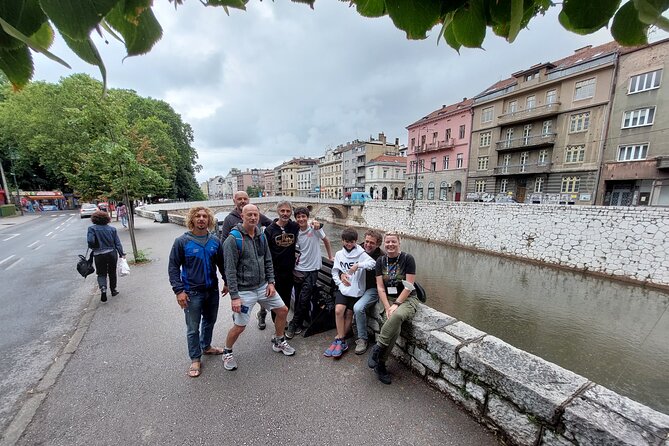
This tour starts at 9:00 am at Trg fra Grge Martića, and it ends back at the same meeting point. That’s helpful for beginners. You’re not trying to figure out transport from the far end of town, and you don’t end the day in the “wrong” neighborhood.
Also, since it’s near public transportation and uses a mobile ticket, you can keep your planning simple. On a first day, that’s underrated. You’ll likely spend the morning figuring out where things are, where to eat, and what direction to go for the rest of your trip—and this helps you get your bearings fast.
In practical terms, this is built for people who want to see a lot without turning it into a full-day grind. If you’re the kind of traveler who likes walking with structure, this format fits.
Catholic, Orthodox, and Muslim landmarks in one guided sweep
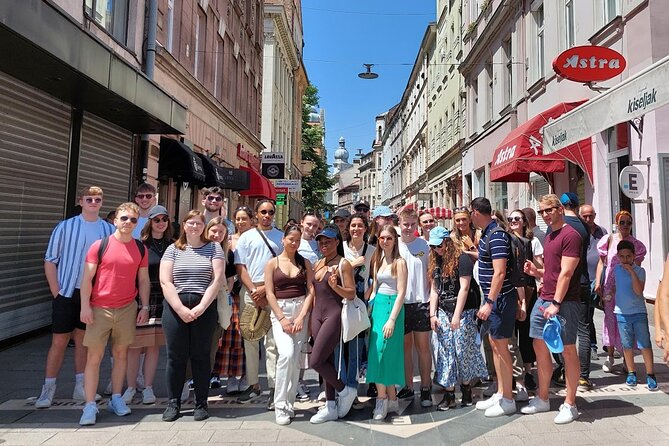
Sarajevo’s religious buildings are close enough to compare directly, and the tour does exactly that. You begin at Katedrala Srca Isusova, a simple but beautiful cathedral stop. Even if you don’t go inside, the guide helps you connect the cathedral to the bigger story of the city’s multiple communities.
Next you move to the Orthodox Church of the Nativity of the Theotokos, described as a Serbian Orthodox church. This is the kind of stop that gives you context: you see how Sarajevo’s faith traditions sit side by side, not separated by faraway geography.
From there, you shift toward Islam with the Emperor’s Mosque (noted as the oldest mosque in Sarajevo) and later the Gazi Husrev-beg Mosque, the central mosque in the city. Between these two, you’re basically learning the skyline of Sarajevo through faith landmarks, which is a smart beginner approach.
A quick consideration: the tour notes admission tickets aren’t included for these sites. That doesn’t mean you can’t enter. It means you should be ready that any interiors you want to see may cost extra separately. If you’re a “look only from the outside” person, you’ll still get a lot.
Ottoman-era remnants and the Austro-Hungarian contrast
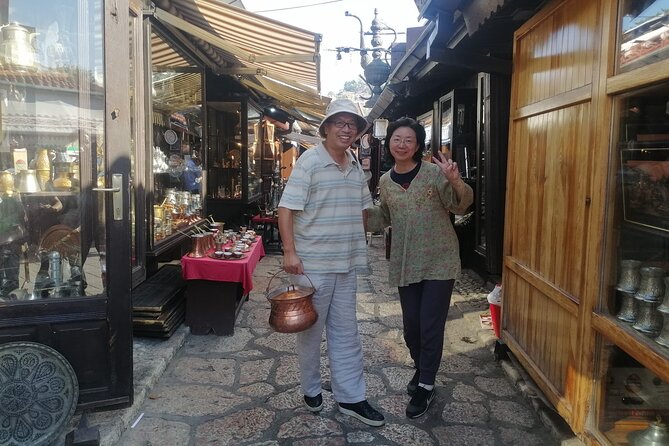
One reason Sarajevo clicks for beginners is the contrast. The city center holds proof that different rulers left visible fingerprints.
You’ll stop at Hotel Europe, described as the first hotel in Sarajevo and the oldest in South-East Europe. That’s not just a trivia moment. It signals how early tourism, travel, and urban life formed here—so later, when you see other historic public spaces, you’ll recognize the pattern.
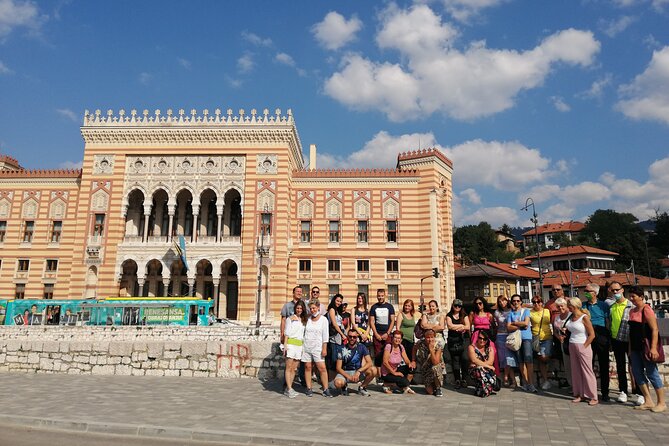
Then you’ll hit Sarajevo City Hall, built during the Austro-Hungarian times in a central area of the Old part of town, and designed to fit with Ottoman architecture. This is the tour’s “architecture lesson without the lecture.” The guide frames what you’re looking at so the styles stop feeling random.
If you like cities where power shifts are visible in stone and layout, you’ll enjoy this part. It’s also a nice break from the constant “church/mosque/bazaar” rhythm. It gives you a different angle on Sarajevo’s identity.
Shopping and bridges: old trade routes made walkable
After you’ve seen the religious and civic anchors, the tour turns toward the city’s movement and commerce—the stuff that made Sarajevo work day to day.
You’ll pause at Tašlihan, described as the remains of Tašlihan. From there, the walk continues to Gazi-Husrev Beg’s Bezistan, noted as the original shopping mall in Sarajevo. Even without extra ticketing, these stops help you understand that shopping here wasn’t always a modern mall thing. It was trade organized through historic structures.
Then comes the bridge section, which is always a highlight in Sarajevo because bridges here carry stories. You’ll see the Latin Bridge, known for having three names. You’ll also visit Seher Cehaja’s bridge, described as the oldest bridge in Sarajevo, and the second built. The guide’s framing helps you see bridges as more than photos—they’re points where history and geography meet.
Here’s the beginner-friendly trick: at each bridge, pause and look for how the river and roads shape what people could reach. Even if you don’t know the exact dates yet, you’ll start understanding why Sarajevo developed the way it did.
- Fall of Yugoslavia, Sarajevo War Tour with Tunnel of Hope Museum and Frontlines
★ 5.0 · 1,314 reviews
Coffee break, Inat, and small cultural details you’ll remember
This tour isn’t all monuments. It includes the small cultural pieces that make Sarajevo feel human.
The coffee and/or tea inclusion is practical, but it also sets up one of the smartest beginner moments: the guide shares tips for how to drink Bosnian coffee. If coffee is part of your travel routine, this is the kind of detail that changes how you experience a country. You don’t just drink it—you understand the ritual and what to do with it.
Then you’ll stop at Inat kuća, where the tour says you’ll learn what inat is. You might not leave with a one-sentence definition that you can quote forever, but you’ll walk away understanding why that word is tied to attitude and local behavior. That makes the rest of your trip easier.
Also, there’s a stop that signals “different time, different story.” That kind of wrap-up moment is valuable on a first visit because it pulls your earlier stops into one mental picture. It’s not only history facts. It’s meaning.
Old streets and meeting points: Baščaršija, Sebilj, and Kazandžiluk
If you want to feel Sarajevo in the way locals probably do day-to-day, you need the squares and the streets.
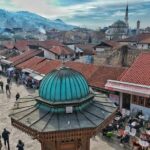
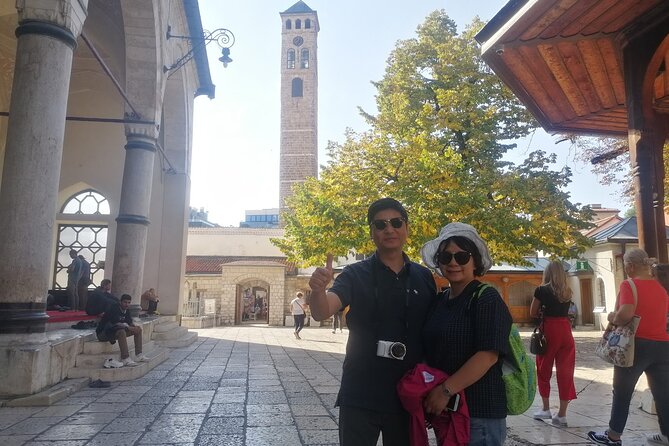
You’ll visit Sebilj, described as a meeting place for many. Then you’ll reach Baščaršija, the main square of Sarajevo. These are the natural gathering hubs, and having them on a guided route helps you understand the layout quickly, so you can return later on your own.
The walk also includes Kazandžiluk, described as one of the most authentic streets in Sarajevo. Authentic can be a vague word, but in this context it usually means older street character and a strong connection to traditional crafts and daily life. The guide’s explanation makes it easier to notice what’s different from a generic pedestrian street.
You’ll also hear the story of the development of Bravadžiluk street. Again, you’re not just shown a name—you get the background so it feels like part of the city’s logic rather than a random lane.
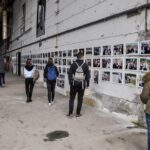
Finally, there’s Fotokopirnica Morića Han, described as probably the coolest place in Sarajevo. If you’re the kind of person who likes quirky details and you enjoy stopping for photos, this is a good tension-break after the heavier history points.
World-changing history: Sarajevo assassination location and the Jewish Museum
Two stops handle heavy history directly, without trying to soften it.
The tour includes the Location of Sarajevo Assassination, described as where the history of the world changed. This is the kind of place where you want someone to give you context fast, because it’s easy to stare at the spot and still feel like you missed the point.
Later, you visit the Jewish Museum of Bosnia and Herzegovina. The emphasis here is on the square and the story of Jews in Bosnia and Herzegovina. This helps balance the overall tour by including communities beyond the most obvious religious landmarks.
Because this tour doesn’t include admission tickets, think ahead. If you care deeply about museums and want to go inside, plan time and money for entry. If you’re satisfied with a guided exterior orientation plus key explanations, you can still get a lot from the route.
Who this tour is best for (and who should consider a different format)
This is a strong choice if you’re:
- seeing Sarajevo for the first time and want a structured introduction
- interested in how different cultures and empires show up in everyday places
- a beginner who wants to walk the Old Town with a guide who makes it make sense
It may be less ideal if you:
- want a mostly museum-based day with included admissions
- hate walking for two hours (even with breaks)
- prefer ultra-detailed stops where you stay inside buildings longer
For most first-time visitors, it’s a smart start. You’ll come away with a better mental map, plus a set of places you’ll feel comfortable returning to later.
Should you book Sarajevo for beginners?
I’d book it if you want a first-day orientation that mixes religious landmarks, Ottoman-era remnants, Austro-Hungarian architecture, and key historical context—without turning it into an all-day marathon. The price is reasonable for a guided walk of this scope, especially since coffee/tea is included and the group stays small enough for real questions.
Book it confidently if you’re traveling solo or in a mixed group of history and culture interests. This tour keeps things moving while still explaining what you’re looking at, and that’s exactly what beginners need.
One deciding point: decide in advance how you feel about admissions. Since tickets aren’t included for the listed stops, plan for possible extra costs if you want to enter buildings. If you’re okay with that, you’ll likely find this tour a solid, cost-effective way to start your Sarajevo trip.
FAQ
How long is the Sarajevo for beginners tour?
It lasts about 2 hours.
Where does the tour start and end?
It starts at Trg fra Grge Martića (71000 Sarajevo) and ends back at the same meeting point.
Is the tour offered in English?
Yes, it’s offered in English.
What’s included in the price?
Coffee and/or tea are included.
Are admission tickets included for the stops?
Admission tickets are not included for the listed stops.
What’s the maximum group size?
The tour has a maximum of 18 travelers.
What is the cancellation policy?
Free cancellation is available up to 24 hours in advance for a full refund. If you cancel less than 24 hours before the start time, the amount paid is not refunded.
You Might Also Enjoy
More Tour Reviews in Sarajevo
- Fall of Yugoslavia, Sarajevo War Tour with Tunnel of Hope Museum and Frontlines
★ 5.0 · 1,314 reviews