REVIEW · SARAJEVO
Sarajevo to/from Belgrade UNESCO Transfer Day Tour (Fees Incl.)
Book on Viator →Operated by Funky Tours · Bookable on Viator
A single-day transfer with nine story stops. This Sarajevo to Belgrade tour turns a long road trip into a guided chain of UNESCO moments, with door-to-door pickup and drop-off to keep you sane. I especially love how the day mixes medieval Stećci necropolises, Ottoman-era Višegrad, and the Drina river boat ride, then caps it with the Šargan Eight train experience. One caution: it’s a long 12–13 hour day with plenty of mountain driving, so build in patience.
You’ll start early at 7:00 am, ride in an air-conditioned vehicle, and keep moving with a professional English-speaking guide and driver. Group size is capped at 15 travelers, which matters when the itinerary includes quick walks, viewpoints, and border-crossing timing.
In This Review
- Key highlights that make this tour worth your time
- A one-way Sarajevo to Belgrade day that stays organized
- Rogatica Stećci necropolis near the village: UNESCO tombstones with an eerie calm
- Borak Stećci near Stjenice: a short hike into East Bosnia’s misty mood
- Višegrad and Mehmed Pasa Sokolović Bridge: the Ottoman masterpiece that anchors the story
- Andrićgrad plus a Drina River boat cruise: stone town meets cinematic vibes
- Dobrun Monastery: frescoes, 14th-century origins, and quiet nature
- Drvengrad and the Šargan–Mokra Gora park stop: film village architecture, not just sightseeing
- Šargan Eight train ride: narrow-gauge steam-era engineering, with a real-world twist
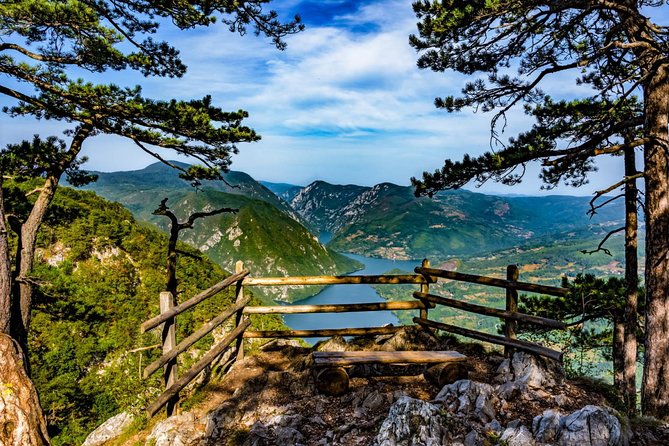
- Tara National Park and Banjska Stena: a panorama over Perućac Lake
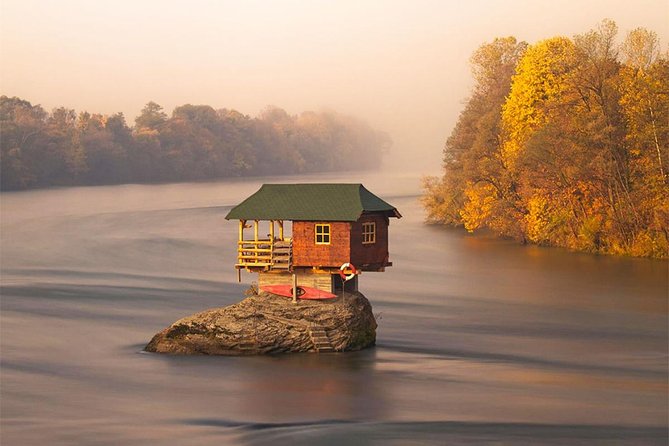
- House on the Drina: a quick finish before Belgrade traffic
- Price breakdown: what you’re really paying for at $174.99
- Who this Sarajevo to Belgrade UNESCO transfer suits best
- Should you book this Sarajevo to Belgrade UNESCO transfer tour?
- FAQ
- How long is the Sarajevo to Belgrade UNESCO transfer day tour?
- What time does the tour start?
- Is hotel pickup and drop-off included?
- Is this tour offered in English?
- What is included in the tour price besides the transfer?
- Do I need to pay admission fees at the stops?
- Are drinks and food included?
- Do I need a passport?
- What is the cancellation policy?
Key highlights that make this tour worth your time
- UNESCO Stećci tombstones at Rogatica and Borak, plus the Višegrad Ottoman bridge
- Drina River boat cruise and a short but memorable stop in Andrićgrad
- Şargan Eight train ride fees included, with classic engineering and a unique track shape
- Small group pacing that still covers a lot without feeling random
- Serbian Orthodox Dobrun Monastery stop adds a different cultural layer
- Tara National Park viewpoints at Banjska Stena plus a final quick photo stop at House on the Drina
A one-way Sarajevo to Belgrade day that stays organized
This is the rare cross-border transfer that feels like a real tour, not just a shuttle with a couple pull-offs. You’re picked up in Sarajevo (or dropped in Belgrade) and you spend the day on a planned route with timed stops—so you get structure without sacrificing the freedom of having someone else handle logistics.
The day runs roughly 12 to 13 hours, and it starts at 7:00 am. That early start matters. It’s what gives you enough daylight for the monastery, the national park viewpoint, and the final stops before arriving in Belgrade by around 8:00 pm.
You’ll also want to plan for the reality of long drives on two-lane roads through hilly terrain. The route breaks up the travel time with stops, but it still includes a lot of “sit, watch, listen” time. If you’re prone to motion sickness, it’s smart to pack something just in case.
You can also read our reviews of more tours and experiences in Sarajevo
Rogatica Stećci necropolis near the village: UNESCO tombstones with an eerie calm
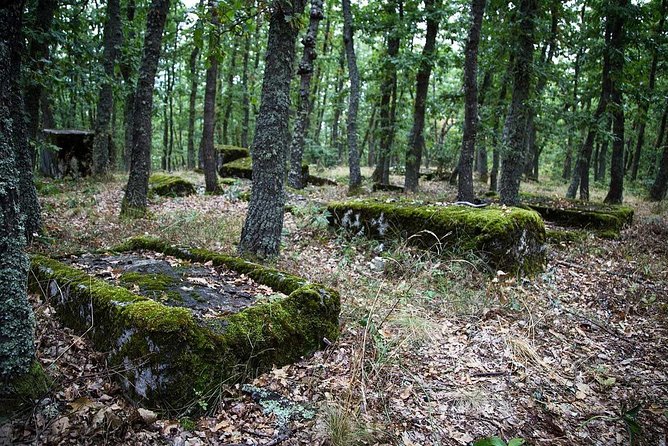
The day opens with medieval Stećci tombstones near Rogatica—an UNESCO necropolis centered on stone grave markers scattered in a quiet setting. Your time here is about 45 minutes, and admission is free.
What I like about starting here is the way it sets the tone. Instead of jumping straight to big famous landmarks, you begin with something older, more intimate, and easy to absorb at your own pace. These Stećci sites can feel surprisingly human: stone markers tied to local traditions, family lines, and a medieval landscape that still looks lived-in.
If you enjoy history that doesn’t need a museum floor, this stop works. The guide also gives context so you understand what you’re seeing, not just where it is.
Borak Stećci near Stjenice: a short hike into East Bosnia’s misty mood
From Rogatica, you drive via Stjenice and then take a short hike through dense forest to reach Borak Stećci, near the Burati village. The walk is part of the experience—time here is about 30 minutes, and admission is free.
This is the kind of stop where the setting becomes the story. You’re moving from open views of stone into a more enclosed, atmospheric forest approach, which makes the Stećci feel even more removed from modern life.
Practical note: wear shoes you’re comfortable with on uneven forest paths. The itinerary doesn’t describe extreme hiking, but it does call it a short hike, and your schedule is built around quick exploration rather than long wandering.
Višegrad and Mehmed Pasa Sokolović Bridge: the Ottoman masterpiece that anchors the story
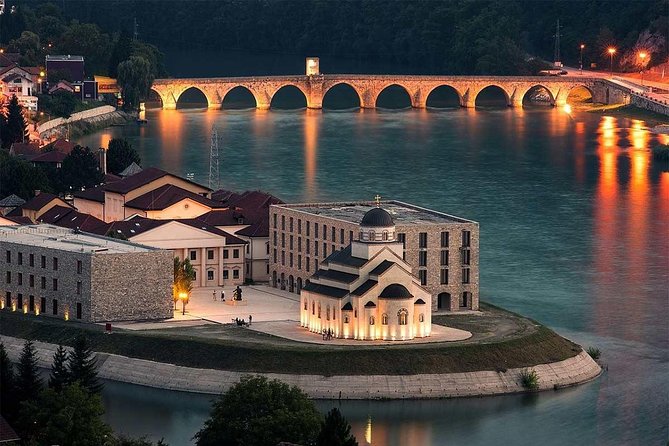
After more mountain driving, you arrive in Višegrad, where the big UNESCO highlight is the Mehmed Pasa Sokolović Bridge. Your time here is about 45 minutes, and admission is included.
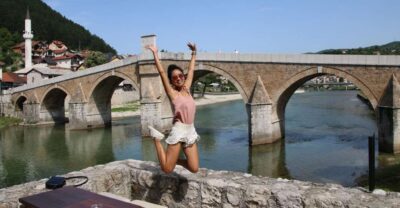
The bridge was built in 1577 by the Grand Vizier Mehmed Pasa Sokolović, and it’s admired for its strong sense of proportion and monumental presence. The bridge matters because it’s not just architecture—it’s part of a wider regional story about the Drina River corridor and the shifting cultures that shaped this part of the Balkans.
You’ll also hear why local writing made this place famous on a global level: Ivo Andrić, the Nobel Prize–winning author connected to the area, centered the Bridge Over Drina in his work. If you’ve read it, you’ll recognize the emotional gravity. If you haven’t, you’re still in good shape because the guide’s context helps you connect the bridge to the bigger historical meaning of the river crossing.
Andrićgrad plus a Drina River boat cruise: stone town meets cinematic vibes
Once you’ve seen the bridge, you’ll continue to Andrićgrad (also described as Andrić town). This is a small stone-made town named after Ivo Andrić, and it also ties into Yugoslav cinema through the vision of filmmaker Emir Kusturica.
Your time is short—about 15 minutes—and admission is free. That doesn’t leave much for long browsing, but it’s enough to get the idea: this is a themed place built to interpret a local cultural narrative and to create a walkable “you are inside the story” setting.
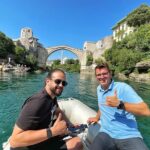
Then comes one of the tour’s most satisfying pace-breakers: the Drina River boat cruise is included. You get to see this part of the river from the water, and it’s a very effective reset after time on roads and inside buildings. When I want a day trip to feel well-balanced, this is usually the kind of stop that does it.
- Fall of Yugoslavia, Sarajevo War Tour with Tunnel of Hope Museum and Frontlines
★ 5.0 · 1,314 reviews
Dobrun Monastery: frescoes, 14th-century origins, and quiet nature
Next up is Dobrun Monastery, a Serbian Orthodox monastery on the way toward the Serbian border area. You get about 20 minutes, and admission is free.
The monastery was initially built in 1343, and frescoes preserved there are highlighted as a major reason to visit. It’s also described as being surrounded by nature, which helps explain why it’s more than a quick photo stop.
This is the point in the day where you feel the itinerary stretching from medieval stone sites to living religious heritage. Even if you’re not a church-detail person, the preserved frescoes and the setting make it worth your time—especially because the stop is short enough to keep the day from dragging.
Drvengrad and the Šargan–Mokra Gora park stop: film village architecture, not just sightseeing
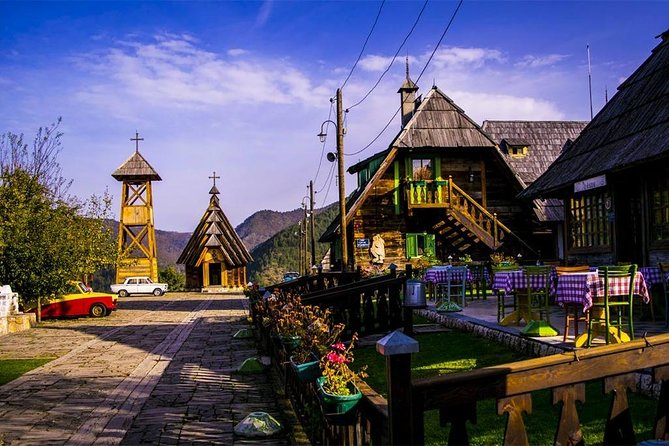
Crossing the border is part of the day, and once you’re in the nature park area of Šargan–Mokra Gora, you visit Drvengrad (also known as Küstendorf, and connected with the Mećavnik name).
This stop is about 1 hour, and admission is included. It’s designed by Emir Kusturica for his film Life is Miracle, and it’s also noted for winning the Philippe Rotthier European Architecture Award from a Brussels architecture foundation.
What makes Drvengrad feel special on this itinerary is timing. You’re not just breaking up drive time—you’re also changing tone. From Stećci and Ottoman bridges to monasteries, now you get a playful, constructed place built as an artistic statement. It’s a different kind of “cultural reading,” and it gives your brain a rest.
Lunch may be possible here (drinks and food are not included, so plan to budget for meals yourself). Use the hour well: walk the streets, check out what’s around, then refuel before the train.
Šargan Eight train ride: narrow-gauge steam-era engineering, with a real-world twist
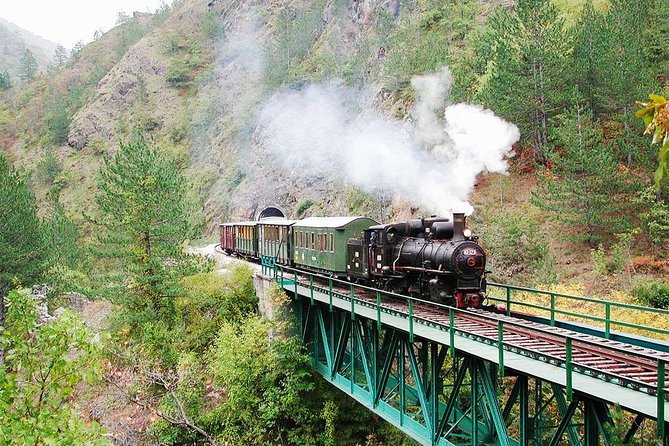
After Drvengrad, you board the famous Šargan Eight. Time here is about 45 minutes, and the ride fee is included.
This railway is narrow gauge (760 mm) and it was originally built in 1925 to connect Sarajevo and Belgrade. The name comes from the track shape: from above it resembles the number 8. It’s also described as a major engineering achievement, climbing roughly 300 meters over about 3.5 km and passing through 22 tunnels and five bridges. Even if you aren’t a rail nerd, the numbers make it feel like a clever feat of problem-solving.
Here’s the practical consideration. The ride can be less about big open views and more about the experience of the track and the ride itself. Also, don’t assume the engine will match the exact steam image in every brochure. You might find the motive power is not what you expected, and much of the scenery can be more wooded than postcard-like. Still, it’s a fun break from roads, and the engineering story lands well with the guide’s talk.
Bring warm layers if it’s cool. The train ride is included, but you’re still outdoors enough to notice the temperature.
Tara National Park and Banjska Stena: a panorama over Perućac Lake
Between the train ride and Belgrade, you’ll drive through Tara National Park and stop at a viewpoint called Banjska Stena.
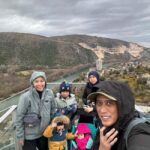
Time here is about 30 minutes, admission is free, and the payoff is the panorama over Perućac Lake on the Drina River—the natural border between Bosnia and Herzegovina and Serbia.
This stop is valuable for two reasons. First, it gives your eyes space after a day of stone sites and indoor-like monastery visits. Second, it reminds you why this region’s geography shaped its history: rivers, ridges, and border zones all drove how people built, traded, fought, and traveled.
If you like photos, this is one of the better windows in the day. Aim for a few minutes just standing and watching before you start taking pictures. The overlook is better when you pause.
House on the Drina: a quick finish before Belgrade traffic
Your last stretch includes a drive through areas around Bajina Bašta, followed by a final stop at the House on the Drina (often called the Drina River House). Time here is about 15 minutes, and admission is free.
This is a short stop, so treat it like a “photo and stretch” moment more than a full attraction. The setting is described as a swimming hut built atop a rock in the middle of the Drina River, so it’s visually memorable even when time is limited.
Then it’s on to Belgrade, with the tour aiming to get you there by 8:00 pm. Because you’re driving from mountain roads and viewpoints, expect the last part of the trip to feel time-sensitive. The guide and driver do handle pacing, but the roads are still roads.
Price breakdown: what you’re really paying for at $174.99
At $174.99 per person, the biggest value isn’t the transfer itself—it’s what’s bundled into the day without extra fuss.
The tour includes:
- Šargan Eight train ride (listed as 11 EUR per person)
- Drina River boat cruise (5.5 EUR per person)
- Drvengrad admission (2.5 EUR per person)
- Eco tax for Mokra Gora Nature Park (1–3 EUR per vehicle)
- All fees and taxes
- An air-conditioned vehicle
- A professional English-speaking guide and driver
- Admission fees to essential stops
Then there’s what’s not included: drinks and food. That’s not unusual for a day tour, but it affects value. If you budget for lunch and water, you’ll feel in control. If you assume meals are covered, you’ll end up paying catch-up.
Also, think about the cost of doing this yourself. You’d need transport, tickets, and scheduling through border-crossing time—plus a guide to connect the Stećci and bridge stories across countries. Here, you’re paying for that coordination, and the included rides do real work in breaking up a long driving day.
Who this Sarajevo to Belgrade UNESCO transfer suits best
This tour fits best if you want a lot of stops with an actual storyline across borders. You’re likely to enjoy it if you:
- care about UNESCO World Heritage sites like Stećci and the Višegrad bridge
- like culture stops with guides who explain the why, not just the where
- enjoy short nature breaks, especially viewpoints at Banjska Stena
- want a transfer that includes real activities like a river cruise and a train ride
It may feel like too much if you want a slow, flexible trip. The schedule is packed with short time blocks, and you’ll spend meaningful time in the vehicle. If you get motion sickness, the curvy mountain roads are the main reason to think twice.
One more point: guides are praised for being punctual and organized. Names that come up in the experience feedback include Tarik, Enis, Zlata, Ajdin, Amar, Ajla, and Annis—and the common thread is calm driving plus clear storytelling. That mix matters when the itinerary includes hikes and border time.
Should you book this Sarajevo to Belgrade UNESCO transfer tour?
I think you should book it if you’re doing Sarajevo and Belgrade in a limited timeframe and you want your transport day to earn its keep. This is the kind of tour where the included activities—Drina cruise and Šargan Eight—do more than add novelty. They give you variety so the day doesn’t feel like a long checklist.
Skip it if you hate long days, need lots of free time at stops, or expect the train ride to be all open views and pure steam nostalgia. The ride is still a great break, but it’s best viewed as part scenic + part engineering experience, not a cinematic postcard parade.
If you’re open to early starts and short stop-and-go exploration, this is a strong way to connect two cities while learning the region’s big themes: stone, water, and the bridges people built—literally and culturally.
FAQ
How long is the Sarajevo to Belgrade UNESCO transfer day tour?
The tour runs about 12 to 13 hours.
What time does the tour start?
Start time is 7:00 am.
Is hotel pickup and drop-off included?
Yes. The tour offers complimentary pick-up and drop-off with door-to-door service in Sarajevo and Belgrade.
Is this tour offered in English?
Yes, it’s offered in English.
What is included in the tour price besides the transfer?
The price includes admission fees for essential attractions, plus the Šargan Eight train ride, Drina River boat cruise, and Drvengrad admission, along with an air-conditioned vehicle and a professional English-speaking guide & driver.
Do I need to pay admission fees at the stops?
Admission fees to essential attractions are included, and the itinerary lists some stops as free while others are included by the tour.
Are drinks and food included?
No. Drinks & food are not included.
Do I need a passport?
Yes. A current valid passport is required on the day of travel.
What is the cancellation policy?
You can cancel for a full refund up to 24 hours before the experience’s start time. After that, the amount paid is not refunded.
You Might Also Enjoy
More Private Drivers in Sarajevo
More Tours in Sarajevo
- Fall of Yugoslavia, Sarajevo War Tour with Tunnel of Hope Museum and Frontlines
★ 5.0 · 1,314 reviews

More Tour Reviews in Sarajevo
- Fall of Yugoslavia, Sarajevo War Tour with Tunnel of Hope Museum and Frontlines
★ 5.0 · 1,314 reviews