REVIEW · SARAJEVO
Remembering Srebrenica Genocide
Book on Viator →Operated by Insider Ltd · Bookable on Viator
Srebrenica is hard to forget. This 8.5-hour, small-group trip uses local guidance to help you understand the 1995 genocide with clarity and care. You’ll visit the Memorial complex in Potočari and the site that once served as an authentic UN base—now a gallery of genocide testimony.
I really like that the group stays intimate, with a maximum of 15 people, so questions don’t get rushed and you can absorb what you’re seeing. I also like the practical setup: round-trip transportation in an air-conditioned vehicle from central Sarajevo, plus a licensed guide and free admission at both stops.
One consideration: this is emotionally intense, and the schedule is long enough that you’ll want to plan food and energy. Snacks and lunch are not included, and it starts early at 8:00 am.
In This Review
- Key things to know before you go
- Entering the Srebrenica story from Sarajevo, without the headache
- The Memorial complex in Potočari: testimony you can see
- The UN base turned gallery: why the setting matters
- Srebrenica town stop: reconciling with what’s left today
- Group size and transport: comfortable, but still a long day
- Licensed guide quality: why it can make or break the day
- Price and value: what you’re paying for at $78.27
- What to bring, and how to mentally pace yourself
- Who this tour suits best
- Should you book Remembering Srebrenica Genocide?
- FAQ
- How long is the tour?
- What time does the tour start?
- Where do I meet the tour?
- Is admission included for the memorial sites?
- What’s included in the price?
- Is lunch or snacks provided?
- How big is the group?
- Is the tour in English?
Key things to know before you go
- Maximum 15 people keeps the day human-sized, not like a cattle car.
- Potočari UN base to Genocide Memorial means the story is told through places that still hold weight.
- Free admission at the memorial and the Srebrenica stop lowers the day’s cost pressure.
- Local, licensed guiding helps you connect events, context, and meaning without turning it into a lecture.
- A town stop focused on reconciliation adds a needed second lens after the memorial visit.
Entering the Srebrenica story from Sarajevo, without the headache
This tour is built for people who want the trip done right, not pieced together with transfers and guesswork. You start in Sarajevo at Zelenih beretki 30 at 8:00 am, and you return to the same meeting point at the end. The total day runs about 8 hours 30 minutes, which is a commitment—but it’s also enough time to do both locations thoughtfully.
The small group size matters more than you might think. When the group is capped at 15, the guide can slow down when emotion rises, and you can ask questions without shouting across seats. That’s a big deal on a day like this, where a rushed explanation can flatten what you’re trying to understand.
Also, the tour is in English, and that’s your ticket to hearing the story in a way that’s clear and direct. If your goal is understanding (not just checking a box), this language setup helps a lot.
You can also read our reviews of more tours and experiences in Sarajevo.
- Fall of Yugoslavia, Sarajevo War Tour with Tunnel of Hope Museum and Frontlines
★ 5.0 · 1,314 reviews

The Memorial complex in Potočari: testimony you can see
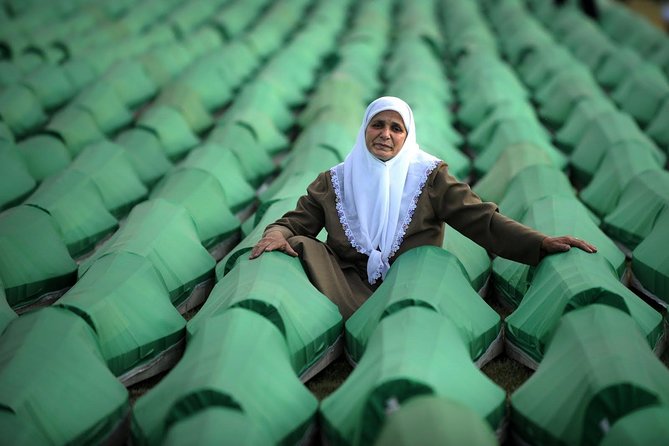
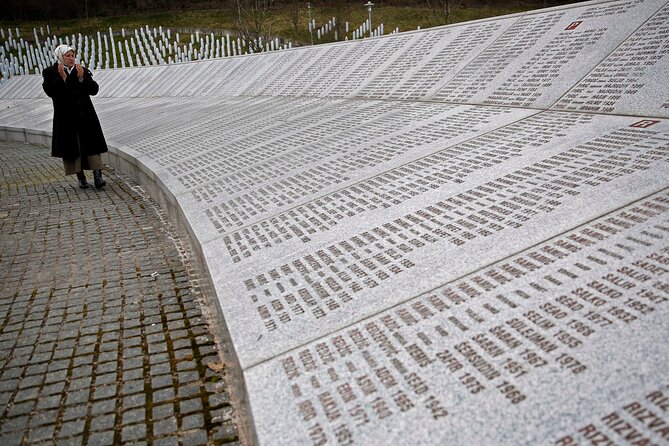
Stop 1 is the Srebrenica Genocide Memorial in Potočari, and it takes about 3 hours. You’ll visit the memorial complex and the UN base area, which today functions as a gallery of genocide. The focus is on what testimony meant for survivors—and how those events left deep scars in the hearts and minds of people who lived through them.
This is the heart of the day, and it’s where the tour’s tone becomes clear: you’re not touring scenery. You’re visiting a place where evidence and memory are treated with seriousness. In guides you might meet—people like Emina Koso Sarajcic have been highlighted for frank, fair, caring explanations—what stands out is the balance between factual background and human impact.
Practical note: plan your body as well as your mind. Three hours in a memorial setting can feel longer than the clock, especially if you’re paying close attention. Wear shoes you can stand in, and think about taking short moments to breathe even if the group is moving as a unit.
The UN base turned gallery: why the setting matters
What makes Potočari especially powerful is the way place and meaning overlap. The tour doesn’t just describe events in general terms—it takes you to a site that once served as an UN base and is now used to present testimony as a gallery. That physical connection can make the story feel less abstract.
The best kind of guiding here is the kind that helps you connect the timeline without turning it into numbers-only history. Several guides associated with this experience are praised for being honest and able to explain complicated background in plain language—without losing respect for the subject. On a day like this, that’s the difference between knowing facts and understanding what those facts meant to real people.
Also, the admission for this stop is free. That’s a small detail that actually matters. It means your money goes toward the guided experience and the transportation, not extra fees at the door—helpful if you’re budgeting your Sarajevo days.
Srebrenica town stop: reconciling with what’s left today
Stop 2 is a shorter 45-minute visit to Srebrenica itself. Instead of repeating the memorial story, the tour shifts to how the town looks now and what reconciliation efforts have looked like over time. You’ll get a sense of the present, not only the past.
This second stop can feel like a relief, but it isn’t a reset. The emotional tone of the day stays serious, yet reconciliation-focused context helps you avoid leaving with only grief and no sense of forward motion. It’s a reminder that communities keep living—and that rebuilding takes time, effort, and honesty.
From a traveler’s perspective, 45 minutes is a smart length. Long enough to see how the place has changed, short enough that you don’t get exhausted after the memorial. After Potočari, your attention may be at a limit, so the pacing helps you stay with the experience rather than rush through it.
Admission here is also free, so again, you’re not stacking extra costs on top of an already heavy day.
Group size and transport: comfortable, but still a long day
Your ride is round-trip, and it’s in an air-conditioned vehicle. That sounds like a boring detail until you remember the Sarajevo start time and the length of the trip. Heat, sitting time, and travel fatigue can steal focus—especially when the rest of the day asks for emotional attention.
The schedule starts at 8:00 am, so you’ll want to treat it like a day-trip with a real start, not a slow morning plan. The tour returns you back to Zelenih beretki 30, which keeps logistics simple if you’re staying nearby or planning onward travel after.
The group size cap of 15 people is worth repeating. Smaller groups tend to be quieter, and on sensitive topics, quiet is a kindness. It gives your guide room to read the room and adjust pacing if the conversation turns emotional.
- Fall of Yugoslavia, Sarajevo War Tour with Tunnel of Hope Museum and Frontlines
★ 5.0 · 1,314 reviews

Licensed guide quality: why it can make or break the day
This experience includes a licensed guide, and the results people highlight tend to share a common thread: the explanation feels both candid and compassionate. Guides like Safet and Emina Koso Sarajcic come up in accounts of the experience for doing more than reciting facts. They’re described as thoughtful companions who provide background before the memorial moments, so the visit lands with understanding rather than shock alone.
You’ll notice guiding that respects the topic while still answering questions directly. On a day like this, that matters because grief can make you misplace your questions in the moment. Having someone who can respond honestly and clearly helps you leave with fewer unanswered blanks in your mind.
If you’re a student, a teacher, or just someone who likes structure, this tour style can fit well. One of the strongest themes is the way guides connect events leading up to the genocide, then bring you into the memorial space with context you can hold.
Price and value: what you’re paying for at $78.27
The price is $78.27 per person, and you can look at it as two parts: transport + guide, with admissions handled separately. The tour includes the licensed guide and the air-conditioned vehicle, and both main sites have free admission.
So your money isn’t mostly going to entrance tickets. It’s going to the logistics and the person doing the explaining—one of the key values for a day that needs careful framing. If you tried to DIY this trip on your own, you’d still spend time coordinating transport and figuring out timing, and you’d be left to reconstruct context without a guide.
This also helps with the bigger budget question: do you want a quick trip, or do you want a guided one that can handle complex topics with care? At this price point, you’re buying a day that is structured, paced, and designed for understanding.
One more budgeting detail: snacks and lunch are not included. That can be the one surprise cost. Bring some planning into that gap and you’ll avoid feeling like you’re rationing energy during the hardest parts of the day.
What to bring, and how to mentally pace yourself
Even with a well-run itinerary, you’re walking into a memory-heavy day. I’d treat this like a mix of museum time and emotional education.
Here are practical things that tend to help:
- Bring water and a simple snack you can handle quietly before or after the longer memorial block.
- Wear comfortable shoes for standing and slow walking.
- If you’re the kind of person who likes taking notes, bring a small notebook—then be ready to put it away when you need to just feel what you’re seeing.
Mentally, try to let the tour breathe. If you rush your understanding, you’ll miss the connections your guide is trying to build. If you slow down, you’ll get more out of both stops: the memorial’s testimony and the town’s reconciliation perspective.
And yes, you should also plan for the possibility that the day will affect you more than you expected. That’s not weakness; it’s the subject doing its job.
Who this tour suits best
This is a strong fit for people who want a guided, structured day focused on genocide remembrance and war-era context. The English-language format helps if you don’t want to rely on translations or written materials alone.
It also makes sense if you’re interested in the Bosnian War but want the story grounded in the sites themselves, including the Potočari memorial and the former UN base area. The pacing—3 hours at the memorial, then 45 minutes in Srebrenica—keeps the day focused without turning it into a blur.
If you’re traveling with limited tolerance for heavy historical topics, you might find this too intense. That doesn’t mean you shouldn’t go; it means you should choose the day with care and have a plan for emotional recovery after.
Should you book Remembering Srebrenica Genocide?
I’d book it if you want:
- a small-group experience that can handle questions and emotion,
- a guided visit that connects context to place,
- and a day that includes both memorial remembrance and a reconciliation-focused look at Srebrenica today.
You might skip or rethink it if you’re expecting a light, casual day out. This trip is designed for remembrance, not entertainment, and it starts early with a long sit-and-visit schedule. If you do go, bring snacks and plan your energy, because the tour provides the guide and transport, not your lunch.
In short: this is value-forward at $78.27, mainly because admissions are free and the core purchase is a licensed guide’s ability to explain the story clearly and responsibly.
FAQ
How long is the tour?
The tour runs about 8 hours 30 minutes.
What time does the tour start?
The start time is 8:00 am.
Where do I meet the tour?
You meet at Zelenih beretki 30, Sarajevo 71000, Bosnia and Herzegovina.
Is admission included for the memorial sites?
Admission tickets are free for both the Srebrenica Genocide Memorial in Potočari and the Srebrenica stop.
What’s included in the price?
The price includes a licensed guide and round-trip transportation by air-conditioned vehicle.
Is lunch or snacks provided?
No. Snacks and lunch are not included.
How big is the group?
The tour has a maximum of 15 travelers.
Is the tour in English?
Yes, it is offered in English.
You Might Also Enjoy

More Tour Reviews in Sarajevo
- Fall of Yugoslavia, Sarajevo War Tour with Tunnel of Hope Museum and Frontlines
★ 5.0 · 1,314 reviews