REVIEW · SARAJEVO
Sarajevo to/from Dubrovnik Two-day Transfer Tour via Mostar
Book on Viator →Operated by Funky Tours · Bookable on Viator
Road-trip history through Herzegovina is the point.
This two-day route turns your Sarajevo to Dubrovnik travel days into sightseeing, with an overnight in Mostar and a full day covering Konjic, Blagaj, and the Neretva River corridor. I especially love Tito’s Nuclear Bunker for its scale and Cold War paranoia, and Mostar’s Old Bridge for how the town’s story feels right there in front of you. One possible drawback: the day starts early (8:00 am) and you’ll move at a steady pace, with relatively short stops at several highlights.
You’ll also get a small-group setup, capped at 8 travelers, which makes the schedule feel less rushed and more personal than big-bus tours. Pickup is offered, and the hotel is a solid 4-star stay in Mostar (Hotel Eden 4 or similar) with breakfast included.
The tour is strongest because it bundles a lot of entrance fees, so you’re not doing math at every ticket window. Still, meals aren’t included, so you’ll want to budget for lunch on the road and dinner on your own during free time in Mostar.
In This Review
- Key highlights to know before you go
- A Two-Day Door-to-Door Route From Sarajevo to Dubrovnik
- Konjic: Old Bridge, Tito’s Bunker, and Neretva views you can’t fake
- Blagaj’s Buna spring and Tekija dervish house: nature meets faith
- Mostar after check-in: Old Bridge, Bazaar streets, and the “why” behind the town
- Day 2 Počitelj: a medieval Ottoman fortress above the Neretva
- Kravice Falls and Brkić wine cellar: two very different highlights, both included
- Medjugorje, Radimlja UNESCO tombstones, and Vjetrenica Cave
- Price and value: is $515.63 money well spent?
- Who should book this Sarajevo to Dubrovnik via Mostar tour
- Should you book?
- FAQ
- How long is the Sarajevo to Dubrovnik transfer tour via Mostar?
- Where do I stay overnight?
- Is hotel pickup included?
- What’s included in the price?
- Are meals included?
- What’s the group size limit?
- Is a service animal allowed?
- When can I cancel for a full refund?
Key highlights to know before you go
- Konjic’s 17th-century Old Bridge over the turquoise Neretva, plus WWII context and a Tito connection
- Tito’s Nuclear Bunker: 270 meters underground and designed for hundreds to survive for months
- Blagaj’s Buna River spring and Tekija dervish house in a dramatic karst setting
- Mostar walking tour focused on Old Bridge, Old Bazaar, and Old Town
- Kravice Falls + summer swim option near Ljubuški on the Trebižat River
- Wine tasting in Brkić cellar featuring local Blatina (red) and Zilavka (white)
A Two-Day Door-to-Door Route From Sarajevo to Dubrovnik
This tour is built for travelers who want to connect Sarajevo and Dubrovnik without turning the trip into “just transit.” You’ll do it as a door-to-door transfer-style experience, with one night spent in Mostar. The start can be either direction, and the itinerary stays the same either way.
Practically, this is ideal when you want a guided framework: wake up, ride, stop, explore, sleep in a great base, and repeat. It also means your biggest travel days come with structure, so you’re not trying to piece together buses, tickets, and timelines across Herzegovina.
You can also read our reviews of more tours and experiences in Sarajevo
Konjic: Old Bridge, Tito’s Bunker, and Neretva views you can’t fake
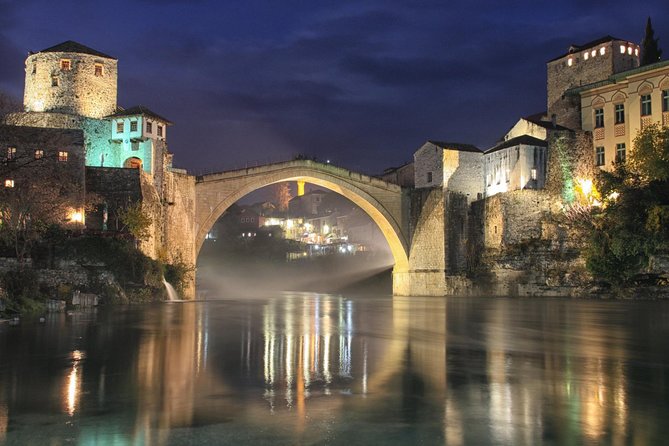
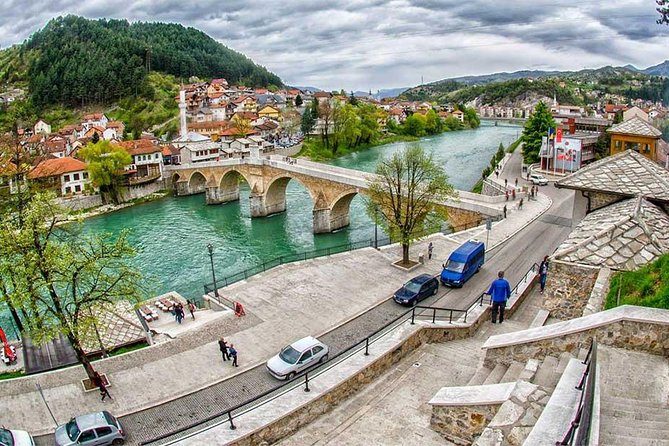
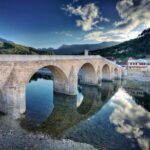
Day 1 begins in Konjic with the old town area and the famous 6-arch Old Bridge from the 17th century. The Neretva River below it has that bright, fast look that photographs well even when you’re just standing there, trying to decide where to look first.
Konjic also carries heavy layers of history. During WWII, the bridge was destroyed during the Nazi withdrawal, and the stories around it are part of what your guide will stitch into the morning’s context. You’ll also hear about Tito’s bunker in the same breath, which helps the later visit make more sense instead of feeling like a random ticketed stop.
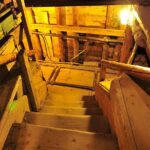
Next is ARK D-0: Tito’s Nuclear Bunker, the star attraction for people who like Cold War oddities. It’s described as being about 270 meters underground, and the project was completed in 1979—just a year before Tito died. There’s also a sense of scale in the design: if restocked, it was intended to support around 350 people for six months without going outside.
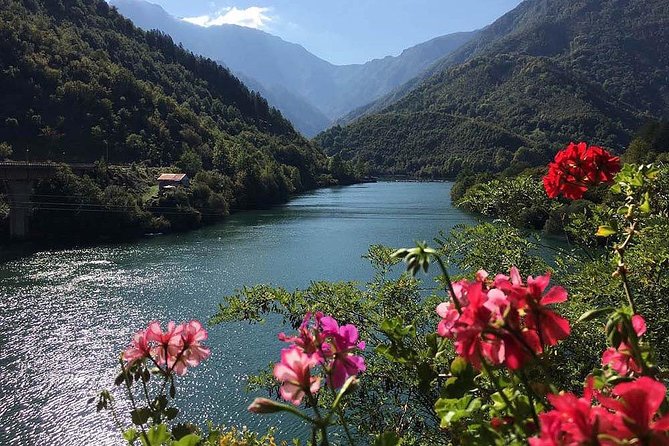
A short ride later, you reach Jablanica and the Neretva corridor. You’ll pass the dammed but scenic Jablaničko Lake, and there’s a brief stop in Jablanica tied to WWII memories like the Neretva Battle. The setting—lake water, mountain slopes, and canyon lines—sets you up to appreciate why the next stops feel like a true change of scenery, not just more towns.
If your timing allows, you may get a quick photo pause at the Neretva River canyon area. It’s the kind of break that matters on a day like this: you’re seeing a lot, and five minutes to breathe and frame the view helps it all stick.
Blagaj’s Buna spring and Tekija dervish house: nature meets faith
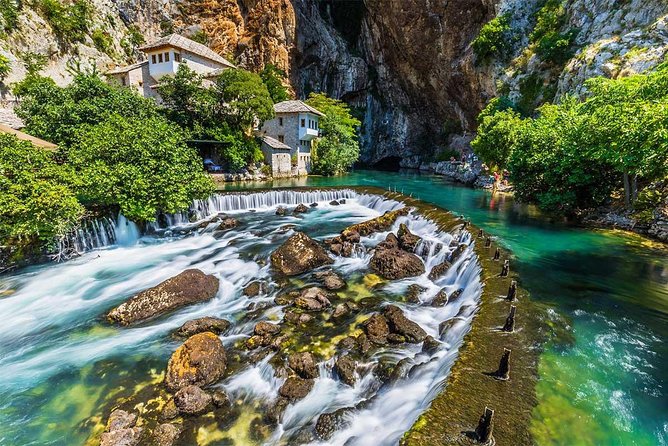
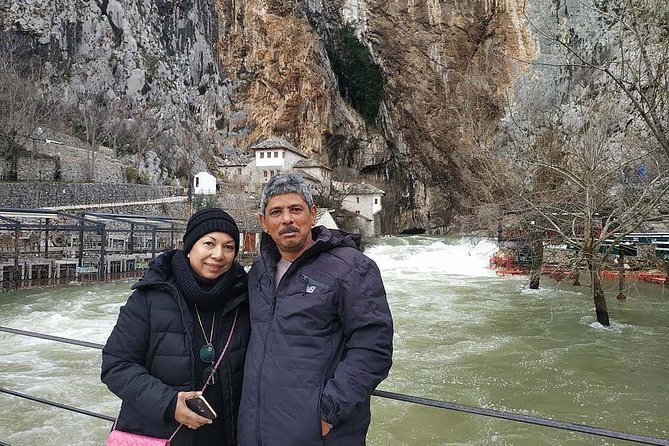
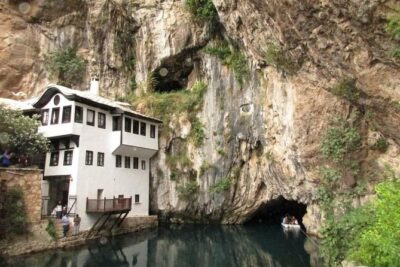
Blagaj is where the tour slows down just enough to feel special. The highlight is Buna River spring, described as Europe’s most beautiful, powerful, clean, and drinkable karst spring. Water comes out of a deep cave and flows at about 43 cubic meters per second, which is a number that turns the experience from “pretty spring” into “how is this real?” mode.
Right next door is Blagaj Tekke (Tekija), a dervish house tied to Islamic sacred-residential architecture. It’s described as likely from the pre- or early Ottoman era, with origins around the early 16th century, so you’re not looking at a modern museum rebuild—you’re walking around a complex with genuine age and function.
For Muslim travelers, the tour notes that the Tekija is a place where prayers are hosted five times a day, and you can attend. Even if you aren’t attending prayers, this stop is valuable because it gives context: it’s not just sightseeing, it’s understanding how a religious space works within the landscape and the community.
Mostar after check-in: Old Bridge, Bazaar streets, and the “why” behind the town
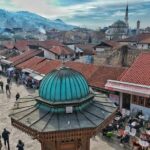
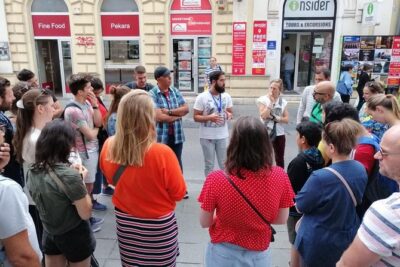
When you arrive in Mostar, you’ll check into your 4-star Hotel Eden 4 (or similar) and then head out on a walking tour. This is a focused 2-hour walk covering the Old Bridge, Old Bazaar, and Old Town, with stories that connect the sites to Mostar’s identity.
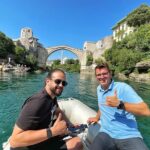
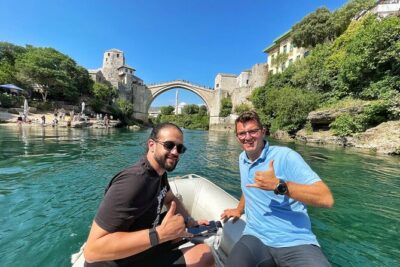
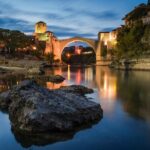
The Old Bridge isn’t treated like a photo backdrop. Your guide’s narrative links the bridge’s rise and fall and then its return, tying that story to the siege of Mostar and why the town is called Mostar in the first place. You also learn about Mostarians—what it means, and how the people and place are inseparable here.
Mostar is also best when crowds thin out, which is exactly why this tour gives you time at night. You’ll have free time after the tour, and the practical value is simple: you can wander, eat, and see the bridge area after the day-trippers drift off.
One more smart touch: since you’re staying overnight, you don’t need to cram everything into a single stop. That makes a difference in how the city feels. A place like Mostar needs time for its mood to change.
Day 2 Počitelj: a medieval Ottoman fortress above the Neretva
After leaving Mostar, you head to Počitelj, perched above the Neretva River. This town is presented as a “to rest in peace” place, and the walk up is described as easy uphill but still long enough to feel like an actual outing. Plan about one hour of walking.
Počitelj also earns its keep with time depth. You’ll get the story of how it developed and why it mattered strategically across 600+ years of written history. Stops include key structures like the Hajji Alija Mosque, the Clock Tower, and the Gavrankapetanović tower.
What I like about this stop is the “urban ensemble” feel—Počitelj is described as one of the few preserved urban ensembles in Bosnia and Herzegovina. In other words, you’re not just seeing one monument. You’re seeing how the whole fortress-town shape still exists.
- Fall of Yugoslavia, Sarajevo War Tour with Tunnel of Hope Museum and Frontlines
★ 5.0 · 1,314 reviews
Kravice Falls and Brkić wine cellar: two very different highlights, both included
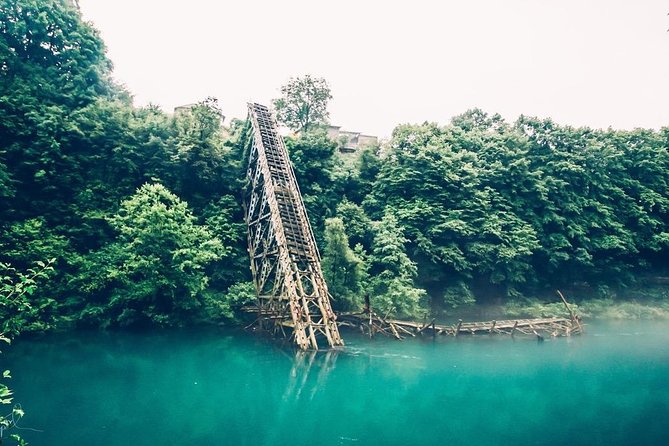
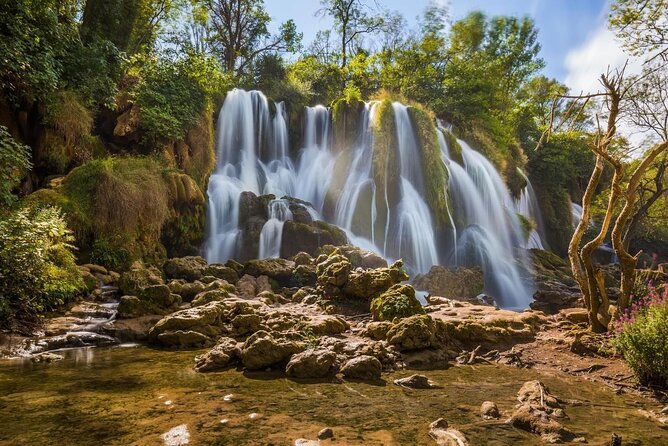
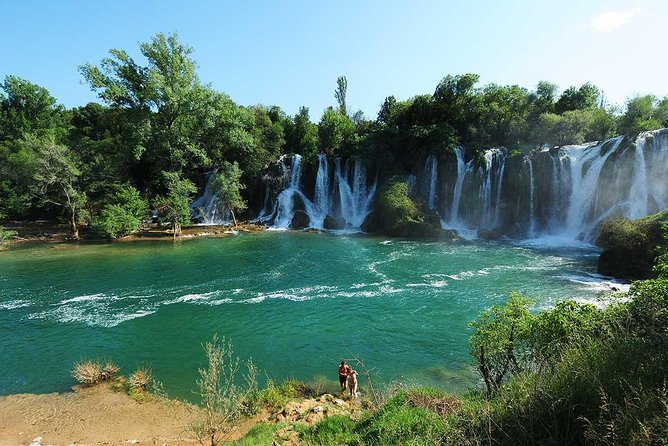
Then comes the “small Niagara” moment: Kravice Falls. You’ll visit a waterfall amphitheater connected to travertine sedimentations, with a height range of 26–28 meters and water spreading across a wider area below. The tour frames it as a geological monument, not just a roadside splash.
There’s a practical tip here: if you’re traveling in summer (June to September), you can bring a swimsuit and go for a cooling swim. Even if you don’t swim, it’s one of those stops where your feet in the shallows can reset the whole day.
From waterfalls to wine is a big jump in tone, but West Herzegovina handles it well. At the wine cellar Brkić, you’ll learn about local winemaking and taste Blatina (red) and Zilavka (white), plus other local products. The tour says you’ll do a tasting with four sorts of local wine and snacks, and it specifically calls out biodynamic wines and why they’re rare.
If wine isn’t your thing, there’s an alternative option: you can arrange a local lunch instead (since meals aren’t otherwise included on the tour). The value for wine lovers is straightforward: you’re tasting the kind of bottles you’d never find just by popping into a generic shop.
Medjugorje, Radimlja UNESCO tombstones, and Vjetrenica Cave
Medjugorje is your next stop, and it’s a completely different kind of experience. The tour describes it as Southeastern Europe’s most famous Catholic pilgrimage site, tied to reported Virgin Mary apparitions starting in 1981 until today. Your time here is short (about 45 minutes), so you should treat it like a focused visit rather than a full spiritual retreat.
After that, you head south toward Radimlja necropolis near Stolac, a UNESCO World Heritage site. This is where the tour leans into one of Bosnia and Herzegovina’s biggest mysteries: stećci stone tombstones. You’ll hear the basic timeline—mid-12th century appearance, first phase in the 13th century, peak in the 14th and 15th centuries, and then disappearance during early Ottoman occupation in the early 16th century.
The tour also highlights the kinds of questions people ask about stećci: origins of the deceased, origins of the tombstones, and symbolic messages carved into stone. For visitors who like history that feels unresolved (in a good way), this stop is a great fit.
Finally, you end Day 2 with Vjetrenica Cave, described as one of the world’s most biodiverse caves. You’ll spend about one hour there, with entry fee included. Even if caves aren’t your favorite genre, this one is presented as a living ecosystem rather than a dry, purely scenic underground room.
Price and value: is $515.63 money well spent?
At $515.63 per person, you’re paying for a true bundle: transportation across multiple stops, a one-night Mostar hotel stay with breakfast, and a set list of paid entrances. The admission list is specific, and that’s what makes the price easier to judge.
Included ticket items are listed with exact costs such as:
- Tito’s Bunker entrance fee (10 EUR)
- Dervish house in Blagaj entrance fee (5 EUR)
- Bosnaseum Museum entrance fee (5 EUR)
- Kravice Waterfalls entrance fee (10 EUR)
- Wine tasting with four sorts plus snacks (4 sorts and snacks)
- Radimlja Necropolis entrance fee (3 EUR)
- Vjetrenica Cave entrance fee (10 EUR)
So, the question becomes less about “Do I like the sights?” and more about “Do I want someone else to handle the tickets and the pacing?” If you enjoy guided structure and want to avoid hunting down entrance fees and timing yourself, this looks like real value. If you prefer to wander independently every hour, the fixed rhythm might feel limiting.
Also factor in meals: no meals are included, so you’ll want to plan for lunch during travel days and dinner during Mostar free time.
Who should book this Sarajevo to Dubrovnik via Mostar tour
I think this tour fits best if you want:
- A guided, small-group road-trip between Sarajevo and Dubrovnik (with Mostar as the base night)
- A mix of big-ticket WWII and Cold War storytelling at Tito’s bunker
- Scenic nature stops with real cultural context like Buna spring and Tekija
- Iconic Mostar streets guided by someone who explains the bridge and the siege story
- Nature + culture variety on Day 2, including Kravice Falls, wine tasting, and UNESCO stećci
It might not be your best choice if you want lots of long, slow stays in one place, or if you strongly prefer meals to be handled for you.
Should you book?
If your ideal trip is: move smart, see a lot, and not manage a stack of tickets and logistics yourself, then this is a very sensible booking. The overnight in Mostar plus the tight set of inclusions means you get both momentum and a real chance to experience Mostar after the walking tour.
I’d skip it only if your priority is deep free time in one city, or if you don’t want to pay for a schedule that includes cave time, pilgrimage time, and a wine tasting stop.
FAQ
How long is the Sarajevo to Dubrovnik transfer tour via Mostar?
It runs for about 2 days and starts at 8:00 am.
Where do I stay overnight?
You stay one night in Mostar at Hotel Eden 4* (or similar), with breakfast included.
Is hotel pickup included?
Yes, pickup is offered as part of the tour.
What’s included in the price?
The tour includes admission fees to the listed attractions, the Mostar hotel with breakfast, entrance fees for major stops (like Tito’s Bunker, Blagaj’s dervish house, Kravice Falls, Radimlja, and Vjetrenica Cave), and wine tasting with local wines and snacks.
Are meals included?
No. Meals aren’t included.
What’s the group size limit?
The tour has a maximum of 8 travelers.
Is a service animal allowed?
Yes. Service animals are allowed.
When can I cancel for a full refund?
You can cancel for a full refund up to 24 hours before the experience’s start time.
You Might Also Enjoy
More Private Drivers in Sarajevo
More Tours in Sarajevo
- Fall of Yugoslavia, Sarajevo War Tour with Tunnel of Hope Museum and Frontlines
★ 5.0 · 1,314 reviews

More Tour Reviews in Sarajevo
- Fall of Yugoslavia, Sarajevo War Tour with Tunnel of Hope Museum and Frontlines
★ 5.0 · 1,314 reviews