REVIEW · SARAJEVO
Sarajevo City SIghtseeing / War Bike Tour
Book on Viator →Operated by Torus Tours · Bookable on Viator
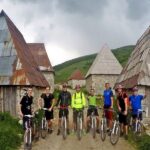
Bike through Sarajevo, then ride into history. This tour strings together Old Town icons and the Tunnel of Hope so you see how everyday city life collided with the wars of the 1990s, with a small max group of 10.
I love that the format is active but not exhausting: you get a bicycle and helmet, and the route is built around short stops like Sebilj Fountain, Latin Bridge, and Gazi Husrev-beg Mosque. I also like that admissions to the War Tunnel museum and Vrelo Bosne park are included, so you spend the money where it counts and not on add-ons.
One consideration: you’re on the bike for a full day (about 6–7 hours) and the pace covers real distance, plus the experience depends on good weather, so plan for a day that can run wet or warm.
In This Review
- Key things to know before you go
- Why this bike tour beats a walking loop
- Sebilj Fountain and Kazandžiluk: your first hit of Ottoman Sarajevo
- Vijećnica and Inat Kuća: Sarajevo’s buildings as time machines
- Latin Bridge: the WWI trigger point you can actually stand on
- Gazi Husrev-beg Mosque and Bezistan: Ottoman power, religion, and commerce
- Sacred Heart Cathedral and Parliament: faith and governance after war damage
- Vrelo Bosne: the one-hour reset outside the center
- Tunnel of Hope: learning the siege story on-site
- Distance, timing, and bike comfort in real life
- Price and value: what $138.34 gets you
- Should you book this Sarajevo city and War Bike Tour?
- FAQ
- How long is the Sarajevo City Sightseeing / War Bike Tour?
- What time does the tour start?
- Where does the tour begin and end?
- Is the tour offered in English?
- What’s included in the price?
- Are entrance tickets required for the major stops?
- How big is the group?
- Do I need to bring a bike or helmet?
- What weather conditions does the tour require?
- What is the cancellation policy?
Key things to know before you go
- Small-group feel (up to 10) keeps the ride personal and makes Q&A easier.
- Short highlight stops (many are about 5 minutes) help you see more without turning it into a long march.
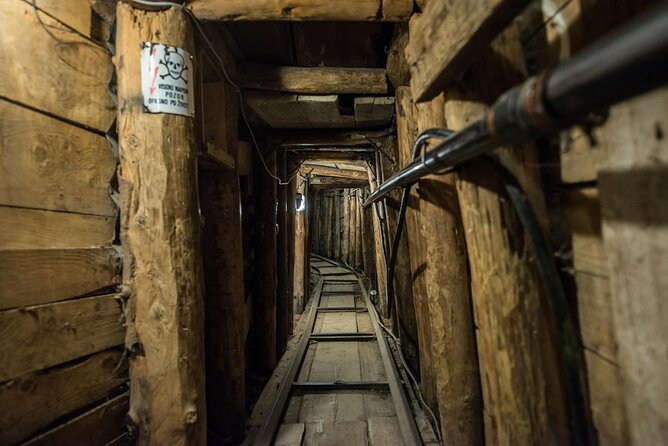
- War Tunnel museum time (about 1 hour) is built in, not just a quick photo stop.
- Vrelo Bosne included (about 1 hour) gives you a breather outside the tight city center.
- Bicycle + helmet included means you’re not hunting rental gear the morning of.
Why this bike tour beats a walking loop
Sarajevo’s center is made for back-and-forth exploring, but walking can turn into a lot of stop-start, especially when you want to cover major sites across different neighborhoods and time periods. A bike tour solves that. You can go farther with less fatigue, and you’ll still have time to pause, look closely, and ask questions.
There’s also a practical rhythm here. Many stops are brief but focused, and two of the day’s stops are longer: the spring park (Vrelo Bosne) and the Tunnel of Hope area. That structure matters. It prevents the tour from becoming either a full-day slog or a string of rushed photo ops.
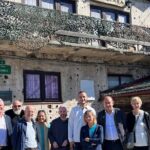
Finally, the small group size changes the tone. With 10 people max, guides can adjust pacing, answer questions, and make sure everyone actually gets a moment at the important spots instead of just rolling past.
You can also read our reviews of more cycling tours in Sarajevo
Sebilj Fountain and Kazandžiluk: your first hit of Ottoman Sarajevo
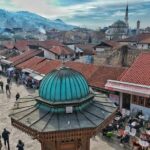
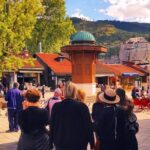
Your day starts near Obala Isa-bega Ishakovića 3, and once you roll into Baščaršija (Old Town), you get the postcard parts fast. The first major stop is Sebilj Brunnen, the famous wooden fountain in the heart of Baščaršija. It’s an 18th-century landmark and a classic meeting spot, surrounded by cobbled streets and small shops where you can feel how the area still runs on foot traffic.
From there, you move to Kazandžiluk, one of Sarajevo’s oldest streets. It’s pedestrian-only and known for coppersmiths—crafts and souvenirs like coffee pots, trays, and jewelry often feature intricate filigree work. This is one of those stops that’s more than shopping. It’s a living reminder of how craft traditions carried through centuries, right where people still walk and browse.
What I like about this section: it gives you context early. You’re not just ticking off monuments; you’re learning what people did here and why the old streets still matter.
What to watch for: this part is easy to do quickly, but if you like buying things (handmade copper items can be tempting), you may want to bring a bit of extra cash or budget time so you don’t feel rushed.
Vijećnica and Inat Kuća: Sarajevo’s buildings as time machines
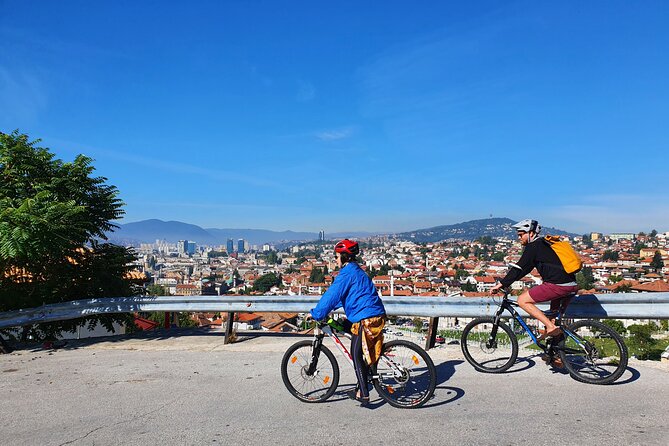
Next you hit two of the most meaningful stories in the center: Vijećnica (City Hall) and Inat Kuća (House of Spite).
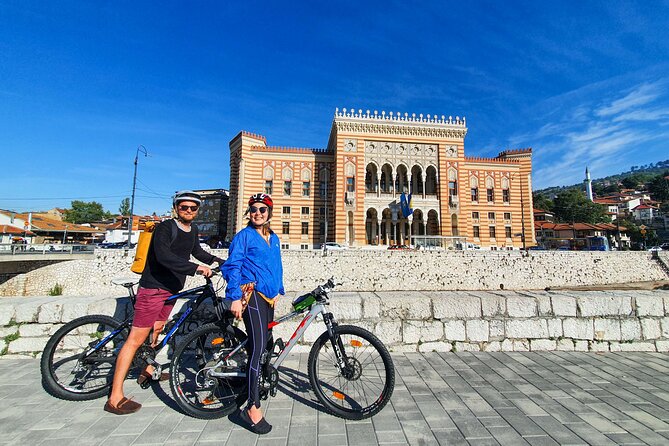
Vijećnica is a stunning Moorish Revival-style building built in 1894. It later housed the National Library. Then came the Siege of Sarajevo in 1992, when it was heavily damaged. After restoration, it reopened in 2014 as a national monument and cultural venue—an unusually visible signal that the city has had to rebuild itself over and over.
A short ride away is Inat Kuća, the House of Spite. The story is delightfully human: in the late 19th century, the owner refused to sell his house for the construction of the City Hall. Authorities reportedly moved it brick by brick to the opposite bank of the river. Today it’s a restaurant, which means you can connect the history to something ordinary and current—food, conversation, and everyday use.
Why this stop combo works: Vijećnica gives you architecture plus survival. Inat Kuća adds a personal angle—one stubborn decision that shaped the cityscape you can still see today.
Possible drawback: Vijećnica and other sites like this can get crowded around popular photo moments. The tour’s short stop time helps you see the building, but if you want long interior time (when available), you’ll likely need to plan a separate visit later.
Latin Bridge: the WWI trigger point you can actually stand on
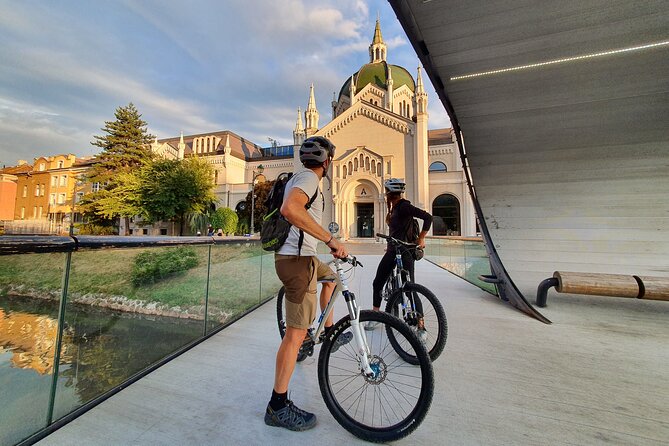
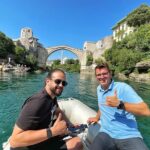
Then you roll to Latin Bridge, an Ottoman bridge tied to one of the most consequential dates of the 20th century. It’s here that Archduke Franz Ferdinand was assassinated in 1914, an event that triggered World War I. The bridge dates to the 16th century, so you’re seeing the kind of durable infrastructure that outlasts empires—and outlasts plans made by people who thought history would move on their schedule.
This is a short stop, so your best move is to slow down your own pace: walk a bit around the bridge area, look at the river views, and then let the guide’s story anchor what you’re looking at.
What you should know going in: this stop is history-heavy but still quick. If you’re the type who likes details—dates, names, cause and effect—listen closely here because the day will move fast afterward.
Gazi Husrev-beg Mosque and Bezistan: Ottoman power, religion, and commerce
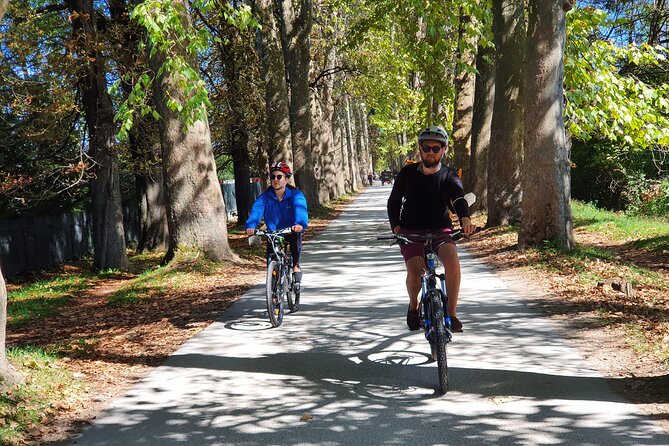
Sarajevo’s Ottoman-era heart gets a big spotlight with Gazi Husrev-beg Mosque and the nearby Bezistan.
Gazi Husrev Bey’s Mosque is the largest mosque in Sarajevo, built in 1530. It’s a central symbol of the city’s Ottoman heritage, and the architecture is the main event even when the stop is brief. It’s the kind of place where you can notice scale and layout quickly, even if you’re not going inside.
Then comes Bezistan, a 16th-century covered market under arched arcades. It’s named for the market structure itself—an older way of controlling foot traffic, shade, and trade. In practice, it means shops sit under the cover of the arcade, so shopping and browsing feel sheltered even when the weather shifts.
Why I think these two are worth pairing: mosque + market shows how the city worked. Religion and commerce weren’t separate worlds; they were side by side in daily life, all under shared urban space.
What to watch for: the day is already packed with major stops. Plan to treat this area as a “look first, shop second” zone. If you shop too early, you can end up repeating items later, just because you’re already in purchasing mode.
You can also read our reviews of more city tours in Sarajevo

Sacred Heart Cathedral and Parliament: faith and governance after war damage
After the Ottoman core, the tour shifts to later periods and different architectural styles, including two major civic and religious landmarks.
Sacred Heart Cathedral is the largest cathedral in Bosnia and Herzegovina. It was built in the late 19th century in Neo-Gothic style. It’s a big visual contrast from the surrounding older streets and gives you a clear sense of how Sarajevo’s religious life evolved.
Then you ride to the Parliamentary Assembly of Bosnia and Herzegovina. The building was constructed in 1982 by architect Juraj Neidhardt and is modernist in form. During the Siege of Sarajevo in the 1990s it was severely damaged, and it has been restored since. Seeing it after the war-timeline you’ve already been learning about is powerful. It’s not just a structure; it’s a statement about repair and continuity.
The practical reason this works: the tour doesn’t leave you stuck in one era. You get Ottoman foundations, then you shift to 1800s–1900s civic life, then you finish with the war sites and the outdoors.
Possible drawback: if you’re hoping for a lot of inside time at each place, this format is designed for “see and understand” rather than long museum-style stays. You’ll cover more, but you won’t linger the way a dedicated cathedral visit might.
Vrelo Bosne: the one-hour reset outside the center
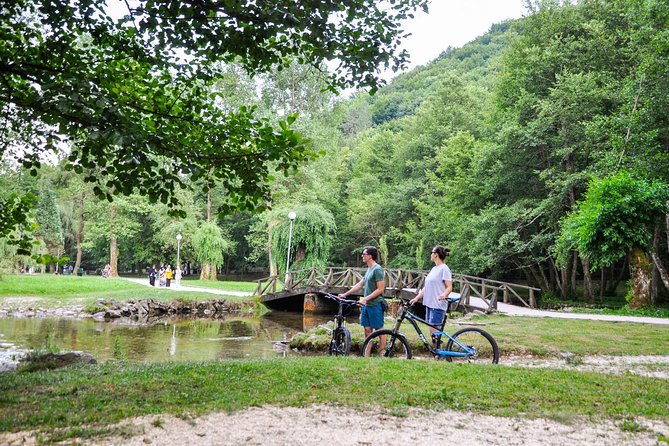
After all the city landmarks, you get a breather with Vrelo Bosne, the spring of the Bosna river in a public park. It’s at the foothills of Mount Igman on the outskirts of Sarajevo. This is included for about an hour, so it’s not just a quick stop.
Why it matters: after you’ve been thinking about bridges, buildings damaged in the 1990s, and the Tunnel of Hope, the park gives your brain a chance to reset. You’re back in nature—fresh air, open space, and a view of the river’s spring source.
What to do with your hour: keep it simple. Walk around, take in the spring area, and use it to cool down if you got warm during earlier cycling.
Tunnel of Hope: learning the siege story on-site
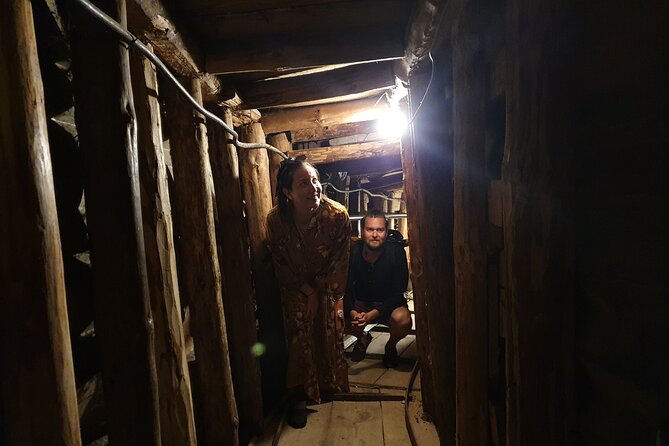
No Sarajevo war-related tour feels complete without the Tunnel of Hope, and this one gives it time rather than treating it like a drive-by.
The tunnel was constructed during the Bosnian War to link two Bosnian-held territories that had been cut off. The tour includes entry to the Tunnel of Hope museum area, which takes about an hour. You’ll get the setting, the purpose, and the human logic behind how people worked around siege conditions.
This part can be heavy. Not in a “doom for the sake of doom” way, but in the honest way that history demands. I’d plan to be mentally ready for seriousness here, and I’d avoid booking this if you know you’re sensitive to war topics.
A small tip that helps: before you enter, take a few seconds to look around at the approach area. Then when the museum explains the why and how, the physical context clicks faster.
Distance, timing, and bike comfort in real life
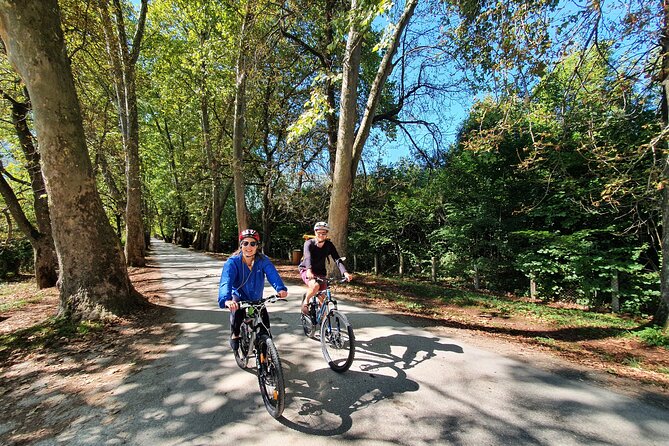
The tour runs about 6–7 hours, starting at 9:00 am and ending back at the meeting point. Many stops are short, but it’s still a real half-day commitment. One rider reported the cycle can come out to a bit over 25 miles, which tells you this is not a casual pedal around the block.
To enjoy it, you don’t need to be an athlete, but you do need comfortable shoes and a willingness to keep moving. Helmet use is provided, which is a big deal for comfort and safety.
What I’d wear: breathable layers and something to protect you from wind or rain, since Sarajevo weather can swing. If you’re going in hot season, plan for hydration. If it’s rainy, treat the day as an outdoor activity, not an indoor one.
Price and value: what $138.34 gets you
At $138.34 per person, this is not the cheapest “see the sights” option in Sarajevo. But it can be good value when you add up what’s included.
You’re getting:
- bicycle use and a helmet
- admission to the War Tunnel museum
- admission for Vrelo Bosne
- an English-speaking guide
- a small group capped at 10
That matters because two of the biggest “pay at the door” items are already covered: the tunnel museum and the spring park entry. And the bike format itself adds value. You’re not just walking between sites; you’re covering distance efficiently while still stopping enough to understand what you’re seeing.
Where the price may feel steep is if you mostly want to wander slowly and don’t care much about structured context. This tour is best when you like guided storytelling and a tight route.
Should you book this Sarajevo city and War Bike Tour?
If you want a fast, organized way to connect Sarajevo’s Ottoman landmarks with the events of the 1990s, this is a strong pick. The small group size and the mix of quick highlights plus two longer stops (the Tunnel and Vrelo Bosne) are a smart way to use limited time without skipping the important parts.
I’d book it if:
- you’re comfortable riding a bike for a full day
- you want both architecture and war context
- you like guides who tell stories tied to specific places
I’d think twice if:
- war-history topics feel too intense for your trip style
- you prefer mostly slow, independent sightseeing with lots of downtime
- weather is likely to be poor (this experience depends on good weather)
If you do book, you’ll come away with a clearer map of Sarajevo and a better sense of how the city’s buildings and streets connect across centuries.
FAQ
How long is the Sarajevo City Sightseeing / War Bike Tour?
It runs about 6 to 7 hours.
What time does the tour start?
The start time is 9:00 am.
Where does the tour begin and end?
It starts at Obala Isa-bega Ishakovića 3, Sarajevo 71000, Bosnia and Herzegovina, and it ends back at the same meeting point.
Is the tour offered in English?
Yes, it is offered in English.
What’s included in the price?
The tour includes bicycle use, helmet use, war tunnel museum admission, and Vrelo Bosne admission.
Are entrance tickets required for the major stops?
The tour data says admissions are included for the War Tunnel museum and Vrelo Bosne. For other listed stops, admission is noted as free.
How big is the group?
The maximum group size is 10 travelers.
Do I need to bring a bike or helmet?
No. Bicycle and helmet use are included.
What weather conditions does the tour require?
The experience requires good weather. If it’s canceled due to poor weather, you’ll be offered a different date or a full refund.
What is the cancellation policy?
Free cancellation is available up to 24 hours in advance of the experience. If you cancel less than 24 hours before the start time, the amount paid is not refunded.
You Might Also Enjoy
More Cycling Tours in Sarajevo
More Tours in Sarajevo
- Fall of Yugoslavia, Sarajevo War Tour with Tunnel of Hope Museum and Frontlines
★ 5.0 · 1,314 reviews

More Tour Reviews in Sarajevo
- Fall of Yugoslavia, Sarajevo War Tour with Tunnel of Hope Museum and Frontlines
★ 5.0 · 1,314 reviews