REVIEW · SARAJEVO
Sarajevo Under Siege: A War History Tour
Book on Viator →Operated by The Globe Balkans · Bookable on Viator
Sarajevo feels close, even when you just arrive. This 3-hour war-history tour pairs big city viewpoints with personal testimony, starting at the White Fortress (Bijela tabija) and ending at the rebuilt City Hall (Vijećnica). I love how the viewpoints help you place the Siege of Sarajevo in your mind, and I love how the Tunnel of Salvation explains survival in a way you can picture. The main consideration: this is not a casual history walk—it deals with real fear, grief, and political division, so go in ready for heavy stories.
The tour is run with a human touch. Guides such as Suvad and Evan are known for answering questions directly and keeping the tone respectful. With pickup offered from hotels in Sarajevo’s city center and a private vehicle for just your group, you get enough time to ask follow-ups instead of rushing past everything.
In This Review
- Highlights to know before you go
- Why this Sarajevo under-siege tour makes sense in 3 hours
- Bijela tabija (White Fortress): the first view that sets the Siege timeline
- Zetra Olympic Hall area: war-time childhood, family grief, and daily survival
- Sniper Alley drive: crossing the city could be a survival choice
- Tunnel of Salvation: the underground lifeline under the airport runway
- Lukavica today: former frontline routes, Dayton’s split, and political memory
- Vijećnica (Sarajevo City Hall): a rebuilt symbol after 1992 destruction
- Price and value: what you pay, what may cost extra
- Getting the most out of your guide: questions worth asking
- Who this tour is best for (and who should think twice)
- Should you book Sarajevo Under Siege?
- FAQ
- How long is the Sarajevo Under Siege: A War History Tour?
- What time does the tour start?
- Where does the tour meet?
- Is pickup included?
- Is this tour private?
- What’s included in the price?
- Are entrance fees included?
- What language is the tour offered in?
- What is the cancellation policy?
- Does the tour depend on weather?
Highlights to know before you go
- Bijela Tabija’s 16th-century viewpoint: panoramic city orientation tied to Sarajevo’s Ottoman-to-Siege timeline
- War-time neighborhood story near Zetra Olympic Hall: a personal account of childhood under shelling, including a guide’s family burial site
- A drive past Sniper Alley: why crossing that main avenue could mean life or death for ordinary errands
- Tunnel of Salvation in 1993: walk a section of the original underground lifeline, see wartime artifacts, and watch a short documentary
- Lukavica and the Dayton-era split: how the Federation of BiH and Republika Srpska changed daily geography, shown through former front lines and murals
- Vijećnica (Sarajevo City Hall): Austro-Hungarian architecture, the 1992 library destruction, and the rebuilt symbol of cultural identity
Why this Sarajevo under-siege tour makes sense in 3 hours
If you only have one afternoon in Sarajevo, you want your time to “click” into place fast. This tour is built for that. You get city orientation first, then you move into siege life (streets, neighborhoods, and the tunnel), then you finish with how the war echoes in the present—through Dayton-era political boundaries and visible murals.
It’s priced at $30.10 per person, which is the cost of a guided, private, air-conditioned ride with WiFi on board. You’re not paying to see a single building and then leave; you’re paying for context: how the city functioned under pressure, and why those places still matter.
Also, it’s offered in English, it starts at 1:30 pm, and it runs about 3 hours. That means you can pair it with an early morning museum visit or dinner afterward without feeling like Sarajevo owns your whole day.
You can also read our reviews of more historical tours in Sarajevo


Bijela tabija (White Fortress): the first view that sets the Siege timeline
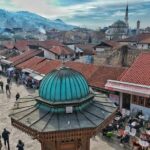
The tour begins at Bijela tabija, the White Fortress, a viewpoint that goes back to the 16th century. From up high, Sarajevo makes more sense. You can see the city’s layout, understand why certain areas mattered strategically, and grasp how quickly distance turns into vulnerability when a city is surrounded.
Your guide then connects that physical view to the long story of Sarajevo—Ottoman times on one end, and the Siege of Sarajevo on the other. That “timeline jump” matters, because without it, the siege can feel like one isolated event. With it, the war feels like a brutal continuation of Sarajevo’s strategic position.
One practical benefit: this stop is only about 30 minutes. It gives you orientation without dragging. The trade-off is that if you’re the type who loves lingering for photos, you’ll have to accept the tour’s pace.
Zetra Olympic Hall area: war-time childhood, family grief, and daily survival
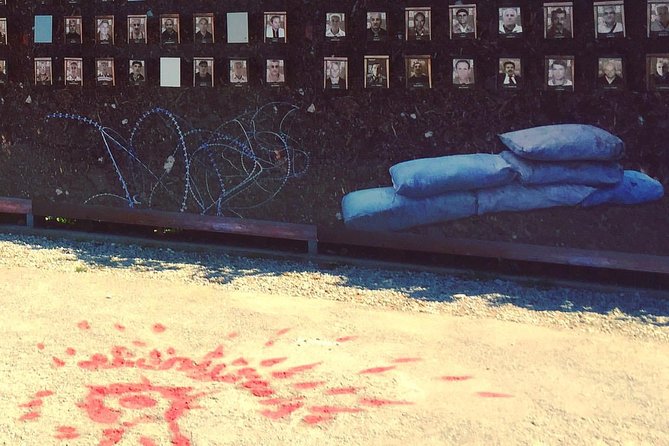
Next comes the Zetra Olympic Hall neighborhood, where your guide lived during the war. This area is close to what used to be the maternity hospital—heavily bombed—and that proximity is part of why the siege days were so harsh.
What makes this stop powerful isn’t just the location. It’s the personal storytelling: childhood under siege, survival routines, and what it feels like to live with constant shelling in the background of everyday life. The tour also includes a visit connected to family: the burial place of the guide’s father, plus the very street where he grew up and used to play.
That combination—place + family + memory—turns “history” into something you can actually process. You’re not being shown tragedy like a museum exhibit; you’re being asked to understand how a war changes the shape of a life.
Give yourself a moment here to slow down. If you rush, you’ll miss why the details stick.
Sniper Alley drive: crossing the city could be a survival choice
You won’t have long set-down moments at every stop, and that’s okay here. The tour drives past one of Sarajevo’s most infamous streets during the war: Sniper Alley, a main avenue under constant sniper fire.
Your guide shares how residents risked their lives just to get basic needs—water, food, and routes to safety. Standing in front of modern buildings today, it’s easy to forget that the same road once symbolized fear and resilience at the same time.
This segment is valuable because it reframes something most visitors assume is simple. You start seeing ordinary movement—crossing streets, stepping outside, timing a trip—as a military problem. It’s uncomfortable, but it’s also accurate to how siege cities work.
If you’re sensitive to intense topics, this is where you’ll feel it most. It’s not graphic for the sake of shock, but it’s still a direct reminder of what daily errands became.
Tunnel of Salvation: the underground lifeline under the airport runway
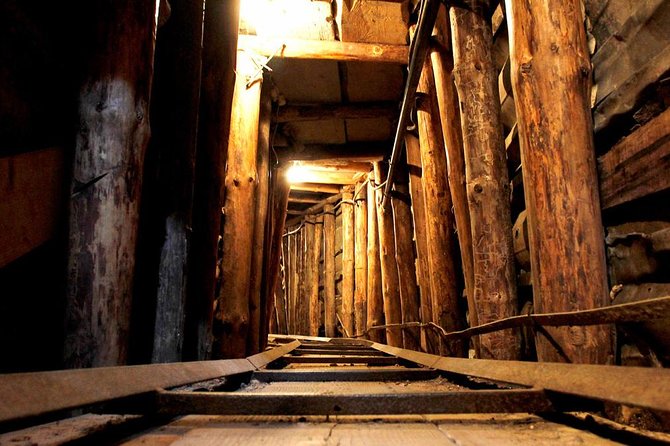
The centerpiece is the Tunnel of Salvation, one of the key sites for understanding the Bosnian War. This narrow passage was dug secretly beneath the airport runway in 1993, connecting besieged Sarajevo with the outside world.
Your visit includes walking through a section of the original tunnel, seeing authentic wartime artifacts, and watching a short documentary about the Siege. That mix matters. The tunnel is physical—you can feel how tight and constrained it was. The artifacts anchor it in reality. The documentary helps tie the objects to the larger story.
This is the stop that most people remember because it explains the siege in a “how did anyone survive?” way. It served as a lifeline for food, medicine, and hope—allowing thousands to endure when normal life was shut down.
Practical tip: wear comfortable shoes. You’ll be moving through a confined space, and you don’t want to be negotiating blisters while trying to take in the story.
- Fall of Yugoslavia, Sarajevo War Tour with Tunnel of Hope Museum and Frontlines
★ 5.0 · 1,314 reviews


Lukavica today: former frontline routes, Dayton’s split, and political memory
After the tunnel, the tour shifts to what came afterward. You’ll drive through Lukavica, which was once part of the front line during the Siege of Sarajevo and today belongs to Republika Srpska.
This is where the tour talks about the post-war division of Bosnia and Herzegovina into two entities: the Federation of BiH and Republika Srpska. Your guide explains how the Dayton Peace Agreement reshaped the city—and how that change shows up not just on maps, but in what people see and remember.
You’ll also see how memory stays political. The guide points out former front lines and shows graffiti and murals that glorify wartime figures such as Ratko Mladić. This can feel jarring if you hoped reconciliation would be the main visual takeaway.
The value here is honesty. Peace in Sarajevo isn’t just a date in the past; it’s an ongoing negotiation in public space. Even when buildings are restored, messages can still divide.
Vijećnica (Sarajevo City Hall): a rebuilt symbol after 1992 destruction
The final stop is Sarajevo City Hall (Vijećnica), originally built in 1896 during the Austro-Hungarian period. It once served as the seat of the National Library, and it was completely destroyed in August 1992 when Serbian forces shelled it—burning almost two million books and manuscripts.
Today, it’s beautifully restored. That restoration isn’t just pretty—it’s symbolic. Your guide explains what Vijećnica means for Sarajevo’s cultural identity now, and why this building’s survival carries weight far beyond its architecture.
If you’ve felt the heaviness building during the earlier stops, this is where you get a different emotion: rebirth. Not denial. Not “everything is fine.” Just the fact that Sarajevo chose to rebuild something that mattered to the city’s intellectual life.
It’s a fitting ending because it closes the loop: siege-era survival (the tunnel), siege-era fear (Sniper Alley), and then the longer struggle of what to do with memory (Dayton divisions and what gets honored or criticized).
Price and value: what you pay, what may cost extra
The tour price is $30.10 per person, and it includes air-conditioned transportation, private transport, and WiFi on board. It also lists a mobile ticket, pickup within the Sarajevo city center, and English language guiding.
Entrance fees are not included. The tour lists €10.25 per adult and €5.25 per student for the war tour entrance fee. At the same time, the stop descriptions call out free entry for multiple parts of the route. So the safest way to think about it is: you’ll likely need to budget for at least one paid entrance element linked to the war sites.
Here’s how I’d judge the value for your money:
- You’re not just “seeing spots.” You’re getting guided interpretation tied to specific locations.
- You’re riding in comfort with a private group and a vehicle, which is a real benefit in a city where distances add up fast.
- You get multiple Siege-related themes in one go: viewpoint strategy, neighborhood life, deadly streets, the tunnel lifeline, and post-war political geography.
If you’re traveling solo and want a human guide who can answer your questions, this is a good structure for getting more than a quick photo tour.
Getting the most out of your guide: questions worth asking
This tour works best when you treat it like a conversation with the city, not a script. With a private setup, you can ask questions when something doesn’t feel clear.
Here are a few practical questions you can bring (and I think they’ll sharpen the experience):
- What should I notice from Bijela tabija that changes how I read the city?
- Why did ordinary tasks become so dangerous along Sniper Alley?
- How did the tunnel change daily survival, not just the overall war story?
- What does Lukavica’s present-day identity mean for how people interpret the war?
- What does Vijećnica represent in Sarajevo’s cultural life today?
Guides like Suvad and Evan are known for balancing clear facts with personal testimony. You’ll get more out of it if you ask, not just listen.
Who this tour is best for (and who should think twice)
This is best for you if you want a focused, guided way to understand the Siege of Sarajevo—not through distant dates, but through real places and real human stories. It’s also a good fit if you like context: how a war changes neighborhoods, movement, and even the way political divisions show up on streets today.
Most travelers can participate, but this isn’t a “light” outing. If you’re hoping for scenery and casual sightseeing, you might find the emotional tone too much.
You’ll also want decent weather. The tour notes that it requires good weather, and if conditions are poor, you’ll be offered a different date or a full refund.
Should you book Sarajevo Under Siege?
Book it if you want one organized afternoon that turns Sarajevo from a name on a map into a place with a clear story. The combination of Bijela tabija, a neighborhood account around Zetra Olympic Hall, a Sniper Alley drive, the Tunnel of Salvation, and the end at Vijećnica gives you a complete arc: strategy, daily fear, survival, aftermath, and cultural identity.
Don’t book it if you’re seeking a relaxed, purely visual tour. This one asks you to sit with painful material and political memory. If you’re okay with that, you’ll leave with sharper understanding—and a city that feels real, not remote.
FAQ
How long is the Sarajevo Under Siege: A War History Tour?
The tour lasts about 3 hours.
What time does the tour start?
The start time is 1:30 pm.
Where does the tour meet?
The meeting point is Vijećnica (VC5M+8GF), Hafiza Ibrahima Trebinjca 10, Sarajevo 71000, Bosnia and Herzegovina.
Is pickup included?
Yes. Pickup is offered from any hotel or location within Sarajevo city center. Pickup begins 15 minutes before the tour starts.
Is this tour private?
Yes. It’s a private tour/activity, so only your group participates.
What’s included in the price?
The tour includes an air-conditioned vehicle, private transportation, and WiFi on board.
Are entrance fees included?
No. Entrance fees are listed separately: €10.25 per adult and €5.25 per student for the war tour entrance fee.
What language is the tour offered in?
The tour is offered in English.
What is the cancellation policy?
You can cancel for a full refund up to 24 hours in advance. If you cancel less than 24 hours before the start time, the amount paid is not refunded.
Does the tour depend on weather?
Yes. The experience requires good weather. If it’s canceled due to poor weather, you’ll be offered a different date or a full refund.
You Might Also Enjoy
More Historical Tours in Sarajevo

More Tours in Sarajevo
- Fall of Yugoslavia, Sarajevo War Tour with Tunnel of Hope Museum and Frontlines
★ 5.0 · 1,314 reviews

More Tour Reviews in Sarajevo
- Fall of Yugoslavia, Sarajevo War Tour with Tunnel of Hope Museum and Frontlines
★ 5.0 · 1,314 reviews