REVIEW · SARAJEVO
Sarajevo Grand Tour: Old Town, War Tunnel, Olympic Sites & More
Book on Viator →Operated by Tour Mage · Bookable on Viator
Sarajevo tells two stories at once. This small-group tour strings together the Ottoman Old Town look, the Austro-Hungarian city center, and the war-era War Tunnel, so you see how the city survived and rebuilt. I especially like the hotel pickup by private vehicle and the tight mix of walking and driving that keeps the day moving.
I also like the food-and-craft moments that feel local, like time at Kazandziluk for cevapi and burek-style bites and a Bosnian coffee stop inside a historic Ottoman caravansaray space. One thing to plan for: the schedule includes a visit to the War Tunnel area, but Tunnel Museum entry is not included, so you’ll want a few euros on hand.
In This Review
- Key highlights I’d plan around
- What you’re really paying for: value of about $47
- 9:00 pickup and the walking-smart itinerary
- Old Town orientation: City Hall, Inat Kuća, and Miljacka river
- Kazandžiluk: food street time plus coppersmith craft
- Baščaršija and Morica Han: the heart of the Old Town
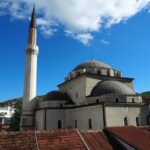
- Gazi Husrev-beg Mosque complex and the Ottoman schoolyard details
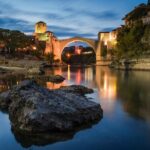
- Latin Bridge to Bezistan: assassination story meets covered-market Sarajevo
- Jewish Museum of Bosnia and Herzegovina plus cathedral promenade stops
- Markale marketplace and Orthodox Cathedral: learning the war’s geography
- Sarajevo War Tunnel: the movie and the on-site walk
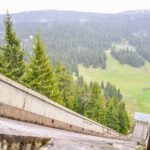
- Trebević Olympic bobsleigh track: warfront views with a sports twist
- Jewish cemetery sniper’s nest and the Yellow Fortress view
- Who should book this tour, and who might not love it
- Should you book the Sarajevo Grand Tour?
- FAQ
- How long is the Sarajevo Grand Tour?
- What time does the tour start?
- Is hotel pickup included?
- What’s the group size limit?
- Is the tour in English?
- What is included in the price?
- Is the Sarajevo War Tunnel Museum included in the price?
- Are meals like cevapi or burek included?
- Can children join the tour?
- What if I need to cancel?
Key highlights I’d plan around
- Door-to-door pickup plus a small group (max 15) makes getting around easier
- Old Town walking through bridges, bazaars, and landmark neighborhoods
- Caravanserai-style coffee moment at Morica Han with a calmer pause in the middle of the day
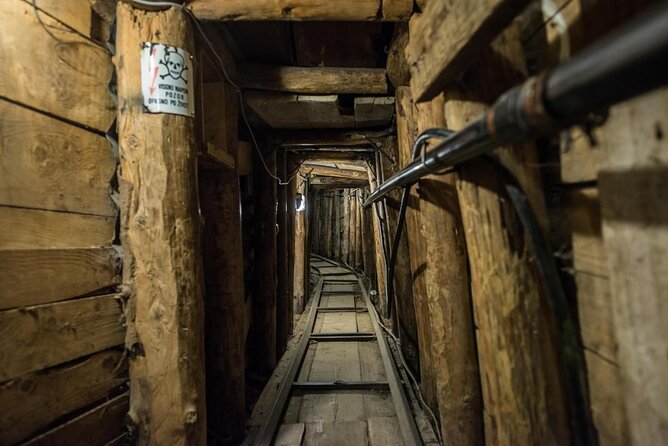
- War Tunnel visit with a movie presentation and an on-site walk through part of the tunnel
- Trebević Olympic bobsleigh track for big views and best photo angles
- Yellow Fortress drop-off view so you can end with one strong look over the city
What you’re really paying for: value of about $47
At roughly $47 per person for about 5 hours, this tour is priced like a “start-here” experience. You’re not just getting a guide and a couple viewpoints. You also get private vehicle transport, bottled water, and Bosnian coffee as part of the day, plus a format that mixes short walks with car rides so you can cover a lot of Sarajevo without spending hours figuring out routes.
The one extra cost you should factor in is the Tunnel Museum entrance fee, listed as €10.50 per booking. That isn’t a surprise if you treat the tunnel as the main “ticket attraction” of the itinerary. Think of it this way: your money buys the orientation tour, and the museum part is the add-on.
The tour is offered in English, and there’s a mobile ticket, which is handy if you’re hopping between activities during your stay.
You can also read our reviews of more tours and experiences in Sarajevo.
- Fall of Yugoslavia, Sarajevo War Tour with Tunnel of Hope Museum and Frontlines
★ 5.0 · 1,314 reviews
9:00 pickup and the walking-smart itinerary
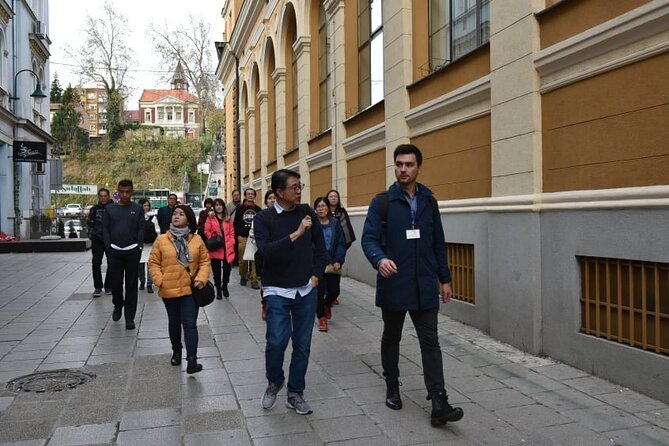
You start at 9:00 am with pickup at your hotel lobby or another Sarajevo location you choose. The day is built around a small group (maximum 15), which helps the guide keep people together on foot, especially in older streets where things can get tight.
Expect a real walking-and-stopping flow. The Old Town portion includes bridges, bazaars, and promenades, and later you’ll do shorter walks near big viewpoints. If you don’t love uneven stone streets or steps, wear shoes you can handle for a few hours of mixed terrain.
A smart tip: since Sarajevo can change fast with weather, bring a light layer and something to cover your shoulders for church or mosque-adjacent areas. Even when you’re mostly stopping outside, it’s a good habit.
Old Town orientation: City Hall, Inat Kuća, and Miljacka river
The tour kicks off around Sarajevo City Hall (Vijecnica), first with a quick orientation of the city: where it sits, population basics, climate, and context so the later stops make sense.
From there, you walk the classic Old Town corridor:
- Inat Kuća (spite house): a local landmark with a story attached, which helps you understand why Sarajevo’s neighborhoods have personality, not just history.
- The Miljacka River: this waterway is part of the city’s spine, so it’s a natural line for your mental map.
- Seher Ćehaja Bridge: you pass it and move on, but it gives you that “OK, I get where I am” feeling fast.
This early section works best if you let the guide build connections. When someone explains why these bridges and buildings matter, later stops stop feeling random.
Kazandžiluk: food street time plus coppersmith craft
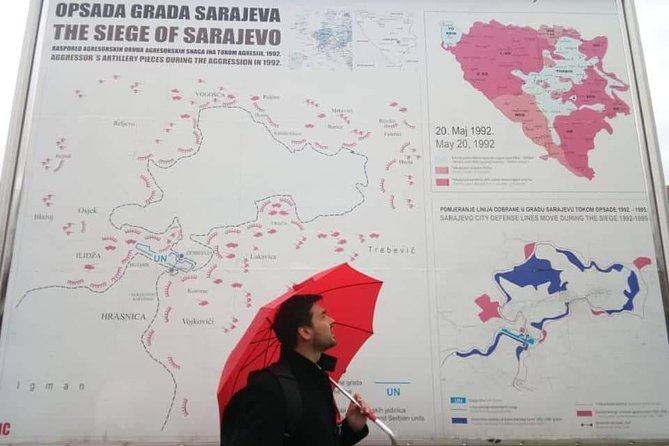
Next comes Kazandžiluk, a pedestrian area you cross into right after the river. This is where the tour shifts from big landmark architecture to everyday Sarajevo.
You’ll spend time around:
- Locksmith street, known for food—so you get a practical chance to try local-style bites like cevapi and pita-burek alongside sweets and coffee.
- Coppersmith street, plus a short shop visit with a craft presentation.
Even if you skip a snack, you still get the value: a guided walk where the guide explains what the neighborhood is known for. That makes it easier to come back later on your own and order confidently.
Baščaršija and Morica Han: the heart of the Old Town
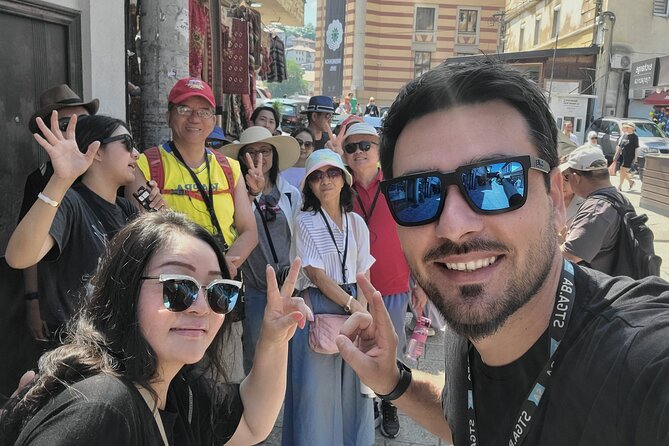
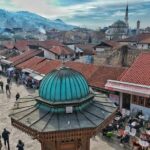
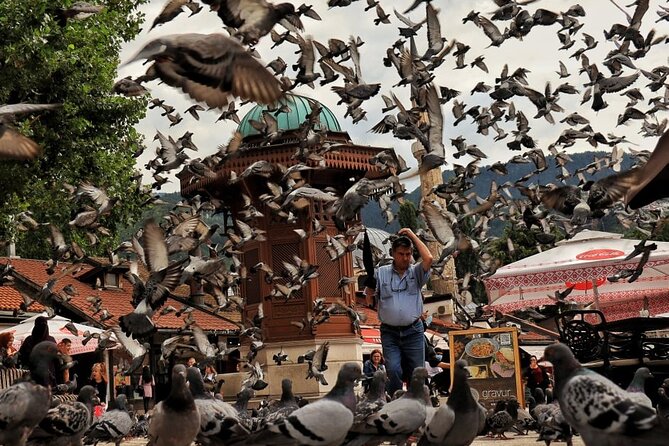
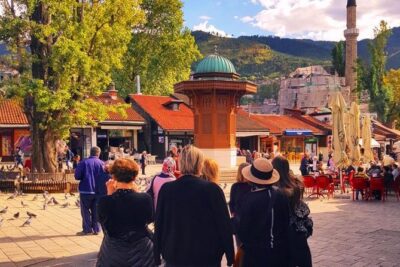
Then you’re at Baščaršija, the main square with the Sebilj fountain, famous for providing free water to travelers for centuries. It’s a small stop on paper, but it’s useful. You see the old core where people still gather, not just a monument behind a fence.
After that, the route moves to Morica Han, and this is one of my favorite parts of the whole design. Morica Han gives you two things:
- a slow walk along the main promenade with small shops, souvenir counters, and coffee spots
- entry into a historic Ottoman caravansaray space, where you get traditional Bosnian coffee and a quieter corner while stories of local traditions are shared
Morica Han is a good reset point. You’re seeing a lot of sights; the coffee pause keeps the day from turning into nonstop “look, look, look.”
- Fall of Yugoslavia, Sarajevo War Tour with Tunnel of Hope Museum and Frontlines
★ 5.0 · 1,314 reviews
Gazi Husrev-beg Mosque complex and the Ottoman schoolyard details
The tour reaches the area of Gazi Husrev-beg Mosque, focusing on what you can see and understand around the complex:
- the mosque garden and the minaret
- the story context of Gazi Husrev-bey
- a Sadrvan fountain
- the medresa (Islamic school)
- the Lunar Clock Tower
This stop is valuable because it’s not just architecture spotting. You’re told who built it and why it matters, so the details become meaningful. Even if you only view parts from outside, it still gives you a strong sense of Sarajevo’s Ottoman layer.
Latin Bridge to Bezistan: assassination story meets covered-market Sarajevo
Moving forward, the tour goes past the Latin Bridge area, tied to the assassination story that shaped the region’s modern timeline. You also pass by an old functional landmark: the oldest public toilet in the country still working since the 1500s. It’s oddly fascinating, and it’s the kind of detail that makes a city feel real.
From there, you reach Gazi Husrev-beg’s Bezistan, a covered market area built in the 1500s, plus nearby points like:
- Taslihan ruins (of a large caravansaray)
- the Hotel Europe area you pass as you walk through the market zone
You also stop at the Sarajevo Meeting of Cultures place, a short but symbolic moment that fits Sarajevo’s identity as a crossroads.
Jewish Museum of Bosnia and Herzegovina plus cathedral promenade stops
Next, you visit the Jewish Museum of Bosnia and Herzegovina. The stop includes the historic 16th-century synagogue (outside viewing), plus a focus on the Hagadah book story and themes of Jewish life and living together. Even when you’re not inside the museum building for long, the guide sets up what you’re meant to notice.
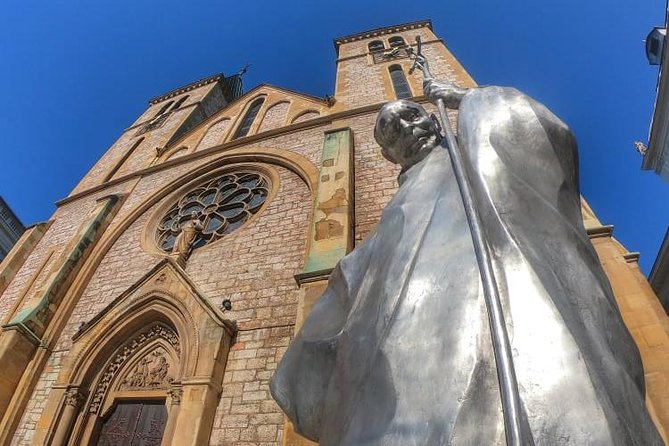
Then you move along Ferhadija promenade and reach Sacred Heart Cathedral (outside visit), with stops around Sarajevo roses and the John Paul Statue area.
This section helps if you’re trying to understand Sarajevo’s layered identity. You don’t just pass religious buildings—you connect them to how the city has held different communities over time.
Markale marketplace and Orthodox Cathedral: learning the war’s geography
At Pijaca Markale, you pass by Hamam and then spend time at the market area that became a site of massacre during the 1992–1995 war. The tour keeps it brief here, but the significance lands because you’re seeing it inside a normal city flow, not only in a museum context.
After that, you have an outside visit at the Serbian Orthodox Cathedral, with time to notice how the street and building layout communicate Sarajevo’s religious and cultural map.
If you’re sensitive to hard topics, this is the part of the day where you might want to slow down mentally. It’s also where a good guide’s framing matters most.
Sarajevo War Tunnel: the movie and the on-site walk
The centerpiece of the war-era portion is Sarajevo War Tunnel. On the drive there, you pass places like Sniper Alley, and you go through Republica Srpska (RS) territory, as well as areas connected to Sarajevo Airport, before arriving at the tunnel.
The visit includes:
- a presentation and short movie about the siege and the tunnel
- a walk through part of the tunnel
This is the stop that people usually remember. It’s one thing to read about a war; it’s another to see the physical space and hear how it worked under pressure.
Just plan your expectations: the Tunnel Museum entrance fee is not included, and your ticket cost can change depending on how the visit is booked. Bring euros, or be ready to pay when the time comes.
Trebević Olympic bobsleigh track: warfront views with a sports twist
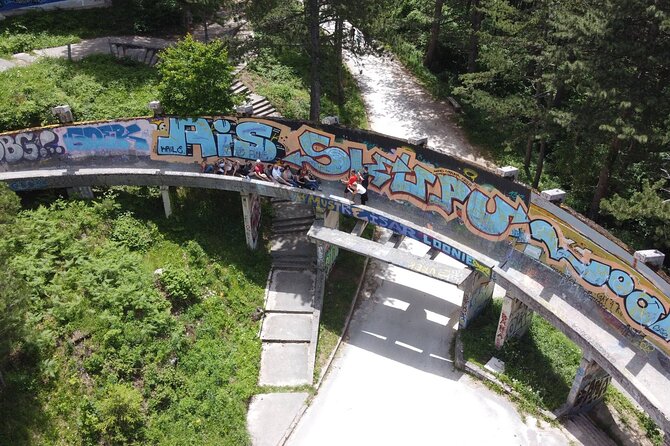
After the tunnel, the tour heads to Trebević Mountain for the Sarajevo Olympic Bobsleigh and Luge Track. You drive there (about 15–20 minutes), pass war frontlines along the way, and then do a short walk to the bobsleigh area.
The schedule gives you real picture time:
- a visit to the bobsleigh track
- time built in for photos
This contrast is part of what makes the day feel “Sarajevo-shaped.” You see how sports infrastructure sits beside scars of conflict, and you get an elevated perspective that makes the city’s layout more understandable.
Jewish cemetery sniper’s nest and the Yellow Fortress view
Next is the Jewish Cemetery Sarajevo stop, with a drive down through local neighborhood streets. The guide takes you to an area used as a sniper’s nest, looking down toward city center and Sniper Alley. This viewpoint is chilling, but it also shows you how geography influenced daily life during the siege.
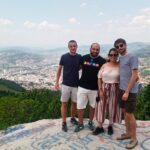
Finally, you end with the Yellow Fortress area. Along the way you pass points like Skenderija Olympic Hall and Ashkenazi synagogue, and the payoff is the view from the Yellow Fortress. The tour then drops you back in Old Town, so you can continue on your own if you still have energy.
There’s a practical reason this ending works: after intense stops, you can walk off the day with one strong panoramic payoff. Even if you don’t stay long, you’ll leave with a better mental map than you started with.
Who should book this tour, and who might not love it
This tour fits you if:
- you want a big Sarajevo orientation in one day
- you’re curious about the Old Town, religious landmarks, and the war-era story without needing multiple separate bookings
- you like structured time blocks but still want a few food and photo moments
You might want a slower option if:
- you prefer museum-heavy days with lots of indoor time
- you dislike walking on uneven ground, since the day includes multiple Old Town promenade and viewpoint walks
- you don’t want to deal with any extra ticket costs, since the tunnel museum fee is not included
Should you book the Sarajevo Grand Tour?
I’d book it if you’re short on time and you want the whole picture: Old Town culture + war geography + views from Trebević. The value is strongest when you treat it as an orientation day that sets up the rest of your trip. The included pickup, private transport, and Bosnian coffee help it feel like more than a basic city walk.
Do book it with one clear plan: bring the mindset for the tunnel portion (and budget for the extra ticket), wear comfy shoes, and give yourself permission to absorb the heavier moments at Markale and the War Tunnel.
If you want Sarajevo in one efficient sweep, this is a very practical choice.
FAQ
How long is the Sarajevo Grand Tour?
It runs for about 5 hours.
What time does the tour start?
It starts at 9:00 am.
Is hotel pickup included?
Yes. Pickup is offered from the lobby of your hotel or another Sarajevo location you choose.
What’s the group size limit?
The tour has a maximum of 15 travelers.
Is the tour in English?
Yes, it’s offered in English.
What is included in the price?
Included items are bottled water, Bosnian coffee, a local guide, transport by private vehicle, and hotel pickup.
Is the Sarajevo War Tunnel Museum included in the price?
Tunnel Museum entry is not included. The fee is listed as €10.50 per booking.
Are meals like cevapi or burek included?
The schedule includes time at Kazandžiluk for cevapi and pita-burek tasting, but the inclusions list only names bottled water and Bosnian coffee—so you may want to expect that additional food items could be extra.
Can children join the tour?
Yes, children must be accompanied by an adult.
What if I need to cancel?
Free cancellation is available up to 24 hours in advance for a full refund.
You Might Also Enjoy
More Tours in Sarajevo
- Fall of Yugoslavia, Sarajevo War Tour with Tunnel of Hope Museum and Frontlines
★ 5.0 · 1,314 reviews

More Tour Reviews in Sarajevo
- Fall of Yugoslavia, Sarajevo War Tour with Tunnel of Hope Museum and Frontlines
★ 5.0 · 1,314 reviews