REVIEW · SARAJEVO
Sarajevo Essential Full Walking Tour
Book on Viator →Operated by Spirit Tours Sarajevo · Bookable on Viator
Sarajevo can feel like a blur—this tour turns it into a route with meaning. I like how the walk links multicultural Sarajevo to real streets and buildings, and I love that the guide is set up for quick context and smart questions, including standout guidance from Adnan (Ado). One possible drawback: it is fast paced, so you get plenty of views but limited time at each stop, with a couple of places not covered for entry.
If you want to lounge in museums for hours, this is not that kind of tour. Also, a few stops have admission that is not included, so budget a little extra if you decide to go inside Sarajevo City Hall (Vijećnica) or the Museum of the Jews of Bosnia and Herzegovina.
For most first-timers, though, this is a strong way to get your bearings fast and understand why Sarajevo looks the way it does. At just 1 to 2 hours with a small-group cap, you’ll cover a lot of iconic ground without feeling like you’re running a marathon.
In This Review
- Key things I’d prioritize on this walk
- A smart 1–2 hour route through Sarajevo’s biggest landmarks
- Sacred Heart Cathedral: Neo-Gothic Sarajevo starts the story
- The Jewish Museum in Sarajevo’s oldest synagogue, plus Ferhadija St.
- Ottoman highlights: Gazi Husrev-beg Mosque, Bezistan, and Taslihan
- Baščaršija Square: Sebilj fountain and street craft at Kazandžiluk
- Vijećnica City Hall (and the nearby Austro-Hungarian glow)
- Cumurija Bridge and the Spite House story
- Emperor’s Mosque and the Serbian Orthodox Cathedral: old worship, close together
- Latin Bridge and the Sarajevo Rose: where history leaves a mark
- The Monument to the Multicultural Human: Sarajevo’s theme made physical
- Pricing and what you truly get for $18.15
- How the group size shapes your experience
- Who this walking tour fits best
- Should you book it?
- FAQ
- How long is the Sarajevo Essential Full Walking Tour?
- What does the tour cost?
- Is pickup available?
- Where does the tour start and end?
- Is the tour offered in English, and how big are the groups?
- Are entrance fees included?
- Is food and drinks included?
- Can I cancel for a full refund?
Key things I’d prioritize on this walk

- A guide who can handle your questions: expect a friendly, focused style like Adnan (Ado), who is easy to listen to and knowledgeable.
- Top sights in a tight loop: from Sacred Heart Cathedral to Gazi Husrev-beg Mosque and Latin Bridge.
- Multicultural messaging you can see in public space: the Monument All Man Multicultural sits right between major religious buildings.
- Real old-town details, not just postcards: coppersmith craft is still part of Kazandžiluk’s street life.
- A few entries may cost extra: Museum of the Jews and Sarajevo City Hall are not included, while many other stops are free to view from outside.
A smart 1–2 hour route through Sarajevo’s biggest landmarks
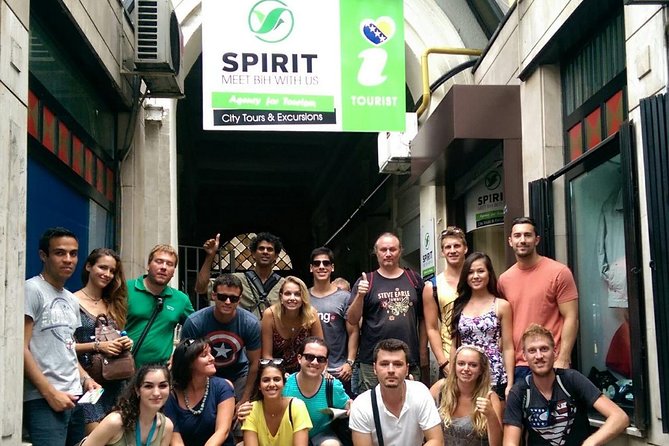
This is an easy, walkable tour built for orientation. You’ll spend roughly 1 to 2 hours moving through the core sights, with a maximum of 50 people, so it usually stays manageable rather than chaotic.
The big value is how tightly the tour connects landmarks to daily life and history. You’re not just ticking off buildings—you’re learning what each one signals about Sarajevo’s mix of influences, from Ottoman to Austro-Hungarian.
The tour starts and ends at the same place, at the Spirit Tours Sarajevo office on Ferhadija 19. If you want pickup, it’s offered in advance (hotel/apartment/hostel), which helps if you’re staying outside the immediate Old Town area.
You can also read our reviews of more walking tours in Sarajevo
Sacred Heart Cathedral: Neo-Gothic Sarajevo starts the story
Your first stop is Cathedral of Jesus’ Sacred Heart, built in 1889 in the Neo-Gothic style. It’s also the biggest Catholic church in Sarajevo and serves as the seat of the Archdiocese of Vrhbosna.
This opening works because it sets a tone: Sarajevo isn’t one cultural chapter. It’s multiple layers stacked over time, and starting with a large Catholic landmark makes the next turns make sense.
Note the timing: this first stop is brief (about 10 minutes), and admission is free. Treat it as a first look—enough to absorb the exterior and get context from your guide, not enough for a long, slow church visit.
The Jewish Museum in Sarajevo’s oldest synagogue, plus Ferhadija St.
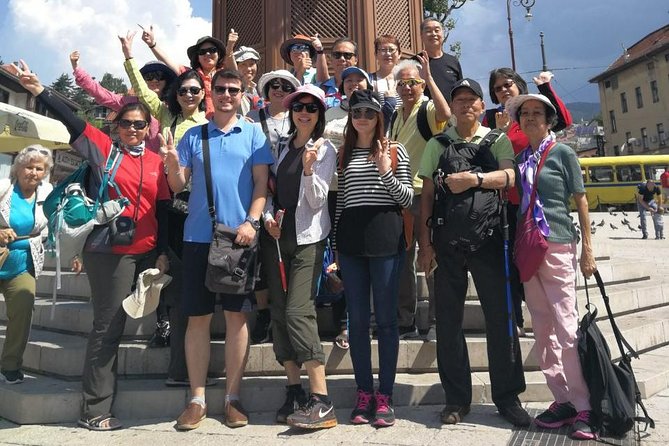
Next you’ll head to the Museum of the Jews of Bosnia and Herzegovina, located inside the City Museum of Sarajevo and in the oldest synagogue in Bosnia and Herzegovina. It is not included in the tour’s admissions, so if you want to go inside, plan for that extra cost.
After that, you’ll walk to Sarajevo Meeting of Culture on Ferhadija St. near Gazi Husrev Bey’s Bezistan. This is one of those spots where the city’s message is carved into public space—two cultures that shaped Sarajevo meet right there, in plain sight.
I like this sequence because it keeps the learning grounded. You’re not jumping from one era to another without a bridge. Ferhadija St. becomes your corridor for understanding how the old city blends faiths and people.
Ottoman highlights: Gazi Husrev-beg Mosque, Bezistan, and Taslihan
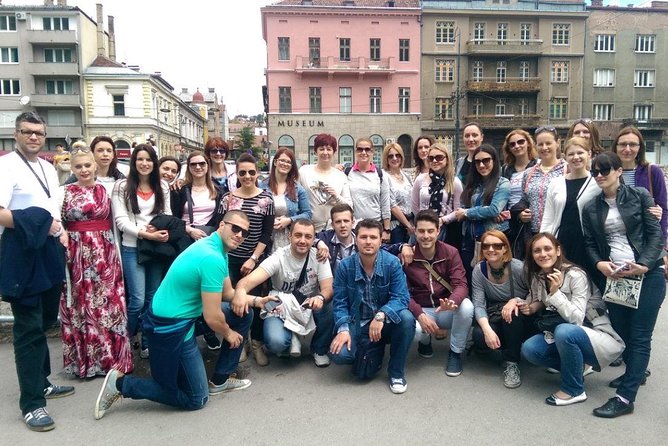
One of the tour’s strongest stops is Gazi Husrev-beg Mosque. Built in the 16th century, it’s the largest historical mosque in Bosnia and Herzegovina and a major Ottoman structure in the Balkans. Admission at this stop is free, and the time is about 10 minutes.
From there, you’ll move through the trading-and-architecture side of Ottoman Sarajevo:
- Gazi-Husrev Beg’s Bezistan (covered bazaar), built in 1555. It still serves trade, and the tour gives you a quick look at how the space functions today.
- Taslihan, built in 1543 as a waqf associated with Ghazi Husrev-Bey. It’s a compact way to see how a complex could include a fountain, mosque, yard, shops, and storage.
These stops matter because they explain a key point: Ottoman influence in Sarajevo is not only in religious buildings. It’s in the street economy, the covered walkways, and the rhythm of commerce.
The drawback is simply time. You’ll get the big impressions, but not enough to study the details deeply at each interior or shop. If you want a longer bazaar visit, use this tour to learn where to return later on your own.
Baščaršija Square: Sebilj fountain and street craft at Kazandžiluk
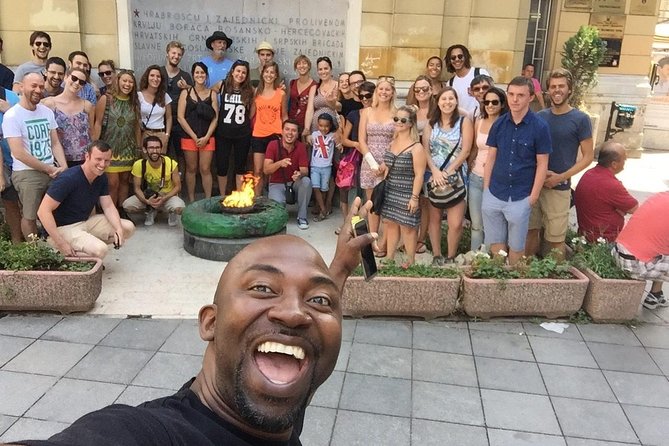
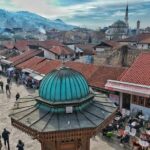
In Baščaršija Square, you’ll see the Sebilj fountain, an Ottoman-style wooden fountain built in 1753 by Mehmed Pasha Kukavica. It’s short and photogenic, with about 5 minutes for the stop, and it’s free to view.
Then comes Kazandžiluk, the coppersmith street. This is one of my favorite “real life” parts of the walk, because the coppersmith craft has stayed active there for centuries. The tour time is about 10 minutes, and admission is free.
A practical tip: if you like handmade goods, slow down for a moment. Even if you don’t buy anything, watching the craft side of the street helps you connect Ottoman-era trade spaces to what’s still going on now.
This is also the kind of stop that makes the guide shine. If your guide is strong at explanations, you’ll come away seeing Kazandžiluk as more than a pretty street—it becomes a living continuation of Sarajevo’s old economy.
- Fall of Yugoslavia, Sarajevo War Tour with Tunnel of Hope Museum and Frontlines
★ 5.0 · 1,314 reviews

Vijećnica City Hall (and the nearby Austro-Hungarian glow)
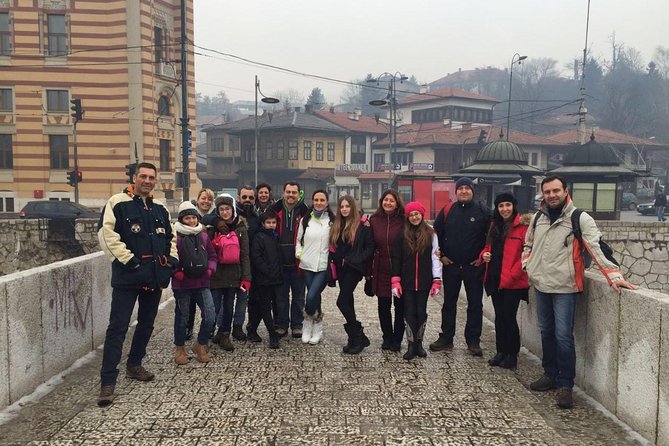
Sarajevo City Hall, also known as Vijećnica, is one of the most extravagant Austro-Hungarian buildings from the occupation period. The tour treats it as a symbol of the meeting of world civilizations—again, the theme stays consistent.
Admission here is not included, so you may need to decide whether it’s worth paying extra to go inside. The stop is about 10 minutes either way, and it’s an exterior-first experience for most people.
Right after, you’ll also pass Europe Hotel, an Austro-Hungarian structure in the heart of the city near the Old Town core. It’s more of a quick visual stop (about 5 minutes), but it helps you read the architecture as a whole instead of as isolated landmarks.
If you’re the kind of traveler who notices façades, this stretch is where you’ll feel the city’s “layer cake” the most.
Cumurija Bridge and the Spite House story
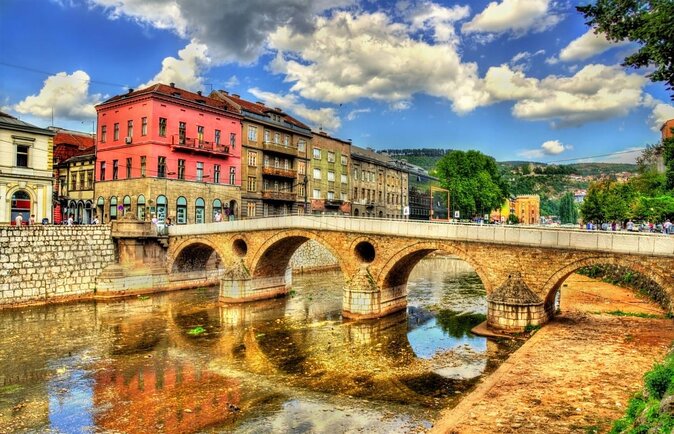
You’ll cross near the Cumurija Bridge, with the Spite House also in the story. The house got its name from a stubborn decision by its owner, and today it’s a protected cultural and historical heritage site.
It’s a fast stop (about 5 minutes) but the point is bigger than the nickname. These little side stories are how Sarajevo stops feeling like a list and starts feeling like a place where personalities, politics, and everyday choices shaped the streets.
If you like history but hate feeling lectured, this is the kind of moment that keeps things light and human.
Emperor’s Mosque and the Serbian Orthodox Cathedral: old worship, close together
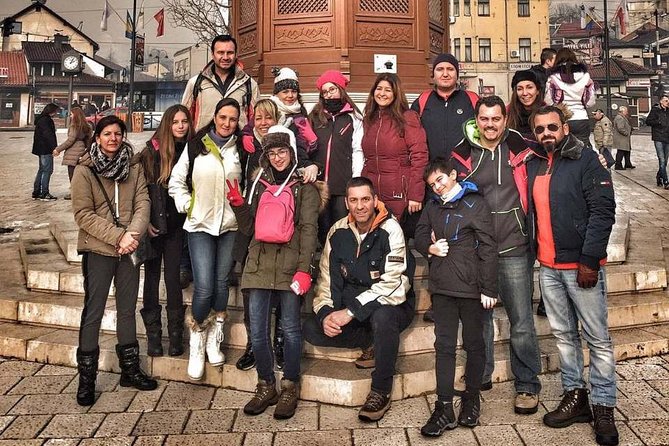
Then you’ll see Emperor’s Mosque, Sarajevo’s oldest mosque. It’s tied to early city history and is believed to have been built soon after Sarajevo’s founding in 1462 in honor of Sultan Mehmed II. Admission is free, and the stop is about 5 minutes.
Next is the Cathedral Church of the Nativity of the Theotokos, the largest Serbian Orthodox church in Sarajevo and one of the largest in the Balkans. It’s also quick (about 5 minutes) with free viewing.
These moments are powerful because the different religious landmarks are not miles apart. Sarajevo’s story is written in proximity, not distance, and the tour keeps them close enough that you feel the geographic reality of coexistence.
The tradeoff: you may not get deep inside these places on this short timeline. If you want interiors, use the tour to identify what you want to revisit.
Latin Bridge and the Sarajevo Rose: where history leaves a mark
At Latin Bridge, also known as Principov Most, you’ll learn about the assassination of Archduke Franz Ferdinand and his wife Sofie, and how that triggered the First World War. This stop is about 10 minutes and admission is free.
Then you’ll reach Sarajevo Rose, a memorial made from concrete scar caused by a mortar shell explosion that was later filled with red resin. Another 10-minute stop, and again admission is free.
This is where the walk can get emotionally heavy—but in a controlled way. The tour keeps the context clear and focused, so you understand why a small landmark can matter for decades afterward.
If you’re sensitive to war memorials, take a breath during the stop at Sarajevo Rose. It’s okay to pause longer than the guide’s timing and simply absorb what you’re looking at.
The Monument to the Multicultural Human: Sarajevo’s theme made physical
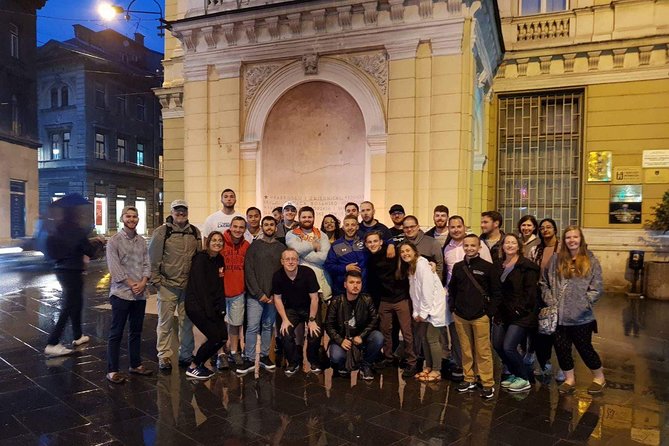
One of the most on-message stops is Monument All Man Multicultural. It’s placed between three major religious symbols: a Catholic cathedral, a Muslim mosque, and a Christian Orthodox church.
The idea is literally carved into the monument: the multicultural human is constructing the world, written in Italian and Bosnian. You’ll spend about 10 minutes here, and admission is free.
This stop is a nice payoff for the tour’s overall approach. By the time you reach it, you’ve already seen the buildings and streets that support the message. It’s not just a symbol you pass through—it feels like a finish line for the theme.
Pricing and what you truly get for $18.15
At $18.15 per person for a 1 to 2 hour guided walk, this tour offers real value if you’re trying to understand Sarajevo quickly. You cover a wide spread of the most recognizable landmarks, including major mosques, churches, old bazaars, and the memorial sites tied to modern history.
You also get a guide who can steer the story in a way that makes the city feel connected. In particular, the feedback around Adnan (Ado) points to clear strengths: he’s easy to listen to, educated, and able to handle questions—especially when the group is small.
The one cost-related caution is that a couple of entries are not included: the Museum of the Jews of Bosnia and Herzegovina and Sarajevo City Hall (Vijećnica). If you go inside both, your total cost rises. If you treat them as optional and mostly enjoy exteriors and explanations, the deal stays strong.
How the group size shapes your experience
The tour can host up to 50 travelers, but your on-the-ground experience depends on day and turnout. When the group is small, the guide has more room to answer personal questions, and you’ll likely get more back-and-forth.
Even in a larger group, the timing is tight enough that you won’t feel abandoned. The tour is structured around quick, high-impact viewing points, so you always know what you’re doing next.
If you dislike rushing, aim for a calm mindset. You’ll be walking often, with stops typically around 5 to 10 minutes, so comfortable shoes are not optional.
Who this walking tour fits best
I think this tour suits you best if:
- You’re a first-timer and want a fast orientation loop
- You like cities with visible layers—Ottoman, Austro-Hungarian, and modern memory
- You want a guide to connect the dots instead of reading everything solo
It may be less ideal if you:
- Want long museum time or slow, interior-heavy sightseeing
- Prefer a tour that includes all entrances without any decisions
For most people doing Sarajevo as part of a wider trip, this walk is a smart anchor. It gives you the street-level understanding that makes later self-guided wandering feel easier.
Should you book it?
Yes, you should book it if you want the best “first pass” through Sarajevo’s core without spending hours researching what matters. The price makes sense for the number of major landmarks, and the tour’s theme—how cultures and faiths share space—shows up again and again in real places, not just in theory.
Book it especially if you value guide quality. The standout praise around Adnan (Ado) is the kind of sign that this won’t be a rushed script. And if you do decide to pay for extra entry at the museum or Vijećnica, you’ll already know what you’re looking at.
FAQ
How long is the Sarajevo Essential Full Walking Tour?
It lasts about 1 to 2 hours.
What does the tour cost?
The price is $18.15 per person.
Is pickup available?
Pickup is offered. If you need it, you should arrange it in advance for your hotel/apartment/hostel.
Where does the tour start and end?
It starts at Spirit ToursFerhadija 19, Sarajevo 71000, and ends back at the same meeting point.
Is the tour offered in English, and how big are the groups?
The tour is offered in English. There is a maximum of 50 travelers.
Are entrance fees included?
Some stops are free to view, but not all admissions are included. The Museum of the Jews of Bosnia and Herzegovina and Sarajevo City Hall (Vijećnica) are not included.
Is food and drinks included?
No. Food and drinks are not included.
Can I cancel for a full refund?
Yes, you can cancel for a full refund up to 24 hours in advance of the experience start time.
You Might Also Enjoy

More Walking Tours in Sarajevo
More Tours in Sarajevo
- Fall of Yugoslavia, Sarajevo War Tour with Tunnel of Hope Museum and Frontlines
★ 5.0 · 1,314 reviews

More Tour Reviews in Sarajevo
- Fall of Yugoslavia, Sarajevo War Tour with Tunnel of Hope Museum and Frontlines
★ 5.0 · 1,314 reviews