REVIEW · SARAJEVO
Understanding Srebrenica Genocide Tour + Lunch with Local Family Included
Book on Viator →Operated by Funky Tours · Bookable on Viator
A sobering day with real people at the center of it. This trip is interesting because you get full context for how the violence spread across 1992 sites first, then you end with a careful visit to the Srebrenica Genocide Memorial and time at Potočari’s cemetery. I especially like the small group size (max 8) with a private vehicle, and I also love that the day includes a home-hosted lunch in Srebrenica that supports survivors locally. One consideration: this is heavy material, and the pace can feel emotional once you reach the memorial grounds.
You’re not just ticking off a site. You’re learning through the drive—mountain towns and documented atrocities that lead directly toward Srebrenica in 1995—and then you get a human moment afterward by sharing food and conversation in someone’s home. The practical upside is that hotel pickup means you don’t have to manage transport on your own. The drawback is that because you enter a Muslim cemetery, you’ll want to dress appropriately even if you’d rather travel casual.
In This Review
- Key things that make this tour different
- Hotel pickup, private vehicle, and a tight group for a 10-hour day
- The road to Srebrenica: Romanija foothills and 1992 villages you must understand first
- Potocari Memorial Centre: what your time at Srebrenica feels like in practice
- Lunch in Srebrenica: a home-hosted meal that supports survivors
- Visiting Srebrenica town: connecting memorial sites to real streets
- Guides who bring the story with weight, not just facts
- Price and value: what $96.75 buys you on a full-day genocide memorial tour
- Who this tour is for (and who should think twice)
- Should you book the Understanding Srebrenica Genocide Tour + Lunch?
- FAQ
- What time does the tour start?
- Is hotel pickup included?
- How many people are in the group?
- Is the memorial admission included?
- What is included in the lunch?
- How long will I spend at the memorial?
- What language is the tour in?
- What should I wear?
- Is it easy to cancel if plans change?
Key things that make this tour different
- Hotel pickup anywhere in Sarajevo plus a private vehicle for a calmer, more personal day
- A guided route through 1992 atrocities before you reach Srebrenica, so the story has sequence
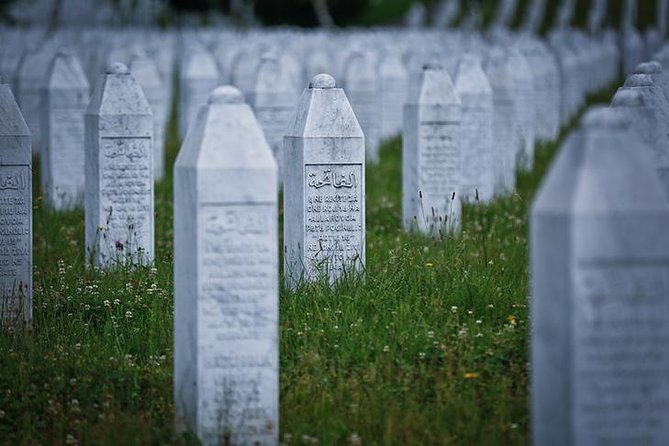
- Potocari Memorial Centre at the heart of the visit with free admission and a long, focused window
- Lunch hosted by a local family in Srebrenica made from scratch with locally grown ingredients
- Group max of 8 travelers, which makes questions and respectful pauses easier
- Guides with personal weight, including stories shared by people connected to the war era
Hotel pickup, private vehicle, and a tight group for a 10-hour day
This is a full-day trip that starts early. You meet at Funky Tours in Sarajevo at 8:00am, and pickup is offered from essentially anywhere in the city—hotel, hostel, or another address you agree on. Once you’re collected, you ride in a private vehicle with a group of up to 8, which matters more than it sounds. On a day like this, you want room to ask questions and for the guide to adjust the pace when people need a pause.
The duration is listed at about 10 hours, and you should plan your schedule around that. From a value standpoint, you’re not paying only for entry tickets—you’re paying for the structured storytelling, the long travel day, and the fact that lunch is hosted locally. If your Sarajevo visit is short, this one-day format is also efficient. It packs a lot into a single outing, without requiring you to coordinate buses, local guides, and separate transfers.
One small practical note: you’re told the dress code is smart casual, and you’ll enter a Muslim cemetery. That’s your cue to avoid overly short or overly revealing clothing, and to bring something you can feel comfortable wearing for solemn grounds.
You can also read our reviews of more tours and experiences in Sarajevo
The road to Srebrenica: Romanija foothills and 1992 villages you must understand first
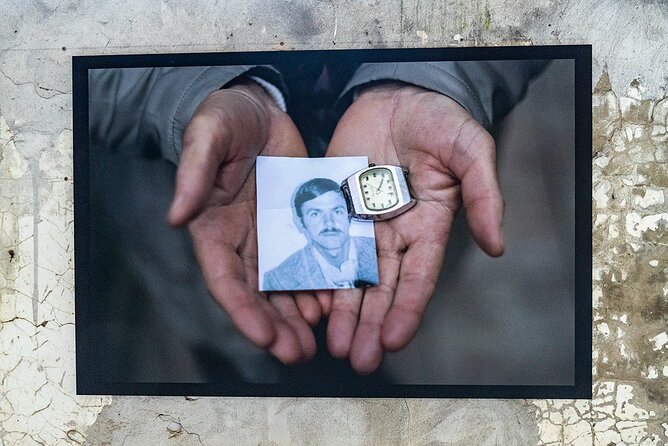
What I like most about this tour is that it doesn’t jump straight to the memorial and stop there. Instead, you travel through places tied to the 1992 ethnic cleansing of Bosniaks, and you learn how violence escalated region by region. That sequencing makes your time in Potočari hit harder for the right reason: the memorial feels less like an isolated tragedy and more like the outcome of choices and campaigns that were already in motion.
Early on, you start in a small mountain town at the foot of Romanija mountain, known for striking scenery. Even if the view is pretty, your guide frames the area through history—specifically the ethnic cleansing of Bosniaks by Republic of Srpska forces in this region during 1992. This is one of those moments where you’ll realize how often war reshapes everyday geography. The guide’s job here is to keep the setting from becoming scenic wallpaper. You learn to look at the place and understand what happened there.
Next, you visit a region known for Concentration Camp Sušica, established by the Republic of Srpska Army in 1992, where more than 8,000 Bosniaks were held successively. The phrasing is blunt for a reason: this part of the day is meant to give weight and scale before you step into the memorial space.
Then you learn about the Zaklopača Massacre on 16 May 1992, when members of the village were killed—59 Bosniaks, including 12 children, with only a very small number of survivors. This is the kind of section where questions may come in bursts. If you do ask something, try to keep it focused: how did the violence work here, and what changed afterward?
Finally, the tour connects this earlier period to Srebrenica. You hear how ethnic cleansing in 1992, and later killing in July 1995, is tied to this town becoming an early gathering point for Bosniaks who were later executed in mass killings. This chain of causes is what makes the story feel “complete” in your mind. You’re not only remembering dates; you’re understanding the path from persecution to genocide.
Potocari Memorial Centre: what your time at Srebrenica feels like in practice
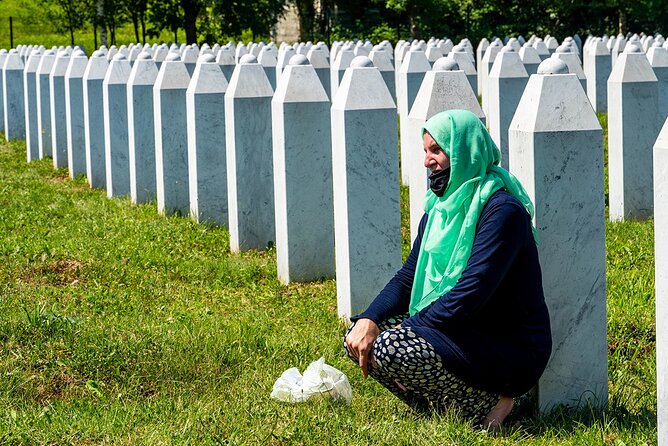
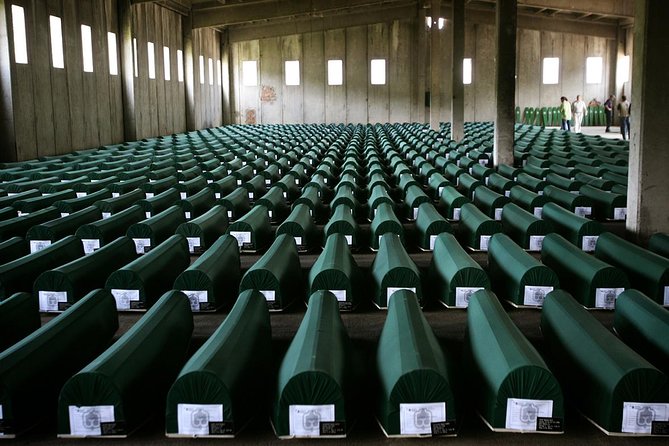
The day’s centerpiece is the Srebrenica Genocide Memorial in Potocari, with a stated duration of about 3 hours and free admission. You’ll also learn this area is dedicated to the victims of the July 1995 genocide, including visits to the nearby cemetery grounds.
Here’s the practical reality: 3 hours sounds generous, and it is. But the material is designed to be absorbed slowly, and you’ll likely need more mental space than you expect. The memorial center exhibitions are described as extensive, so you may find yourself wanting to zoom through—but resist that urge. Pick a few sections you want to understand well. If you’re with a small group, you’ll usually have an easier time stepping back for a moment without feeling like you’re behind schedule.
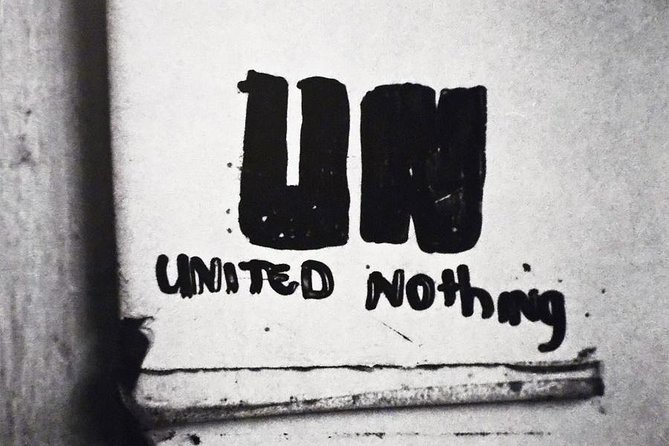
One detail that shows up strongly in guidance: the story isn’t only local. You may hear references to the UN context and the way people sought shelter or false security during the events. Even if you’re not focused on UN history, those references help you understand the wider failure of protection, which explains why the memorial feels so internationally charged.
Emotion matters here, and guides on this tour work hard to keep the tone respectful. Still, be honest with yourself: if you’re someone who struggles with heavy historical trauma in public settings, this part could be tough. On the other hand, if you’ve ever felt frustrated by museum tours that skim, this is the opposite. You get time.
Lunch in Srebrenica: a home-hosted meal that supports survivors
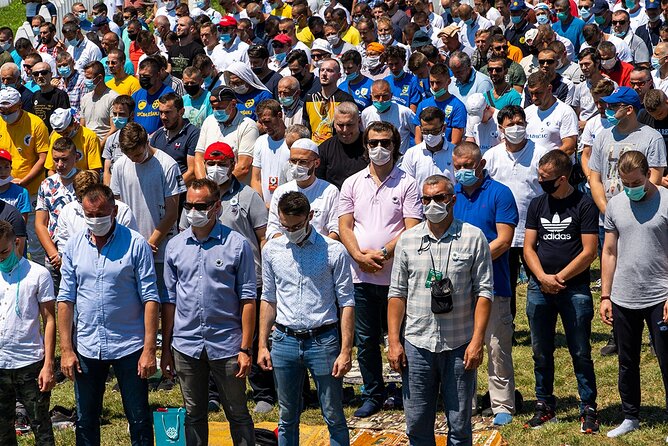
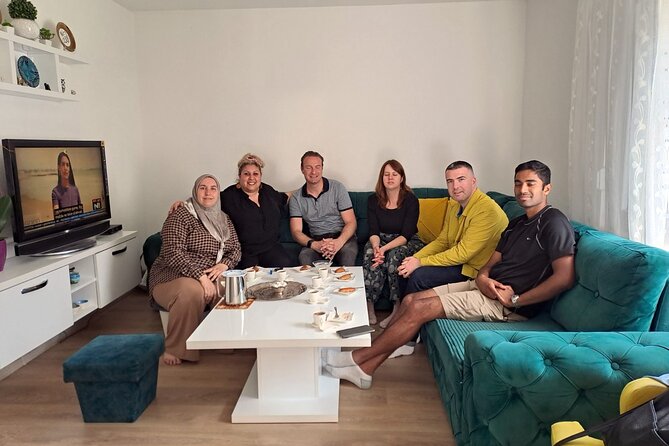
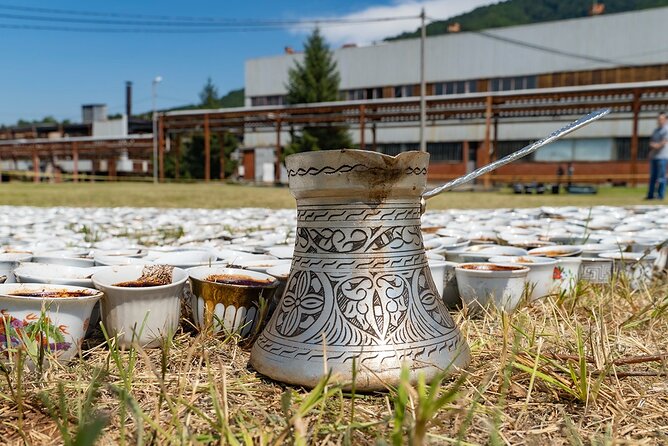
The highlight, for many people, is lunch in Srebrenica. It’s a full-course home-hosted lunch served in a local setting, with a listed duration of about 1 hour. Admission is free for this portion because the experience is included in the tour day.
What makes this lunch more than just food is the stated purpose behind it. The lunch is made from scratch with organically grown ingredients from local farms tied to Srebrenica genocide survivors. The tour framework also emphasizes empowering local communities through sustainable tourism, and the lunch is presented as a way to support small local efforts and ongoing life in Srebrenica.
You should also expect a conversation component. The tour says people in Srebrenica share personal stories—some beautiful, some terrible. That means you’re not going to be treated like a passive diner. Be ready to listen, and if you want to ask questions, keep them gentle and human. You’re visiting a community, not consuming a tragedy.
Food-wise, the promise is delicious and local. The other practical advantage is timing. After the memorial, you’ll likely have a hard time concentrating on another stop immediately. Lunch gives you the chance to digest what you learned, literally and mentally. If you can, eat slowly. This is one of those experiences where rushing makes the whole day feel colder.
Dietary info isn’t specified in the data you provided, so if you have allergies or strong dietary needs, I’d recommend reaching out when you book (or ask the day-of at pickup). That’s the safest way to avoid surprises.
Visiting Srebrenica town: connecting memorial sites to real streets
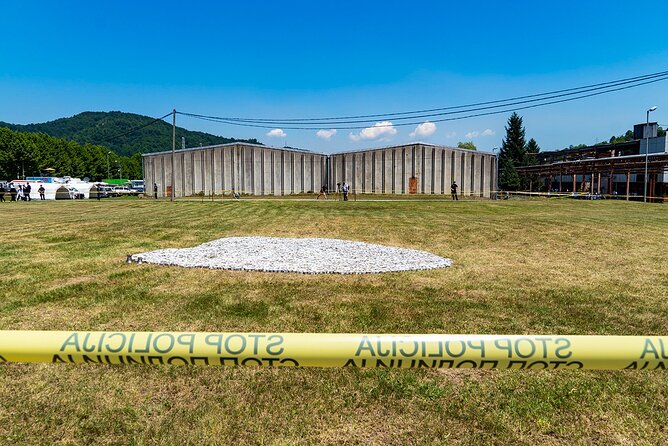
After lunch, the tour continues with a visit to the town of Srebrenica for another about 1 hour. The purpose here is to add more parts of the Srebrenica genocide story and to connect what you saw at the memorial grounds back to the places you’re hearing about.
You’ll get a chance to see real places connected to the memorial visit you just had. This can be reassuring if you felt overwhelmed at Potocari. When you come out of the memorial and then walk or look around town, the story becomes less like an exhibit and more like a lived geography.
The tour notes that there may be a lunch break option. In practical terms, that means you can likely adjust your needs a bit—use the time for a small rest, hydrate, and reset your attention before the return ride.
One caution: Srebrenica is a place where you’re expected to keep your tone respectful. Even if you’re feeling numb, behave like you’re in a memorial-adjacent public area.
- Fall of Yugoslavia, Sarajevo War Tour with Tunnel of Hope Museum and Frontlines
★ 5.0 · 1,314 reviews
Guides who bring the story with weight, not just facts
A big part of why people rate this tour so highly is the guide. In the info you provided, you can see repeated praise for guides who are not only well informed but also careful with questions and emotional pacing. Names mentioned include Adnan, Almir, and Ado in different experiences. One review also notes the guide was in the army during the war, and another describes personal stories shared during the day.
You don’t need a long biography to understand why that matters. When a guide has lived proximity to the history, they tend to speak with fewer textbook shortcuts. You’ll hear context and also the small human details that make the timeline feel real—how people moved, how events unfolded in sequence, and what it meant to survive.
How to get the most out of the guide: go in with questions you truly want answered. But also know when not to ask. At sensitive points—like after learning about concentration camp Sušica or Zaklopača—some silence is part of the experience. Let the guide take the lead. If you want to ask something, a good approach is to ask about meaning, not blame: what should visitors understand, and what should they avoid misunderstanding?
Price and value: what $96.75 buys you on a full-day genocide memorial tour
At $96.75 per person, you’re buying more than transport and admissions. You’re paying for:
- Hotel pickup in Sarajevo (reduces friction and saves time)
- Private vehicle for a 10-hour outing
- A structured, multi-stop historical route before Potocari
- A long memorial visit with free admission
- A full-course home-hosted lunch included in the day
- Small-group format (max 8), which keeps the experience from feeling rushed
Compared to piecing together separate taxi rides, museum tickets, and a local guide, this price can feel fair—especially because lunch is not a casual add-on. It’s a centerpiece designed to connect visitors to survivors and local farms. If your budget is tight, the one-day format is still worth considering because it avoids the costs of multiple independent logistics.
The only way the price feels less “good value” is if you personally know you don’t want an organized, guided day. If you’d rather travel at your own pace, you might feel pressured by the schedule. But if you like guidance and structure—this is the type of day where structure is a kindness.
Who this tour is for (and who should think twice)
This is best for people who:
- want a guided, chronological understanding of how violence escalated from 1992 to 1995
- feel comfortable with emotionally heavy history and a solemn setting
- appreciate small-group attention and real conversation during lunch
- like practical logistics that reduce your stress in a long day
It may be less suitable if:
- you need a very light itinerary after learning about traumatic events
- you dislike cemeteries or memorial sites (even with respectful guidance)
- you have mobility or comfort needs that make long, structured days difficult (the data doesn’t specify accessibility details)
Also consider what kind of traveler you are. If you came to Bosnia to understand the past alongside the present, this tour fits. If you’re mainly seeking scenic sightseeing, you’ll likely find the focus too serious.
Should you book the Understanding Srebrenica Genocide Tour + Lunch?
If you’re choosing one “big history day” from Sarajevo, I think this is a strong option. The combination of context-building stops before the memorial, the long Potocari visit, and the home-hosted lunch gives you both understanding and human connection. The small-group cap and hotel pickup make the logistics easy, which matters when the topic is intense.
Book this if you want a guided day that treats the subject with respect and spends enough time to let it land. If you do book, plan your body and mind: dress appropriately for cemetery grounds, bring water, and give yourself room afterward to rest. This isn’t a day you finish and immediately bounce into normal sightseeing.
FAQ
What time does the tour start?
Pickup begins around 8:00am, and the meeting point is listed at Funky Tours in Sarajevo.
Is hotel pickup included?
Yes. The tour offers pickup from any address in Sarajevo, including hotels, hostels, or an agreed meeting location.
How many people are in the group?
The group size is capped at maximum 8 travelers.
Is the memorial admission included?
Yes. Memorial Centre at Potočari is listed as free admission.
What is included in the lunch?
You get a full-course home-hosted lunch with a local family in Srebrenica, made from scratch with ingredients described as organically grown and sourced from local farms.
How long will I spend at the memorial?
The visit to the Srebrenica Genocide Memorial at Potocari is about 3 hours.
What language is the tour in?
The tour is offered in English.
What should I wear?
The dress code is smart casual, and since the tour enters a Muslim cemetery, you should dress accordingly.
Is it easy to cancel if plans change?
Cancellation is free up to 24 hours in advance for a full refund.
If you want, tell me your travel dates and your hotel area in Sarajevo, and I’ll help you figure out a realistic plan for the rest of your day before and after the tour.
You Might Also Enjoy
More Lunch Experiences in Sarajevo
More Tours in Sarajevo
- Fall of Yugoslavia, Sarajevo War Tour with Tunnel of Hope Museum and Frontlines
★ 5.0 · 1,314 reviews

More Tour Reviews in Sarajevo
- Fall of Yugoslavia, Sarajevo War Tour with Tunnel of Hope Museum and Frontlines
★ 5.0 · 1,314 reviews