REVIEW · SARAJEVO
Tunnel of Hope Tour – Survival and Resilience
Book on Viator →Operated by Insider Ltd · Bookable on Viator
One street tells a siege story. The Tunnel of Hope Tour pairs a short city orientation with time underground at Sarajevo’s War Tunnel Museum, plus the grim context of life from 1992 to 1995. I like that the tour doesn’t just point at sites, it explains how the siege shaped daily routines, from scarce basics to constant shelling.
I also really like the guide style: in past departures, people have shared first-hand accounts from the siege years—including guides named Nermin, Safet, Haris, Jernej, and Yasif—so the facts land with real weight. One drawback to plan for: the Tunnel Museum ticket is not included in the base price, so you’ll pay extra on site.
In This Review
- Key points before you go
- Sarajevo’s Tunnel of Hope: what you learn beyond the facts
- Meeting at Zelenih beretki: the quick start that matters
- The siege street tour: Markale, the Presidency, and the buildings under fire
- Sniper Alley and the city’s “shelling map”
- The cemetery stop: remembering the people behind the siege
- Tunnel of Hope Museum: admission, exhibits, and what underground feels like
- Museum ticket details you should plan for
- Original tunnel vs. replica: why it’s still worth it
- The “drive + stories” method: why the guide’s role is the real ingredient
- Timing and value: 2h30 that doesn’t feel like a drive-by
- Who should book this tour—and who might prefer something else
- Should you book the Tunnel of Hope Tour?
- FAQ
- How long is the Tunnel of Hope Tour?
- What does the tour price include?
- How much are the Tunnel Museum tickets?
- Where does the tour start and end?
- How big is the group?
- Is the tour offered in English?
- Is the museum entry included in the schedule time?
- What happens if weather is poor?
- Can I get a full refund if I cancel?
Key points before you go
- A tight 2.5-hour format that still covers the tunnel, museum, and major siege landmarks
- Drive-by history at places tied to journalism, politics, and wartime broadcasting
- Sniper Alley on your route, so you see what shaped movement in the city
- Tunnel Museum time (about 1h15) with exhibits and a video about UN intervention
- Small group size (max 20) that makes questions feel normal, not rushed
- English available with a mobile ticket and easy meeting point access
Sarajevo’s Tunnel of Hope: what you learn beyond the facts
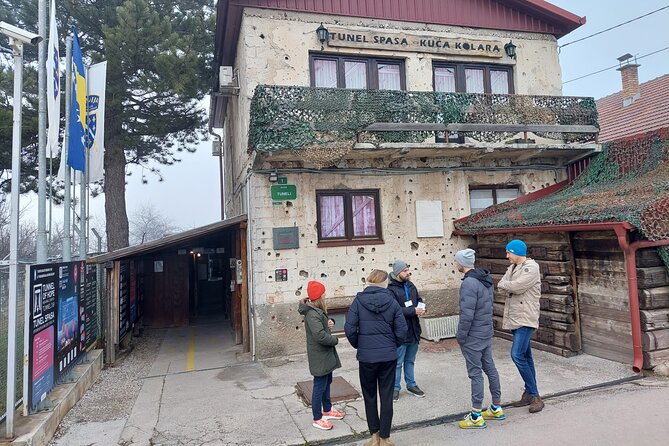
This isn’t a casual sightseeing loop. The whole idea is to understand how Sarajevo held on during the siege, and how people created a lifeline when the city was cut off. The tour gives you the core timeline (1992–1995) and then keeps translating that timeline into what it meant in real life.
Before you ever go underground, you’ll get the siege basics: residents dealt with limited food, water, electricity, and gas, all while major parts of the city took shelling. It’s the kind of context that makes the streets, buildings, and memorials feel less like photos and more like a lived system under pressure.
One reason this works so well is pacing. You start with the city surface—where damage and symbolism are visible—then you transition into the tunnel story, where the survival logic becomes physical.
You can also read our reviews of more tours and experiences in Sarajevo.
- Fall of Yugoslavia, Sarajevo War Tour with Tunnel of Hope Museum and Frontlines
★ 5.0 · 1,314 reviews

Meeting at Zelenih beretki: the quick start that matters
The tour begins at Sarajevo Insider – City Tours and Excursions, at Zelenih beretki 30. It’s a central spot, near public transportation, and the format is designed so you’re not hunting around the city to get going.
Right away, you’re with a licensed guide and a small group. From there, the day flows as a mix of short pass-bys (you see the place from the road or on foot) and one longer block of time at the Tunnel Museum.
If you’re the type who likes your trip to feel organized—clear meeting point, set route, no wandering—this setup is reassuring. You also won’t waste time trying to figure out what’s significant. The guide does that job for you.
The siege street tour: Markale, the Presidency, and the buildings under fire
A big chunk of the experience is a drive-through and walk-through orientation that connects the siege to key landmarks. You’ll pass Markale City Market, which is tied to major wartime moments in Sarajevo’s history. Even if you’ve read about the siege, seeing the location in the flow of the city helps your brain stop treating it like distant news.
You’ll also pass Trg Djece Sarajeva (Children of Sarajevo Square). The tour presents it as a symbol of endurance. That matters because Sarajevo has rebuilt, refreshed, and reopened in many places—but the city still keeps reminders of what the siege took.
Next come the political and communications landmarks:
- The Presidency Building is the historic seat of Bosnia and Herzegovina’s presidency, pivotal during the war.
- The Parliament and Holiday Inn Hotel are presented as places linked to wartime journalism and decision-making.
- The RTV Dom (TV building) is where you’re reminded that broadcasting played a role in how the world saw what was happening.
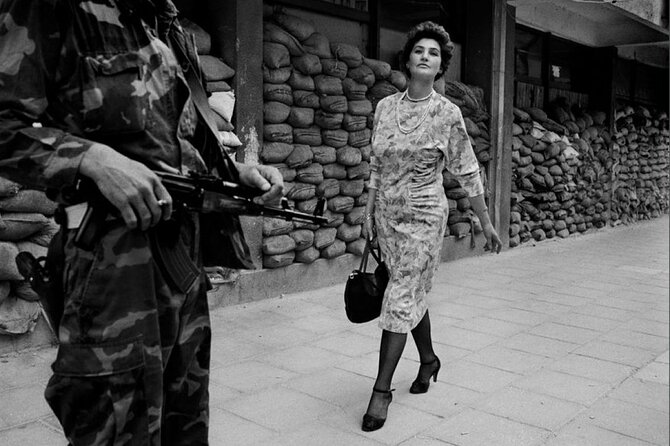
Then you’ll drive through what the tour calls the most dangerous street in Sarajevo during the 1990s—Sniper Alley. Even if you’ve only seen the name online, being in the street is different. You understand why “movement” wasn’t a neutral activity then.
Tip for your visit: pay attention to where you stop mentally. The route is short, but the guide keeps layering meaning onto each stop, and the pay-off happens when the landmarks connect into one story.
Sniper Alley and the city’s “shelling map”
You’re not walking through ruins. You’re walking through a functioning city that still carries siege scars. That’s why Sniper Alley lands so hard: it shows how the same streets that carry people today once forced decisions about where to be, when to be there, and how long to stay.
The itinerary also includes a wider sweep of landmarks that were heavily shelled, including City Hall and the National Library of Bosnia and Herzegovina. You’ll also pass the National Museum, the Presidency Building, Skenderija Market, and the Zetra Olympic Hall.
These stops do two things for you:
- They show that shelling hit more than one district—it was part of how the siege functioned.
- They help you understand Sarajevo’s geography as a system of vulnerability, not just a set of pretty addresses.
One practical note: some of these are pass-bys, not long photo stops. If you want to linger at every building, you may wish you had more time. If you’re happy letting the guide steer and using your photos as bookmarks, you’ll likely enjoy the pace.
The cemetery stop: remembering the people behind the siege
At some point during the surface portion, you’ll visit a cemetery where victims of the war are buried. This is where the tour stops being about strategy and starts being about loss.
The value here is emotional, but also educational. It helps you connect the resource-scarcity story (food, water, electricity, gas) to the human cost that came with it.
If you’re sensitive to heavy topics, plan for a few minutes where you might want to quietly absorb. I’d treat this stop like part of the “museum mindset,” not just another waypoint.
- Fall of Yugoslavia, Sarajevo War Tour with Tunnel of Hope Museum and Frontlines
★ 5.0 · 1,314 reviews

Tunnel of Hope Museum: admission, exhibits, and what underground feels like
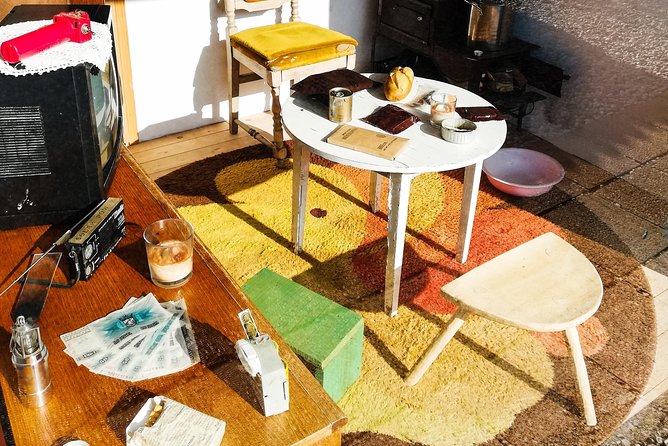
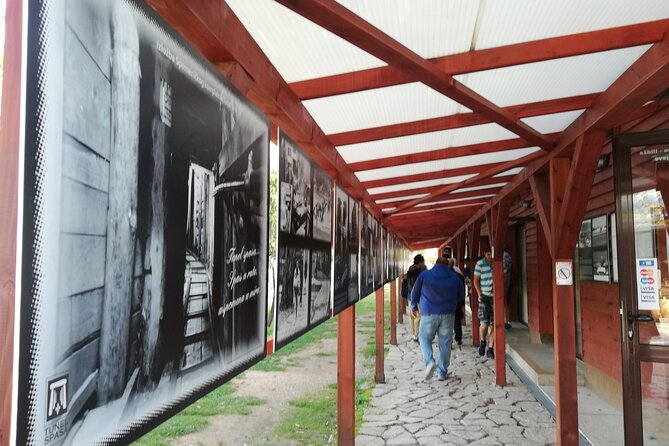
This is the core event. The tour includes a visit to the Tunnel of Hope Museum (Tunnel Museum). You spend about 1 hour 15 minutes there, and the exhibits include background on the conflict, plus a video about UN intervention during the Siege of Sarajevo.
The museum is also where the tunnel stops being a concept and becomes a construction you can picture. You’ll learn about why it was built, how it connected Sarajevo to the outside world, and what that meant operationally for people living in the city.
Museum ticket details you should plan for
Tunnel Museum admission is not included in the tour price:
- Adult: 20 BAM (about €10.50)
- Student: 8 BAM (about €4.50)
So your actual trip cost is the base tour price plus the museum ticket.
Original tunnel vs. replica: why it’s still worth it
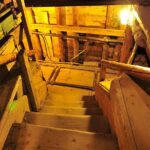
One thing that can surprise people: the real tunnel isn’t always accessible for safety reasons. In some experiences, guides explain that the original section is very tight—reported as roughly 1 meter wide and 1.6 meters high—which can feel claustrophobic for adults. In response, the tour experience includes a replica section that’s wider and taller.
Some departures have allowed a short walk portion (reported as about 25 meters into the original and about 100 meters into the replica). The exact access can vary, but the takeaway stays consistent: you get a stronger sense of how movement, breathing, and stress worked in a space designed for survival logistics.
Practical advice: wear clothes you can move in comfortably, and be ready for a different pace underground. Even when it’s not long, it’s physically different from walking a city street.
The “drive + stories” method: why the guide’s role is the real ingredient
This tour’s reviews and reputation point to one clear theme: the guide is often the difference between knowing facts and really grasping what siege life meant. Many guides have shared personal angles from the period—war veterans, ex-police officers, and people who lived through it as children or young adults.
Names you may encounter include Nermin, Safet, Haris, Jernej, and Yasif. The pattern in their storytelling is consistent: they don’t just recite timelines. They explain what decisions felt like, how people coped, and how the tunnel changed the psychology of survival.
I like this approach because it also makes the city drive more than transportation. When you’re listening to the story behind the Presidency Building or RTV Dom, you’re not just looking—you’re building a mental map.
Also, the group is kept small (maximum 20 travelers). That helps with one of the biggest perks of this type of tour: questions don’t feel like an interruption.
Timing and value: 2h30 that doesn’t feel like a drive-by
The tour runs about 2 hours 30 minutes in total. The museum portion alone is around 1 hour 15 minutes, which means the underground part isn’t rushed. The rest of the time is split between route context, pass-by landmarks, and the sniper/tunnel lead-ins that make the museum make sense.
Price-wise, $25.40 is reasonable for transportation plus a licensed guide for the full route. Since the Tunnel Museum admission is extra, you’re really paying for a packaged “guide-led siege orientation + museum access.”
So the best way to judge value is simple:
- If you want a short, guided, siege-focused day
- And you care about understanding more than just taking photos
…this tends to be a smart use of a few hours in Sarajevo.
Who should book this tour—and who might prefer something else
This is a strong fit for history lovers, people who like architecture-with-context, and anyone who wants to understand Sarajevo’s resilience without needing a full day. It’s also ideal if you’ll appreciate practical storytelling from someone who has lived the era or studied it deeply.
You’ll probably enjoy it if you’re comfortable with emotional material. The siege story includes hardship, loss, and memorial spaces. This is not a “light and funny” tour—and that’s not a flaw. It’s the point.
One more practical fit check: if you’re not into tight spaces, you should know that the tunnel experience (even with a replica) is a narrow, underground environment. In those cases, it may still be worth going—but you’ll want to mentally prepare for that physical feeling.
Should you book the Tunnel of Hope Tour?
I think you should book it if you want a focused Sarajevo experience that connects street-level landmarks to the reality of the siege. The schedule is short, the museum time is substantial, and the small group format helps you ask questions without feeling pushed out.
Skip or reconsider if:
- You want only scenic stops with minimal heavy context
- You’re unwilling to pay the extra museum admission
- Tight, underground spaces are a hard no for you
If you’re on the fence, choose this tour over trying to piece it together alone. The biggest value isn’t the route map—it’s the way the guide turns those landmarks into a coherent siege story, then sends you underground where the survival logic becomes real.
FAQ
How long is the Tunnel of Hope Tour?
The tour lasts about 2 hours 30 minutes, with around 1 hour 15 minutes spent at the Tunnel Museum.
What does the tour price include?
The price includes transportation and a licensed guide. It does not include Tunnel Museum tickets.
How much are the Tunnel Museum tickets?
Adult tickets are 20 BAM (about €10.50) per person, and student tickets are 8 BAM (about €4.50) per person.
Where does the tour start and end?
It starts at Sarajevo Insider – City Tours and Excursions, Zelenih beretki 30, Sarajevo 71000. It ends back at the same meeting point.
How big is the group?
The maximum group size is 20 travelers.
Is the tour offered in English?
Yes, the tour is offered in English.
Is the museum entry included in the schedule time?
Yes, the itinerary includes admission to the Tunnel Museum time slot, but you still need to pay the museum ticket separately.
What happens if weather is poor?
This experience requires good weather. If it’s canceled due to poor weather, you’ll be offered a different date or a full refund.
Can I get a full refund if I cancel?
You can cancel up to 24 hours in advance for a full refund. If you cancel less than 24 hours before the start time, the amount paid is not refunded.
You Might Also Enjoy

More Tours in Sarajevo
- Fall of Yugoslavia, Sarajevo War Tour with Tunnel of Hope Museum and Frontlines
★ 5.0 · 1,314 reviews

More Tour Reviews in Sarajevo
- Fall of Yugoslavia, Sarajevo War Tour with Tunnel of Hope Museum and Frontlines
★ 5.0 · 1,314 reviews