REVIEW · SARAJEVO
Sarajevo 1425 days under the siege – War Tour
Book on Viator →Operated by Spirit Tours Sarajevo · Bookable on Viator
A siege city teaches you fast how history can weigh on real lives. This tour is built around Sarajevo’s most direct reminders, especially a walk through the Tunnel of Hope. I love that it’s led by guides with lived, personal perspective, and I also like the tight mix of war sites + major viewpoints that helps you understand the city in one outing. One thing to consider: this is not a light sightseeing loop—expect harrowing stories and solemn memorials.
What makes it work is the human telling. In reviews, I saw names like Emina Koso and Enes, and the common thread is guides who lived through the war themselves (one was 11 at the time). That kind of firsthand memory doesn’t read like a script. It changes how you look at buildings, streets, and even viewpoints.
With a 3 to 4 hour pace and a max group size of 50, you’ll cover several key sites without feeling dragged all day. At about $48.39 per person, it’s good value when you compare the amount of ground you cover and the fact that hotel pickup and drop-off are included (the one extra cost to plan for is the Tunnel ticket).
In This Review
- Key highlights worth your time
- Why Sarajevo’s siege story hits harder when you move through it
- Tunnel of Hope Museum: your most powerful stop
- The drive that sets context: Sniper Alley and the child memorial
- Trebević Vidikovac: the best photo spot and the clearest city picture
- Sarajevo Olympic Bobsleigh and Luge Track: abandoned sport with history in the frame
- Jewish Cemetery Sarajevo: a UNESCO-candidate site shaped by the siege
- The memorial for 1,621 murdered children: why this stop matters more than you think
- Price and timing: what you’re really paying for
- Who should book this war tour (and who might choose differently)
- Practical tips so you get the most from it
- Should you book Sarajevo 1425 Days Under the Siege War Tour?
- FAQ
- How long is the Sarajevo 1425 Days Under the Siege War Tour?
- Is hotel pickup and drop-off included?
- Do I need to pay extra for the Tunnel of Hope Museum?
- What stops are included on the tour?
- What language is the tour offered in?
- What’s the maximum group size?
- Is the tour dependent on weather, and is it suitable for most people?
Key highlights worth your time
- Walk the 25-meter Tunnel of Hope and see how Sarajevo’s residents made survival possible
- Firsthand war stories shared by guides like Emina Koso and Enes
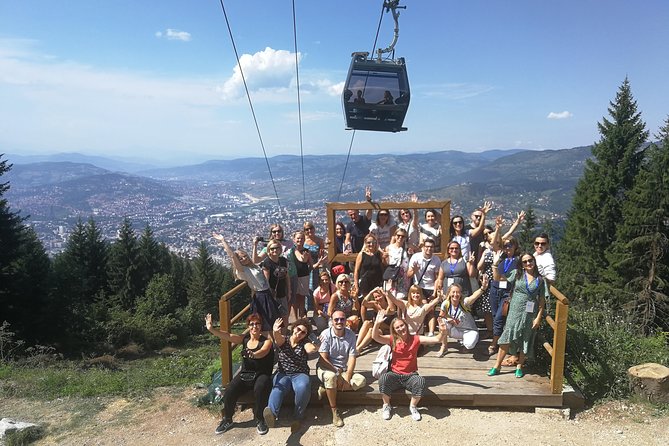
- Views from Trebević Vidikovac (1,230m) to connect the city’s layout with the conflict
- Olympic ruins with a cable car connection, for a strange blend of sport and loss
- Jewish Cemetery Sarajevo as a siege battleground and a UNESCO candidate site
- The child memorial for 1,621 murdered children, built to make you stop and think
Why Sarajevo’s siege story hits harder when you move through it
Sarajevo’s siege is measured in days and also in detail. This tour doesn’t treat those details like museum labels. You’re in motion—driving from place to place, stopping at points that explain why people suffered where they did, and then looking back at the city with new eyes.
You’ll start with a clear orientation on the conflict and the city’s layout. On the way to the first major stop, your guide points out Sniper Alley and a memorial to brutally murdered children, plus other war-related landmarks. Even before you reach the tunnel, it’s helping your brain build a map: who could see what, where people tried to hide, and why certain routes mattered.
This is the part I think you’ll appreciate most. When you connect streets and buildings to what happened there, the story stops being abstract. It turns into something you can actually picture.
You can also read our reviews of more tours and experiences in Sarajevo.
- Fall of Yugoslavia, Sarajevo War Tour with Tunnel of Hope Museum and Frontlines
★ 5.0 · 1,314 reviews

Tunnel of Hope Museum: your most powerful stop
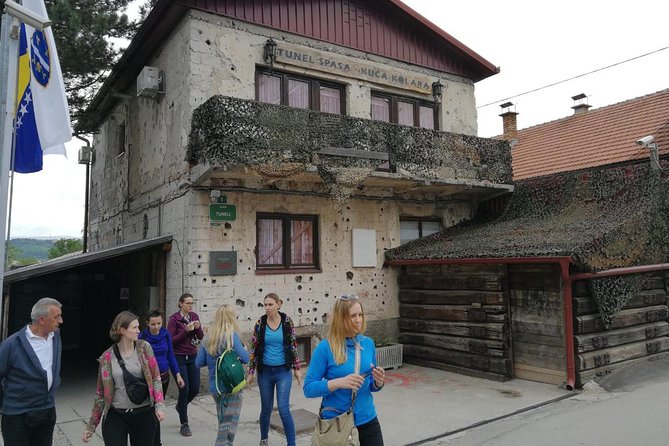
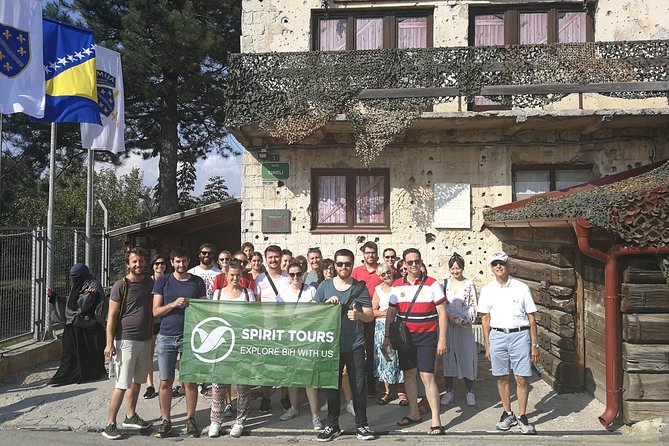
The heart of the tour is the Tunnel of Hope Museum, where you’ll spend about 1 hour 30 minutes, and where the experience becomes more physical than any slideshow could be.
Here’s what to expect:
- You’ll get an orientation that includes a large map of Sarajevo under siege, showing enemy lines.
- You’ll watch a short 17-minute movie.
- You’ll tour the museum exhibition before walking into the tunnel itself.
- The signature moment is a walk through the 25-meter-long tunnel, designed to let you understand the struggle of Sarajevans during the siege.
The ticket matters. The Tunnel of Hope Museum admission is not included. The cost is €10.00 per person, so I’d plan for that extra line item. Still, it’s the one stop that most clearly earns its time. A war story is easier to carry after you’ve been inside the place where people tried to survive.
One practical consideration: a tunnel walk is not long, but it’s enclosed and emotionally intense. If you’re someone who gets overwhelmed in tight spaces, take it slowly and give yourself mental space.
The drive that sets context: Sniper Alley and the child memorial
Before you even reach the tunnel, you’re not just riding in a car. Your guide uses the commute to point out Sniper Alley and a memorial focused on murdered children. That choice matters. It means you’re not arriving at the Tunnel of Hope Museum already fully formed; you’re being taught how to read what you’re seeing.
The child memorial is one of those details that stays with you. It’s made of bronze and glass. The sculpture symbolizes a mother trying to protect her children, and a bronze ring symbolizes a strong, round line of defence. Even if you’ve read about the siege before, memorial design like this can hit differently—because it’s built to force you to pause, not to keep you moving.
If you prefer a tour where you only stop for views and photos, this might feel heavy early. But if your goal is to understand Sarajevo honestly, the tone set in the car is a smart start.
Trebević Vidikovac: the best photo spot and the clearest city picture
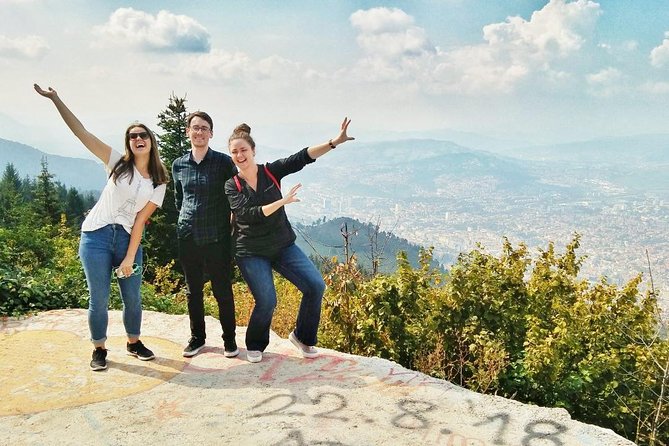
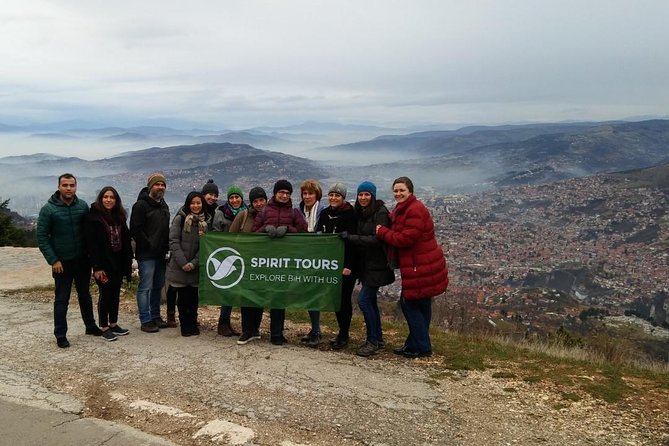
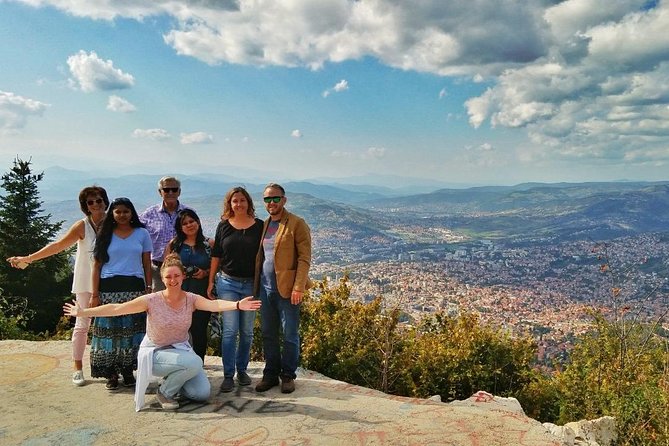
After the tunnel, the tour shifts gears to high ground: Trebević Vidikovac. It’s a short stop—about 20 minutes—but it gives you something crucial: context from above.
You’ll head toward Trebević, the Olympic Mountain area, and you’ll reach 1,230 meters above sea level. From there, the city opens up in a way that helps you visualize what the siege meant spatially. Your guide will show enemy lines and connect the war stories to the geography you can now see.
This is also where you’ll get the kind of photos that actually teach you something. It’s not just a pretty skyline shot. It’s the city layout, seen through the lens of what your guide just explained.
A small drawback: because the stop is brief, you’ll want to decide quickly whether you’re taking photos or listening closely. I’d suggest doing both, but with a plan—spend 5 minutes scanning from your spot, then let the guide talk.
Sarajevo Olympic Bobsleigh and Luge Track: abandoned sport with history in the frame
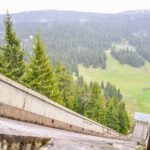
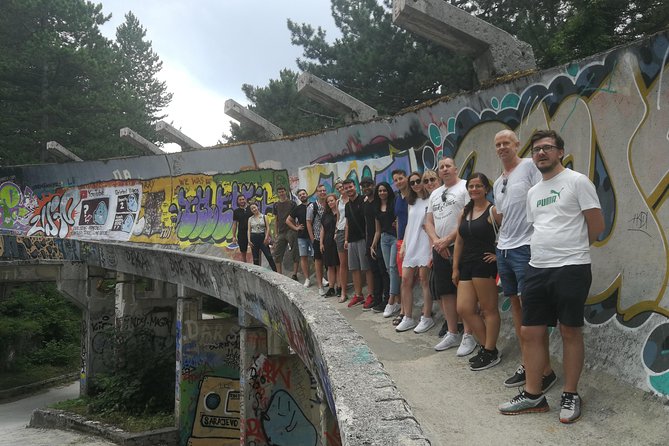
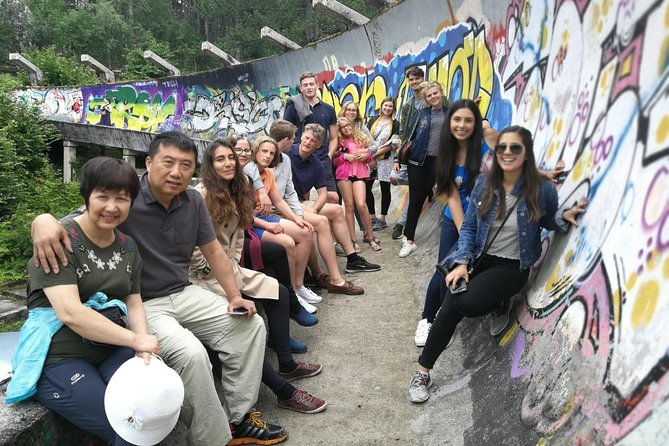
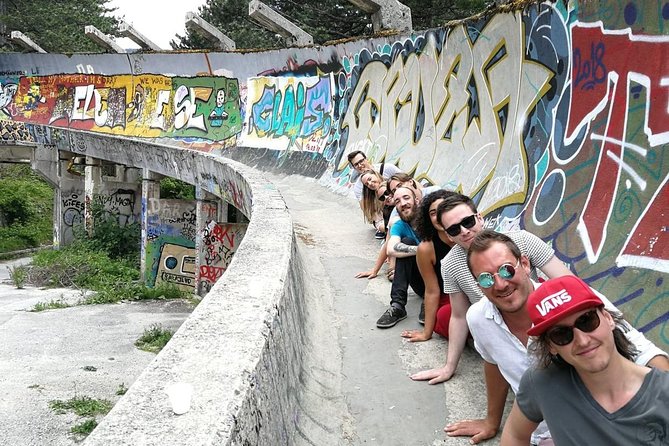
Next comes the Sarajevo Olympic Bobsleigh and Luge Track—a site tied to the 1984 Winter Olympics. You’ll spend about 30 minutes here, and the experience is a blend of sport infrastructure and siege-era loss.
One detail that makes this stop extra interesting: as you walk toward the start of the track, you’ll have a view of the cable car reopened on 6 April 2018. That contrast—modern restoration visible near abandoned structures—helps you think about time. Sarajevo isn’t stuck in the past, but the past is still physically present.
As you move along the track area, your guide explains why it’s often described as one of the most beautiful abandoned places in the world. I’d translate that into something practical: you’re seeing dramatic structure, steep lines, and wide sightlines, and the city’s story is right there in the background.
If you’re doing this in cool weather, be ready for wind on higher ground. Comfortable shoes help, because you’ll be walking along uneven historic areas.
- Fall of Yugoslavia, Sarajevo War Tour with Tunnel of Hope Museum and Frontlines
★ 5.0 · 1,314 reviews


Jewish Cemetery Sarajevo: a UNESCO-candidate site shaped by the siege
The final major stop is Jewish Cemetery Sarajevo, where you’ll spend about 15 minutes. This cemetery is described as the second largest in Europe and a candidate for UNESCO World Heritage title. But in siege context, it becomes more than an impressive site.
During the siege, this cemetery served as a battleground between the Bosnian Army and Serbian forces. Your guide ties that history to what you see, so you understand why this location is emotionally charged and historically important.
This stop is short by design. It’s meant for respect and recognition more than exploration. If you like slow walking and long reading, you may want extra time here on your own after the tour ends, but the basic story connection is already done during your stop.
The memorial for 1,621 murdered children: why this stop matters more than you think
The tour also includes a key memorial dedicated to 1621 murdered children. The design choices are meaningful: bronze and glass with a mother protecting her children, and a bronze ring that symbolizes defence.
I like memorials that don’t let you skim. This one encourages reflection without needing a long lecture. In a tour filled with explanations, this kind of silent stop can be the moment your brain catches up.
If you’re traveling with kids or teens, this is one of the places where discretion matters. The tour is described as most travelers can participate, and service animals are allowed—but emotional readiness is still your call.
Price and timing: what you’re really paying for
At $48.39 per person for about 3 to 4 hours, the value comes from two things: coverage and storytelling.
You get:
- a professional tour guide (and in practice, the reviews highlight guides with lived experience)
- air-conditioned vehicle and bottled water
- hotel pickup and drop-off
- multiple stops that form a connected narrative, not random hopping
The one cost to plan for is the Tunnel of Hope Museum ticket (€10.00 per person). If you’re comparing tours, treat that as part of the real total. Even with that added, the day still stacks up well because the tunnel visit is the centerpiece and it isn’t the kind of place most people casually stumble into.
Group size is capped at 50 travelers, and the tour is offered in English. That means you should expect the guide to keep things moving but still spend enough time at each stop for it to land.
Who should book this war tour (and who might choose differently)
This works best for you if:
- you want the siege story told with real human weight
- you like tours where you learn something specific at each stop, not just see scenery
- you’re comfortable with solemn themes and direct historical context
You might want a different option if:
- you’re looking for a relaxed, upbeat afternoon
- you don’t handle enclosed spaces well (the tunnel walk is part of the core experience)
- you want only viewpoints and photos without the heavy memorial focus
One more note: this is a moving itinerary. Even if the total time is under half a day, you’ll be getting in and out of the vehicle and walking at several sites.
Practical tips so you get the most from it
- Wear comfortable shoes. You’ll walk at the tunnel area, along the bobsleigh track site, and around the cemetery.
- Bring a light layer. Weather in Sarajevo can swing, and higher stops can feel colder or windier.
- If you care about photos, decide early what matters most to you. The viewpoints at Trebević are quick but rewarding.
- Plan for the €10 Tunnel of Hope ticket so you don’t lose time at the start.
- The tour is near public transportation, but if you’re doing it for the first time, you’ll probably appreciate the included hotel pickup.
Should you book Sarajevo 1425 Days Under the Siege War Tour?
I’d book it if you want Sarajevo to feel real, not just scenic. This is one of those tours where the stops connect logically: siege geography, a survival route you can walk, and memorials that refuse to be forgotten. The best part is the guide approach—people like Emina Koso and Enes (and others who were children during the war) bring a clarity you don’t get from distance.
If you’re sensitive to heavy topics, you can still go, just go with intention. Choose a moment in your trip when you can slow down after the tour, and don’t stack something cheerful right afterward.
Bottom line: for a first time in Sarajevo, this is the outing that teaches you the city’s spine.
FAQ
How long is the Sarajevo 1425 Days Under the Siege War Tour?
It runs about 3 to 4 hours.
Is hotel pickup and drop-off included?
Yes. Hotel pickup and drop-off are included, and pickup is also offered from the meeting point area.
Do I need to pay extra for the Tunnel of Hope Museum?
Yes. The Tunnel of Hope Museum admission ticket is not included and costs €10.00 per person.
What stops are included on the tour?
You’ll visit the Sarajevo War Tunnel (Tunnel of Hope Museum), Trebević Vidikovac, the Sarajevo Olympic Bobsleigh and Luge Track, the Jewish Cemetery Sarajevo, and you’ll also see an important memorial dedicated to 1621 murdered children.
What language is the tour offered in?
The tour is offered in English.
What’s the maximum group size?
The tour has a maximum of 50 travelers.
Is the tour dependent on weather, and is it suitable for most people?
Yes, it requires good weather. It also says most travelers can participate and service animals are allowed.
You Might Also Enjoy
More Tours in Sarajevo
- Fall of Yugoslavia, Sarajevo War Tour with Tunnel of Hope Museum and Frontlines
★ 5.0 · 1,314 reviews


More Tour Reviews in Sarajevo
- Fall of Yugoslavia, Sarajevo War Tour with Tunnel of Hope Museum and Frontlines
★ 5.0 · 1,314 reviews