A single walk can change the meaning of a city. In Sarajevo, this Franz Ferdinand route turns everyday streets into a clear, chronological story that ends with the clues that led to World War I. You’ll move at a human pace and get the big picture without feeling like you’re trapped in a museum.
I especially like the hotel pickup/drop-off. It saves you time and hassle, and it helps you keep your day flowing. I also like the small-group feel of a tour capped at 50 people, plus the guides who answer questions in plain language.
One thing to consider: this tour is weather-dependent, and you’re on foot for about two hours. If it’s pouring or miserable, it may not be the right day to be out and walking.
In This Review
- Key things I’d circle before you book
- Franz Ferdinand’s Last Day in Sarajevo: What This Walk Really Gives You
- Cost and time: is $24.08 worth a 2-hour Sarajevo walk?
- Ferhadija 19 meeting point: easy starts, minimal friction
- The route that makes the story make sense (and what to watch for)
- Latin Bridge: the stop that turns background into a timeline
- City Hall: speech time with admission not included
- The in-between stops: Governor’s residence and Hotel Europe
- How this walking route explains the WWI trigger
- The guide factor: clear answers make a short tour feel longer
- Group tour practicalities: who this is best for
- Weather matters: when your plans might need to flex
- Should you book? My take for deciding fast
- FAQ
- FAQ
- How long is the Last Day of Franz Ferdinand Walking Tour?
- What language is the tour offered in?
- Do you offer pickup from hotels and other accommodations?
- Where does the tour start and end?
- How big is the group?
- Is admission included for the stops?
- Is the tour dependent on weather?
- What if I need to cancel?
Key things I’d circle before you book
- Hotel pickup and drop-off make this an easy add-on to a tight Sarajevo schedule
- Chronological route connects the first attempt, speeches, key residences, and Latin Bridge
- English-guided walk that includes room for questions
- Ten-minute stop at City Hall with admission not included, so plan for that
- Latin Bridge admission is free on the tour
- Max 50 travelers keeps the pace manageable for a walking tour
Franz Ferdinand’s Last Day in Sarajevo: What This Walk Really Gives You
Sarajevo has a way of layering meaning onto ordinary corners. This tour does that job fast. In about two hours, you connect the dots between the events tied to Archduke Franz Ferdinand and the places you’ll recognize immediately on the map once you’ve walked them.
The best part is that it isn’t just a list of famous landmarks. The route is built like a story with cause-and-effect momentum. You start with the setting for the day, then you move through the key public moments and the famous sites associated with his visit—ending at the area tied to the assassination. Along the way, you’re not memorizing dates so much as learning how one incident triggers the next.
If you like history that feels close enough to touch, this is the right angle. You’re not stuck inside. You’re outside, watching how Sarajevo’s spaces shape the narrative.
You can also read our reviews of more walking tours in Sarajevo
Cost and time: is $24.08 worth a 2-hour Sarajevo walk?
At $24.08 per person, the big value isn’t that it’s cheap for the sake of cheap. It’s that you’re buying three things at once: a focused route, an English guide, and logistics that would cost you time and effort on your own.
A two-hour walking tour also fits real travel days. You can do it in the morning to sharpen your understanding before museums, or in the afternoon when you’re ready to turn sights into context. Either way, you avoid the classic problem of solo history wandering: you see the places, but you miss the links that make the story click.
Group walking tours work best when you don’t have to think too hard about what to do next. Here, you do one thing: follow the guide. That’s how you keep your costs down and still get real context.
Ferhadija 19 meeting point: easy starts, minimal friction
This tour begins at Ferhadija 19, Sarajevo 71000. The good news is that it also ends back at the meeting point, so you’re not left figuring out how to get home after you’re done.
Even better, pickup is offered from hotels, hostels, and private accommodations across Sarajevo. If you’re staying centrally, that’s a real time saver. If you’re not, it still helps you avoid hunting for a convenient transit stop and assembling your own route in a city that rewards being oriented.
Practical tip: because this tour uses a mobile ticket, make sure your phone has enough battery. It’s a small thing, but it’s one less stress moment when you’re trying to meet the group.
The route that makes the story make sense (and what to watch for)
The walk covers the main locations connected to the day, including:
- the place of the first attempt of assassination
- Franz Ferdinand’s speech in City Hall
- the Governor’s residence
- Hotel Europe
- Latin Bridge and the nearby place of the assassination
Because this is a walking route, you’ll experience the city as a sequence rather than a pile of photos. That’s the point. Once you understand how the stops connect, you’ll look at Sarajevo differently for the rest of your trip.
What to watch for: the tour is about two hours. That’s long enough to feel the walking, but short enough that you won’t want to arrive late. Wear comfortable shoes. Bring a light layer if the weather swings. And if you’re the type who likes slow museum pacing, remember this is designed for movement and story clarity.
Latin Bridge: the stop that turns background into a timeline
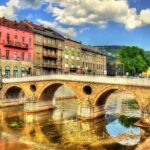
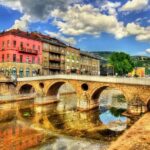
Latin Bridge is the first major named highlight. The tour frames it as a key stage in the day’s unfolding events, including the related area nearby tied to the assassination.
You’ll likely find this stop especially effective if you’ve seen Sarajevo’s war-era photos before and wondered how the city’s landmarks fit into the story. Latin Bridge is one of those places where the geography matters: it’s a focal point you can locate instantly once you’re there.
A practical note: Latin Bridge is listed as free admission for this tour. That’s helpful for budgeting and keeps the stop from turning into a cash-and-lines moment.
Time-wise, you get about 10 minutes at this stop. Ten minutes can sound short, but for a walking tour highlight, it’s enough time to orient, read what you need, and connect it to the guide’s explanation. If you want to linger for photos, you’ll probably do best by choosing your exact photo angles quickly, then listening.
- Fall of Yugoslavia, Sarajevo War Tour with Tunnel of Hope Museum and Frontlines
★ 5.0 · 1,314 reviews

City Hall: speech time with admission not included
Next comes Sarajevo City Hall, another central stop connected to the day—specifically Franz Ferdinand’s speech in City Hall.
City Hall is one of the easiest places to understand why a speech matters to history. Public announcements don’t float in a vacuum; they land in real spaces with real people watching, which is exactly what makes the story feel less distant. Even if you’re not a “speeches person,” the guide’s framing helps you see the political weight behind the moment.
You’ll spend about 10 minutes here, and the key practical detail is that admission is not included. If you’re planning on going beyond the exterior context or you want to spend extra time inside, you may want to set aside a little time and money for that possibility.
If your priority is story clarity rather than museum-style lingering, this stop still works well in the route. The main payoff is how the guide uses City Hall to connect the earlier attempt and the later tragedy into one connected sequence.
The in-between stops: Governor’s residence and Hotel Europe
The tour also includes the Governor’s residence and Hotel Europe as major landmarks tied to the day. These are the kinds of places that you might miss or under-appreciate if you’re walking on your own.
Why they matter: they help you understand what kind of day this was. The assassination isn’t just a dramatic end point—it’s surrounded by public movements, ceremonial moments, and the way leaders and officials moved through Sarajevo’s spaces.
The benefit of including them in a two-hour tour is that you don’t have to plan extra transport or separate visits. You get quick context as you pass them and hear how each stop fits into the larger chain of events.
The trade-off is time. Because the entire tour is about two hours, these stops are likely more about orientation and explanation than long, in-depth exploration. If you want deep time in any single building, you might treat these as your “send me back later” highlights rather than final stops.
How this walking route explains the WWI trigger
The tour’s overall promise is simple: you get a different perspective on Sarajevo and the facts that contributed to the events leading to the First World War.
What you’ll notice, if you pay attention as you walk, is how the guide uses the city’s layout like a timeline. You’re going from one meaningful location to another, and each place adds a missing link. That’s what makes the story stick.
This also helps if you’re already familiar with the basic assassination narrative. Instead of re-learning the headline, you’re filling in the “how did we get from there to here” parts—what happened next, and why it mattered.
And because you’re walking, the story becomes spatial. That’s the difference between reading a summary and standing in the places where the chain unfolded.
The guide factor: clear answers make a short tour feel longer
Two of the standout themes from the feedback are about the guide: being helpful and answering questions clearly, and offering more information than people expected from a short walking tour.
That’s a big deal. In history tours, the guide’s job isn’t just to recite facts. It’s to interpret them in a way you can use. If your guide can handle questions without getting defensive or vague, the tour feels like it expands in your head, even though your feet are still moving at a steady pace.
If you like to ask questions, this kind of tour tends to reward it. If you’re quiet and more “listen, then think,” it still works, because the route itself keeps you oriented. Either way, you’re not left with a vague feeling of having seen buildings—you get a clearer chain of events.
Group tour practicalities: who this is best for
This tour is marked as most travelers can participate, and it’s a walking experience with a maximum of 50 travelers. That size is big enough to run smoothly, but small enough that you’re not constantly fighting for position against crowds.
This is especially good if:
- you want a focused Sarajevo history outing without planning multiple visits
- you value a local guide’s context over self-guided guessing
- you’re short on time but still want a meaningful story tied to major sites
- you like learning how history connects across specific places
If you’re the type who hates walking tours or you need long seating breaks, you might find the two-hour pace challenging. In that case, you’d probably be happier with a slower option that allows more independent time.
Weather matters: when your plans might need to flex
This experience requires good weather. That isn’t a throwaway line. It affects comfort, and it affects whether you’ll enjoy the route.
If rain is expected, bring a packable layer and be ready to accept that plans can shift. And if you’re visiting outside a stable stretch of weather, consider scheduling this on a day where you have flexibility.
Should you book? My take for deciding fast
Book this tour if you want:
- a 2-hour Sarajevo experience that turns famous sites into a coherent story
- easy pickup/drop-off so you don’t waste your best sightseeing hours commuting
- a guide who gives enough detail to make the WWI trigger and nearby events feel understandable, not abstract
- a route that includes multiple key stops tied to Franz Ferdinand’s last day without extra planning
Skip or reconsider if:
- you want lots of time inside buildings at each stop (City Hall has admission not included, and the listed time at named stops is short)
- you’re not comfortable walking for about two hours
- weather looks rough and you won’t be able to adjust
Overall, this is a strong value choice for travelers who want real context without turning the day into logistics. You leave with a clearer mental map of Sarajevo tied to one of the major turning points of the 20th century.
FAQ
FAQ
How long is the Last Day of Franz Ferdinand Walking Tour?
It’s about 2 hours.
What language is the tour offered in?
The tour is offered in English.
Do you offer pickup from hotels and other accommodations?
Yes. Pickup is offered from all hotels, hostels, and private accommodations in Sarajevo.
Where does the tour start and end?
The meeting point is Ferhadija 19, Sarajevo 71000, and the activity ends back at the meeting point.
How big is the group?
The tour has a maximum of 50 travelers.
Is admission included for the stops?
Latin Bridge is listed as free admission, while Sarajevo City Hall is listed as admission not included.
Is the tour dependent on weather?
Yes. The experience requires good weather.
What if I need to cancel?
You can cancel for a full refund up to 24 hours in advance of the experience start time.
You Might Also Enjoy
More Walking Tours in Sarajevo
More Tours in Sarajevo
- Fall of Yugoslavia, Sarajevo War Tour with Tunnel of Hope Museum and Frontlines
★ 5.0 · 1,314 reviews

More Tour Reviews in Sarajevo
- Fall of Yugoslavia, Sarajevo War Tour with Tunnel of Hope Museum and Frontlines
★ 5.0 · 1,314 reviews