REVIEW · SARAJEVO
Private Walking Tour, Food Tasting and Bosnian Coffee in Sarajevo
Book on Viator →Operated by Bella Bosnia Tours · Bookable on Viator
Sarajevo hits you fast, then keeps talking. This private 2.5-hour walking tour strings together Bosnian coffee culture with satisfying food tasting stops, while your guide maps the city’s shift between Ottoman, Austro-Hungarian, and religious landmarks. It’s a smart way to get your bearings and snack at the same time.
What I like most is how often the tour brings you back to the coffee ritual—first with coffee talk tied to local craft streets, then again at Morica Han where you taste it. I also like the human side: guides like Emina and Lamija come across as friendly and genuinely invested, so the history feels like a conversation, not a lecture.
One thing to keep in mind: it’s a steady walk with lots of short stops and a bit of standing around, so wear comfortable shoes and plan for weather changes.
In This Review
- Quick highlights you’ll feel right away
- Meeting at Sarajevo City Hall and setting your pace
- Sebilj Brunnen and Sarajevo City Hall: the first contrast you’ll notice
- Kazandžiluk coppercraft and how Bosnian coffee fits the tradition
- Morica Han: caravan-saray atmosphere plus a real coffee moment
- Bravadžiluk Street food recommendations you can actually use
- Clock Tower and Sacred Heart Cathedral: stories in plain sight
- Gazi Husrev-beg Mosque and Bezistan: Ottoman core, not just a drive-by
- Latin Bridge finish: Franz Ferdinand and the ripple effect
- Serbian Orthodox Cathedral: the last big architecture cue
- Price and logistics: does $66.54 per person make sense?
- Who should book this Sarajevo food and Bosnian coffee walk
- Should you book this Sarajevo private walking tour?
- FAQ
- How long is the Private Walking Tour, Food Tasting and Bosnian Coffee in Sarajevo?
- Where does the tour start, and where does it end?
- Is the tour private, and is it offered in English?
- Is food and Bosnian coffee included?
- Do I need to buy tickets for the stops?
- Can I cancel for a full refund?
Quick highlights you’ll feel right away
- Bosnian coffee, taught and tasted at key points, not just one quick sip
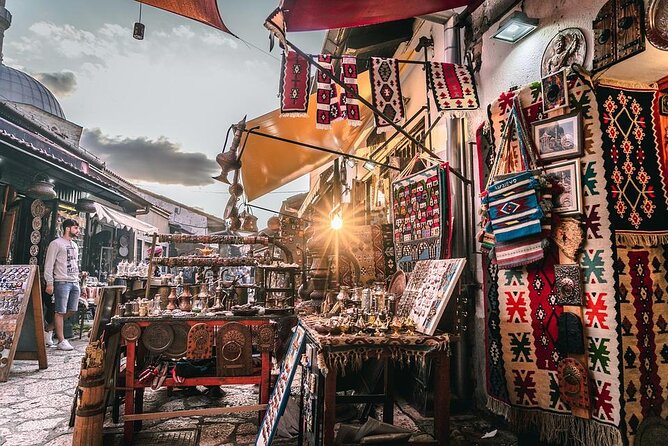
- Old-school Sarajevo shopping streets tied to coppercraft and Ottoman-era atmosphere
- Morica Han caravan-saray setting where you slow down and taste like a local
- A food-and-sweets focus around Bravadžiluk, with dish and sweet recommendations as you go
- A faith and architecture mix across mosque, cathedral, and church areas in one route
- Latin Bridge finish near the Franz Ferdinand assassination site and its World War I impact
Meeting at Sarajevo City Hall and setting your pace
The tour starts at Sarajevo City Hall (Brodac 1). That’s a solid first anchor point because you’re already looking at an Austro-Hungarian-style landmark before you head into the older lanes around Bascarsija.
You’ll be with a private guide for just your group, so the pacing is adjustable. If you need a slower rhythm—more photos, fewer speed-walk moments—that flexibility is part of what you’re paying for.
It’s also designed to be easy to join: it’s offered in English, with mobile ticket use, and service animals are allowed. If you’re trying to fit Sarajevo into a short visit, this kind of 2.5-hour format is efficient without feeling rushed.
You can also read our reviews of more walking tours in Sarajevo
Sebilj Brunnen and Sarajevo City Hall: the first contrast you’ll notice
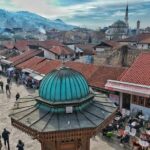
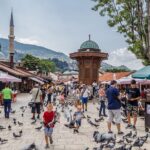
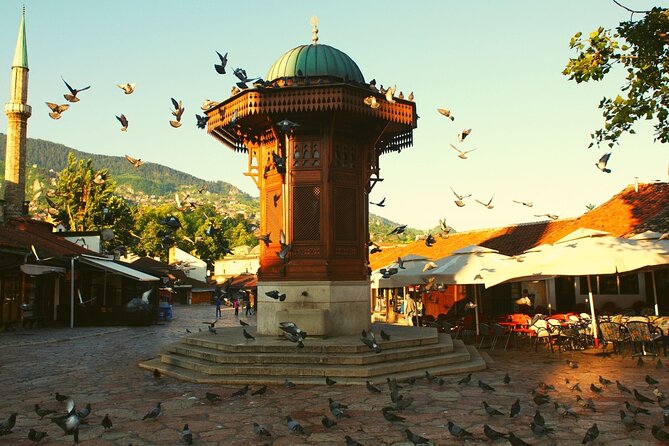
The walk kicks off at Sebilj Brunnen on Bascarsija square, also known as Pigeon Square. It’s an 18th-century wooden fountain—pretty in photos, yes, but it also gives your guide a place to start explaining how Sarajevo formed and why this square mattered.
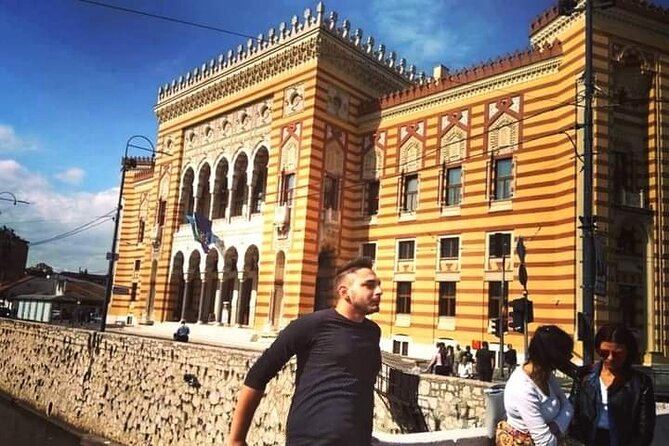
Right after that, you’ll move to Sarajevo City Hall, one of the city’s most representative Austro-Hungarian-era buildings. The tour also connects it to earlier uses, including serving as a National and University Library, which helps you understand that these impressive facades weren’t just decoration.
The value here is simple: you’re seeing the city’s “two-story” identity from the first steps. Ottoman-influenced old quarters and Austro-Hungarian public architecture sit close enough that you can feel how Sarajevo grew in layers.
Kazandžiluk coppercraft and how Bosnian coffee fits the tradition
Next up is Kazandžiluk, described as Sarajevo’s oldest street. This is the place for coppercraft pieces—small workshops, distinctive handmade items, and the kind of street where you can’t help but slow down.
The tour ties this street to coffee culture, which is the key point for food lovers. You’re not learning coffee as a random food trivia fact; you’re seeing it as part of daily life and hospitality traditions.
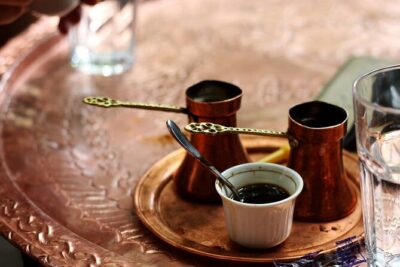
You’ll also be shown how Bosnian coffee is traditionally made and drunk. Even if you think you already know the basics, a proper local explanation changes the way you taste it. The whole experience is built around coffee as a social ritual, not just a caffeine stop.
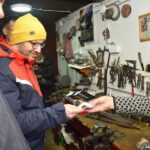
One extra detail that shows up in how guides run this theme: you may also get a quick look at local metal craft work, including brass and copper. In at least some versions of the walk, that can include a workshop connection where old shell casings have been transformed into vases—an eye-opening reminder that Sarajevo’s history isn’t stuck in the past.
Morica Han: caravan-saray atmosphere plus a real coffee moment
Morica Han is one of the strongest “time travel” stops on the route. It’s a medieval caravan saray, built under Ottoman influence, and the stone-and-arch feel makes the whole area slow down in your head.
Then comes the payoff: you taste Bosnian coffee here as part of the experience, not just as an afterthought. This is where the coffee lesson becomes real. Sitting in a setting linked to travel and trade makes the coffee ritual feel logical—something you’d serve to visitors, merchants, and neighbors.
If you’re wondering whether coffee tasting will be more than a sip: the tour’s food focus is strong, and guides tend to keep the stops substantive. Several highlights in the feedback point to coffee being a satisfying ending to a longer walk, not a tiny side item.
Bravadžiluk Street food recommendations you can actually use
After the coffee-and-craft sections, you’ll head to Bravadžiluk Street, known for restaurants serving traditional Bosnian food. This stop is short, but it’s useful because your guide will point you toward dishes and sweets that fit what you’ve been tasting along the way.
Here’s the practical angle: Sarajevo can be overwhelming if you don’t know where to start. A local recommendation matters because it saves you time and keeps you from playing guessing games with portions, ingredients, and sweetness levels.
Also, the food portion of this tour tends to be generous. The strongest praise centers on large, delicious offerings—so even if you’re not a huge eater, you’ll likely leave feeling fed rather than “lightly sampled.”
You can also read our reviews of more food & drink experiences in Sarajevo
Clock Tower and Sacred Heart Cathedral: stories in plain sight
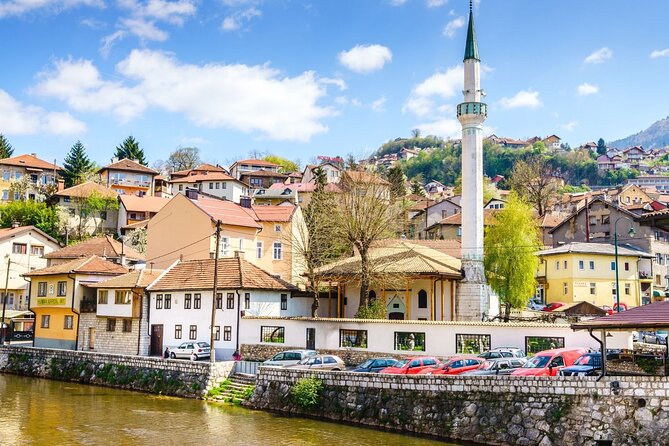
A quick stop brings you to the Old Sarajevo Clock Tower, close to the religious landmarks in this part of town. The tower is famous for showing an unusual time, and your guide’s job is to give you the story behind that oddity.
Next you’ll see Katedrala Srca Isusova (Sacred Heart Cathedral), built in a Neo-Renaissance style by the Austro-Hungarian Monarchy. Right next to it, there’s also a statue of Pope John Paul II, who visited Bosnia twice, which your guide will connect back to Sarajevo’s religious crossroads.
The tour also mentions Sarajevo roses, tying the area to a cultural detail you can’t get from a quick photo stop. Even if you’re not a cathedral person, this section helps you read the city like a map—who built what, and why faith architecture shows up in different layers.
Gazi Husrev-beg Mosque and Bezistan: Ottoman core, not just a drive-by
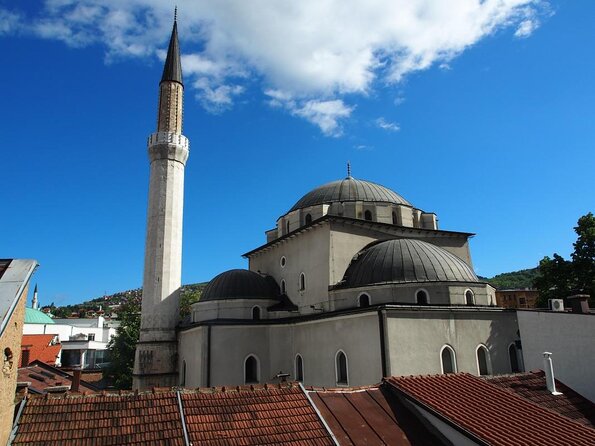
This part of the tour is about the Ottoman heart of Sarajevo. You’ll visit Gazi Husrev-beg Mosque, described as the biggest and one of the most beautiful mosques in the city. Even in a short stop, the scale and presence are hard to miss, and your guide will help you understand what to pay attention to.
Then you’ll spend time with Gazi Husrev Bey’s Bezistan, an old Ottoman bazaar. This is where the architecture and the idea of commerce overlap with culture—you’re seeing how a trading space becomes part of everyday identity.
What makes this section feel worthwhile is the contrast. Earlier you looked at city-scale Austro-Hungarian buildings. Here you’re in the older trading-and-community rhythm, where the bazaar concept makes sense. It’s one of the best stretches for “seeing the city’s rules” rather than just collecting sights.
Latin Bridge finish: Franz Ferdinand and the ripple effect
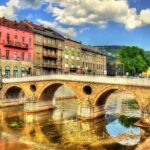
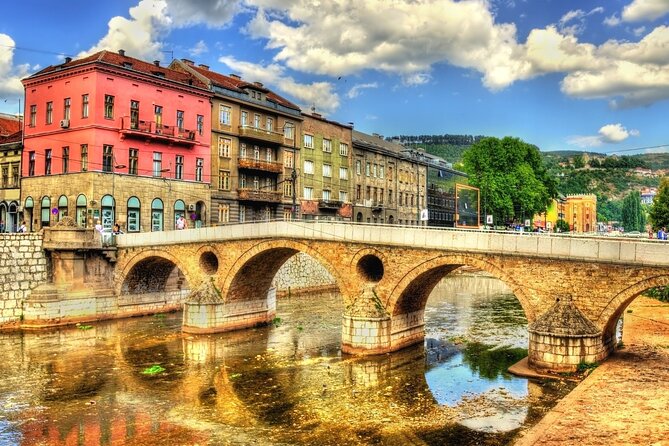
The tour ends near Latin Bridge, tied to the assassination of Franz Ferdinand. Your guide doesn’t just point at the spot; the key value is how the story is framed around the chain reaction that led to World War I.
This is a heavy topic, so the pacing matters. In a food-and-coffee tour format, it can feel like a tonal shift, but that’s also the point. Sarajevo’s beauty and tragedy live close together, and Latin Bridge is where that connection becomes impossible to ignore.
If you want to keep the momentum after the tour, this ending location is convenient for continuing your own walk. You’ll already know what you’re looking at, and you’ll understand why the place matters beyond its name.
Serbian Orthodox Cathedral: the last big architecture cue
Before you completely wrap, you’ll see the Serbian Orthodox Cathedral of the Nativity of the Theotokos. It’s described as the biggest Orthodox church in Sarajevo, and your guide shares the story of how it was constructed.
This stop rounds out the “faith map” you’ve been building through the route. By the time you reach the cathedral, you’ve already seen a mosque, a Neo-Renaissance Catholic cathedral, and a mix of Ottoman-era space. So this feels less like a random extra sight and more like a final piece of Sarajevo’s visible identity.
Price and logistics: does $66.54 per person make sense?
At $66.54 per person for about 2 hours 30 minutes, you’re paying for a private guide plus multiple stops that include food tasting and Bosnian coffee. For a walking tour, the cost often hinges on whether you get more than “look and go.”
In this case, the strongest value signals are in the way guides run the experience: lots of explanation in an easy way, friendly personal tone, and food portions that aren’t skimpy. That combination turns a sightseeing route into something that fills your schedule and your stomach.
Also, because it’s private, you’re not stuck in a pace set by strangers. If you’re the type who likes asking questions—about why the architecture looks the way it does, or how coffee traditions became part of everyday life—this setup usually pays off.
Who should book this Sarajevo food and Bosnian coffee walk
This is a great match if you:
- want a first-day Sarajevo introduction that blends food with history
- like walking tours that explain context without turning into a long classroom session
- care about local traditions like Bosnian coffee and how they connect to hospitality
- prefer a private experience with room for conversation
It’s also a strong choice for couples and small groups. The private format tends to keep things relaxed, which matters when you’re moving between sites quickly and stopping for tastings.
If you’re traveling solo and want a friendly guide who can also point you to what to do next, this type of tour format can feel like a shortcut to local confidence. Just plan for the walk time and bring shoes you can stand in.
Should you book this Sarajevo private walking tour?
If you want Sarajevo in one evening (or one afternoon) without sacrificing food, coffee, or meaningful context, I’d book it. The biggest reasons are the dual focus—Bosnian coffee plus hearty tastings—and the way guides like Emina and Lamija are praised for friendly conversation and deep area knowledge.
Skip it only if you dislike structured walking tours, or if you’re looking for long museum-style time at a single location. This experience is about movement, sampling, and getting a usable overview you can build on after.
FAQ
How long is the Private Walking Tour, Food Tasting and Bosnian Coffee in Sarajevo?
The tour lasts about 2 hours 30 minutes.
Where does the tour start, and where does it end?
It starts at Sarajevo City Hall, Brodac 1, Sarajevo. It ends in a different location, and the route finishes next to Latin Bridge.
Is the tour private, and is it offered in English?
Yes, it’s a private tour with only your group participating. It’s offered in English.
Is food and Bosnian coffee included?
Yes. The experience is specifically a food tasting and Bosnian coffee tour, with coffee tasting included at multiple points and traditional food recommendations around Bravadžiluk.
Do I need to buy tickets for the stops?
The listed stop admission tickets are marked as free at each stop.
Can I cancel for a full refund?
Yes. You can cancel for a full refund up to 24 hours before the experience’s start time.
You Might Also Enjoy
More Walking Tours in Sarajevo
More Tours in Sarajevo
- Fall of Yugoslavia, Sarajevo War Tour with Tunnel of Hope Museum and Frontlines
★ 5.0 · 1,314 reviews

More Tour Reviews in Sarajevo
- Fall of Yugoslavia, Sarajevo War Tour with Tunnel of Hope Museum and Frontlines
★ 5.0 · 1,314 reviews