REVIEW · SARAJEVO
Eat, Pray, Love Tour
Book on Viator →Operated by Insider Ltd · Bookable on Viator
Sarajevo grabs you fast, then keeps talking. This 4-hour Eat, Pray, Love-style walk strings together the city’s religious mix, street-level stories, and a couple of real food breaks, so you leave with a map in your head and flavors you’ll remember. I love the way the route hits both the famous names (like Latin Bridge) and the quieter corners (like Morica Han). I also like that the tastings are built in, not an afterthought. One thing to consider: the big interior visits (Gazi Husrev-beg Mosque, the Jewish Museum area, and the Old Orthodox Church) cost extra, so check how much you want to go inside versus just see from the street.
You’ll start at Zelenih beretki 30 at 10:00 am and end back there. It’s designed for a small group (max 20), in English, and you get a city map and a mobile ticket. Wear comfortable shoes—some parts are classic old-town walking—and bring your camera for the bridge views and the Baščaršija center photo spots.
In This Review
- Quick take: what makes this tour worth your time
- Getting your bearings: where the tour starts and how it moves
- The route’s backbone: a four-hour Sarajevo sampler you can reuse
- Stop-by-stop: the stories behind the landmarks
- Stop 1: Insider City Tours & Excursions (meeting point context)
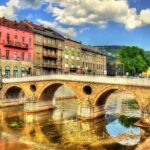
- Stop 2: Latin Bridge—history you can see in one glance
- Stop 3: Jedileri (Tomb of the Seven Brothers)
- Stop 4: Saint Anthony Catholic Church
- Stop 5: Sarajevska Pivara—Ottoman-era beer history
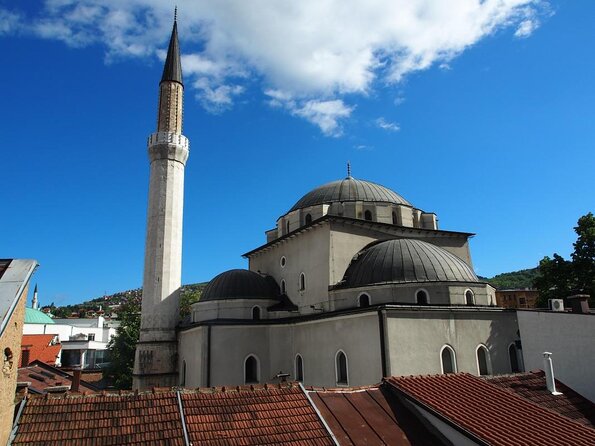
- Stop 6: Emperor’s Mosque
- Stop 7-8: Gazi Husrev-beg Mosque and Medresa—big interiors need planning
- Stop 9: Sarajevo Meeting of Culture—East meets West in one landmark
- Stop 10: Jewish Museum of Bosnia and Herzegovina (synagogue area)
- Stop 11: Baščaršija coffee break—Bosnian coffee and baklava
- Stop 12: Old Orthodox Church (entry not included)
- Stop 13: Sebilj Brunnen (Fountain)—photo stop with local symbolism
- Stop 14: Morica Han—Ottoman caravanserai history
- Stop 15: Kazandziluk—traditional crafts still alive
- Stop 16: Bravadžiluk Street—burek dégustation (food tasting included)
- Stop 17: Sarajevo City Hall (not included)
- Stop 18: Inat kuća (Spite House)—a story with attitude
- Food and drink: what you’re actually getting (and what you’re not)
- The guides: the real difference between a good day and a great day
- Price and value: does $36.97 make sense?
- Who this tour suits best
- Should you book Eat, Pray, Love in Sarajevo?
- FAQ
- How long is the Eat, Pray, Love Tour in Sarajevo?
- What time does the tour start?
- Where does the tour meet and where does it end?
- Is the tour offered in English?
- What’s included in the tour price?
- Are any entry fees included?
- How much is the entry fee package if I want to go inside?
- What tastings are included?
- How big is the group?
Quick take: what makes this tour worth your time
- A tight 4-hour loop that makes Sarajevo feel understandable, not overwhelming.
- Coffee plus burek tasting stops that fit the route and taste like real Bosnia.
- Religions side-by-side—Catholic, Orthodox, Jewish, and Ottoman Islamic heritage in one walk.
- Great storytelling from guides like Suad, Elsa, Irfan, and Rijad, who are praised for clarity and personality.
- Paid entry is limited to a few interiors, so you can budget without surprises.
- Craft and market streets (Kazandziluk, Bravadžiluk) if you like hands-on local culture.
Getting your bearings: where the tour starts and how it moves
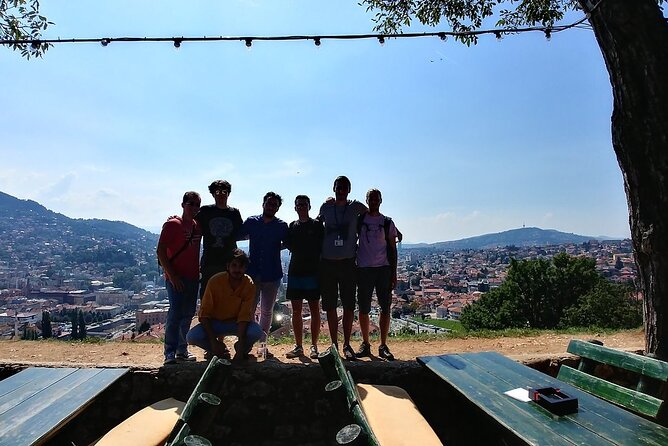
The meeting point is Zelenih beretki 30, Sarajevo 71000, and the tour runs about 4 hours back to the same spot. You’ll start at 10:00 am, which is a good time to beat some afternoon crowds and still have daylight for photos.
The pace is built for real walking between landmarks, including short stops where you can look, listen, and take pictures. You’ll also have time for two structured food moments—one for Bosnian coffee with baklava, and one for burek—so this doesn’t feel like a nonstop museum tour where you forget you’re hungry.
Practical tip: bring sunglasses and a camera, and wear comfortable shoes. Some surfaces are uneven, and you’ll be standing at street corners longer than you might expect because the stories are the point.
You can also read our reviews of more tours and experiences in Sarajevo
The route’s backbone: a four-hour Sarajevo sampler you can reuse
This tour works because it uses small geography to tell big stories. Sarajevo is compact, but its identity is complicated—different empires, different faiths, and a city that keeps rebuilding and renegotiating what it means to live together.
That’s why the order matters. You begin with the city’s “insider” context, then move through a sequence of landmarks that each explain a piece of the puzzle: infrastructure and memory at Latin Bridge, memorial and local legend at Jedileri, faith architecture with Ottoman and Catholic stops, then culture crossroads in Baščaršija and the surrounding lanes.
If you’ve only got one half-day in Sarajevo, this is a strong way to get your bearings quickly. If you want a full-on food trip, you might find it’s more of a culture walk with two tastings rather than a long restaurant crawl.
Stop-by-stop: the stories behind the landmarks
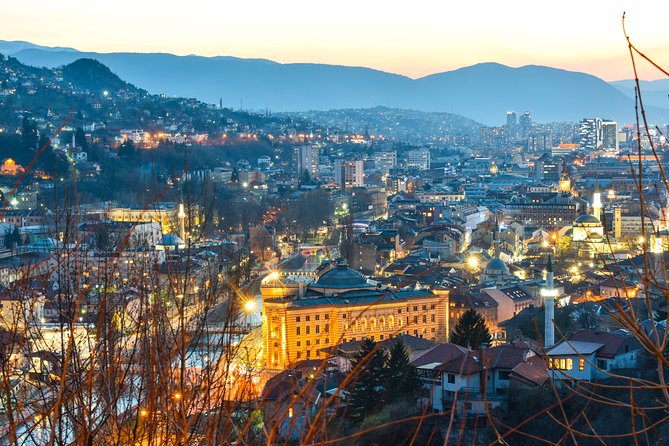
Stop 1: Insider City Tours & Excursions (meeting point context)
You meet the guide at Insider City Tours & Excursions for a quick start. This matters more than it sounds: you get the route framed early, so later stops land with context instead of feeling like a list of buildings.
You’ll also get what you need to move independently afterward—a city map—so the tour becomes a launchpad for your next wander.
Stop 2: Latin Bridge—history you can see in one glance
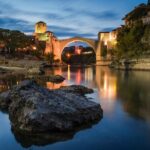
Latin Bridge is short on walking, long on meaning. The guide points out why the bridge is an iconic part of Sarajevo’s story, not just a pretty crossing. Expect a photo moment and a focused explanation that helps you understand how one location can become a symbol.
Even if you already know the name, you’ll likely appreciate the local framing—Sarajevo treats this kind of landmark as memory made physical.
- Fall of Yugoslavia, Sarajevo War Tour with Tunnel of Hope Museum and Frontlines
★ 5.0 · 1,314 reviews
Stop 3: Jedileri (Tomb of the Seven Brothers)
Jedileri is quieter and more contemplative than you might expect in a city-center walk. The Tomb of the Seven Brothers is a serene memorial with local legends layered over historical significance.
This stop gives the tour emotional variety. After the public, outward-facing landmarks, you get a chance to slow down and listen to a story that feels rooted in community memory.
Stop 4: Saint Anthony Catholic Church
Saint Anthony Catholic Church adds the Catholic thread to the city’s religious mix. The point here isn’t just the architecture—it’s the fact that Sarajevo’s character is shaped by multiple communities living in overlapping space.
You’ll get a brief look that’s long enough to register the church’s place in the broader city story, then you move on.
Stop 5: Sarajevska Pivara—Ottoman-era beer history
Sarajevska Pivara connects food and history in a very Sarajevo way. You’ll learn about the history of the first brewery in the Ottoman Empire, which is a reminder that local traditions don’t live in one era only.
This is a short stop, but it adds a useful angle: the city’s everyday life has always had its own kind of cultural exchange.
Stop 6: Emperor’s Mosque
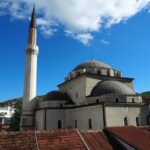
Emperor’s Mosque brings Ottoman architecture and spirituality into focus. You’re not looking at a “museum model” here—you’re seeing how religious spaces shape the feel of streets and neighborhoods.
Again, it’s brief, but it sets you up to appreciate the next mosque stops more.
Stop 7-8: Gazi Husrev-beg Mosque and Medresa—big interiors need planning
Gazi Husrev-beg Mosque is the major interior stop where entry is not included. Same for the learning atmosphere of the Gazi Husrev Begova Medresa nearby, whose scholarship focus is explained during your short time there.
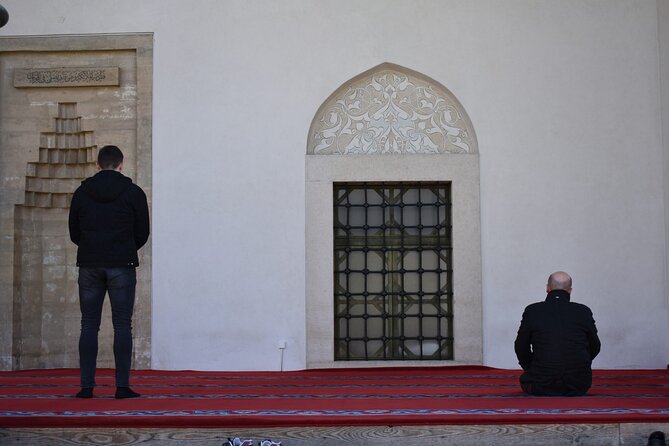
If you want to go inside and take in the full experience, budget for the entry fee package. The tour’s included materials note an additional cost of 13 BAM (about 7€) per person for the package covering Bey’s Mosque, the synagogue, and the Old Orthodox Church.
The practical advantage of this setup is control. You decide how much interior time you want based on your interests and budget.
Stop 9: Sarajevo Meeting of Culture—East meets West in one landmark
This stop is short but conceptually important. The Sarajevo Meeting of Culture landmark is where the guide draws the contrast and the overlap between influences across time.
It works well after the mosque and education stops, because you’ve already seen how different traditions coexist in buildings—now you see the idea spelled out as a landmark.
Stop 10: Jewish Museum of Bosnia and Herzegovina (synagogue area)
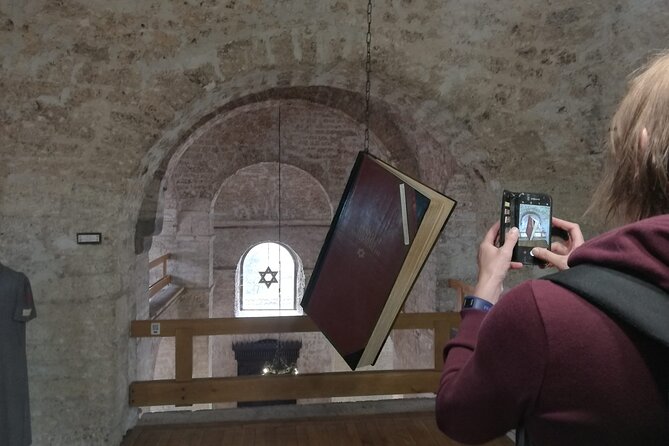
The Jewish Museum stop is not included for entry, so the guide’s explanation becomes your anchor. You’ll learn about Sarajevo’s Jewish heritage in one of the oldest synagogues in the Balkans.
If you pay the entry package, you’ll likely feel the story more fully in person. If not, you’ll still get the narrative context from the guide, which is often what you need to make future independent visits make sense.
Stop 11: Baščaršija coffee break—Bosnian coffee and baklava
Here’s one of the best parts of the whole day: the coffee break is built into the route and time-boxed so it doesn’t sprawl. You get a Bosnian coffee degustation with baklava, which is exactly the kind of simple, local pairing that tells you more than a long lecture.
If you’re the type who remembers places by taste, this stop is your payoff. The coffee moment also gives your feet a reset before you continue into the market lanes.
Stop 12: Old Orthodox Church (entry not included)
The Old Orthodox Church is described as a hidden Byzantine-art-style treasure, and the tour gives you a quick look. Entry is not included, so your experience depends on whether you’re paying for the entry package.
Either way, the stop adds the Christian roots piece to Sarajevo’s mix, rounding out the religious checklist in a way that feels more grounded than a “tourist highlights” list.
Stop 13: Sebilj Brunnen (Fountain)—photo stop with local symbolism
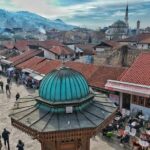
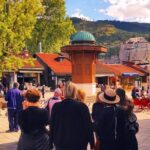
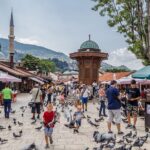
Sebilj Brunnen is quick and very photogenic: a wooden fountain that marks the heart of Baščaršija. This is one of those stops where the guide’s job is to point out what you should notice—then you can do the rest with your camera.
Use this pause to spot where you want to return after the tour.
Stop 14: Morica Han—Ottoman caravanserai history
Morica Han is the Ottoman-era caravanserai part of the walk. You’ll step into an in-between world: a place built for travelers and traders, not for a single community.
That’s why it fits the Eat, Pray, Love theme so well. It’s not only faith; it’s movement—people bringing crafts, languages, and food habits into the city.
Stop 15: Kazandziluk—traditional crafts still alive
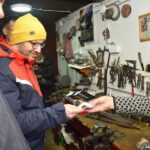
Kazandziluk is a crafts-focused stop where you learn about traditional craft practices that still exist in Sarajevo. It’s a reminder that heritage isn’t only in monuments; it’s in skills passed on and still used.
You’ll spend long enough to understand the theme, but short enough to keep the day moving.
Stop 16: Bravadžiluk Street—burek dégustation (food tasting included)
This is the other high point: a traditional burek tasting at Bravadžiluk Street. The tour gives you around 30 minutes here, which is exactly enough time to try without turning it into a slow sit-down meal.
A balanced note: this isn’t a long gourmet food tour. Some people prefer more variety and more food quantity. If your main goal is culture with a couple of meaningful tastings, it’s a great match.
Stop 17: Sarajevo City Hall (not included)
Sarajevo City Hall is described as neo-Moorish in style. The exterior time is worthwhile, especially if you like architecture that shows how Sarajevo has worn different styles over time.
Entry is not included, so treat it as a visual lesson and a guide-to-what-to-check-later if you want to return.
Stop 18: Inat kuća (Spite House)—a story with attitude
Inat kuća is a resilience story with a twist: a house moved across a river to defy authority. This is the kind of stop that makes history feel human—someone didn’t just accept the plan; they pushed back.
It’s also a fun final-note photo moment before you circle back.
Food and drink: what you’re actually getting (and what you’re not)
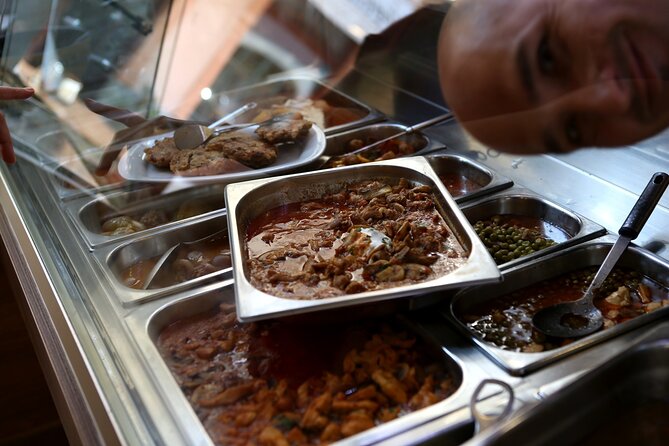
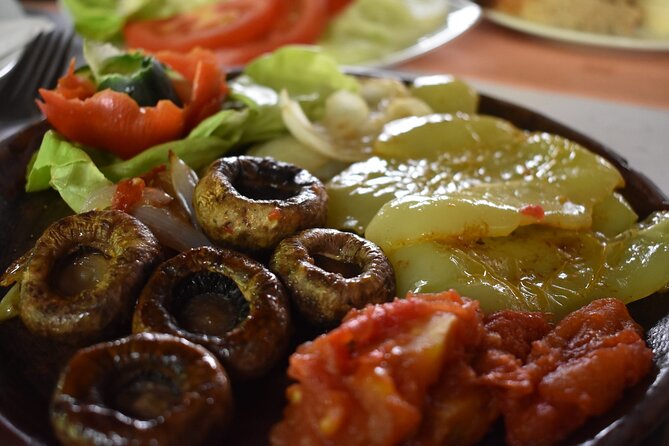
The tour includes two food moments: Bosnian coffee with baklava and a burek tasting. That’s it—no long buffet, no full meal served as part of the ticket.
So if you’re expecting an Eat-heavy day that includes multiple tastings or a restaurant-style lunch, you might feel it’s not food-forward enough. If you want a culture walk that gives you real local tastes at the right points, you’ll likely think it hits the mark.
One more practical thing: quality can vary when food is handled as part of a group experience. The overall feedback is mostly positive, but I’d still come in with the right expectation: these are tastings designed to complement the walk, not to replace a standalone food tour.
The guides: the real difference between a good day and a great day
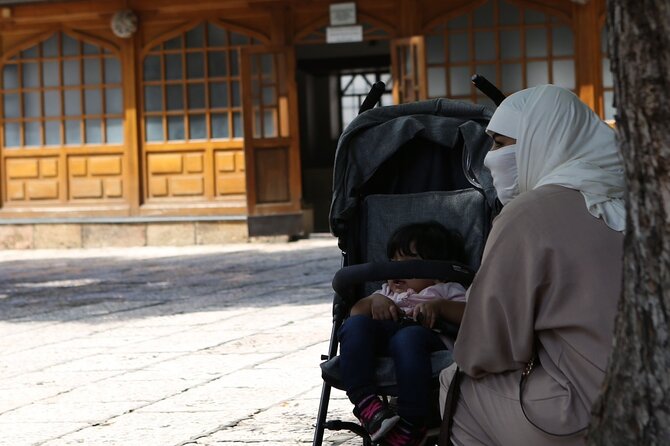
The tour is led by a certified guide, and the name recognition in reviews matters here. Suad is mentioned as passionate and emotionally connected to Sarajevo. Elsa earns praise for in-depth knowledge and for adding personal context about the region. Irfan is singled out for being poised, eloquent, and excellent at answering questions. Rijad is praised for not rushing, even when people keep stopping for photos.
That’s a clue to what you should do on the day: ask questions. If you want the most out of stops like Jedileri or Meeting of Culture, your best upgrade is dialogue with the guide, not speed through the streets.
Price and value: does $36.97 make sense?
At $36.97 per person, you’re paying for a guided orientation plus included tastings (coffee with baklava and burek), a city map, and a route that hits a lot of major landmarks in one afternoon.
What’s not included is important: the entry fee package costs 13 BAM (about 7€) per person and covers Bey’s Mosque, the synagogue, and the Old Orthodox Church. If you plan to go inside those places, your total spend rises, but you also get the full experience rather than stopping at the exterior.
Here’s how I’d judge it for your budget:
- If you want a guided “get your bearings” walk and you’re happy with two tastings, this is solid value.
- If you mostly care about interiors and museums, you’ll want to factor in the extra entry fee package before booking.
Who this tour suits best
This tour fits you if:
- You want a first-time Sarajevo overview in one half-day.
- You like religious architecture, memorials, and how cities remember.
- You enjoy a couple of tastings without turning the day into a long food crawl.
- You prefer a small-group feel (max 20) and a guide who can answer questions.
It might be less ideal if:
- You’re expecting a full food tour with lots of stops and heavy quantities.
- You don’t want any extra entry fees at all.
Should you book Eat, Pray, Love in Sarajevo?
I’d book it if you’re visiting Sarajevo for the first time and want a guided walk that actually connects the dots. The route is compact, the stories hit multiple parts of Sarajevo’s identity, and the included coffee-and-burek breaks are timed well for real energy—not just a checkpoint.
One last check before you decide: be clear about whether you want interior time at the major sites with the 13 BAM entry package. If yes, budget for it and you’ll get a fuller version of the day. If no, you’ll still get strong orientation and great street-level context.
FAQ
How long is the Eat, Pray, Love Tour in Sarajevo?
It runs for about 4 hours.
What time does the tour start?
The start time is 10:00 am.
Where does the tour meet and where does it end?
It starts at Zelenih beretki 30, Sarajevo, and ends back at the same meeting point.
Is the tour offered in English?
Yes, it’s offered in English.
What’s included in the tour price?
You get a certified guide, a tasting of local food and drinks, and a city map. Mobile tickets are also provided.
Are any entry fees included?
Some stops are free, but entry fees are not included for the paid entry package that covers Bey’s Mosque, the synagogue, and the Old Orthodox Church.
How much is the entry fee package if I want to go inside?
The entry fee package is listed as 13 BAM (7€) per person.
What tastings are included?
You’ll have a Bosnian coffee degustation with baklava, and a traditional burek degustation.
How big is the group?
The tour has a maximum of 20 travelers.
You Might Also Enjoy
More Food Experiences in Sarajevo
More Tours in Sarajevo
- Fall of Yugoslavia, Sarajevo War Tour with Tunnel of Hope Museum and Frontlines
★ 5.0 · 1,314 reviews

More Tour Reviews in Sarajevo
- Fall of Yugoslavia, Sarajevo War Tour with Tunnel of Hope Museum and Frontlines
★ 5.0 · 1,314 reviews