REVIEW · SARAJEVO
SARAJEVO STREET ART TOUR (art, history & mystery) – sARTajevo!
Book on Viator →Operated by Art and Tours Sarajevo · Bookable on Viator
Sarajevo’s walls tell stories if you slow down. This small-group street art tour links murals to what Sarajevo has lived through and walks you past pieces you’d likely miss on your own. I especially like the English explanations that keep the art readable, not just decorative, and the way the stops feel connected like chapters in a single story.
One thing to consider: the whole walk is timed, so it’s not built for long detours at each wall. If you want to linger for photos or sketching, you may need a little extra time before or after.
In This Review
- Key things to know before you go
- What this Sarajevo street art walk is really like
- Meeting at Đulagina 2 at 6:00 pm: timing, pace, and getting oriented
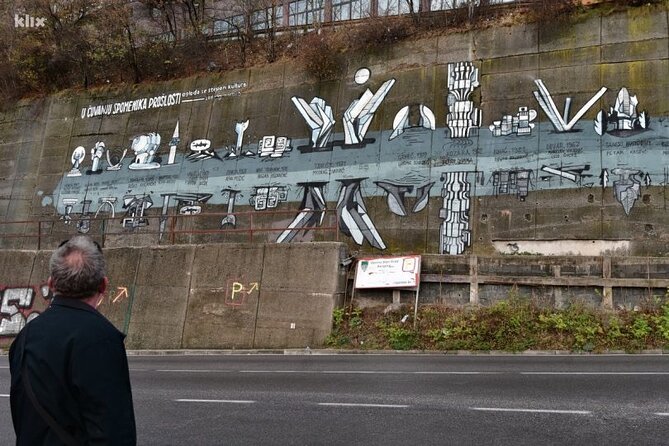
- Bentbaša mural: In the preservation of monuments of the past
- Papagajka (Perrot): where the first street art festival happened
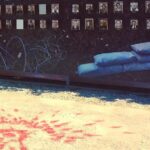
- Academy of Fine Arts: sticker art and a designed object in Sarajevo
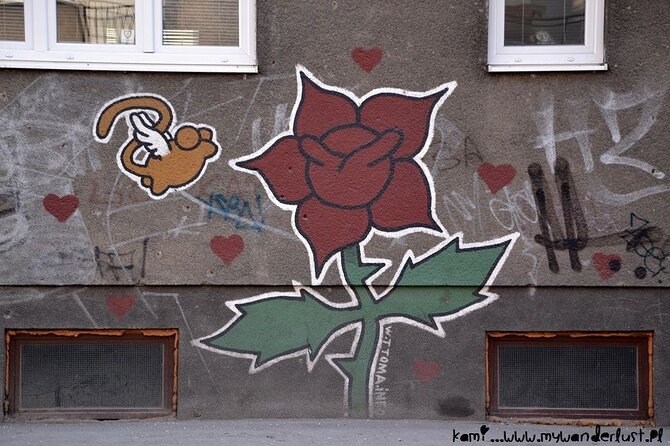
- Aria street art zones: Mr. Chat, Pjevač, and Gallery Boris Smoje
- Ferhadija Pedestrian Street and the Srebrenica 1992/1995 mural
- Price of $30.04: is it worth it
- English guides, real-world context, and why the explanations matter
- Who should book this Sarajevo Street Art Tour sARTajevo
- Should you book Sara(e)javo Street Art Tour sARTajevo?
- FAQ
- FAQ
- How much does the Sarajevo Street Art Tour cost?
- How long is the tour?
- Is the tour offered in English?
- What time does the tour start, and where do we meet?
- How many people are in the group?
- Are there admission tickets I need to pay for the stops?
- Is there a cancellation policy, and what if the minimum number of travelers is not met?
- Do I need a mobile ticket?
Key things to know before you go
- Small group of max 5 means more questions and less waiting around
- 6:00 pm start gives you an evening rhythm and a quick return to the meeting point
- English guided with detailed explanations of every mural on the route
- Five focused stops cover memorial murals, festival history, and art movements
- Free admissions at stops help keep the cost down in practice
- Mobile ticket makes it easier to show up and go
What this Sarajevo street art walk is really like
This is a 2 to 3 hour walking experience built around the idea that street art is not random. It’s public writing. It reacts to politics, memory, culture, and everyday life. In Sarajevo, that matters because so much of the city’s story has been fought over, survived, and retold. Walking with a guide turns murals from background noise into something you can actually read.
You’ll also get a different kind of sightseeing. Yes, you are seeing landmarks and art spaces. But the main point is learning how to connect the work on the wall to the city’s context. That’s why the tour keeps returning to history and meaning, not just style.
And based on what people consistently praise, the best part is the guidance. It’s not just facts. It’s a way of looking. You leave scanning walls with new questions in your head.
You can also read our reviews of more historical tours in Sarajevo
Meeting at Đulagina 2 at 6:00 pm: timing, pace, and getting oriented
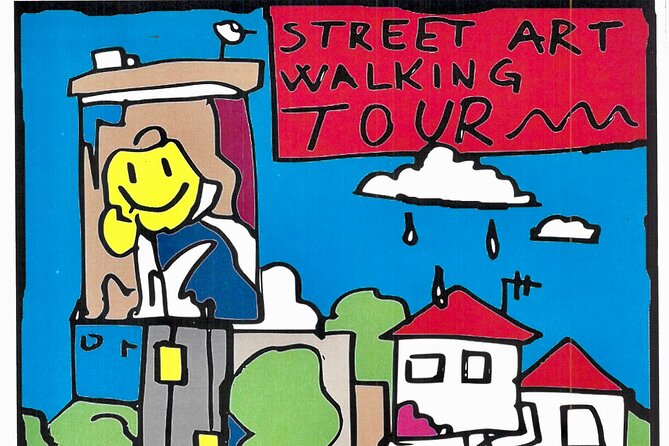
You meet at Đulagina 2 in Sarajevo (71000). The tour starts at 6:00 pm and ends back at the same meeting point. That back-to-base setup is handy: you’re not stuck figuring out a new transit plan after a couple of hours on foot.
Pace is the main thing to plan around. Each stop is given a set time window, and the route moves you along. In practice, that keeps the tour moving efficiently, and it helps you hit all five art zones without burning an entire evening. Still, you should expect to split your time between listening and looking.
The tour is designed for most travelers, and it’s near public transportation. If you’re arriving from elsewhere, that makes your start easier. Service animals are allowed too, which is good to know if you travel with one.
Bentbaša mural: In the preservation of monuments of the past
Your first stop is the Bentbaša area, where you’ll see the mural titled In the preservation of monuments of the past. This opening matters. It’s the tour’s thesis statement: street art here isn’t only about today. It’s about protecting memory, and it’s about what the city chooses to carry forward.
What I like about beginning here is the tone. The guide explains each mural in detail, and this one sets the expectations for how to interpret the rest. You start thinking about preservation, symbolism, and why a wall becomes a public reminder.
The stop is scheduled for about 20 minutes. That’s long enough to absorb the message and still move on while you’re fully switched on.
Practical tip: take a moment to read the mural closely, then step back and look at its placement in the neighborhood. A lot of the meaning can change depending on where you stand.
Papagajka (Perrot): where the first street art festival happened
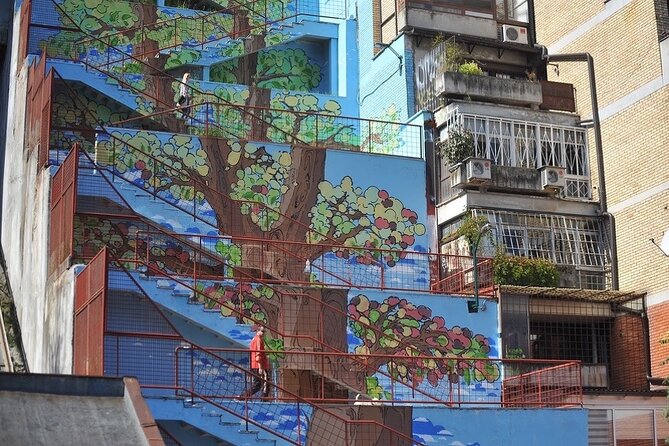
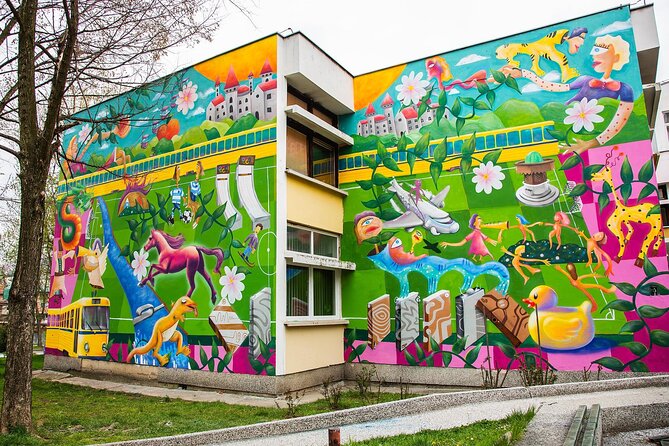
Next you head to the art building known as Papagajka (Perrot). This is a key stop because the tour connects the city’s street art to organized culture, not just informal tagging. You’ll learn that the first street art festival was held here, and you’ll see examples of wall art connected to that legacy.
What makes this spot useful for your understanding is the shift from murals as isolated moments to murals as part of an art scene. Festivals, workshops, visiting artists, and community energy all shape what appears on walls. Even if you’re new to street art, this kind of context helps you stop guessing and start recognizing patterns.
This stop is also about 20 minutes, so it works well as a quick reset: you get history, then you move on to newer streetside conversations.
If you like places with a sense of purpose, this is one of the more grounding stops. It’s not just looking at art. It’s learning how the art community formed.
Academy of Fine Arts: sticker art and a designed object in Sarajevo
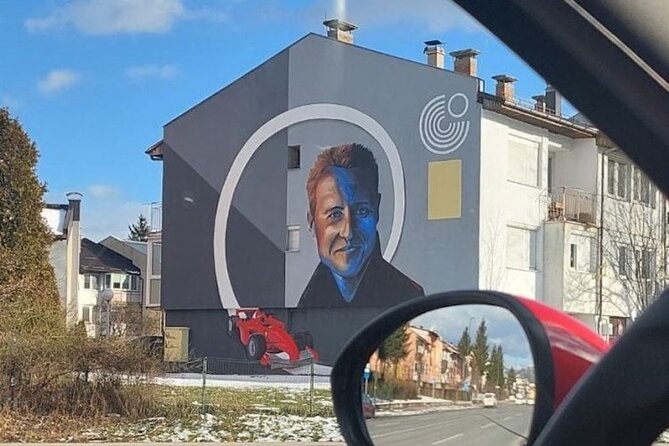
Your third stop is the Academy of Fine Arts. This is where the tour stretches beyond murals-in-the-street and points toward how Sarajevo’s art education and design sensibility show up in public space.
The guide also frames this as a place to see one of the most beautifully designed objects in Sarajevo. Even if you don’t rank buildings in your mind, it’s worth paying attention to the way design supports identity. When the guide connects this design to the street art you’ve already seen, the city starts to feel like one continuous conversation.
Another highlight at this stop: sticker art. You’ll get a demonstration and explanation of sticker art and how it fits into the larger street art language. That matters because stickers are often treated like small distractions. Here, they’re presented as part of the same system of visual messages.
Expect about 30 minutes here, which is a little longer than most stops. That extra time helps because sticker art and design ideas can take a few minutes to sink in.
- Fall of Yugoslavia, Sarajevo War Tour with Tunnel of Hope Museum and Frontlines
★ 5.0 · 1,314 reviews

Aria street art zones: Mr. Chat, Pjevač, and Gallery Boris Smoje
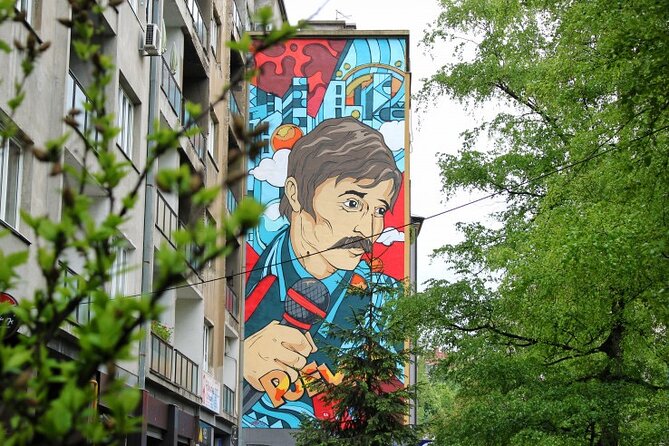
From there, you move into the Aria area for several connected concepts and locations. This is a stop built for recognition. You’re not only seeing art. You’re learning names, themes, and connections between works.
Here’s what the route includes:
- Concepts by Mr. Chat
- The mural Singer (Pjevač)
- Gallery Boris Smoje
The tour explains and visits these places, so you get the context behind the imagery rather than just a photo opportunity. The “mystery” angle of the tour typically comes alive around these kinds of stops—when you can start seeing the city’s visual world as a network of references.
This section runs about 20 minutes. It’s quick, but it’s the type of quick that gives you momentum. By now, you’ve learned how the guide thinks about meaning, so the art hits differently than it did at stop one.
Practical tip: if there’s a specific piece you want to remember, mark it in your phone map during the stop. The route ends where it starts, but saving your bearings helps later.
Ferhadija Pedestrian Street and the Srebrenica 1992/1995 mural
Your last major stop is Ferhadija Pedestrian Street and what’s behind it: the mural Srebrenica 1992/1995. This is the tour’s most serious moment. The art here is tied to a painful chapter of the region’s history, and the tour introduces it in the larger setting of street art and graffiti scenes.
The big value of ending here is emotional balance. Earlier stops lean into art as expression, design, and community. Here, you’re reminded that street art can also be memorial and public witness.
This stop is set for about 30 minutes, which gives the guide time to explain why this work belongs where it does. It also gives you space to look without rushing. If you’re the type who reads captions or wants to truly understand what you’re seeing, this longer slot is a gift.
My advice: slow down. Treat the area like you would any memorial space. You can take photos, but keep your attention on the meaning first.
Price of $30.04: is it worth it
The price is $30.04 per person for roughly 2 to 3 hours in English. That might sound modest or expensive depending on how you value guided interpretation.
Here’s the value logic I see:
- You’re paying for detailed explanations that change how you see what you’re looking at.
- The group size is small, with a maximum of 5 travelers, so you’re not competing with 20 other people for attention.
- The tour includes multiple art stops, and it indicates admission tickets are free for the listed stops. That means you’re not paying extra at each location to make the tour work.
In other words, this isn’t just a scenic walk. You’re buying time with someone who helps connect street art to Sarajevo’s identity and history. If you’re even slightly curious about how political and cultural memory shows up on city walls, this is a good deal.
If you’re only here for broad, mainstream sightseeing, you might feel like you could do it on your own. But if you want interpretation that keeps you from missing the point, the guide’s role is the whole product.
English guides, real-world context, and why the explanations matter
One reason this tour tends to land well is the clarity people report in the guidance. Names that have come up include Alan, Ado, and Mak. Each is described as thoughtful about connecting art to Sarajevo’s life, past and present.
That’s what you should look for when choosing a street art tour. Street art can be easy to misread. It can also be easy to over-romanticize. A good guide does two things at once: gives you the background and teaches you how to look carefully at the wall in front of you.
The tour is also positioned as part art walk, part history lesson, part mystery. You’ll feel that mix most at the stops that link named artists or concepts (like Mr. Chat and the Singer mural) to real locations. By the time you reach the memorial work on Ferhadija, the earlier explanations make more sense.
Who should book this Sarajevo Street Art Tour sARTajevo
You’ll probably love this if:
- You enjoy walking tours but want more than a list of sights
- You like learning how cities use art to talk about memory and identity
- You want an easy, structured way to explore Sarajevo’s modern creative side
- You’re okay with a paced route and listening as much as looking
You might want to skip it (or add extra time) if:
- You expect to roam freely at each mural for a long time
- You want a purely visual tour with minimal explanation
- You’re only interested in famous architecture and big-ticket landmarks
This tour fits best as an early evening activity when you want a strong sense of place fast. It also works well if you’re traveling with a partner who might not be “into street art.” The way it connects art to city life makes it understandable even when you don’t know the scene.
Should you book Sara(e)javo Street Art Tour sARTajevo?
If you want Sarajevo through the lens of murals and the stories behind them, book it. The price is reasonable for a guided interpretation experience, the small group size keeps it personal, and the route covers both lighter art-world context and a serious memorial stop.
The one caution is time. The tour is timed at each location, so if you’re a slow wanderer, plan to add a bit of extra time after the tour to keep exploring the streets you liked most.
FAQ
FAQ
How much does the Sarajevo Street Art Tour cost?
It costs $30.04 per person.
How long is the tour?
The tour lasts about 2 to 3 hours.
Is the tour offered in English?
Yes. The tour is offered in English.
What time does the tour start, and where do we meet?
The tour starts at 6:00 pm and meets at Đulagina 2, Sarajevo 71000, Bosnia and Herzegovina. The tour ends back at the meeting point.
How many people are in the group?
The tour has a maximum of 5 travelers.
Are there admission tickets I need to pay for the stops?
The tour information indicates admission tickets are free for the listed stops.
Is there a cancellation policy, and what if the minimum number of travelers is not met?
You can cancel for a full refund up to 24 hours in advance. If the tour is canceled because a minimum number of travelers isn’t met, you’ll be offered a different date or a full refund.
Do I need a mobile ticket?
Yes. It includes a mobile ticket. Confirmation is received at the time of booking.
You Might Also Enjoy

More Historical Tours in Sarajevo
More Tours in Sarajevo
- Fall of Yugoslavia, Sarajevo War Tour with Tunnel of Hope Museum and Frontlines
★ 5.0 · 1,314 reviews

More Tour Reviews in Sarajevo
- Fall of Yugoslavia, Sarajevo War Tour with Tunnel of Hope Museum and Frontlines
★ 5.0 · 1,314 reviews