REVIEW · SARAJEVO
Sarajevo genuine walking tour: Steps through history
Book on Viator →Operated by Blossom Tours · Bookable on Viator
Sarajevo teaches fast, on foot. This private 2-hour walk strings together Ottoman-era streets, Sarajevo’s major churches and mosques, and the Latin Bridge where WWI’s spark happened. It’s built for people who want context without a museum-hour headache.
I love the route because it starts at the striking Sarajevo City Hall and ties you to local legends right away, including the story of the “Spite house.” You also get a smooth transition into Baščaršija Square, where the iconic Sebilj Fountain becomes more than a photo stop—it’s a landmark with layers.
One thing to consider: it’s a tight city-center loop with short stops and plenty of walking between them. If you need frequent long breaks or low-impact pacing, plan for that.
In This Review
- Key highlights worth your attention
- Why this Sarajevo walk works better than a big bus tour
- Price and value: what $27.61 buys in real-world terms
- Your 2-hour route: City Hall to the Latin Bridge
- Stop 1: Sarajevo City Hall and the Spite house legend
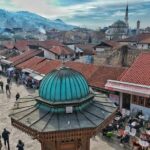
- Stop 2: Baščaršija Square and Sebilj Fountain
- Stop 3: the Old Serbian Orthodox Church (Archangels Michael and Gabriel)
- Stop 4: Gazi Husrev-beg Mosque complex in the Ottoman quarter
- Stop 5: Jewish Museum of Bosnia and Herzegovina and Sephardic stories
- Stop 6: Sacred Heart Cathedral and the meaning of closeness
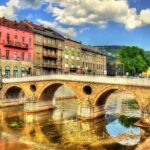
- Stop 7: Latin Bridge—Franz Ferdinand, WWI, and a chilling walk finish
- The guide makes or breaks it: Sanela and Amilia as examples
- Practical tips so you get the most out of the walk
- Who should book this Sarajevo genuine walking tour
- Should you book it?
- FAQ
- How long is the Sarajevo walking tour?
- How much does the tour cost?
- Is the tour private?
- What language is the tour offered in?
- Where does the tour start and end?
- What’s the meeting point address?
- Do any stops require paid admission?
- How soon will I get confirmation after booking?
- Can I bring a service animal?
- What if I need to cancel?
Key highlights worth your attention
- City Hall + the Spite house legend right at the start
- Baščaršija Square and Sebilj Fountain as your cultural anchor
- Four faith landmarks in one loop: Orthodox, Ottoman Muslim, Jewish, and Catholic
- Gazi Husrev-beg Mosque complex with madrasa, library, and clock tower
- Latin Bridge and the Franz Ferdinand connection near the WWI trigger point
- Free admission at every listed stop, plus a mobile ticket for easy check-in
Why this Sarajevo walk works better than a big bus tour
This is the kind of city tour that helps you get your bearings fast. Instead of feeling like you’re collecting random sights, the walk gives you a thread: how different communities lived side by side, and how conflict changed what the city stands for.
You’ll also like the pace because it’s short—about 2 hours—but not rushed to the point of chaos. The stops are close enough that the guide can keep talking through them, so the details land instead of evaporating after the photo.
And because it’s private, the experience feels less like a script and more like a conversation. If you have questions, you’re not forced to whisper them into a crowd. Based on guide feedback I’ve seen from this operator, questions were handled well, with clear answers and calm confidence.
You can also read our reviews of more walking tours in Sarajevo
Price and value: what $27.61 buys in real-world terms
At $27.61 per person for roughly 2 hours, the price is reasonable—especially because the tour’s stops are listed with free admission. That matters in Sarajevo, where some attractions can add up if you’re stacking tickets on top of each other.
You’re also buying convenience:
- a mobile ticket
- English narration
- start-to-finish routing in the historic center (and it ends where it begins)
- a near-public-transport location, so you can plug it into your day easily
So the value isn’t just “you get a guide.” You’re getting a guided route that organizes the city in a way you can repeat later—like when you wander back to Baščaršija on your own after the facts make sense.
Your 2-hour route: City Hall to the Latin Bridge
This tour is built like a storyline. It begins with Sarajevo’s civic face, shifts into the market-and-faith heart of the city, and ends with the moment that changed modern Europe.
Most days you’ll find yourself moving in a simple rhythm:
1) arrive at a landmark
2) hear what to notice
3) take it in for a short window
4) walk to the next site
That’s also the main trade-off: the stops are brief. If you want to linger for 30–45 minutes in one place, you’ll feel a bit time-pressed. For most visitors, though, that structure is exactly what makes the tour useful.
Stop 1: Sarajevo City Hall and the Spite house legend
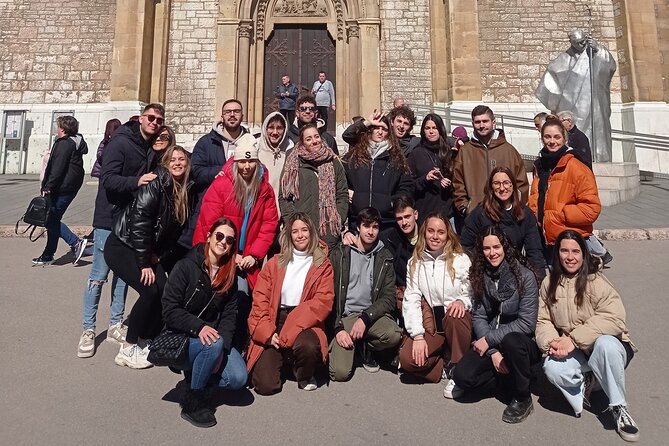
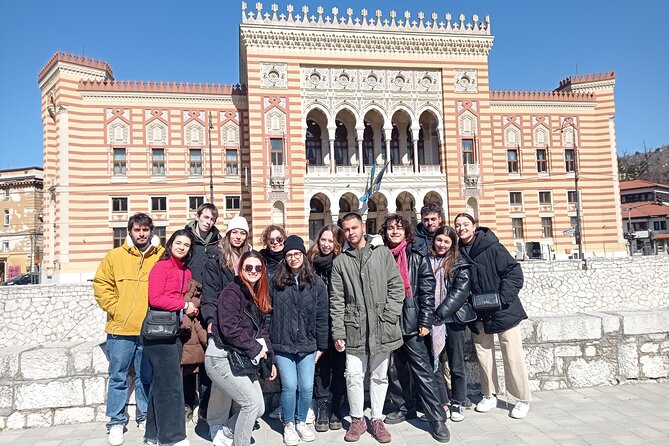
You start at Sarajevo City Hall on Obala Kulina Bana. It’s not a quiet building—its presence is the point. The façade is known for its Pseudo-Moorish architecture, a style that gives the city a layered, Ottoman-meets-local feel even before you step into the Old Town.
This first stop matters because it sets tone. Before you start hunting for faith landmarks and old streets, the City Hall anchors the idea that Sarajevo has always been a crossroads: civic power, local identity, and the stories people attach to buildings.
You’ll also hear the legend about the “Spite house.” Even if you’ve never heard it before, that kind of story is a great way to understand how locals explain the city to themselves—especially in a place where history didn’t politely stay in the past.
Watch for: the way your guide points out architectural details. City Hall is a good warm-up because you can spot features quickly and still learn something.
Stop 2: Baščaršija Square and Sebilj Fountain
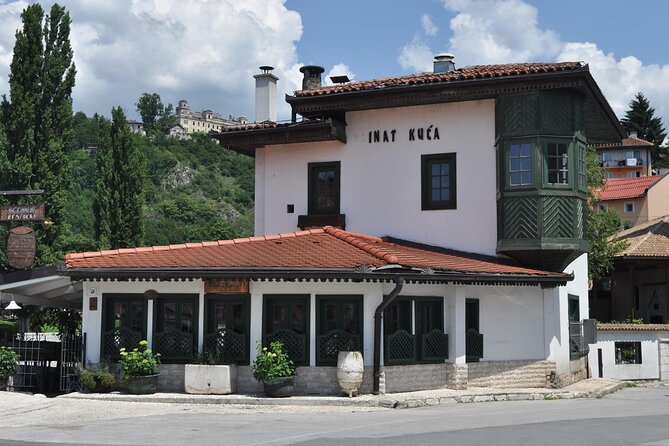
Next comes Baščaršija Square, the historic center where Sarajevo feels most like Sarajevo. This is where the walking tour starts to feel more human—vendors, foot traffic, and the sense that the city’s everyday life sits on top of old foundations.
In the middle of it all is the Sebilj Fountain, a landmark that’s easy to photograph but also easy to misunderstand if you treat it like just another fountain.
The tour frames Sebilj as a symbol of Sarajevo’s cultural heritage—something that has witnessed centuries of city life. That shift changes how you see it. Instead of “look, a fountain,” you start thinking: why this spot, why here, why this form?
Possible drawback: because this square is a busy public space, you may feel more surrounded by motion than at some other stops. It’s still worth it, but it’s not a quiet moment.
You can also read our reviews of more historical tours in Sarajevo



Stop 3: the Old Serbian Orthodox Church (Archangels Michael and Gabriel)
Then you step into the Orthodox story with the Old Serbian Orthodox Church, dedicated to the Archangels Michael and Gabriel. One reason this stop works is its focus: it’s not trying to cover every Orthodox detail. It’s showing you the character of one important church in the city.
You’ll notice the church’s Byzantine architecture. That visual style can feel timeless—domes, shape language, and details that signal where the tradition comes from.
Why this matters on a short tour: Sarajevo is famous for being “many things at once,” but you still need structure to understand it. Visiting a specific Orthodox church with a named dedication gives you that structure.
Tip for your own follow-up: after the tour, if you return to the Old Town area, try spotting architectural cues you saw here—Byzantine details often become easier to recognize once someone points them out.
Stop 4: Gazi Husrev-beg Mosque complex in the Ottoman quarter
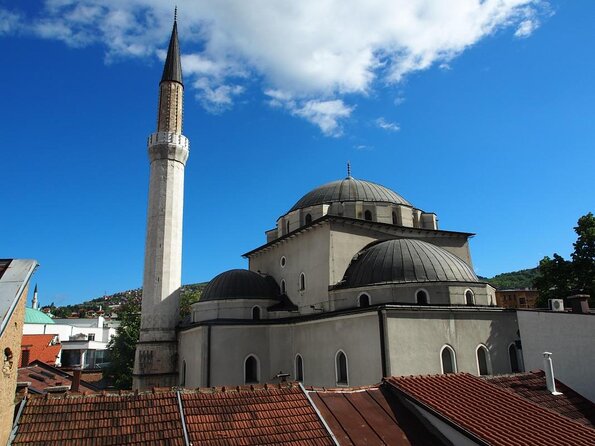
Now you’re in the heart of Sarajevo’s Ottoman-era atmosphere at Gazi Husrev-beg Mosque in the Baščaršija district.
This stop is a standout for practical reasons. The mosque isn’t just a single building. The mosque complex includes a madrasa, a library, and a clock tower—so you can see how religious life, education, and daily structure were connected.
That’s what I like about this part of the tour: it gives you more than “here’s a mosque.” It helps you understand why Ottoman architecture can look both spiritual and functional.
As you move through the space, you’ll also get a sense of continuity—how the city keeps its landmarks even as the political story around them changes.
When to be mindful: religious sites are still active places of faith. You’ll want to follow the guide’s cues for respectful behavior and timing.
Stop 5: Jewish Museum of Bosnia and Herzegovina and Sephardic stories
After the mosque, the tour shifts to the Jewish quarter and the Jewish Museum of Bosnia and Herzegovina.
This part focuses on the story of Sephardic Jews in Bosnia and Herzegovina, with an emphasis on resilience and heritage. Even in a short walk, that framing helps you avoid a common trap: treating Jewish history as a single chapter instead of a community presence with changing realities.
The museum stop also adds a valuable contrast. You’ve just spent time with Ottoman and Orthodox architecture. Now the guide shows you how another community shaped life in Sarajevo—different faith, different traditions, still deeply tied to the city.
If you have limited time: the tour keeps this stop short, so you may only capture the highlights. Still, it’s a strong starting point if you want to return later on your own and read more slowly.
Stop 6: Sacred Heart Cathedral and the meaning of closeness
Next is the Cathedral of the Sacred Heart of Jesus. This cathedral is presented as a major faith landmark that has endured periods of conflict—yet remains a symbol of spiritual significance for Sarajevo’s people.
The really useful idea here is scale and proximity. After you visit the three multi-faith or multi-confessional religious objects on this route, you’ll see how closely they sit together—listed as about 100 square meters apart.
That small distance is a big clue about Sarajevo’s identity. The city doesn’t separate communities into faraway zones. It often places them near each other in a way that forces daily coexistence—plus tension when history turns.
Quick takeaway: this stop makes “religion as architecture” feel very real. You’re not just seeing buildings; you’re seeing neighbors.
Stop 7: Latin Bridge—Franz Ferdinand, WWI, and a chilling walk finish
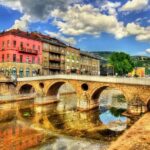
You finish at the Latin Bridge, near where Archduke Franz Ferdinand was assassinated—an event tied directly to the beginning of World War I.
This ending has weight. You can’t help it. Even if you know the basic story, the physical location brings the timeline into focus in a way that reading alone doesn’t.
The guide’s job here is to help you slow down. In a city tour, this is where people often start snapping photos too fast. Instead, you’ll want to treat it like a moment: absorb the meaning, understand the “why this spot” logic, then let the story settle before you move on.
It’s also a smart way to close the tour because it connects all the earlier themes—power, identity, and how Sarajevo’s position in Europe shaped consequences.
The guide makes or breaks it: Sanela and Amilia as examples
The standout praise from this operator isn’t about flashy performance. It’s about clarity. Guides were described as professional, able to answer questions, and making history feel real instead of stuck in a textbook.
In the feedback I’ve seen, two names come up in a positive way: Sanela and Amilia. That’s a good sign if you care about Q&A and not just passive listening.
So if you’re the type who asks, Why did that happen? What does this architecture mean? Who lived here?—you’ll likely feel comfortable.
Practical tips so you get the most out of the walk
A few things will help you enjoy this tour even more:
- Wear shoes you’re happy to stand in. The stop times are short, so you’ll do more on-your-feet time than you might expect.
- Bring a light layer. Stone and open areas can feel cooler or hotter depending on the day.
- Have your questions ready. This style of tour is best when you use your chance to ask.
- Plan one extra wander hour afterward. After learning the route, you’ll notice more on your own in Baščaršija and nearby streets.
Also, this tour uses a mobile ticket, so have your phone accessible at check-in. The meeting point is Sarajevo City Hall, Brodac 1, Sarajevo 71000.
Who should book this Sarajevo genuine walking tour
Book it if you:
- want a focused 2-hour orientation to Sarajevo’s center
- care about how multiple communities shaped the city
- like walking tours with a clear storyline (not just a list of landmarks)
- prefer a private format for easier questions and pacing
You might choose differently if you:
- dislike standing and short stops
- want lots of free time inside museums rather than quick context points
- need a very slow, pause-heavy itinerary
Should you book it?
Yes, if you want Sarajevo explained in a practical, walkable way. For a modest price, you get a route that links civic Sarajevo to Ottoman architecture, Orthodox faith space, a Jewish community museum stop, and a Catholic cathedral—then it lands at the Latin Bridge with the Franz Ferdinand connection.
The biggest reason to book is simple: the tour doesn’t treat religion and history like separate categories. It shows you how they’re stacked close together in real city space. That’s what makes Sarajevo feel personal—fast.
If your time in the city is limited, this is one of the better ways to spend a couple hours and leave with a map in your head, not just a memory of photos.
FAQ
How long is the Sarajevo walking tour?
It lasts about 2 hours.
How much does the tour cost?
The price is $27.61 per person.
Is the tour private?
Yes. It’s a private tour/activity, meaning only your group participates.
What language is the tour offered in?
It’s offered in English.
Where does the tour start and end?
It starts at Sarajevo City Hall (Brodac 1, Sarajevo 71000) and ends back at the same meeting point.
What’s the meeting point address?
The meeting point is Sarajevo City Hall, Brodac 1, Sarajevo 71000, Bosnia and Herzegovina.
Do any stops require paid admission?
The listed stops show admission ticket free for each of them.
How soon will I get confirmation after booking?
You should receive confirmation within 48 hours of booking, subject to availability.
Can I bring a service animal?
Yes. Service animals are allowed.
What if I need to cancel?
You can cancel for a full refund if you cancel at least 24 hours in advance of the experience start time. If you cancel less than 24 hours before, the amount paid is not refunded.
You Might Also Enjoy
More Walking Tours in Sarajevo
More Tours in Sarajevo
- Fall of Yugoslavia, Sarajevo War Tour with Tunnel of Hope Museum and Frontlines
★ 5.0 · 1,314 reviews

More Tour Reviews in Sarajevo
- Fall of Yugoslavia, Sarajevo War Tour with Tunnel of Hope Museum and Frontlines
★ 5.0 · 1,314 reviews